



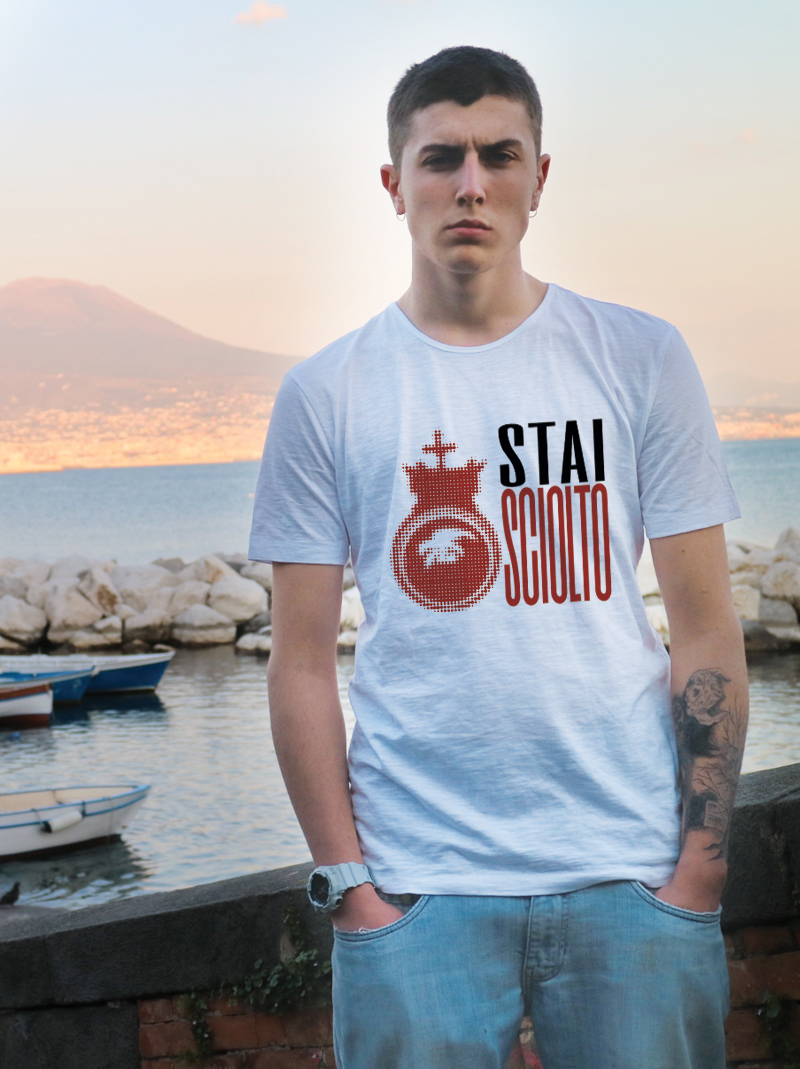
In Naples, a graduation is never a private affair: it's a neighbourhood celebration. Here's how to choose an original...
Latest posts
-
 Original Neapolitan graduation gift: ideas for the graduate (him and her)Read more
-
 Asso 'e mazze: meaning and history of the Neapolitan ace of clubsRead more
The strongest card on the green table becomes, in Naples, the most elegant way to say who really calls the shots....
-
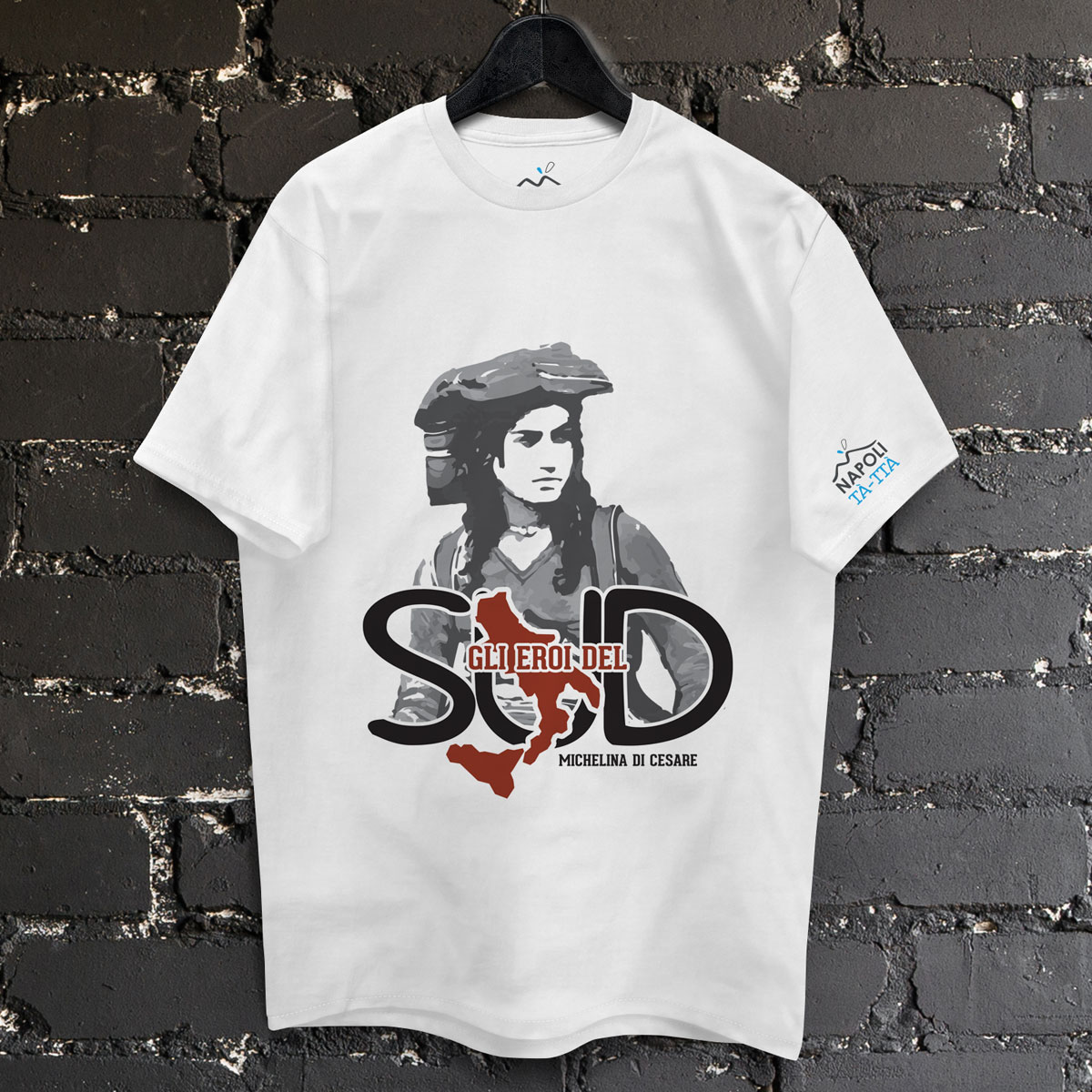 Michelina Di Cesare, the brigantessa who defied a kingdomRead more
Born poor in Terra di Lavoro, Michelina Di Cesare chose the maquis and the rifle against a newly united Italy. A...
-
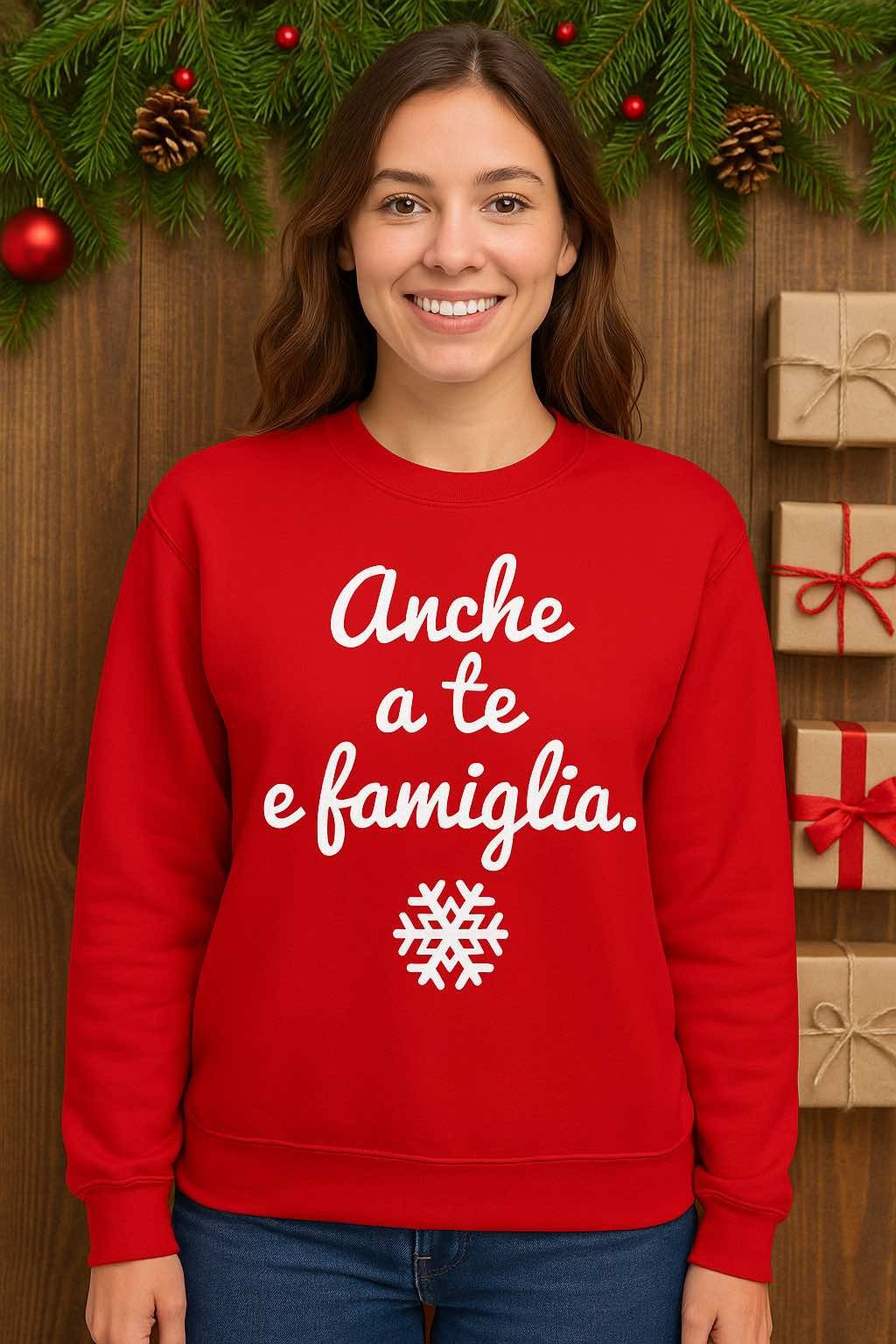 Neapolitan Hoodies: The Autumn 2026 Style GuideRead more
When the air turns crisp, in Naples people don't just reach for a hoodie: they reach for a piece of identity. Here's...
-
 Maradona Stadium: City Council allocates €50 million for Euro 2032Read more
The City Council has allocated €50 million for the redevelopment of the Diego Armando Maradona stadium, ahead of...
-
 Pizza Maxima 2026: Franco Pepe Is Once Again Best Pizzeria in ItalyRead more
At the fifth edition of Pizza Maxima, the Oscars of Italian pizza, Franco Pepe confirms his title as Best Pizzeria in...
-
 ‘L’acqua è poca e ‘a papera nun galleggia’: what it meansRead more
When the means are few, so is the result. Let's discover the most realistic Neapolitan saying there is.
-
 Avanti Scugnizzi: the story of the year's most loved T-shirtRead more
One word, ‘scugnizzo’ (Neapolitan street kid), and it holds the whole of Naples inside it. We tell you how the year's...
-
 'Chi chiagne fotte a chi ride': what it means and why it's truer than everRead more
At the market, at the counter, in the family: there's always someone who complains and gets more. It's the sharp...
-
 San Gennà, futtatenne! (Saint Januarius, don't worry about it!) San Gennaro, 19 September and the patron saint's t-shirtRead more
Who San Gennaro was, the miracle of the blood that liquefies, and the feast on 19 September. Plus that close,...
Blog categories
Search in blog
Archived posts
Neapolitan masks: the Carnival of Naples
Officially, it begins on 17 January, the feast day of Sant'Antonio Abate (Saint Anthony the Abbot), and, initially, it was a celebration reserved for countesses and princes, nobles and the Neapolitan aristocracy: this is the Neapolitan Carnival, a festival already deeply felt back in the 17th century; indeed, it was during this very period that the typical Neapolitan popular masks were born, masks that have since become part of history.
by Silvia Semonella
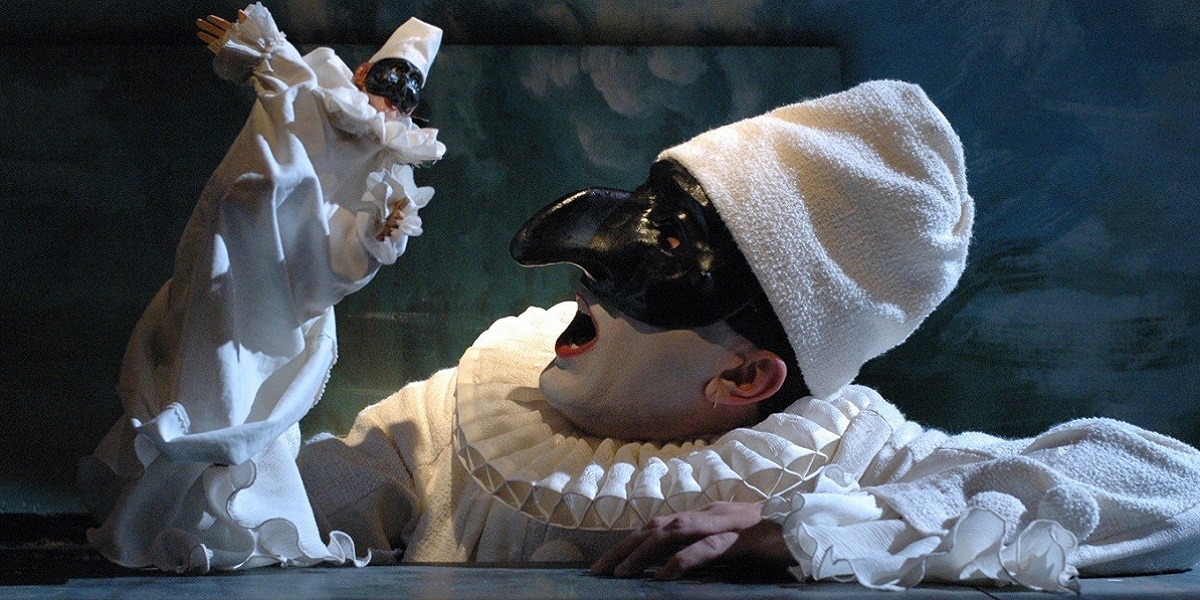
Pulcinella
The first to mention, for importance and popularity, is undoubtedly Pulcinella. The mask, as we know it today, was officially invented in Naples by the actor Silvio Fiorillo in the second half of the sixteenth century, but his modern costume was created in the nineteenth century by Antonio Petito. In fact, originally, Fiorillo's mask wore a bicorn hat (different from today's "sugarloaf" style) and had a beard and moustache.
The theories about his origins are, in truth, varied: some trace him back to “Pulcinello” (little chick), a small chick, because of his hooked nose; others claim he embodies a peasant from Acerra, Puccio d'Aniello, who in the 1600s joined a travelling troupe passing through his town as a jester; others still go further back in time, to the 4th century BC, arguing that Pulcinella descends from Maccus, a character from the Roman Atellan farces (ancient comedies). Maccus represented a type of servant with a long nose and a lumpy face with big cheeks and a prominent belly, dressed in a loose white shirt.
Finally, others still trace the mask back to another character from the Fabulae Atellanae: Kikirrus, a theriomorphic mask (with an animal-like appearance) whose very name, in fact, recalls the crowing of a rooster.
Pulcinella has embodied and continues to embody, especially abroad, the Neapolitan stereotype: the character who, fully aware of the troubles he finds himself in, always manages to come out of them with a smile, publicly mocking the powerful and revealing all their hidden dealings to the common people.
Lo Spagnolo (The Spaniard)
In the 17th century, the popular mask of Lo Spagnolo, or the "Spanish Captain", was famous.
His distinguishing feature was his clothing, made up of: a small cape, a plumed hat, lace on his shoes and a sword.
The Spaniard, according to descriptions of the time, used to go around with a procession of unmasked Pulcinellas leading him through the streets of the city centre; these, with their festive tambourines, would draw the crowd's attention and, once arranged in a circle, would invite the Spaniard to dance the tarantella.
The "Ciarlatano del Molo" (Charlatan of the Pier) and the Cacciamole
In the second half of the 19th century, we instead find the mask of the Doctor, also known as the “Ciarlatano del Molo” (Charlatan of the Pier), a rather unusual doctor who boasted of being the best in his field, offering rather peculiar cures and remedies.
More similar to a clown than a doctor, he wore a long green robe with silver cut-outs, a white and red paper wig with pigtails hanging down to his feet, and large glasses dangling on his face.
Very similar to this was the mask of the Cavadenti (Tooth-puller), also known as Cacciamole, who was dressed in an old tailcoat and a tricorn hat, all completed by huge glasses perched on his nose. He would go around on a cart, where he welcomed his patients (in reality his accomplices) who, after a careful examination, he would treat by pulling their teeth out with a large pair of pliers.
Don Nicola and Paglietta Calabrese
Alongside the doctors, another very popular mask was that of Don Nicola, this time a lawyer, always played by improvised actors or ordinary townsfolk. Dressed in the fashion of the eighteenth century, he was always preceded by his servant and would go around reciting verses, rhymes and funeral eulogies.
Also a man of the law, though a rather clumsy one, was Paglietta Calabrese.
During Carnival (so much so that, even today, people say “ogni scherzo vale”, meaning “anything goes as a joke”) it was permitted to poke fun at one's rivals or people from other social classes and cultural groups; in this case, for example, Calabrian students attending Law School in Naples were mocked.
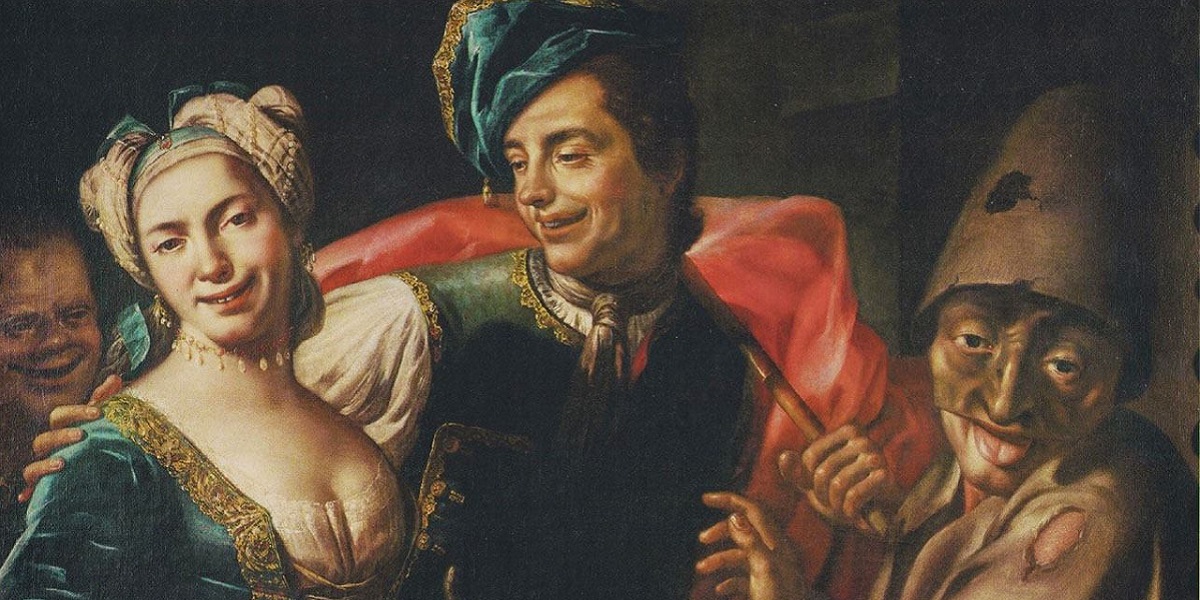
Giangurgolo
Certainly, one of the most napulegne (typically Neapolitan) masks, alongside Pulcinella, is Giangurgolo, who already appears in 1618 as a character of the Commedia dell'Arte and who stands out for his taste for obscenities.
His name is made up of Gian-Gianni and gurgolo-gorgo, alluding to his voracity and his reputation as a ladies' man; he is dressed as a sort of Captain of the Spanish army: armed with a sword, wearing a pointed hat typical of Calabria, and a red mask, he goes around boastfully, climbing into the carriages of ladies, bragging about his sexual prowess and reciting forbidden verses. His speech is a Neapolitanised Calabrian dialect (poking fun at the Calabrians of the time).
Pascalotto
Another very famous nineteenth-century mask, though not exclusively tied to Carnival, was that of Pascalotto. His main characteristic was the gymnastic agility with which he amused himself by throwing and catching his long stick in the air, as well as his sexual ambiguity: he was the hermaphrodite par excellence; dressed as a woman, with a bosom and a well made-up face, he would stroll about with his tambourine, entertaining people, singing and dancing through the city.
Razzullo and Sarchiapone
Also worth remembering, certainly, because they too are typically Neapolitan, are the masks of Razzullo, a man of the people forced to get by and live off his wits, and Sarchiapone. To understand how important these masks were in Neapolitan tradition, it is enough to consider that the term “sarchiapone” has even entered everyday usage, used to refer to a person who is not exactly light on their feet…
Posted in:
Neapolitan Spirit
Related posts
-
Asso 'e mazze: meaning and history of the Neapolitan ace of clubs
The strongest card on the green table becomes, in Naples, the most elegant way to say who really calls the shots....Read more
-
Michelina Di Cesare, the brigantessa who defied a kingdom
Born poor in Terra di Lavoro, Michelina Di Cesare chose the maquis and the rifle against a newly united Italy. A...Read more
-
‘L’acqua è poca e ‘a papera nun galleggia’: what it means
When the means are few, so is the result. Let's discover the most realistic Neapolitan saying there is.Read more
-
'Chi chiagne fotte a chi ride': what it means and why it's truer than ever
At the market, at the counter, in the family: there's always someone who complains and gets more. It's the sharp...Read more
-
San Gennà, futtatenne! (Saint Januarius, don't worry about it!) San Gennaro, 19 September and the patron saint's t-shirt
Who San Gennaro was, the miracle of the blood that liquefies, and the feast on 19 September. Plus that close,...Read more
Leave a comment