



Quando l'aria si fa frizzantina, a Napoli non si tira fuori solo la felpa: si tira fuori un pezzo di identità. Ecco...
Latest posts
-
 Felpe napoletane: la guida allo stile dell'autunno 2026Read more
 -
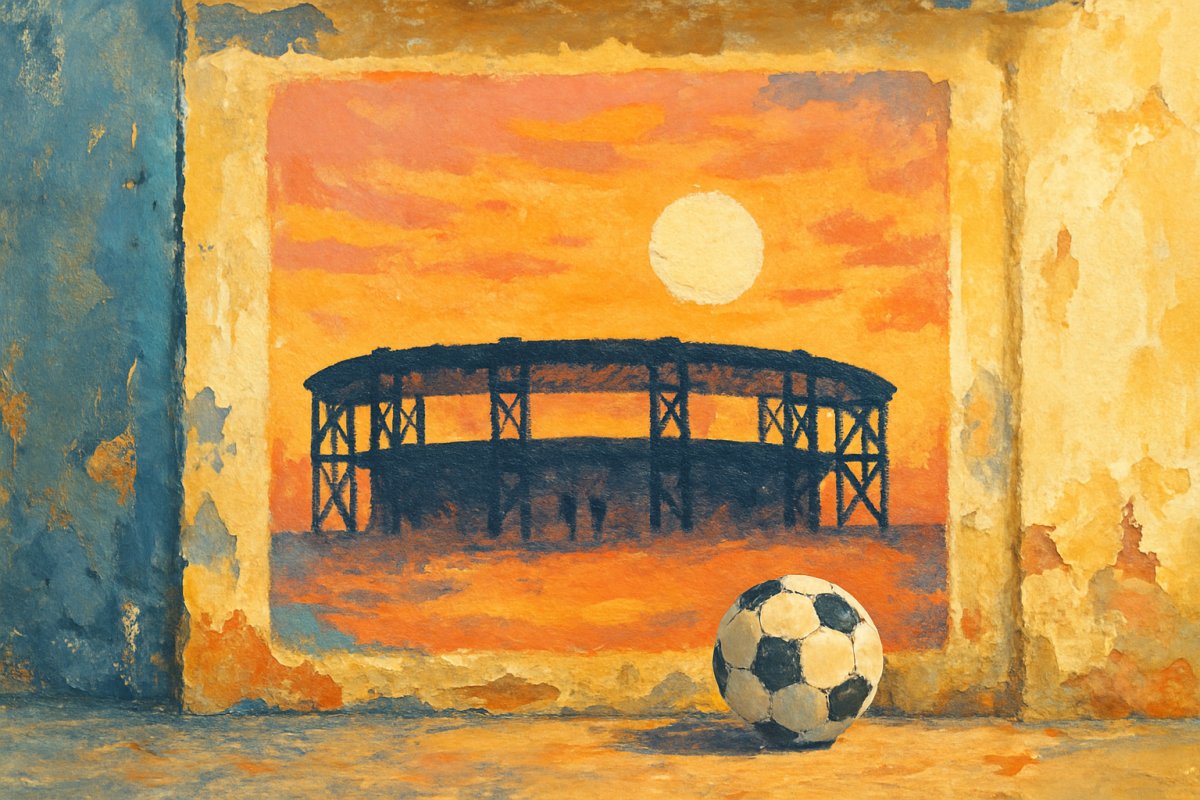 Maradona Stadium: City Council allocates €50 million for Euro 2032Read more
The City Council has allocated €50 million for the redevelopment of the Diego Armando Maradona stadium, ahead of...
-
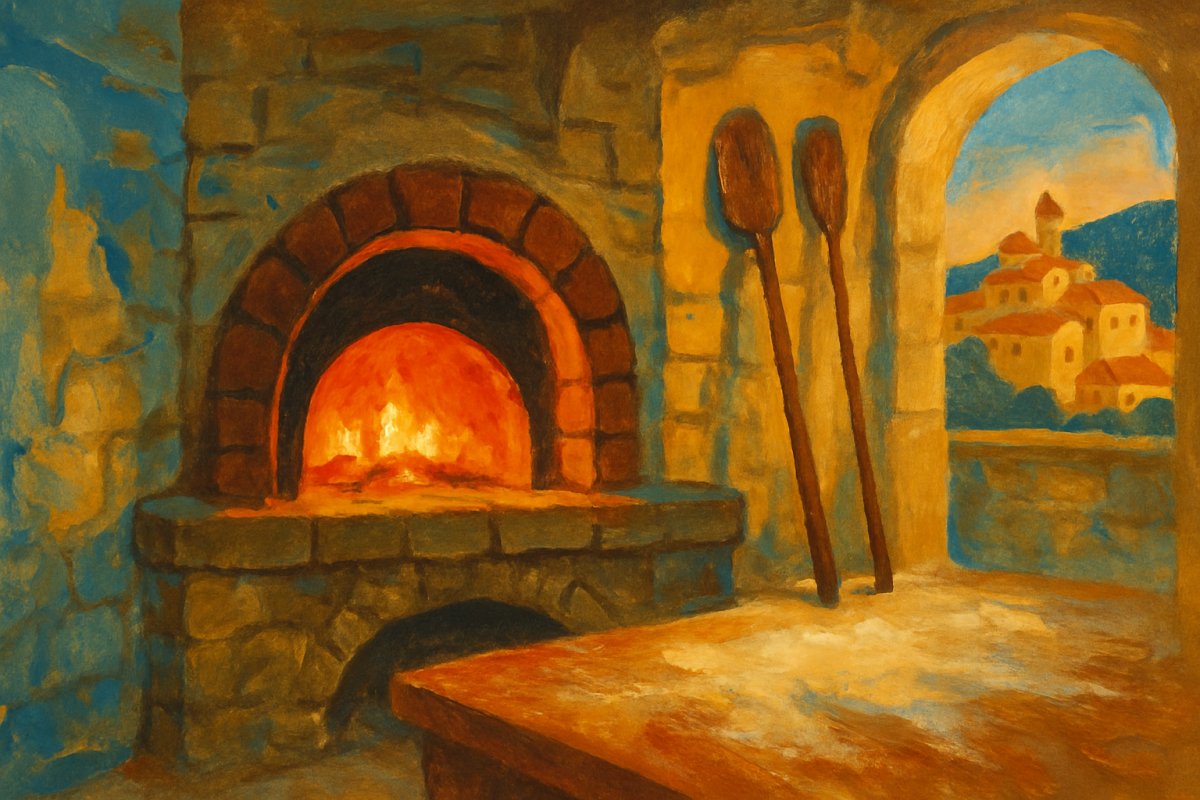 Pizza Maxima 2026: Franco Pepe Is Once Again Best Pizzeria in ItalyRead more
At the fifth edition of Pizza Maxima, the Oscars of Italian pizza, Franco Pepe confirms his title as Best Pizzeria in...
-
 ‘L’acqua è poca e ‘a papera nun galleggia’: what it meansRead more
When the means are few, so is the result. Let's discover the most realistic Neapolitan saying there is.
-
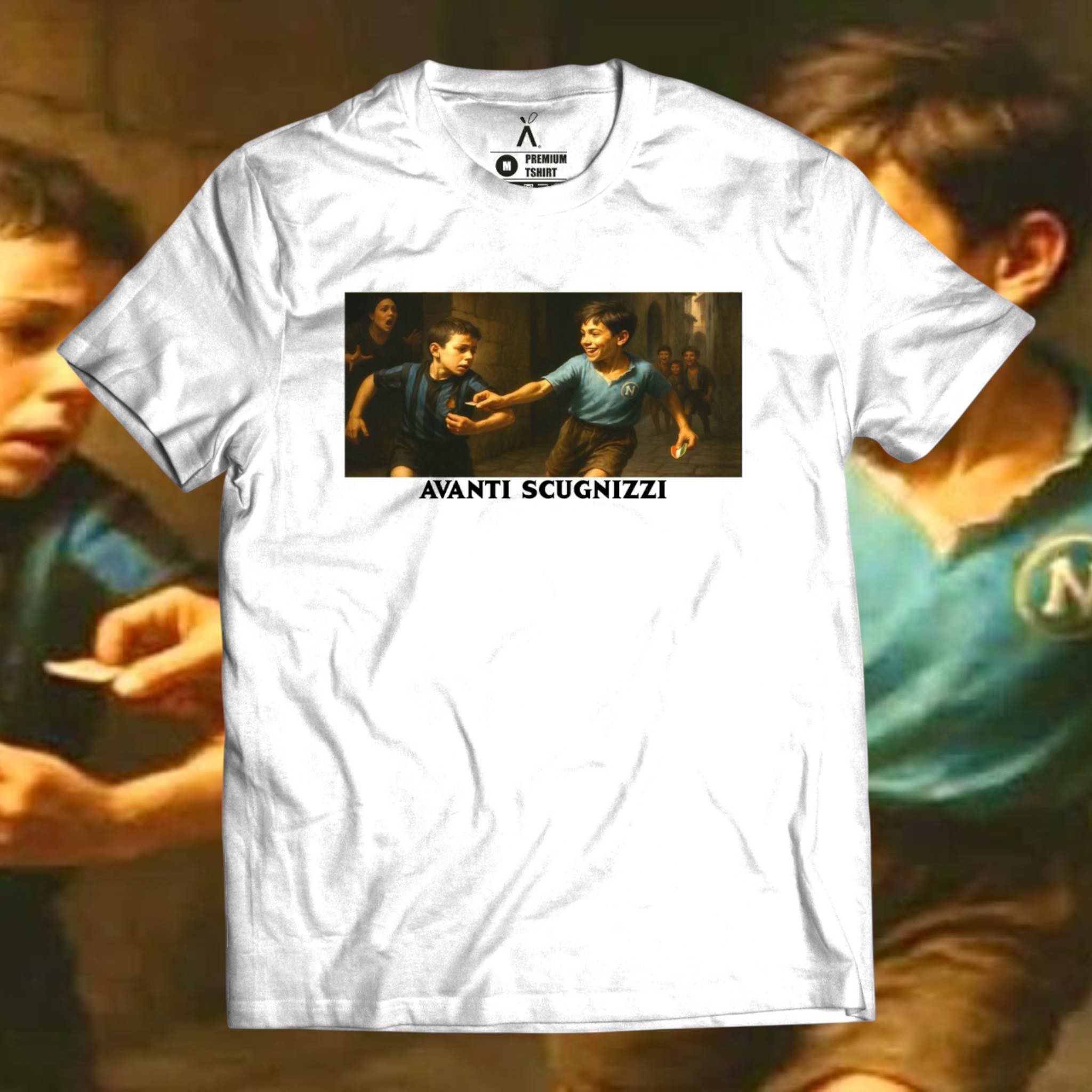 Avanti Scugnizzi: the story of the year's most loved T-shirtRead more
One word, ‘scugnizzo’ (Neapolitan street kid), and it holds the whole of Naples inside it. We tell you how the year's...
-
 'Chi chiagne fotte a chi ride': what it means and why it's truer than everRead more
At the market, at the counter, in the family: there's always someone who complains and gets more. It's the sharp...
-
 San Gennà, futtatenne! (Saint Januarius, don't worry about it!) San Gennaro, 19 September and the patron saint's t-shirtRead more
Who San Gennaro was, the miracle of the blood that liquefies, and the feast on 19 September. Plus that close,...
-
 'O purpo se coce int'a ll'acqua soja: what it means (o purpo se coce meaning)Read more
Someone has wronged you, and instead of reacting, you wait in silence with a smile? Here's the Neapolitan proverb...
-
 Cazzimma: meaning, origin and why it can't be translatedRead more
There's a word that explains everything in Naples and can't be translated into any language. It's called cazzimma,...
-
 Who is Minollo? Totoro speaks NeapolitanRead more
He's not an animal, and he wasn't born in Naples. But like everyone who passes through here, he stayed.
Blog categories
Search in blog
Archived posts
'Chi chiagne fotte a chi ride': what it means and why it's truer than ever
Imagine the scene: you're at the till in an office, you've been waiting in silence for half an hour, polite, with a smile plastered on your face. Then along comes someone who barges in huffing, raises their voice, complains about everything and everyone… and gets served before you. In that moment, deep inside, a little Neapolitan voice whispers an ancient truth: chi chiagne fotte a chi ride (‘he who cries cheats he who laughs’).
It's one of those proverbs that in Naples we know before we can even walk. Cynical? Perhaps. But anyone who has ever survived a queue, a negotiation or a residents' meeting knows that, nine times out of ten, that's exactly how it works.
What does "chi chiagne fotte a chi ride" mean
Translated literally: 'he who cries cheats he who laughs'. The meaning lies in a small, ruthless philosophy of life: those who complain, who play the victim, who display suffering (real or feigned) get more than those who stay quiet and good-natured with a smile on their lips.
The proverb captures a universal human dynamic: those who protest loudly attract attention, sympathy and advantages; those who accept everything calmly are often taken for granted. It's not a celebration of playing the victim, mind you: it's more of a bitter, wry observation, a very Neapolitan way of saying 'that's how the world works, let's keep it in mind'.
It should be used with a touch of irony. When you say it, you're not really inviting someone to whinge: you're pointing out, with a half-smile, that whoever complained has walked away with the result. It's a compliment when you recognise someone's cunning; it's gentle criticism when you realise that you, ever the quiet one, have been left empty-handed.
Where it comes from
Like many Neapolitan proverbs, this expression has no 'birth date' or precise author: it's popular wisdom passed down by word of mouth, from generation to generation, in the alleyways, workshops and kitchens.
The most common theory is that it arose from everyday observation of street life and trade: in a city historically crowded, where getting something often meant knowing how to bargain, those who showed need and insistence won better terms. The verb chiagnere (to cry) should here be understood in a broad sense: to complain, to protest, to play the part of the worse-off.
Some say the proverb also reflects a certain Neapolitan fatalism, that ability to read power dynamics with clear-eyed disenchantment. But these are, of course, interpretations: the beauty of popular sayings is precisely that they belong to everyone and no one, and no one can claim to have invented them.
How to use "chi chiagne fotte a chi ride"
Here are a few examples to help you use it with the right cadence:
- "Hê visto? S'è lamentato mez'ora e l'hanno cagnato 'o telefono gratis. Chi chiagne fotte a chi ride!" (Did you see that? He complained for half an hour and they replaced his phone for free. He who cries cheats he who laughs!)
- "Io stongo zitto e bbuono e nun ottengo maje niente. Aggia 'mparà a chiagnere pur'io." (I keep quiet and well-behaved and I never get anything. I need to learn to complain too.)
- "Nun te fà truvà semp'accussì gentile, ca chi chiagne fotte a chi ride." (Don't always be so kind, because he who cries cheats he who laughs.)
- "Muglierema ha fatto 'na faccia 'e sofferenza e 'o capo l'ha dato 'e fferie ca vuleva. Overo, chi chiagne fotte a chi ride." (My wife pulled a suffering face and the boss gave her the holiday she wanted. It's true, he who cries cheats he who laughs.)
And a little dialogue, the kind you hear at the bar:
- "Ma comme, tu ê avuto 'o sconto e io no?" (How come you got the discount and I didn't?)
- "Embè, tu ririve e io me lamentavo. Chi chiagne fotte a chi ride, caro mio!" (Well, you were laughing and I was complaining. He who cries cheats he who laughs, my dear!)
Why we put it on a T-shirt
Because this proverb is Naples in five words: irony, realism and that ability to laugh at life's unwritten rules. It's never pure malice; it's cunning told with a crooked smile, the same one you hear when someone says it while shaking their head.
We liked the idea of wearing it as a small statement of philosophy: a reminder for quiet friends who ought to stand up for themselves more, and a knowing wink for those who have already worked out how the world turns. That's why we designed with love the "Chi chiagne fotte a chi ride" T-shirt, for anyone who wants to wear a little piece of Neapolitan wisdom without having to explain too much.
It's the perfect piece to wear when you're off to negotiate something, or simply when you want to remind yourself that every now and then it's fine to complain a little too. With elegance, of course, and always with that half-smile that Naples never runs out of.
If you enjoyed this word, know that there are many more waiting to be told. Take a look through our T-shirts dedicated to Naples and dialect and find the proverb that suits you best.
Posted in:
Neapolitan Spirit
Related posts
-
‘L’acqua è poca e ‘a papera nun galleggia’: what it means
When the means are few, so is the result. Let's discover the most realistic Neapolitan saying there is.Read more
-
San Gennà, futtatenne! (Saint Januarius, don't worry about it!) San Gennaro, 19 September and the patron saint's t-shirt
Who San Gennaro was, the miracle of the blood that liquefies, and the feast on 19 September. Plus that close,...Read more
-
'O purpo se coce int'a ll'acqua soja: what it means (o purpo se coce meaning)
Someone has wronged you, and instead of reacting, you wait in silence with a smile? Here's the Neapolitan proverb...Read more
-
Cazzimma: meaning, origin and why it can't be translated
There's a word that explains everything in Naples and can't be translated into any language. It's called cazzimma,...Read more
-
 Carnival in Campania Between Culture and Tradition
This cultural phenomenon has roots in classical tradition, but in Napoli it has been interpreted in light of the...Read more
Carnival in Campania Between Culture and Tradition
This cultural phenomenon has roots in classical tradition, but in Napoli it has been interpreted in light of the...Read more
Leave a comment