



Quando l'aria si fa frizzantina, a Napoli non si tira fuori solo la felpa: si tira fuori un pezzo di identità. Ecco...
Latest posts
-
 Felpe napoletane: la guida allo stile dell'autunno 2026Read more
 -
 Maradona Stadium: City Council allocates €50 million for Euro 2032Read more
The City Council has allocated €50 million for the redevelopment of the Diego Armando Maradona stadium, ahead of...
-
 Pizza Maxima 2026: Franco Pepe Is Once Again Best Pizzeria in ItalyRead more
At the fifth edition of Pizza Maxima, the Oscars of Italian pizza, Franco Pepe confirms his title as Best Pizzeria in...
-
 ‘L’acqua è poca e ‘a papera nun galleggia’: what it meansRead more
When the means are few, so is the result. Let's discover the most realistic Neapolitan saying there is.
-
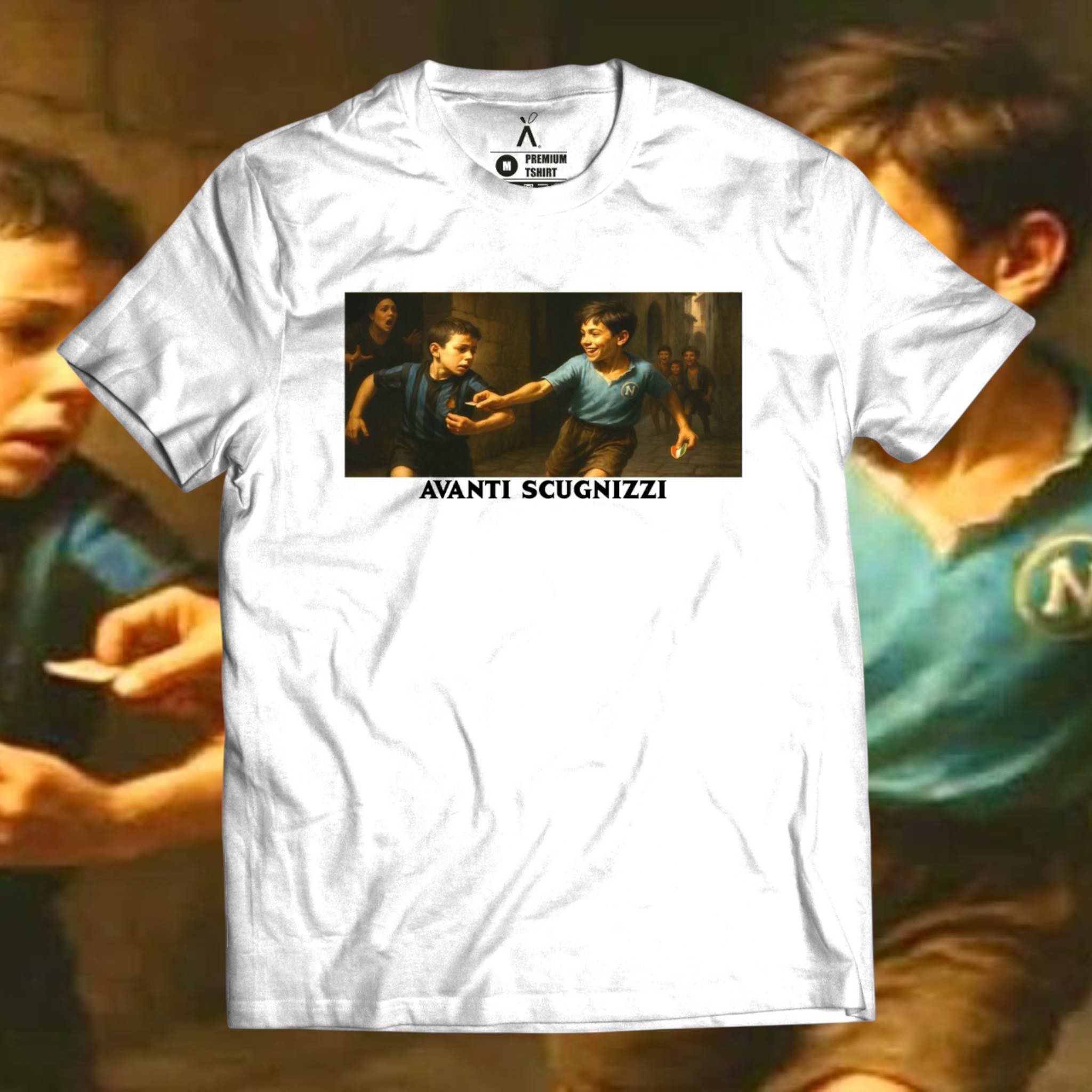 Avanti Scugnizzi: the story of the year's most loved T-shirtRead more
One word, ‘scugnizzo’ (Neapolitan street kid), and it holds the whole of Naples inside it. We tell you how the year's...
-
 'Chi chiagne fotte a chi ride': what it means and why it's truer than everRead more
At the market, at the counter, in the family: there's always someone who complains and gets more. It's the sharp...
-
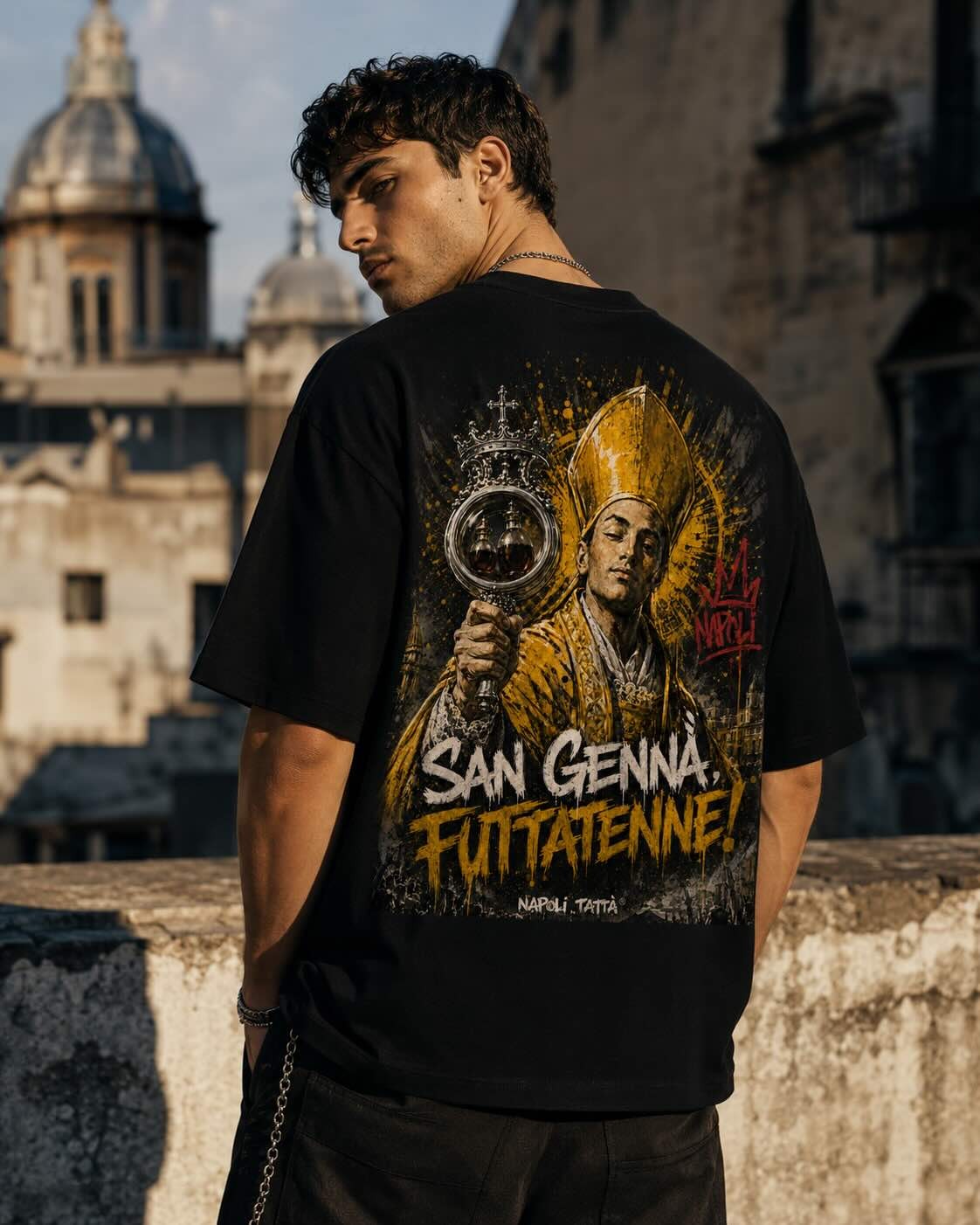 San Gennà, futtatenne! (Saint Januarius, don't worry about it!) San Gennaro, 19 September and the patron saint's t-shirtRead more
Who San Gennaro was, the miracle of the blood that liquefies, and the feast on 19 September. Plus that close,...
-
 'O purpo se coce int'a ll'acqua soja: what it means (o purpo se coce meaning)Read more
Someone has wronged you, and instead of reacting, you wait in silence with a smile? Here's the Neapolitan proverb...
-
 Cazzimma: meaning, origin and why it can't be translatedRead more
There's a word that explains everything in Naples and can't be translated into any language. It's called cazzimma,...
-
 Who is Minollo? Totoro speaks NeapolitanRead more
He's not an animal, and he wasn't born in Naples. But like everyone who passes through here, he stayed.
Blog categories
Search in blog
Archived posts
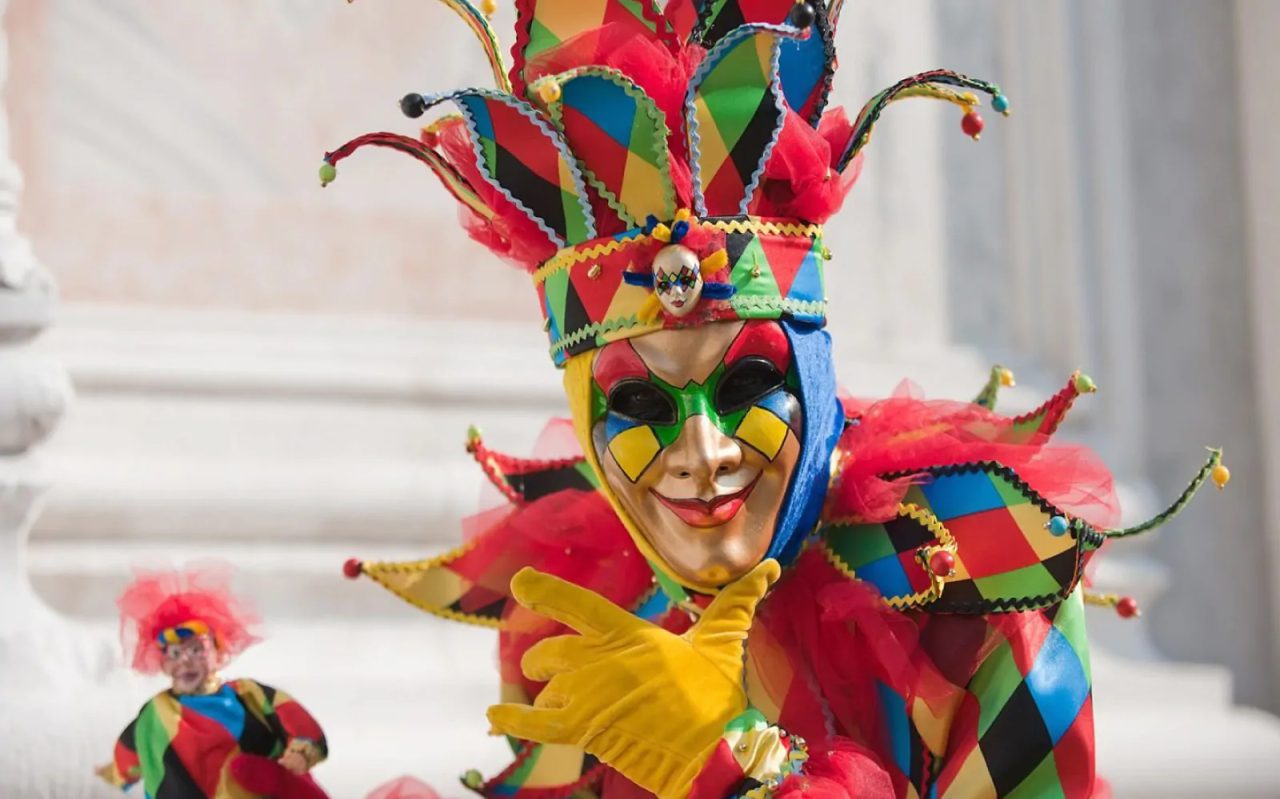
Carnival in Campania Between Culture and Tradition
Carnival 2024 in Campania promises to be wonderfully varied and engaging, offering a range of activities for all ages and needs.
Napoli's most emblematic mask is certainly Pulcinella, one of the city's most recognised symbols. As mentioned earlier, Pulcinella is also one of the most important characters of the Commedia dell'Arte, alongside Arlecchino (Harlequin), among the most famous in the world. His distinctive costume is white, with a loose shirt and trousers, and a dark half-mask that accentuates his hooked nose, giving the character his unmistakable grotesque look. Pulcinella embodies many, often contrasting, facets of Neapolitan culture: exuberance and vitality, a leaning towards instinct and carnal pleasure, captivating and theatrical gestures, but also irony and generosity, cunning and a melancholy disenchantment.
His origins were initially attributed to classical theatre, and the name Pulcinella, derived from the Neapolitan term "Pulleceniello" (little chick), was often linked to the Oscan term "Cicirrus" (rooster). However, the creation of the character is credited to the celebrated actor Silvio Fiorillo in the early seventeenth century, when Pulcinella made his first artistic appearances. From that moment to the present day, Pulcinella has been portrayed, studied and reinterpreted by artists, writers, costume designers and actors from all over the world, even finding his way into the interpretations of the great Eduardo de Filippo and Lello Esposito, both illustrious sons of Napoli.
Pulcinella is linked to many typically Neapolitan proverbs and sayings, such as the famous "Segreto di Pulcinella" (Pulcinella's secret), referring to a truth known to everyone but kept hidden all the same. In fact, the spirit of Pulcinella can be traced through all the great examples of Neapolitan character, from the captivating performances of Troisi to the melancholy ballads of the early songs of Pino Daniele, to name just a few examples. It is a mask in constant evolution, which for centuries has embodied and represented the moods and spirit of the Neapolitan people.

The Tartaglia mask is one of the most interesting and distinctive masks of Neapolitan Carnival. According to the historian Riccoboni, the mask was introduced in the mid-seventeenth century and made famous by the comic actor Cioppo. What makes Tartaglia so particular is his origin as a caricature of servants who preferred to rely on their own make-up rather than wearing a mask. This gives the figure of Tartaglia a touch more realism, keeping him anchored in everyday life.
At first, the character of Tartaglia had several peculiar traits: baldness, a grey hat, a clean-shaven face, light blue glasses, green trousers with yellow stripes, and yellow leather shoes. But what characterised Tartaglia above all was his stutter, which gave him his name, a byword for stammering.
It was the actor Fiorelli who, around 1750, brought Tartaglia to the height of his success, introducing a few changes. The reformed Tartaglia wore short trousers, a cap and silver braid trimmings. And, above all, he was no longer just a simple servant, but often played the role of policeman, lawyer, doctor or judge. Always ambivalent, his actions ranged from helping the innocent to swindling others. In this sense, Tartaglia is seen as a kind of Robin Hood.
The story of Scaramuccia, a character steeped in comedy and theatricality, has deep roots in Neapolitan culture. This mask, brought to success by the actor Tiberio Fiorilli in the seventeenth century, portrayed a man forever caught up in quarrels and conflicts, the so-called "scaramucce" (skirmishes). His figure draws inspiration from ancient theatrical traditions, such as Plautus's character of the Miles gloriosus, a boastful soldier who bragged about great deeds but who, in reality, was always destined for defeat. Scaramuccia, with his vainglorious, lying character, presented himself as a hero of impressive feats, yet in reality he constantly failed in his exploits. This type of theatrical character enjoyed enormous success even beyond Italy's borders, to the point of being adopted by French theatre under the name Scaramouche and masterfully performed by the celebrated Molière. Scaramuccia's original costume consisted of an all-black outfit, set off by a large hat and a sword.
However, Fiorilli made changes to the character, heightening the caricature element by introducing a cap and a guitar. This latter addition further underlined Scaramuccia's fondness for "cantar balle" (literally "singing tall tales"), that is, telling fanciful and often baseless stories. The Scaramuccia mask delighted audiences with its liveliness and grotesque spirit, becoming one of the best-loved and most recognisable characters of Neapolitan theatrical tradition.
Despite the passing of the centuries, his memory has endured, and his name is still associated with a love of theatre and the vivacity typical of Neapolitan culture.
Carnival in Campania: the most beautiful floats
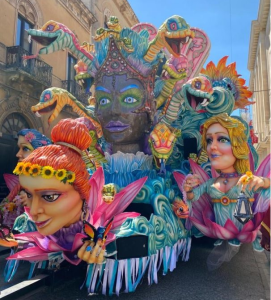
- The Carnival of Palma Campania (Na)
- The Neapolitan Carnival (Na)
- The Carnival of Saviano (Na)
- The Carnival of Striano (Na)
- The Carnival of Scampia (Na)
- The Grand Carnival of Maiori (Sa)
- The Carnival of Agropoli (Sa)
- The Carnival of Montemarano (AV)
- The Carnival of Casteltevere sul Calore (AV)
- The Carnival of Capua (Ce)
- The Carnival of Caserta (Ce)
Posted in:
Neapolitan Spirit
Related posts
-
‘L’acqua è poca e ‘a papera nun galleggia’: what it means
When the means are few, so is the result. Let's discover the most realistic Neapolitan saying there is.Read more
-
'Chi chiagne fotte a chi ride': what it means and why it's truer than ever
At the market, at the counter, in the family: there's always someone who complains and gets more. It's the sharp...Read more
-
San Gennà, futtatenne! (Saint Januarius, don't worry about it!) San Gennaro, 19 September and the patron saint's t-shirt
Who San Gennaro was, the miracle of the blood that liquefies, and the feast on 19 September. Plus that close,...Read more
-
'O purpo se coce int'a ll'acqua soja: what it means (o purpo se coce meaning)
Someone has wronged you, and instead of reacting, you wait in silence with a smile? Here's the Neapolitan proverb...Read more
-
Cazzimma: meaning, origin and why it can't be translated
There's a word that explains everything in Naples and can't be translated into any language. It's called cazzimma,...Read more
Leave a comment