



Bourbon lilies and De Crescenzo's little red horse: the story of the symbols of the Regno delle Due Sicilie and of a...
Latest posts
-
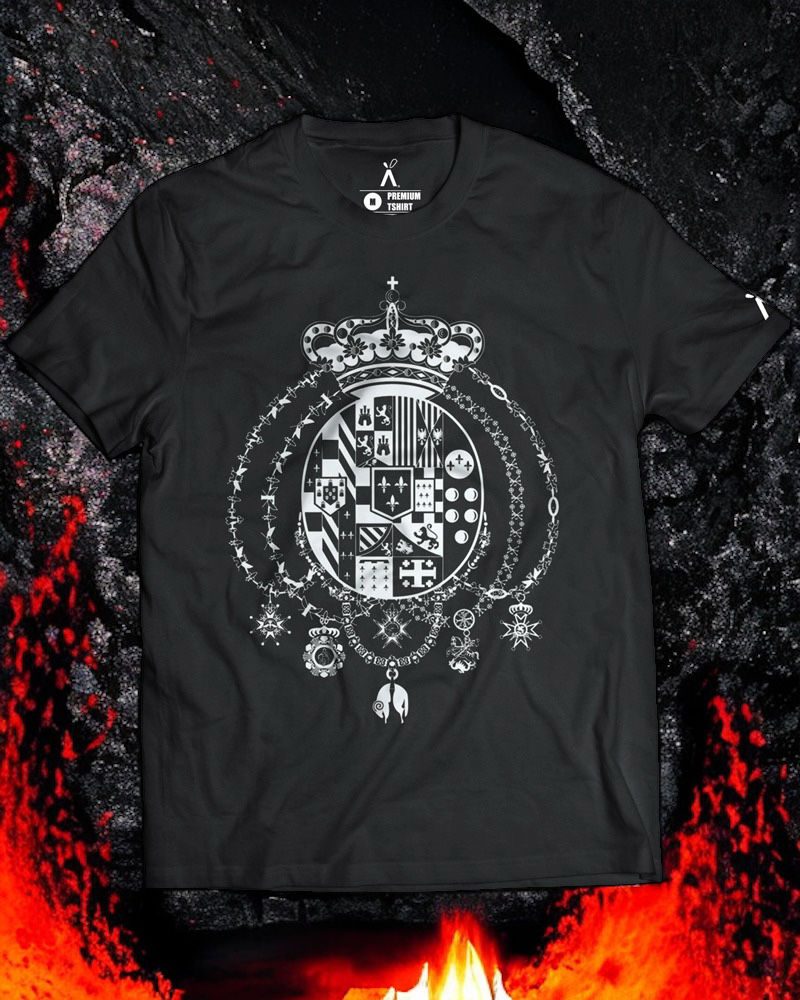 Regno delle Due Sicilie, the symbols: Elegant Borbonic and the Cavalluccio Rosso to wearRead more
-
 'O Munaciello: the legend, the mischief and the coins under the pillowRead more
There's a noise in the old house, an object that disappears and then reappears, a coin found on the floor. In Naples...
-
 How to choose your T-shirt size (and make it last): the Tattà® guideRead more
Sizes, fabrics and prints explained plainly, with the honesty of someone who really wears 'a maglietta' (Neapolitan...
-
 Original Neapolitan graduation gift: ideas for the graduate (him and her)Read more
In Naples, a graduation is never a private affair: it's a neighbourhood celebration. Here's how to choose an original...
-
 Asso 'e mazze: meaning and history of the Neapolitan ace of clubsRead more
The strongest card on the green table becomes, in Naples, the most elegant way to say who really calls the shots....
-
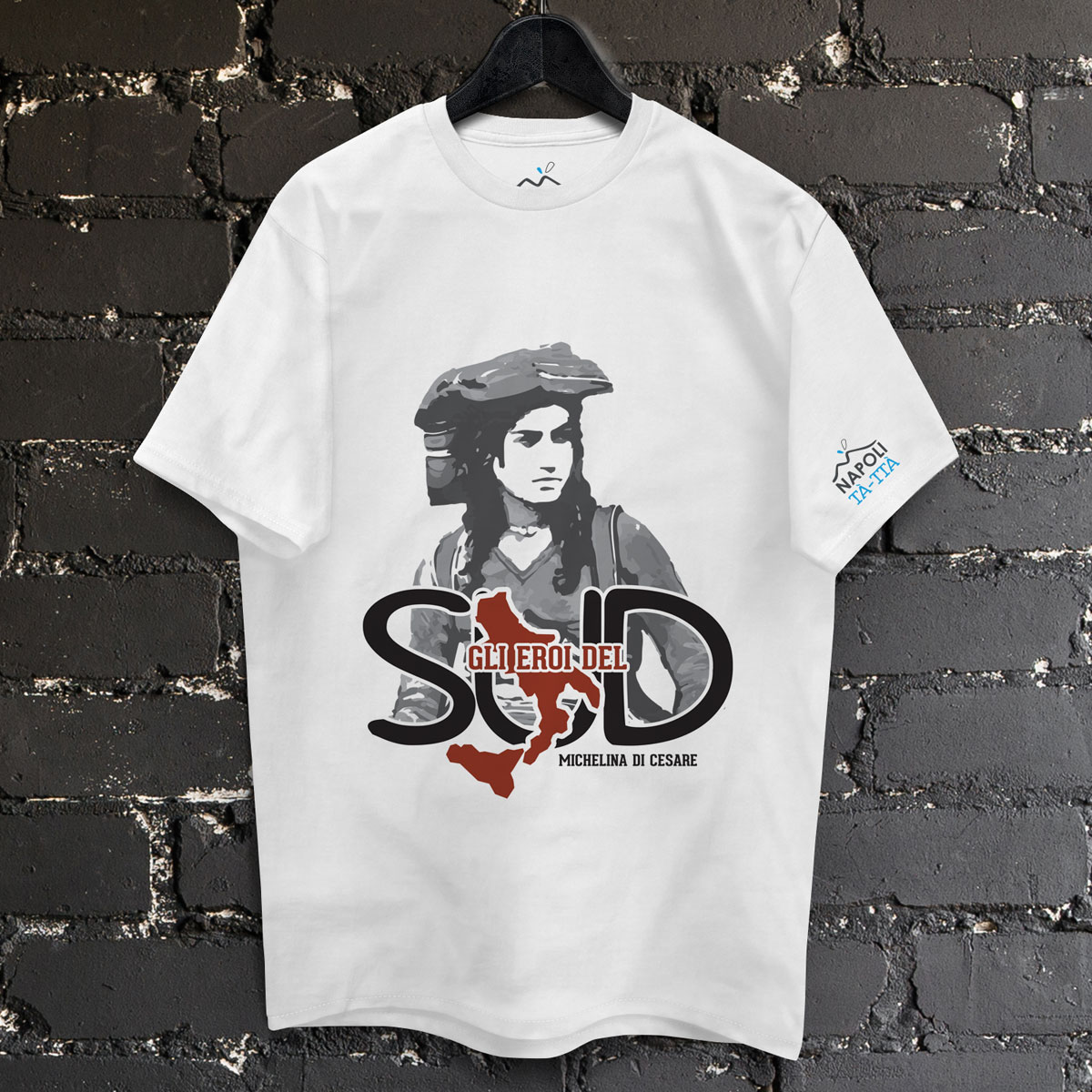 Michelina Di Cesare, the brigantessa who defied a kingdomRead more
Born poor in Terra di Lavoro, Michelina Di Cesare chose the maquis and the rifle against a newly united Italy. A...
-
 Neapolitan Hoodies: The Autumn 2026 Style GuideRead more
When the air turns crisp, in Naples people don't just reach for a hoodie: they reach for a piece of identity. Here's...
-
 Maradona Stadium: City Council allocates €50 million for Euro 2032Read more
The City Council has allocated €50 million for the redevelopment of the Diego Armando Maradona stadium, ahead of...
-
 Pizza Maxima 2026: Franco Pepe Is Once Again Best Pizzeria in ItalyRead more
At the fifth edition of Pizza Maxima, the Oscars of Italian pizza, Franco Pepe confirms his title as Best Pizzeria in...
-
 ‘L’acqua è poca e ‘a papera nun galleggia’: what it meansRead more
When the means are few, so is the result. Let's discover the most realistic Neapolitan saying there is.
Blog categories
Search in blog
Archived posts
Regno delle Due Sicilie, the symbols: Elegant Borbonic and the Cavalluccio Rosso to wear
There are symbols that don’t live only in history books: they live in the signs above palazzo doorways, in ancient coins, in grandparents’ stories and, if you look closely, even in the way a Neapolitan walks with their head held high. To talk about the Regno delle Due Sicilie and its emblems means telling the story of a city that for centuries was a capital, a royal court and a crossroads of the Mediterranean. And it also means understanding why, even today, those symbols end up printed on a T-shirt and become a gentle way of saying «io so’ ‘e c’cca» (Neapolitan for “I’m from here”).
Regno delle Due Sicilie: the symbols and their history
Let’s set things straight, properly. The coat of arms of the Regno delle Due Sicilie didn’t come from nowhere: it’s the result of a dynastic union and a long stratification of heraldry. The Bourbon emblem officially came into force on 21 December 1816, when Ferdinand unified the thrones of Naples and Sicily into a single kingdom. From that moment, the state heraldry gathered together the coats of arms of the various territorial and dynastic entities linked to the Royal House.
The most recognisable detail, the one almost everyone remembers, is the three golden lilies on a blue field: the lily (in French, fleur-de-lis) is the ancient emblem of the House of Bourbon, of French origin, and on its own it tells the story of the European kinship of a ruling house that left its emblems everywhere from Paris to Madrid to Naples. Around that heraldic heart, the other symbols of the lands linked to the crown were arranged. That’s why, when we talk about Bourbon symbols today, we’re not talking about just any little drawing: we’re talking about a grammar of power that has travelled through the centuries.
Anyone who loves this imagery finds its perfect synthesis in the Elegant Borbonic T-shirt: a garment that takes that courtly elegance and brings it onto everyday cotton, without dusty nostalgia and without turning history into a holy picture. It’s the eighteenth century catching the bus, you might say.
Why those symbols still matter
A common mistake is to think that Bourbon symbols are «a thing for monarchists». That’s not the case. They are, above all, the cultural heritage of a capital that for centuries produced music, architecture, science, theatre and cuisine. Wearing an emblem, in this sense, isn’t a political statement: it’s an act of memory and belonging. It’s a way of saying that Naples wasn’t just the «periphery» of something, but a centre, a court, a laboratory for the world.
Il Cavalluccio Rosso: «Dottò, scusate, ma che è successo?» (Doctor, excuse me, but what happened?)
And now we come to the other protagonist, which has nothing to do with heraldry and everything to do with Naples. Our little red horse comes from a scene in Così parlò Bellavista (So Spoke Bellavista, 1984), the film by Luciano De Crescenzo. Piazza Mercato: Salvatore (Riccardo Pazzaglia) tells an ever-growing little crowd how he foiled a mugging without even meaning to, a handkerchief in one hand and, in the other, a little plastic red horse he’d just bought for his grandson. Whoever arrives later asks whoever arrived earlier: «Dottò, scusate, ma che è successo?» (Doctor, excuse me, but what happened?). And the story starts all over again, growing a little bigger each time.
In the book, instead of the little horse, there was a ball. On screen it became a little horse, and ever since, that little horse has been Naples: a city that turns everything into theatre, that stops to listen, that transforms any old event into a story worth telling. Not a state symbol, not a coat of arms: a cheap toy held in one’s hand while telling a tale. And yet it says more about the city than many a coat of arms.
A little horse in Piazza Mercato
When De Crescenzo passed away, in July 2019, Naples bid him farewell by displaying a little red horse right there in Piazza Mercato, where that scene had been filmed. It’s a sign that certain images step out of the screen and become shared heritage, like a proverb or a song. A curious fact for anyone who loves coincidences: the horse is also the oldest civic emblem of Naples, struck on thirteenth-century coins and still found today in the coat of arms of the Metropolitan City. But our little horse doesn’t come from there: it comes from that little crowd, that question, and that smile.
From this scene comes the Il Cavalluccio Rosso unisex T-shirt: a tribute to a film that explained us to ourselves, and to a man who told the story of Naples with more affection than anyone else. You see it, you recognise it, and if you don’t recognise it, there’s a lovely story waiting to be told to you. And we’re proud to say: one of these T-shirts made its way into De Crescenzo’s own hands.
From history to the wardrobe: how to wear these symbols
The funniest part is that these two worlds — Bourbon elegance and De Crescenzo’s irony — don’t clash at all. Quite the opposite: they get along beautifully. The Elegant Borbonic is the «formal» piece, the one that brings together courtly taste and contemporary wit. The Cavalluccio Rosso, on the other hand, is the piece that wins your heart, the one that makes you smile before you’ve even explained it, perfect for anyone who already knows the punchline by heart.
- For those who love storytelling history: Bourbon elegance, with its heraldic references, is ideal for anyone who wants a garment that «tells a story» without shouting it.
- For those who love cinema and the city: the little red horse is a scene every Neapolitan knows, a sign that strikes up a conversation on the street.
- For those who want to give a gift that means something: there’s also a gentle way of sending a piece of Naples to someone far away.
On that last point: you don’t always need a T-shirt. Sometimes a handwritten thought is enough. That’s why there’s the Cavalluccio Rosso greeting card: small, but holding within it the very same scene we’ve just told you about. It’s the Neapolitan way of saying «I’m thinking of you», complete with its own little crowd.
A note of respect
We tell these symbols’ stories with affection, but also with honesty. Behind a golden lily lies centuries of real history, made of kings and ordinary people, of splendour and of wounds; behind a little plastic horse there’s a man who taught Naples to look at itself with tenderness. Wearing them doesn’t mean rewriting the past or turning the city into a caricature: it means recognising them, treasuring them, and smiling about them with that irony which, in Naples, is a form of intelligence.
If you’ve found a little of yourself in these stories, let them walk alongside you: choose the Elegant Borbonic or Il Cavalluccio Rosso, or send a thought to someone you love with the greeting card. Because the lilies of the Due Sicilie and De Crescenzo’s little horse aren’t meant to be kept behind glass: they’re worn, given as gifts, and carried around the world, with heads held high and hearts beating in dialect.
Posted in:
Neapolitan Spirit
Related posts
-
'O Munaciello: the legend, the mischief and the coins under the pillow
There's a noise in the old house, an object that disappears and then reappears, a coin found on the floor. In Naples...Read more
-
Asso 'e mazze: meaning and history of the Neapolitan ace of clubs
The strongest card on the green table becomes, in Naples, the most elegant way to say who really calls the shots....Read more
-
Michelina Di Cesare, the brigantessa who defied a kingdom
Born poor in Terra di Lavoro, Michelina Di Cesare chose the maquis and the rifle against a newly united Italy. A...Read more
-
‘L’acqua è poca e ‘a papera nun galleggia’: what it means
When the means are few, so is the result. Let's discover the most realistic Neapolitan saying there is.Read more
-
 'Chi chiagne fotte a chi ride': what it means and why it's truer than ever
At the market, at the counter, in the family: there's always someone who complains and gets more. It's the sharp...Read more
Leave a comment