



In Naples, a graduation is never a private affair: it's a neighbourhood celebration. Here's how to choose an original...
Latest posts
-
 Original Neapolitan graduation gift: ideas for the graduate (him and her)Read more
-
 Asso 'e mazze: meaning and history of the Neapolitan ace of clubsRead more
The strongest card on the green table becomes, in Naples, the most elegant way to say who really calls the shots....
-
 Michelina Di Cesare, the brigantessa who defied a kingdomRead more
Born poor in Terra di Lavoro, Michelina Di Cesare chose the maquis and the rifle against a newly united Italy. A...
-
 Neapolitan Hoodies: The Autumn 2026 Style GuideRead more
When the air turns crisp, in Naples people don't just reach for a hoodie: they reach for a piece of identity. Here's...
-
 Maradona Stadium: City Council allocates €50 million for Euro 2032Read more
The City Council has allocated €50 million for the redevelopment of the Diego Armando Maradona stadium, ahead of...
-
 Pizza Maxima 2026: Franco Pepe Is Once Again Best Pizzeria in ItalyRead more
At the fifth edition of Pizza Maxima, the Oscars of Italian pizza, Franco Pepe confirms his title as Best Pizzeria in...
-
 ‘L’acqua è poca e ‘a papera nun galleggia’: what it meansRead more
When the means are few, so is the result. Let's discover the most realistic Neapolitan saying there is.
-
 Avanti Scugnizzi: the story of the year's most loved T-shirtRead more
One word, ‘scugnizzo’ (Neapolitan street kid), and it holds the whole of Naples inside it. We tell you how the year's...
-
 'Chi chiagne fotte a chi ride': what it means and why it's truer than everRead more
At the market, at the counter, in the family: there's always someone who complains and gets more. It's the sharp...
-
 San Gennà, futtatenne! (Saint Januarius, don't worry about it!) San Gennaro, 19 September and the patron saint's t-shirtRead more
Who San Gennaro was, the miracle of the blood that liquefies, and the feast on 19 September. Plus that close,...
Blog categories
Search in blog
Archived posts
Easter for Neapolitans: cuisine and traditions
“Natale con i tuoi, Pasqua con chi vuoi” (Christmas with your family, Easter with whoever you like) says the proverb – though in Naples this simply doesn't hold true. Easter, in fact, like any self-respecting festivity, is marked by historic rites and traditions, and must be spent strictly with the family.
by Silvia Semonella
“Natale con i tuoi, Pasqua con chi vuoi” (Christmas with your family, Easter with whoever you like) says the proverb – though in Naples this simply doesn't hold true.
Easter, in fact, like any self-respecting festivity, is marked by historic rites and traditions and must be spent strictly with the family.
The processions
There are many distinctive processions, particularly typical of Holy Week: in Sorrento, after the procession of hooded figures at dawn on Friday who, dressed in white robes, follow the statue of the Madonna as she searches for Jesus, another procession follows at sunset, this time with figures dressed in black robes, for Mary's finding of her beloved dead Son. There are various processions in Piano di Sorrento, where those of the Madonna Addolorata (Our Lady of Sorrows) and the Cristo Morto (Dead Christ) take place, and those of Sant'Agnello, with the Cristo Orante nel Getsemani (Christ Praying in Gethsemane), lasting late into the night, and the Procession of the Cristo Morto on Good Friday.
The Holy Thursday tradition in Minori is also distinctive: the procession of the Battenti (Penitents), involving around a hundred people in white tunics, hooded, with thick ropes wound around their bodies. An event enriched by centuries-old chants in “tono 'e vascie” (low-key tone), a style that also caught the attention of Roberto De Simone, who described them as “canti senza compromessi con l'autorità ecclesiastica” (chants making no compromise with ecclesiastical authority) that showed “una grande autonomia culturale” (a great cultural autonomy).
In Procida, things always begin on Thursday with the procession of the hooded Apostles, organised by the Congrega dei Bianchi (Confraternity of the Whites), continuing on Friday with a parade led by the brothers of the Congrega dei Turchini (Confraternity of the Blues), capable of drawing thousands of tourists along the island's distinctive streets.
On Friday, but this time in Somma Vesuviana, a Via Crucis (Way of the Cross) takes place, boasting four centuries of history.
A ceremony held on Good Friday also takes place in Acerra, with a procession around the ramparts of the baronial castle, featuring women dressed in black, the voices of dozens of young girls and the hymn of the town band.
Traditional cuisine
Blending the sacred and the profane, Easter is represented on Neapolitan tables with countless traditional dishes: gastronomic tradition is about taste and flavour, but also “historical memory”, culture, and a celebration of love for one's homeland.
The typical Holy Thursday dish is mussel soup (‘a zuppa ‘e cozzeche), a simple dish that brings out the flavours of the splendid sea of the Gulf of Naples.
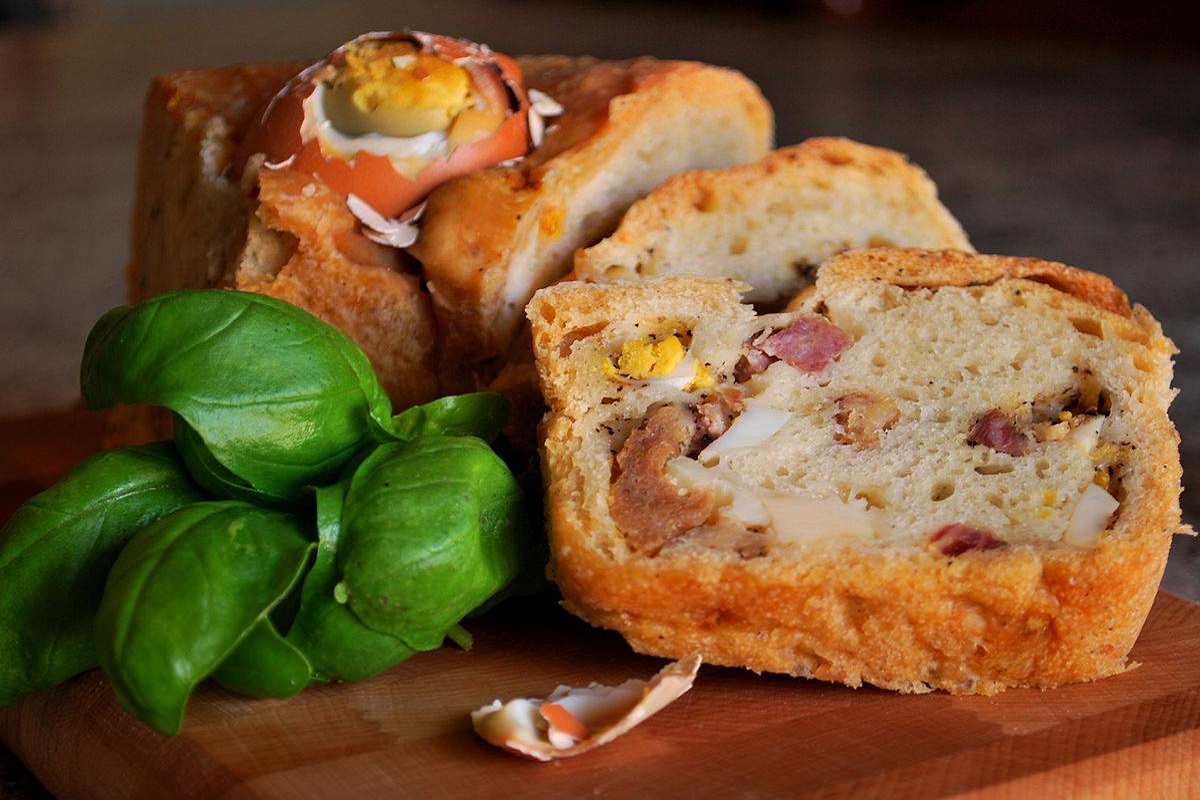
Always present on the Easter table are, of course, pizza “chiena” (“full” pizza pie), a special savoury pie with a rich and tasty filling, and, naturally, tortano (also called “casatiello” in its version decorated with hard-boiled eggs), a rustic ring-shaped bread made with lard worked into the base dough and filled generously with cured meats and cheeses. Tortano generally accompanies all three days of Easter: excellent for lunch (or dinner) on Easter Eve, it's often served alongside the “fellata” and is the star dish of the Easter Monday countryside outing.
The “fellata”, in turn, is a triumph of cured meats: salami, capocollo, lonza, prosciutto crudo and cotto. Some even add to this already rich platter a complementary one made up of various types of cheese, including salted ricotta. The fellata can be served as a starter, alongside casatiello and other savoury pies, or after the main course.
Other stars of the table are kid goat and the so-called “mammarelle”, that is, artichokes.
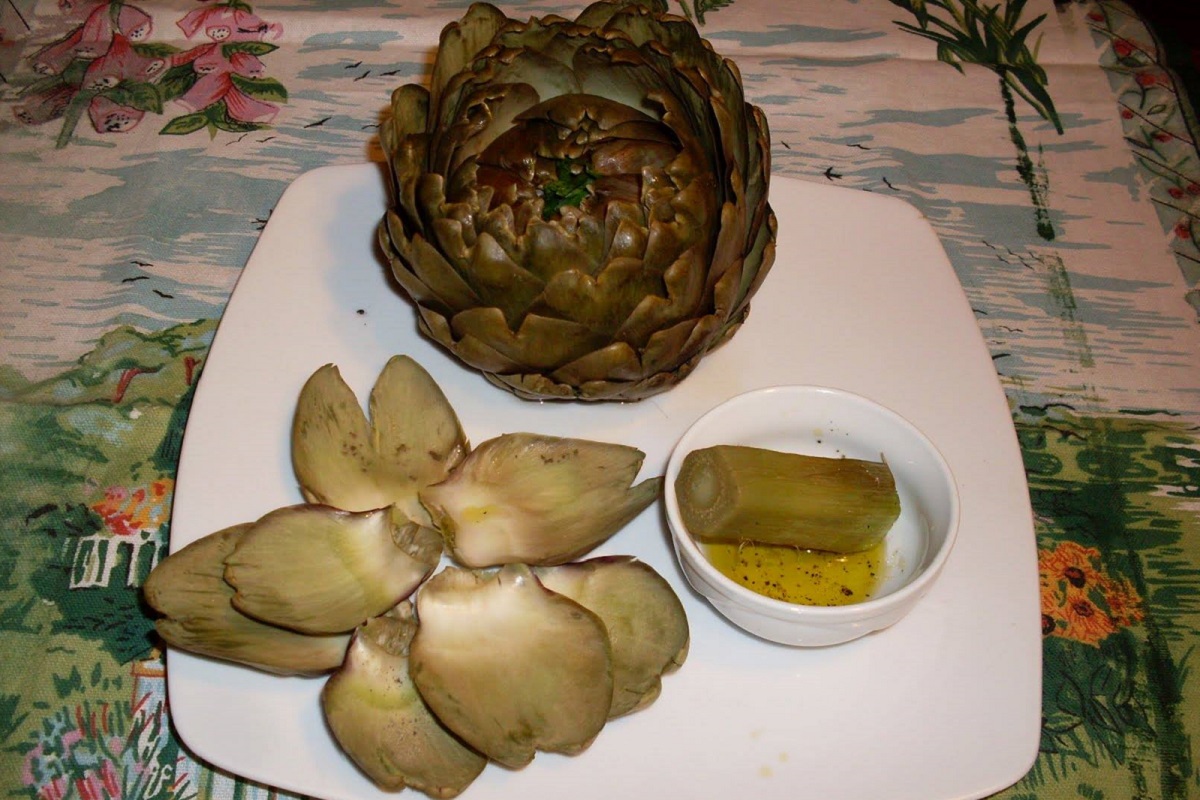
Kid goat is the typical main course found on Neapolitan tables on Easter Sunday. It's usually oven-roasted and cooked together with potatoes and peas. To prepare it, less meaty cuts are chosen, first marinated in wine and onions for 6-7 hours, then arranged in a baking tray, surrounded by potatoes cut into pieces. Oil, salt and pepper are added, and it goes into the oven. When the oil begins to sizzle, the wine is added, and halfway through cooking, the peas as well.
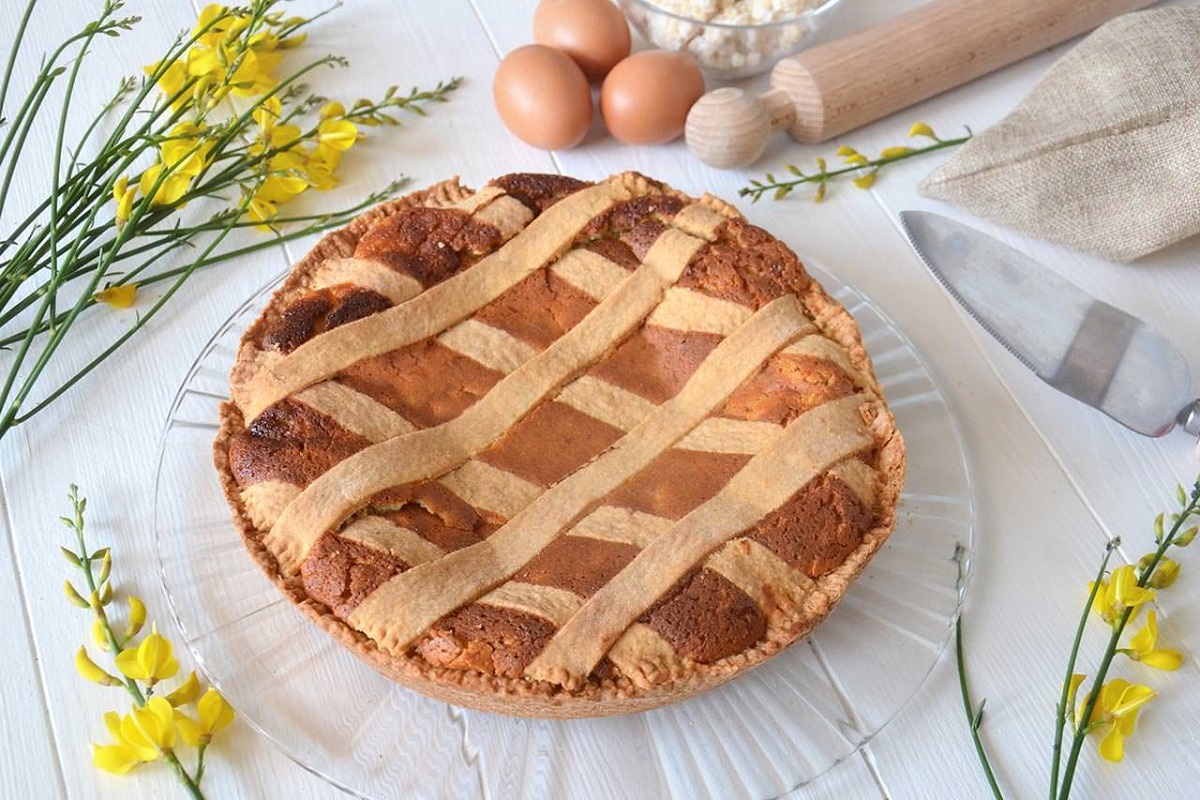
Every self-respecting festivity demands its own traditional sweet, and Naples honours Easter with an exceptional dessert: pastiera, the undisputed queen of homemade cakes. It's the sweet that accompanies the whole festive period: it keeps the family busy all through the pre-Easter week with its lengthy preparation, and is then enjoyed right through Easter Monday (and beyond).
Easter Monday
A mention of honour is also due to the lunch of Lunedì in Albis (Easter Monday), the day when, by tradition, people set off for a countryside outing. The Easter Monday picnic lunch simply must include a good slice of tortano, as mentioned, the leftover cured meats, a hearty slice of pastiera, and the irresistible pasta frittata, which can be plain or with tomato sauce, made with long or short pasta, according to taste.
The result is always guaranteed to please!
Posted in:
Neapolitan Spirit
Related posts
-
Asso 'e mazze: meaning and history of the Neapolitan ace of clubs
The strongest card on the green table becomes, in Naples, the most elegant way to say who really calls the shots....Read more
-
Michelina Di Cesare, the brigantessa who defied a kingdom
Born poor in Terra di Lavoro, Michelina Di Cesare chose the maquis and the rifle against a newly united Italy. A...Read more
-
‘L’acqua è poca e ‘a papera nun galleggia’: what it means
When the means are few, so is the result. Let's discover the most realistic Neapolitan saying there is.Read more
-
'Chi chiagne fotte a chi ride': what it means and why it's truer than ever
At the market, at the counter, in the family: there's always someone who complains and gets more. It's the sharp...Read more
-
San Gennà, futtatenne! (Saint Januarius, don't worry about it!) San Gennaro, 19 September and the patron saint's t-shirt
Who San Gennaro was, the miracle of the blood that liquefies, and the feast on 19 September. Plus that close,...Read more
Leave a comment