



A car braking suddenly, a hefty bill, unexpected news: from the mouth of a Neapolitan, out it comes. "Cara matre"...
Latest posts
-
 Cara matre: meaning and why it's the most Neapolitan exclamation there isRead more
-
 Neapolitan Tombola: the history, the panariello and the 90 numbers of the SmorfiaRead more
Neapolitan tombola is the family ritual of the festive season: from the panariello (the basket used to draw the...
-
 Hoodie or T-shirt? Ten gifts under 40 euros for Naples loversRead more
There's always that moment when you need to find a gift and your budget says one thing while your heart says another....
-
 Stai sciuoto: the meaning and use of 'stay loose', and why we love it so muchRead more
A friend sees you tense and gives you a "Stai sciuoto!" (stay loose!) with a pat on the shoulder. In those two words...
-
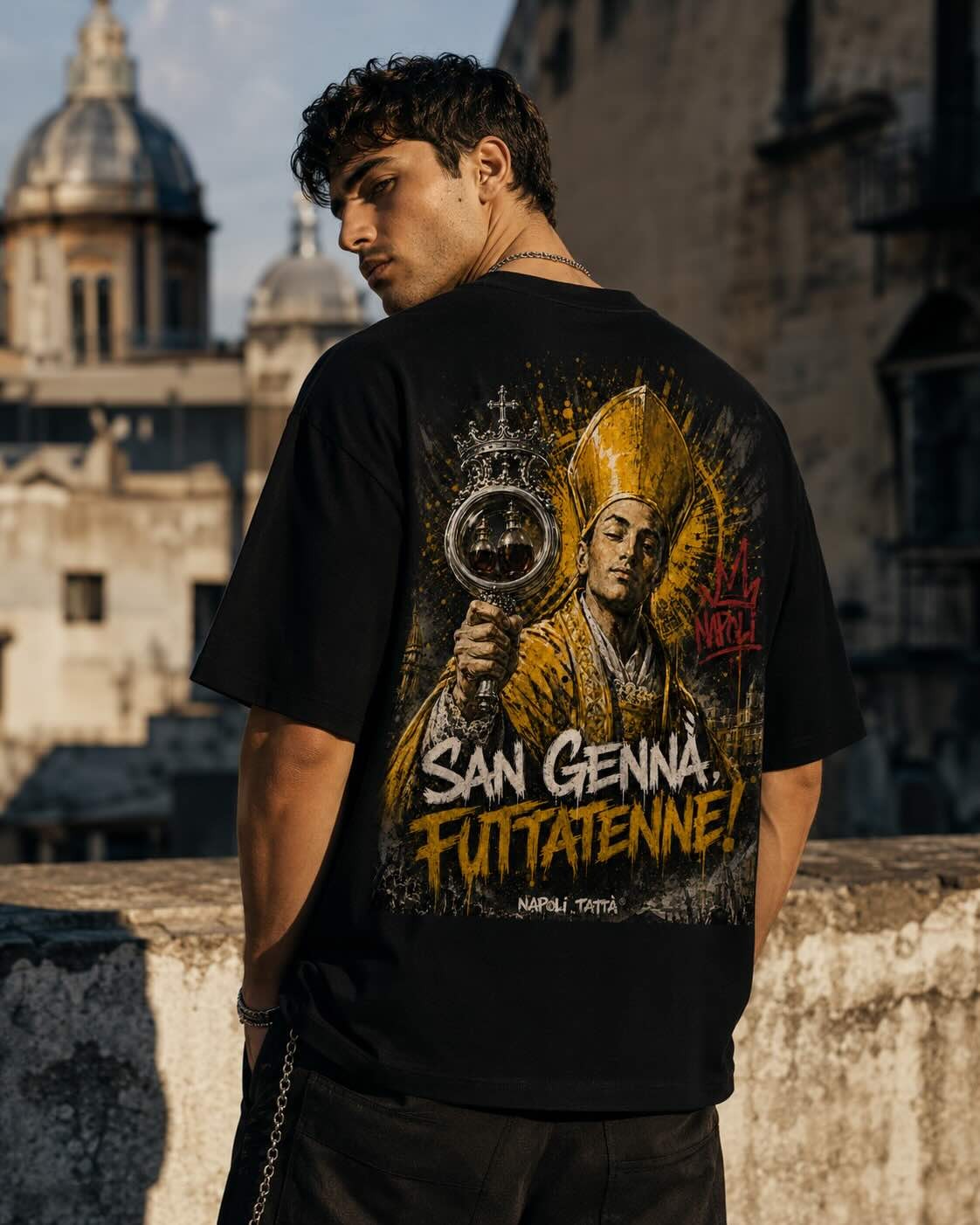 Neapolitan Christmas gifts: the definitive 2026 guideRead more
The longest guide of the year to get your gift right: ideas sorted by recipient and budget, with Neapolitan spirit...
-
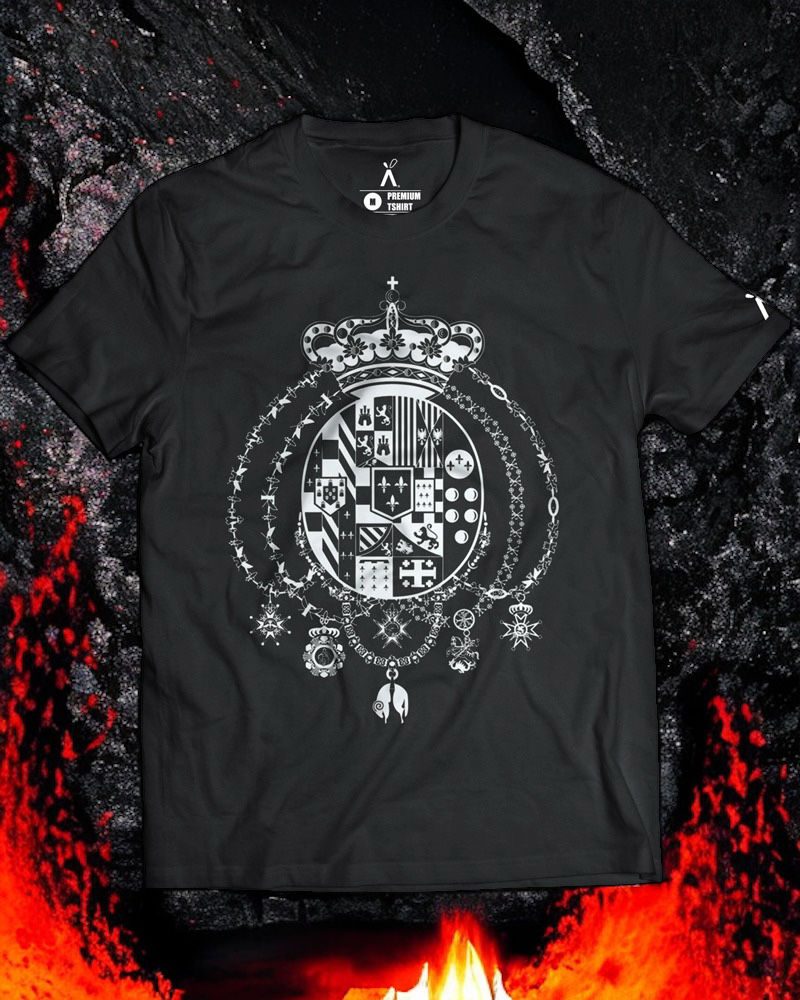 Regno delle Due Sicilie, the symbols: Elegant Borbonic and the Cavalluccio Rosso to wearRead more
Bourbon lilies and De Crescenzo's little red horse: the story of the symbols of the Regno delle Due Sicilie and of a...
-
 'O Munaciello: the legend, the mischief and the coins under the pillowRead more
There's a noise in the old house, an object that disappears and then reappears, a coin found on the floor. In Naples...
-
 How to choose your T-shirt size (and make it last): the Tattà® guideRead more
Sizes, fabrics and prints explained plainly, with the honesty of someone who really wears 'a maglietta' (Neapolitan...
-
 Original Neapolitan graduation gift: ideas for the graduate (him and her)Read more
In Naples, a graduation is never a private affair: it's a neighbourhood celebration. Here's how to choose an original...
-
 Asso 'e mazze: meaning and history of the Neapolitan ace of clubsRead more
The strongest card on the green table becomes, in Naples, the most elegant way to say who really calls the shots....
Blog categories
Search in blog
Neapolitan Tombola: the history, the panariello and the 90 numbers of the Smorfia
There are evenings, between Christmas and the Epiphany, when all of Naples sits down around the same table. Outside it's cold, inside there's the smell of struffoli (fried honey-coated dough balls) and mandarins, and someone — usually the uncle with the loud voice — picks up the panariello and gives it a shake. From that moment there's no escape: the tombolata (tombola game night) begins, and nobody gets up until someone shouts tombola.
The Neapolitan tombola is no ordinary pastime: it's the family ritual of the festive season, a piece of home handed down like the presepe (nativity scene) and the ragù recipe. But first, there's a story. And this story began almost three hundred years ago, in a dispute that seems written especially for Naples.
How the Neapolitan tombola began: Carlo di Borbone and a stubborn friar
It's said that it all began in Naples in 1734. The young king Carlo di Borbone (Charles of Bourbon) wanted to bring that very Neapolitan passion for numbers and fortune under public control, to regulate it, to put it down in black and white. The man who said no to him was padre Gregorio Maria Rocco (Father Gregorio Maria Rocco), a Dominican friar well known throughout the city for his strictness, convinced that this number-gambling habit was a dangerous temptation for the souls of the faithful.
A real dispute broke out between the king and the friar. Legend has it that a thoroughly Neapolitan compromise was found: during the days of the Christmas Novena, that public game of chance was suspended, closed, silenced. And what did a people who can't do without numbers do? They brought them home. Around the table, with family, the domestic and innocent version of that passion was born: the tombola. The step from a compromise between a king and a friar to a family tradition was a short one, and it has never left since.
It's worth saying straight away, because it's the heart of the whole thing: the Neapolitan tombola is a story about celebration, about being together, about the voice of whoever is calling the numbers and the laughter of whoever is complaining. Nothing more.
The panariello, the cards and the beans: the kit for a tombola night
The tombola's arsenal is humble and perfect. There's the panariello, the wicker basket (or tin, or wooden one) into which all ninety numbers go, each on a little token or a rolled-up piece of card. You shake it, you draw, you call: it's the engine of the whole evening.
Then there are the cartelle (the number cards), those rectangles full of numbers that get handed out at the start of the game, often sold for a few cents each, just to build up a common pot. And here's where things get serious: what do you cover the numbers with as they come out? Everyone has their own school of thought. Some use dried beans, others prefer little pieces of mandarin peel — they smell lovely and are already sitting there ready on the table — and some, in the more organised families, keep chickpeas, sweetcorn kernels or buttons set aside for the purpose.
Even the children know the combinations to chase: the ambo (two numbers on the same line), the terno (three), the quaterna (four), the cinquina (five), and finally her, the tombola, when the whole card is filled. Whoever gets an ambo or a tombola shouts it out loud, and woe betide anyone who notices too late. There's always the distracted child who's covered the wrong number, the grandmother keeping an eye on three cards at once without missing a beat, and the relative who swears they've got tombola when they're still a number short. It's noise, it's chaos, and it's the most beautiful part of the festive season.
Whoever calls the numbers: the Smorfia at the table
But the Neapolitan tombola wouldn't be the same without whoever calls out the numbers. Because in Naples a number is never just a number: it has a name, a face, a story. It's the Smorfia, the great popular book of dreams, which gives a meaning to every single digit. So whoever is drawing the numbers doesn't say "twenty-three": they say the name, wait for the laugh, and only then reveal the number.
Calling the numbers with the Smorfia is a little performance in itself. Whoever is holding the panariello plays it up, teases, draws out the moment, watches the grandchildren's faces. Here's a handful of the best-loved names, the ones that always set something off at the table — an "ooh!", a laugh, a nudge in the ribs:
- 13, Sant'Antonio (Saint Anthony): the saint everyone loves, a number of devotion and homely good fortune.
- 23, 'O scemo, meaning "the fool": the moment it comes up, someone at the table instantly becomes the butt of the joke.
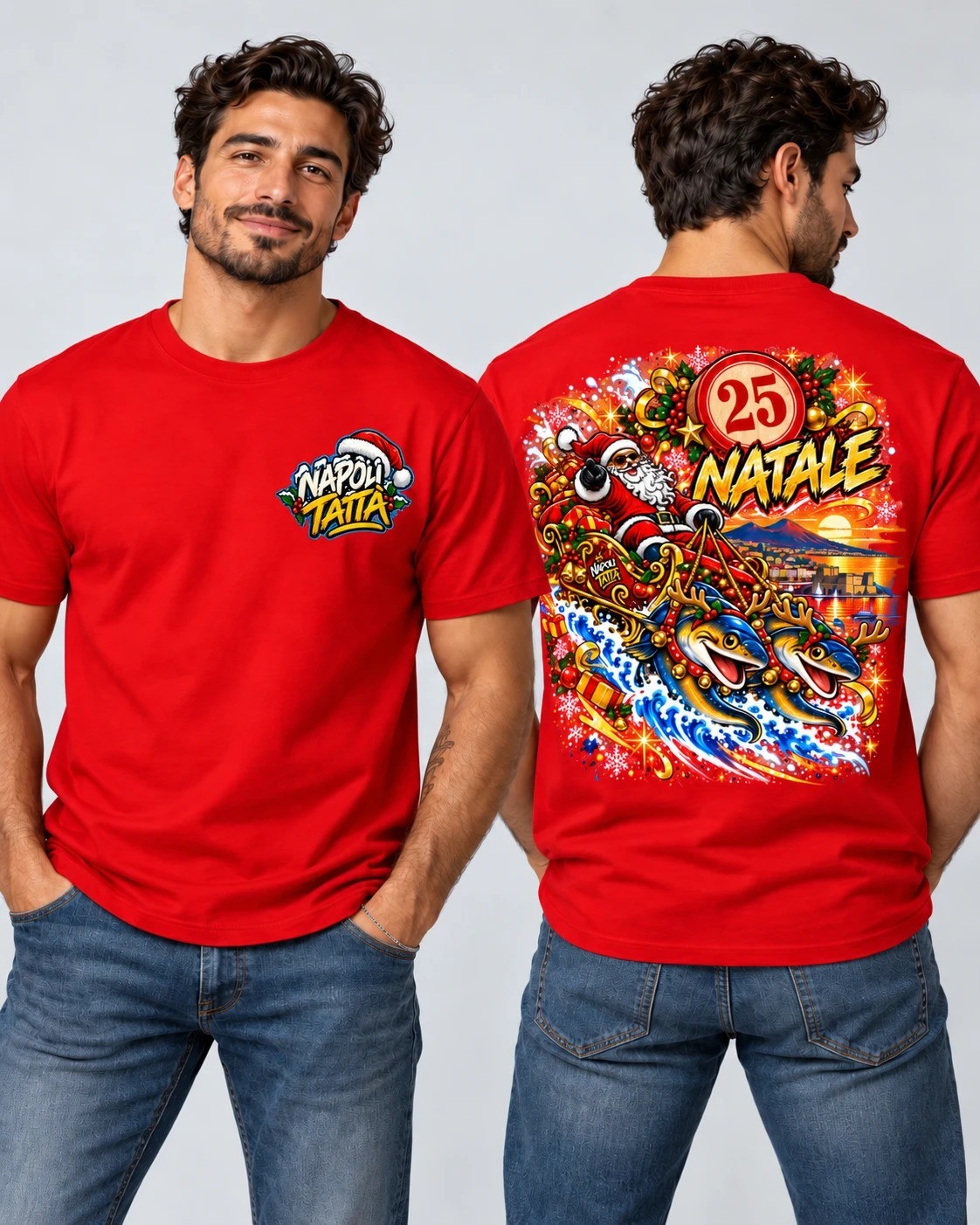
- 25, Natale (Christmas): the festive number par excellence, the one that in December seems made for the occasion.
- 29, 'O pate d''e criature, meaning "the father of the children": the head of the family, a figure both tender and respected.
- 33, Ll'anne 'e Cristo, meaning "the years of Christ": the age of Jesus, a number that in Naples carries the weight of a sacred date.
- 47, 'O muorto, meaning "the dead man": don't worry, in the Smorfia the sacred and the spooky sit side by side quite naturally.
- 48, 'O muorto che pparla, meaning "the dead man who talks": one of the most famous names of all, almost a proverb in its own right.
- 71, L'ommo 'e merda (roughly, "the rotten man"): forgive the bluntness, but the Smorfia doesn't mince its words and calls things exactly what they are.
- 77, 'E diavule, meaning "the devils": when it comes up, someone always makes the sign against bad luck.
- 90, 'A paura, meaning "fear": the last number, the one that empties the panariello and often closes the evening.
Behind each of these names there's a whole world, and it often starts life as a dream told the next morning over coffee. If you're curious how a dream turns into a number, you can have some fun with «Racconta il sogno» ("Tell your dream"): you write down what you dreamed and discover which Smorfia figure it corresponds to. A pastime of words and memory, nothing more — very much in the spirit of the tradition that brings the generations together around the same table.
The Neapolitan tombola as a gift: keeping the tradition alive
There's something beautiful in all of this: the tombola gets passed down. It travels from grandparents to grandchildren together with the battered old panariello, the presepe to be set up again every year, and the usual arguments about who cheated with the beans. It's a family tradition, and tradition wants to be worn, hung on a wall, given as a gift.
For anyone wanting to carry a piece of this warmth beyond the festive season, there's the ceramic plaster presepe (nativity scene), a little piece of Naples made of home, plaster and devotion, that keeps the hearth lit all year round. And for the colder days, when the tombola game runs on into the night, there's the cream-coloured San Lorenzo hoodie, featuring San Lorenzo Maggiore and the shepherd figurines of San Gregorio Armeno: Naples on your back, as cosy as a blanket.
It all ends on 25, with two eels and not a fish in sight
And so we come to him, the number that in December means more than any other: 25, which in the Smorfia is Natale (Christmas). It's the number that closes the circle, the one that brings us back to the table, to the cards, to the panariello going round and round. The one who brings it is a special figure: Father Christmas, who in Naples arrives the way everything arrives, from the sea.
Because in our version, the sleigh doesn't run over snow: it runs over the waves of the gulf. And it isn't pulled by just any old reindeer, but by two capitoni (eels) wearing reindeer antlers — eels, mind you, never "fish": that's the sacred dish of Christmas Eve, and a Neapolitan certainly feels the difference. This is exactly the idea behind the 25 Natale – Edizione Natale 2026 (25 Christmas – 2026 Christmas Edition): a wooden token with the number 25, the word Natale written in large letters and, below it, Father Christmas arriving from the gulf on a sleigh pulled by the two eels.
This year, when you bring out the panariello and hand round the cards, let the Smorfia tell the story of the evening: one name after another, one laugh after another. And if you'd like to bring a piece of this tradition to your own table, take a look — perhaps starting with the 25 Natale or having some fun putting a dream into words with «Racconta il sogno». Because, at the end of the day, that's what tombola is really about: sitting together, with no desire at all to get up.
Posted in:
Neapolitan Spirit
Related posts
-
Cara matre: meaning and why it's the most Neapolitan exclamation there is
A car braking suddenly, a hefty bill, unexpected news: from the mouth of a Neapolitan, out it comes. "Cara matre"...Read more
-
Stai sciuoto: the meaning and use of 'stay loose', and why we love it so much
A friend sees you tense and gives you a "Stai sciuoto!" (stay loose!) with a pat on the shoulder. In those two words...Read more
-
Regno delle Due Sicilie, the symbols: Elegant Borbonic and the Cavalluccio Rosso to wear
Bourbon lilies and De Crescenzo's little red horse: the story of the symbols of the Regno delle Due Sicilie and of a...Read more
-
'O Munaciello: the legend, the mischief and the coins under the pillow
There's a noise in the old house, an object that disappears and then reappears, a coin found on the floor. In Naples...Read more
-
Asso 'e mazze: meaning and history of the Neapolitan ace of clubs
The strongest card on the green table becomes, in Naples, the most elegant way to say who really calls the shots....Read more
Leave a comment