



From 13 Sant'Antonio to 90 'a paura (fear): a journey through the most searched Neapolitan Smorfia numbers....
Latest posts
-
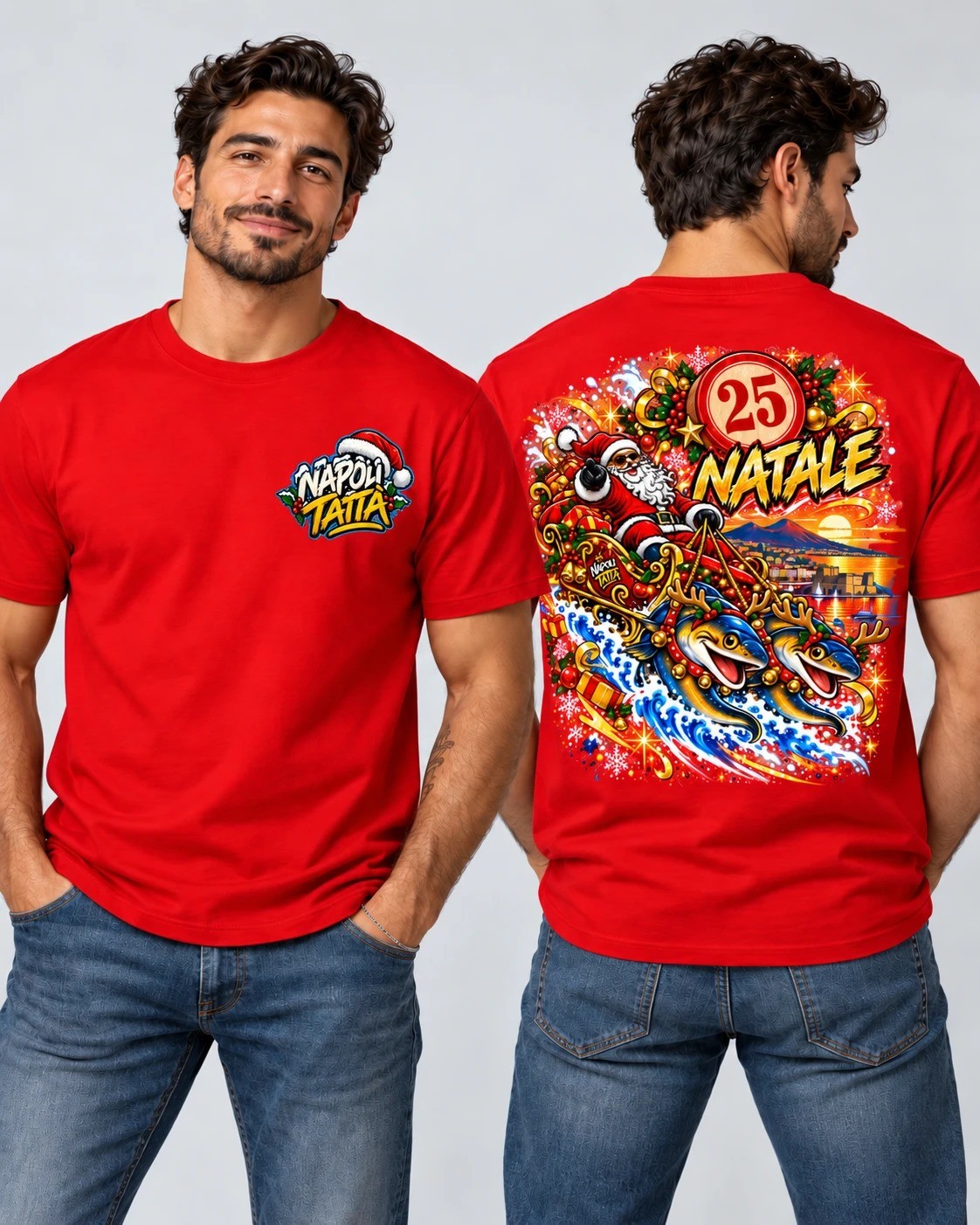 The Neapolitan Smorfia numbers everyone searches for (and what they really mean)Read more
-
 Cara matre: meaning and why it's the most Neapolitan exclamation there isRead more
A car braking suddenly, a hefty bill, unexpected news: from the mouth of a Neapolitan, out it comes. "Cara matre"...
-
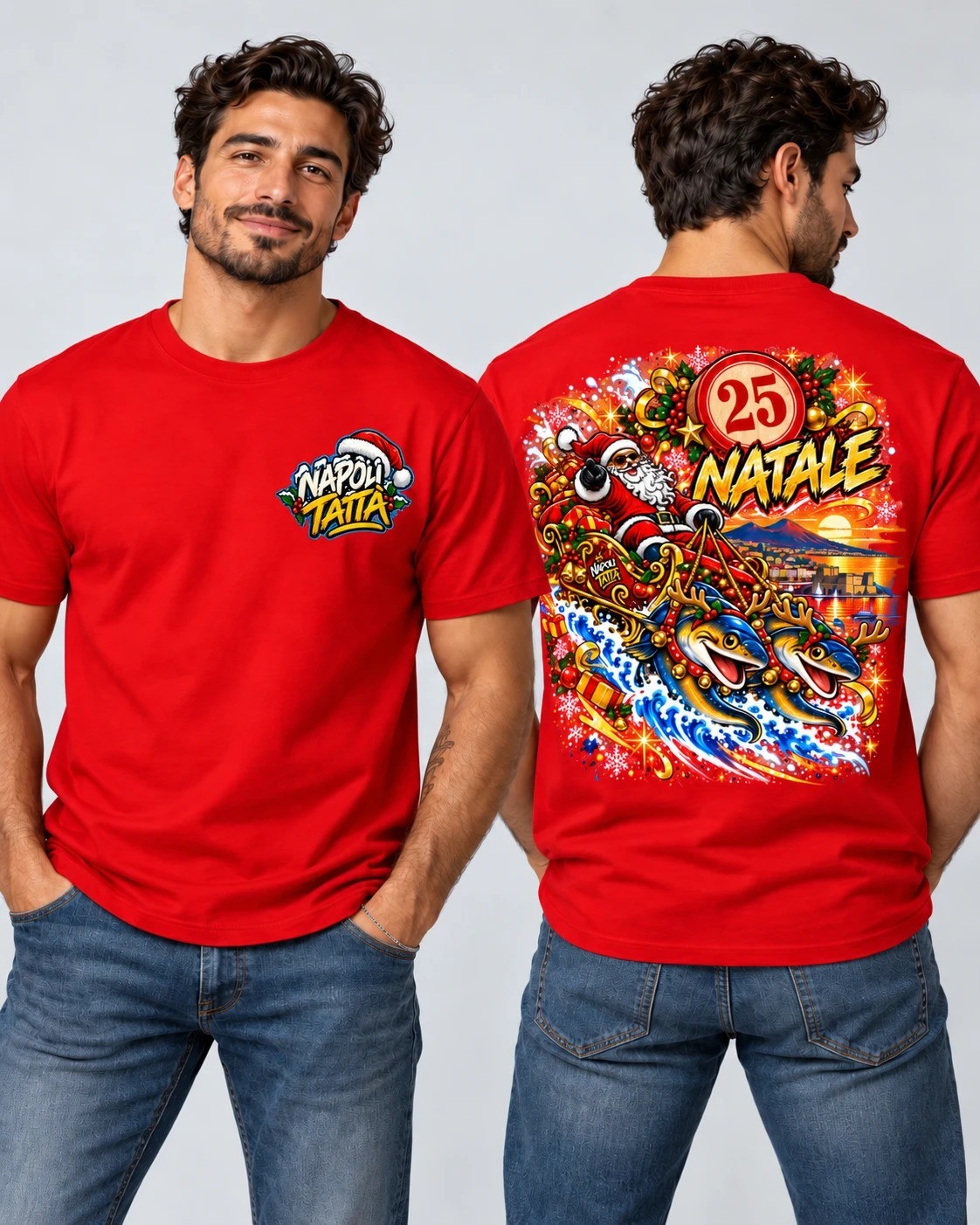 Neapolitan Tombola: the history, the panariello and the 90 numbers of the SmorfiaRead more
Neapolitan tombola is the family ritual of the festive season: from the panariello (the basket used to draw the...
-
 Hoodie or T-shirt? Ten gifts under 40 euros for Naples loversRead more
There's always that moment when you need to find a gift and your budget says one thing while your heart says another....
-
 Stai sciuoto: the meaning and use of 'stay loose', and why we love it so muchRead more
A friend sees you tense and gives you a "Stai sciuoto!" (stay loose!) with a pat on the shoulder. In those two words...
-
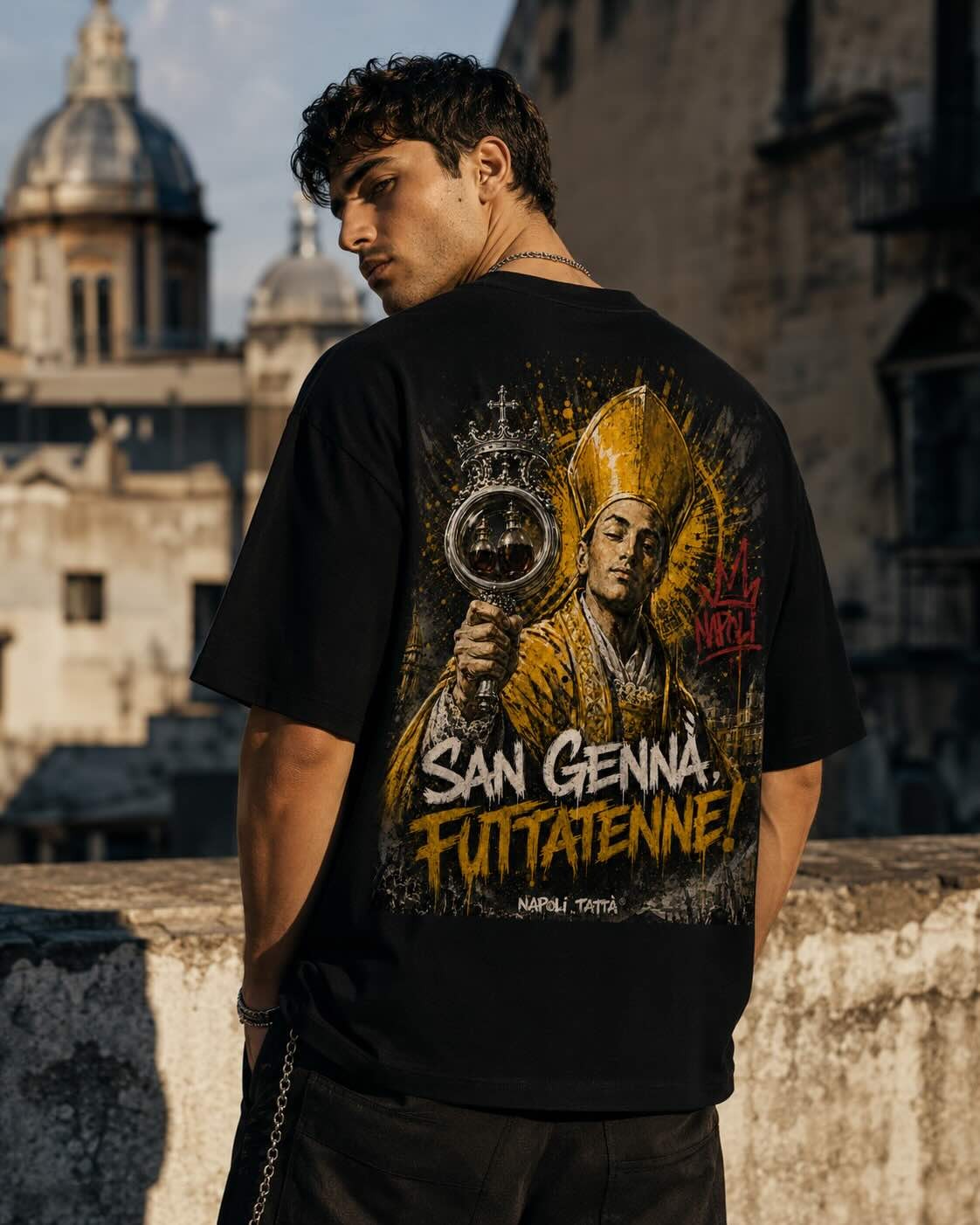 Neapolitan Christmas gifts: the definitive 2026 guideRead more
The longest guide of the year to get your gift right: ideas sorted by recipient and budget, with Neapolitan spirit...
-
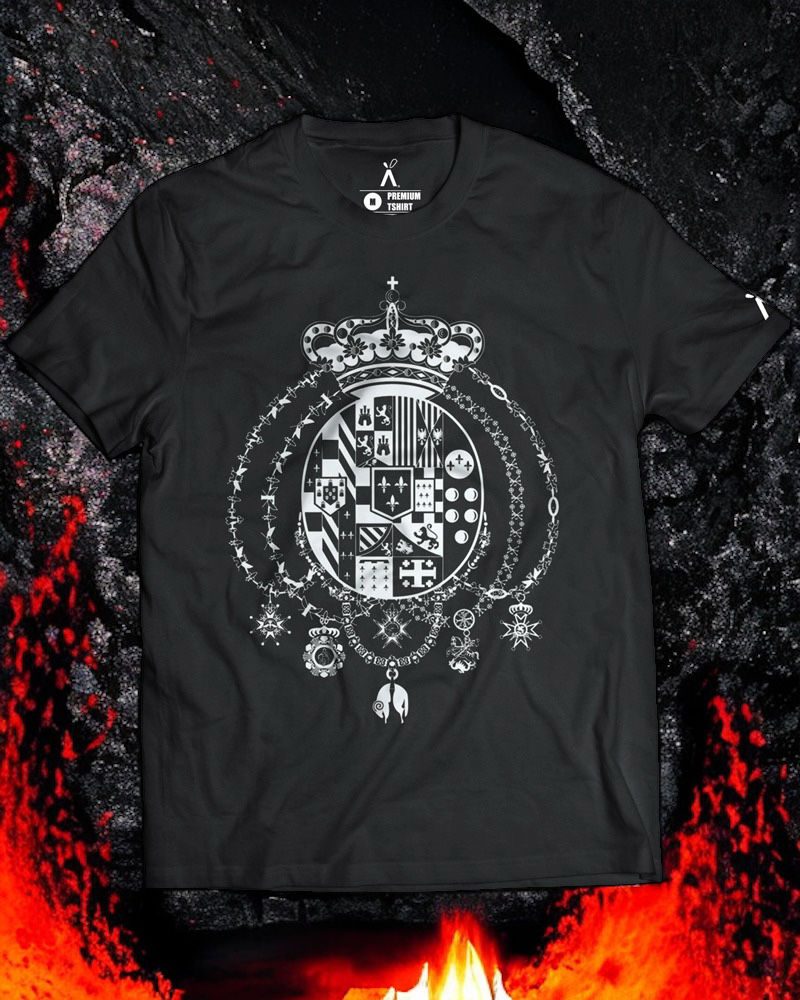 Regno delle Due Sicilie, the symbols: Elegant Borbonic and the Cavalluccio Rosso to wearRead more
Bourbon lilies and De Crescenzo's little red horse: the story of the symbols of the Regno delle Due Sicilie and of a...
-
 'O Munaciello: the legend, the mischief and the coins under the pillowRead more
There's a noise in the old house, an object that disappears and then reappears, a coin found on the floor. In Naples...
-
 How to choose your T-shirt size (and make it last): the Tattà® guideRead more
Sizes, fabrics and prints explained plainly, with the honesty of someone who really wears 'a maglietta' (Neapolitan...
-
 Original Neapolitan graduation gift: ideas for the graduate (him and her)Read more
In Naples, a graduation is never a private affair: it's a neighbourhood celebration. Here's how to choose an original...
Blog categories
Search in blog
The Neapolitan Smorfia numbers everyone searches for (and what they really mean)
There's a notebook that's never thrown away in Naples: it's the dream book. You wake up, you remember a cat, a dead relative who was speaking to you, a dark cave, and the first thing you do is run to your grandmother to have it all translated into numbers. That's what the Smorfia is: a folk dictionary that for centuries has turned the images of sleep into numbers, a bridge between what we dream at night and what we recount the next morning over coffee.
It's not magic, nor superstition to be taken seriously: it's family memory. It's the Christmas Eve game of tombola (Neapolitan bingo), with the panariello (the wicker basket the numbers are drawn from) going round, beans marking the cards, an uncle calling out the numbers in his sing-song voice, and the little nephew shouting "ambo!" (two numbers in a row) convinced he's won something big. In this article, let's get comfortable and discover the Neapolitan Smorfia numbers that everyone searches for the most: what they mean, where they come from, and in which scenes of Neapolitan life we still find them today.
What is the Smorfia (and why we still look for it)
The word "Smorfia" recalls Morpheus (Morfeo), the god of sleep and dreams: it's no coincidence that tradition links every night-time vision to a number. In Naples this language has become shared culture, handed down by word of mouth from generation to generation, inside homes and around the table at family gatherings. Today we look it up not to calculate numbers, but for the pleasure of the story: because behind every number there's a figure, a saint, a mask, a little piece of the city. It's the same spirit as the pastori (nativity figurines) of San Gregorio Armeno, where every figurine has its own story: if you love this imagery, you'll find the same soul in our hoodie dedicated to San Lorenzo and the pastori of San Gregorio Armeno.
The most searched Neapolitan Smorfia numbers, one by one
13 · Sant'Antonio
In Neapolitan dialect we affectionately call him Sant'Antuono. Translated, that's simply Sant'Antonio (Saint Anthony). In the Smorfia, 13 is Sant'Antonio, a figure linked to protection: Sant'Antonio Abate, celebrated on 17 January, is the saint of animals and fire, with the traditional bonfires that light up the winter. It's the number that disproves the bad reputation of "unlucky 13": in Naples, quite the opposite, it's considered a lucky number. Picture the old aunt who, faced with a mishap, raises her eyes to the heavens and mutters "Sant'Antuono mio, pensaci tu" (my dear Sant'Antonio, you take care of it).
21 · 'A femmena annura
The 21, 'a femmena annura, means the naked woman. It's one of the most-called numbers during tombola night, because whenever an uncle calls it out, all the kids giggle and the grandmothers pretend to be scandalised. In tradition it represents femininity, beauty, seduction. It's the number that, the moment it comes out of the panariello, is enough on its own to spark a joke around the table: in Naples, teasing about number 21 is a timeless classic of family evenings.
23 · 'O scemo
The 23, 'o scemo, is the fool, the simpleton. It's one of the most beloved figures in the repertoire, because in Naples the "scemo" is never simply an insult: often he's the one who, acting as if he didn't notice, says the truths others don't have the courage to say. He appears in countless sayings, like "fa' 'o scemo pe' nun ì' â guerra" (play the fool to avoid going to war), meaning to feign stupidity to dodge an awkward obligation. When number 23 comes up, there's always someone at the table pointing, laughing, at the most absent-minded relative in the room.
29 · 'O pate d''e criature
The 29, 'o pate d''e criature, means the father of the children, the head of the family. It's the number of the father who provides, who brings bread home, who holds the family together. In Neapolitan culture the father figure is central and respected, and this number celebrates him in his most domestic and affectionate form. Picture the father coming home in the evening with a bag of fruit and the children running to meet him: a snapshot of everyday life that number 29 carries within it.
36 · 'E ccastagnelle
The 36, 'e ccastagnelle, are the castagnette, small wooden castanets shaped like little chestnuts, played between the fingers. They're the instrument of the tammurriata and the tarantella, the rhythm of folk festivals across the South. When you think of 36, picture a village festival, the beating drum, hands clicking the castagnette, and feet that just can't stay still. It's a number that smells of tradition and music, of those Neapolitan evenings when people dance for no reason at all.
46 · 'E denare
The 46, 'e denare, is, literally, money. It's one of the most-called and most "talked about" numbers during the game, because money, as everyone knows, always sparks a debate. In the Smorfia it represents prosperity and abundance, but also the eternal Neapolitan relationship with the art of getting by. Think of the saying "'e denare so' comm'ê fà': vann' e venen'" (money is like doing: it comes and goes), a philosophy of life passed down in Naples with a shrug and a smile.
47 · 'O muorto
The 47, 'o muorto, is the deceased. Contrary to what one might think, in Neapolitan culture the dead are not only mourned: they are a presence, a dialogue, a mark of respect for those who are no longer here. The cult of the dead in Naples runs deep, from the Souls in Purgatory to cemetery visits treated as a tender, regular appointment. Number 47 opens up a whole family of numbers linked to this theme, because here death is looked straight in the eye, and people even talk to it.
48 · 'O muorto che pparla
The 48, 'o muorto che pparla, is the dead who speaks, and it's perhaps the most evocative number of them all. It comes from the very idea that the departed, in dreams, come back to say something: a piece of advice, a warning, a loving word. When a grandmother says "stanotte aggio visto 'o nonno, me parlava" (last night I saw grandad, he was talking to me), nobody in Naples laughs: everyone sits down and listens. Number 48 proves that here the boundary between those who are present and those who are gone is made of velvet, not of a wall.
62 · 'O muorto acciso
The 62, 'o muorto acciso, is the murdered dead man, meaning someone who died by a violent hand. It's a darker number, one that tells the dramatic side of the tradition: crime stories, folk ballads, bloody events that became tales and memory. In the Smorfia every shade of meaning has its own number, and 62 precisely distinguishes a "natural" death from a violent one. It's a detail that shows just how closely this language pays attention to every fold of life — and of death.
74 · 'A rotta
The 74, 'a rotta, is the cave. It's a number that in Naples instantly brings to mind two images: the cave of the Nativity, the heart of every presepe (nativity scene), and the many hollows carved into the tufo rock that the city is literally built upon, from Naples Underground downwards. The cave is shelter, birth, mystery: all at once. And it's impossible to think of the nativity cave without thinking of home devotion, the kind that keeps the hearth burning even on feast days, like our ceramic plaster nativity scene, a little piece of Naples brought home.
90 · 'A paura
The 90, 'a paura, is fear, and it's the number that closes the tombola. It's no coincidence that the highest number is this one: it's the shiver running down your spine, the dream that frightens you, the darkness at the bottom of the stairs. But it's also the most eagerly awaited number of the game, the one that makes everyone shout "tombola!" and the whole table erupt with joy. In Naples, fear is exorcised exactly like this, by laughing about it together: 90 is both an ending and a beginning at the same time, the last number that calls all the others home.
From numbers to the table: the tradition continues
These are just a few of the numbers people search for the most, but the Smorfia is an entire universe, made up of saints, masks, animals and little everyday scenes. The beauty isn't in the number itself: it's in the story stitched around it, the grandmother translating the dream, the uncle calling out the cards, the children learning without even realising it. This is how a city passes itself down, one number at a time, one Christmas Eve after another.
And speaking of Christmas Eve: in the Smorfia the 25 is Natale (Christmas), the warmest number of all. So tell us: what was the last dream you had? Come and look up its meaning among the Neapolitan Smorfia numbers and take a little piece of this tradition home with our 25 · Natale token from the Christmas 2026 Edition, with Father Christmas arriving in Naples the way everyone always arrives: by sea. Because in Naples, even a number knows how to become a gift.
Posted in:
Neapolitan Spirit
Related posts
-
Cara matre: meaning and why it's the most Neapolitan exclamation there is
A car braking suddenly, a hefty bill, unexpected news: from the mouth of a Neapolitan, out it comes. "Cara matre"...Read more
-
Neapolitan Tombola: the history, the panariello and the 90 numbers of the Smorfia
Neapolitan tombola is the family ritual of the festive season: from the panariello (the basket used to draw the...Read more
-
Stai sciuoto: the meaning and use of 'stay loose', and why we love it so much
A friend sees you tense and gives you a "Stai sciuoto!" (stay loose!) with a pat on the shoulder. In those two words...Read more
-
Regno delle Due Sicilie, the symbols: Elegant Borbonic and the Cavalluccio Rosso to wear
Bourbon lilies and De Crescenzo's little red horse: the story of the symbols of the Regno delle Due Sicilie and of a...Read more
-
'O Munaciello: the legend, the mischief and the coins under the pillow
There's a noise in the old house, an object that disappears and then reappears, a coin found on the floor. In Naples...Read more
Leave a comment