



Gigli borbonici e il cavalluccio rosso di De Crescenzo: la storia dei simboli del Regno delle Due Sicilie e di una...
Latest posts
-
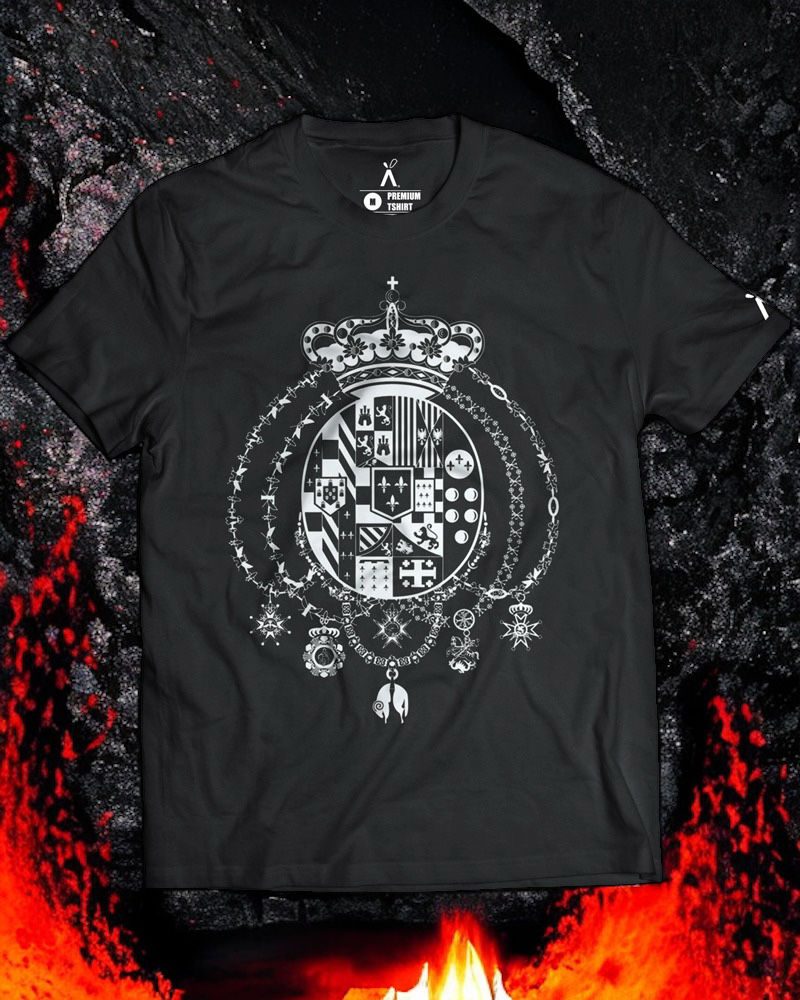 Regno delle Due Sicilie, i simboli: Elegant Borbonic e il Cavalluccio Rosso da indossareRead more
-
 'O Munaciello: the legend, the mischief and the coins under the pillowRead more
There's a noise in the old house, an object that disappears and then reappears, a coin found on the floor. In Naples...
-
 How to choose your T-shirt size (and make it last): the Tattà® guideRead more
Sizes, fabrics and prints explained plainly, with the honesty of someone who really wears 'a maglietta' (Neapolitan...
-
 Original Neapolitan graduation gift: ideas for the graduate (him and her)Read more
In Naples, a graduation is never a private affair: it's a neighbourhood celebration. Here's how to choose an original...
-
 Asso 'e mazze: meaning and history of the Neapolitan ace of clubsRead more
The strongest card on the green table becomes, in Naples, the most elegant way to say who really calls the shots....
-
 Michelina Di Cesare, the brigantessa who defied a kingdomRead more
Born poor in Terra di Lavoro, Michelina Di Cesare chose the maquis and the rifle against a newly united Italy. A...
-
 Neapolitan Hoodies: The Autumn 2026 Style GuideRead more
When the air turns crisp, in Naples people don't just reach for a hoodie: they reach for a piece of identity. Here's...
-
 Maradona Stadium: City Council allocates €50 million for Euro 2032Read more
The City Council has allocated €50 million for the redevelopment of the Diego Armando Maradona stadium, ahead of...
-
 Pizza Maxima 2026: Franco Pepe Is Once Again Best Pizzeria in ItalyRead more
At the fifth edition of Pizza Maxima, the Oscars of Italian pizza, Franco Pepe confirms his title as Best Pizzeria in...
-
 ‘L’acqua è poca e ‘a papera nun galleggia’: what it meansRead more
When the means are few, so is the result. Let's discover the most realistic Neapolitan saying there is.
Blog categories
Search in blog
Archived posts
The Royal Pontifical Basilica of San Francesco di Paola
by Silvia Semonella
Over the centuries, Naples has seen the passing of many different peoples and rulers, each of whom left their mark, both on the culture and on the city's priceless artistic heritage.
In the early years of the nineteenth century, after a long spell of Bourbon rule, the city went through a period of French domination, known, in fact, as the “decennio francese” (French decade).
The French decade under Murat
Gioacchino Murat, proclaimed King of Naples, arrived in the city determined to clean it up; in particular, he turned his attention to the so-called “largo di palazzo” (the open square in front of the Royal Palace, the king's residence): he cleared it of the criminals who frequented it, demolished the convents and buildings crowding the area, and ordered the construction of a great square, which was to be called “Gran Foro Gioacchino”.
He also held a competition to decide who would carry out the works: it was won by the architect Leopoldo Laperuta, who built a broad colonnade with 38 Doric columns right in front of the Royal Palace. The original design called for this grand structure to enclose, at its centre, a circular area dedicated to public assemblies.
The return of the Bourbons
None of this was ever completed, because in 1815 Gioacchino Murat was driven out of Naples and the Bourbon crown was restored: Ferdinand I of Bourbon, then, as a gesture of thanks to San Francesco di Paola for the reconquest of the kingdom (which he believed to be thanks to the saint's intercession) and as compensation for the destruction of the convents, ordered a church dedicated to the saint to be built at the centre of the colonnade, expressly requesting that its dome should not rise above the height of the Royal Palace.
A second competition established that the works would be directed by the architect Pietro Bianchi. Building began in 1817 and was completed in 1824, producing a church in a clear neoclassical style, inspired by the Pantheon in Rome. However, it was only consecrated 12 years later by Pope Gregory XVI, who granted it the privilege of being the first church in Naples with a reversed altar (that is, facing the congregation).
The structure
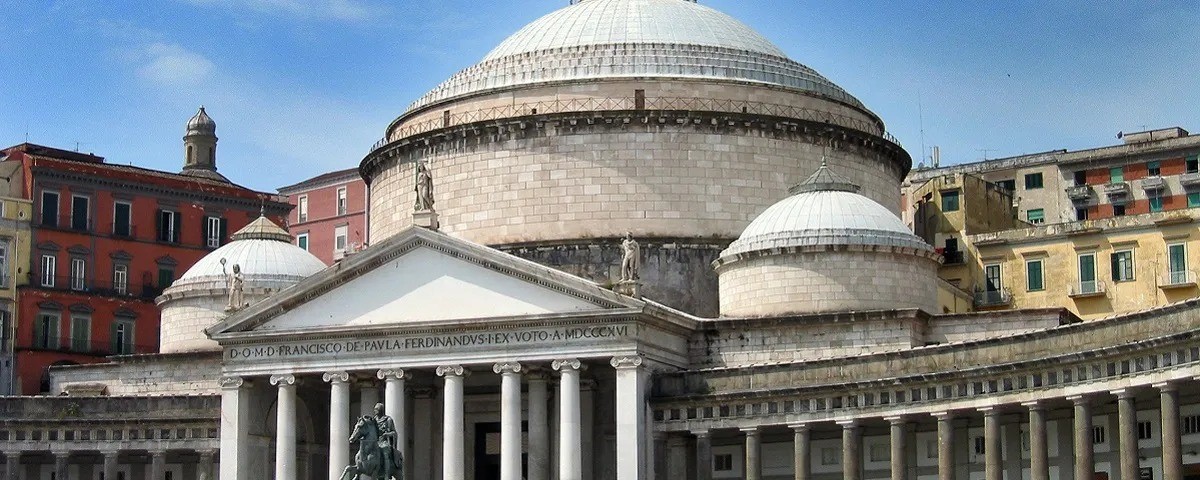
The façade of the Church is preceded by a portico supported by six columns in the Ionic style, on which the dedication to the saint can be read. Two side pilasters support the architrave: to the left stands a statue of San Francesco di Paola, to the right one of San Ferdinando di Castiglia, and at the top, one representing Religion.
In the colonnade below, meanwhile, statues of the four cardinal virtues (prudence, justice, fortitude and temperance) and the three theological virtues (faith, hope and charity) have been placed.
All around the perimeter of the church, moreover, rise thirty-four columns of Mondragone marble, eleven metres high, each topped with a Corinthian capital decorated with the fleur-de-lis, the flower typical of the House of Bourbon, interspersed with eight pilasters of the same height.
The central body of the church, meanwhile, is circular in shape and paved with wonderful polychrome marbles.
Inside, we also find a canvas by Luca Giordano, while opposite the entrance stands the apse, decorated with precious stones and lapis lazuli, designed by Ferdinando Fuga and moved here from the Church of the Santi Apostoli.
How to reach Piazza Plebiscito
The square is easily reached by Metro Line 1 (connected to Piazza Garibaldi): simply get off at the Via Toledo stop and continue to the end of the street of the same name, passing Piazza Trieste e Trento.
Posted in:
Places in Naples
Related posts
-
 The Roman Theatre of Neapolis
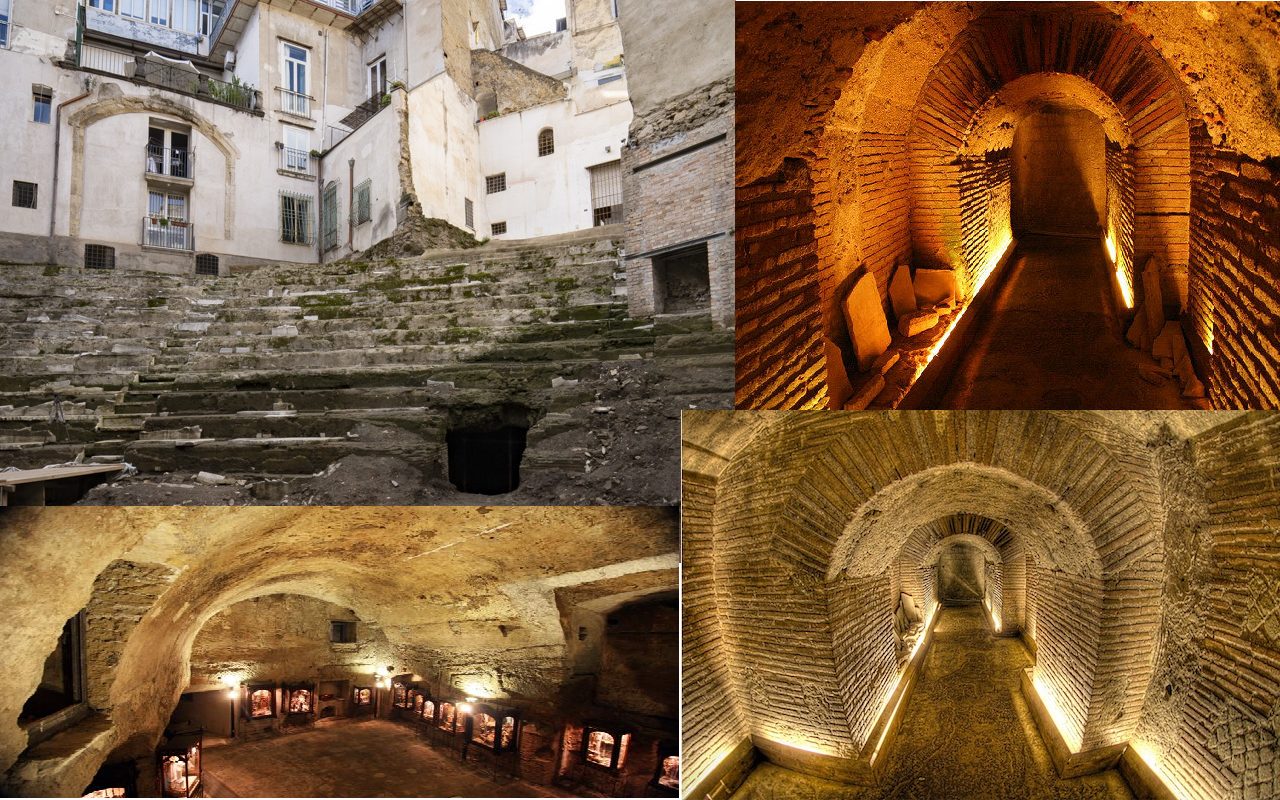
Among the many wonders of Naples' historic centre stands the ancient Roman Theatre of Neapolis, between what are now...Read more
-
 Discover Vicoletto Sant'Arpino: History and Beauty of Naples
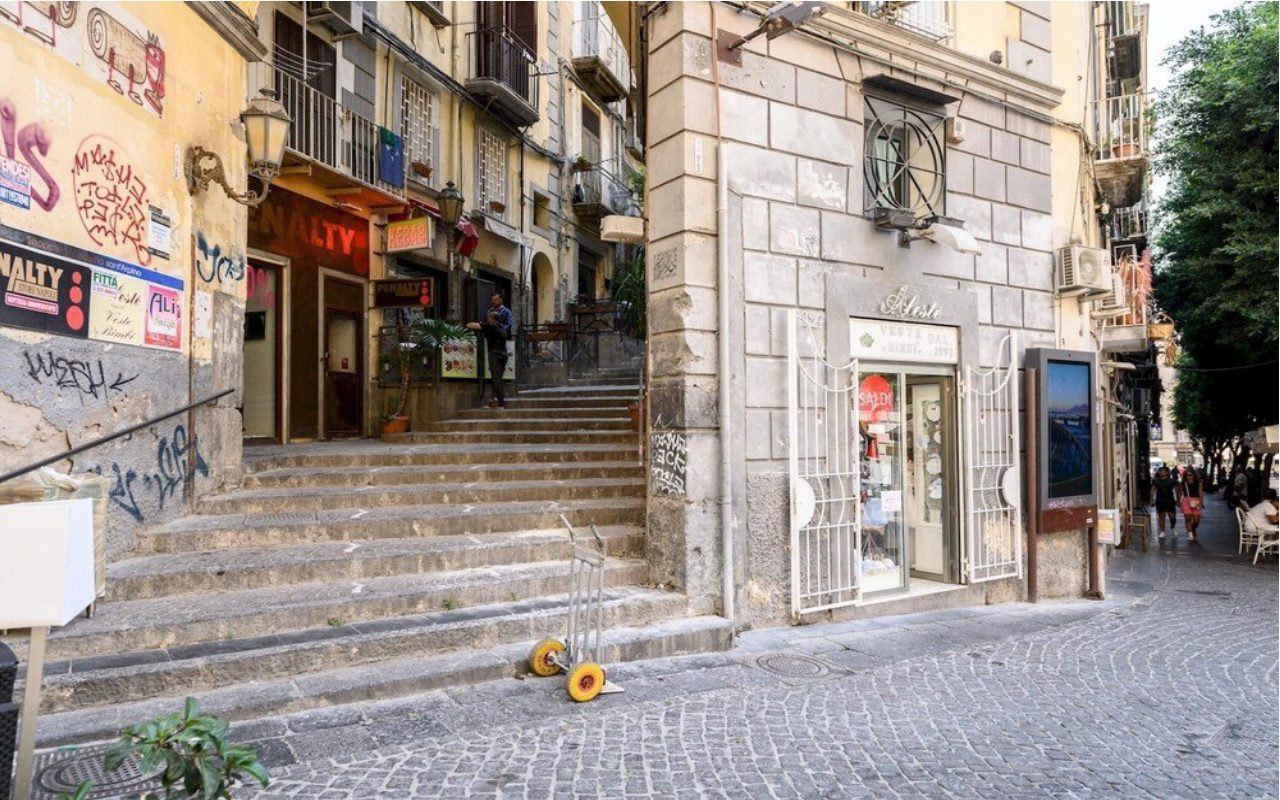
There are corners of Naples that tell incredible stories, that take your breath away and make it unique, sincere and...Read more
-
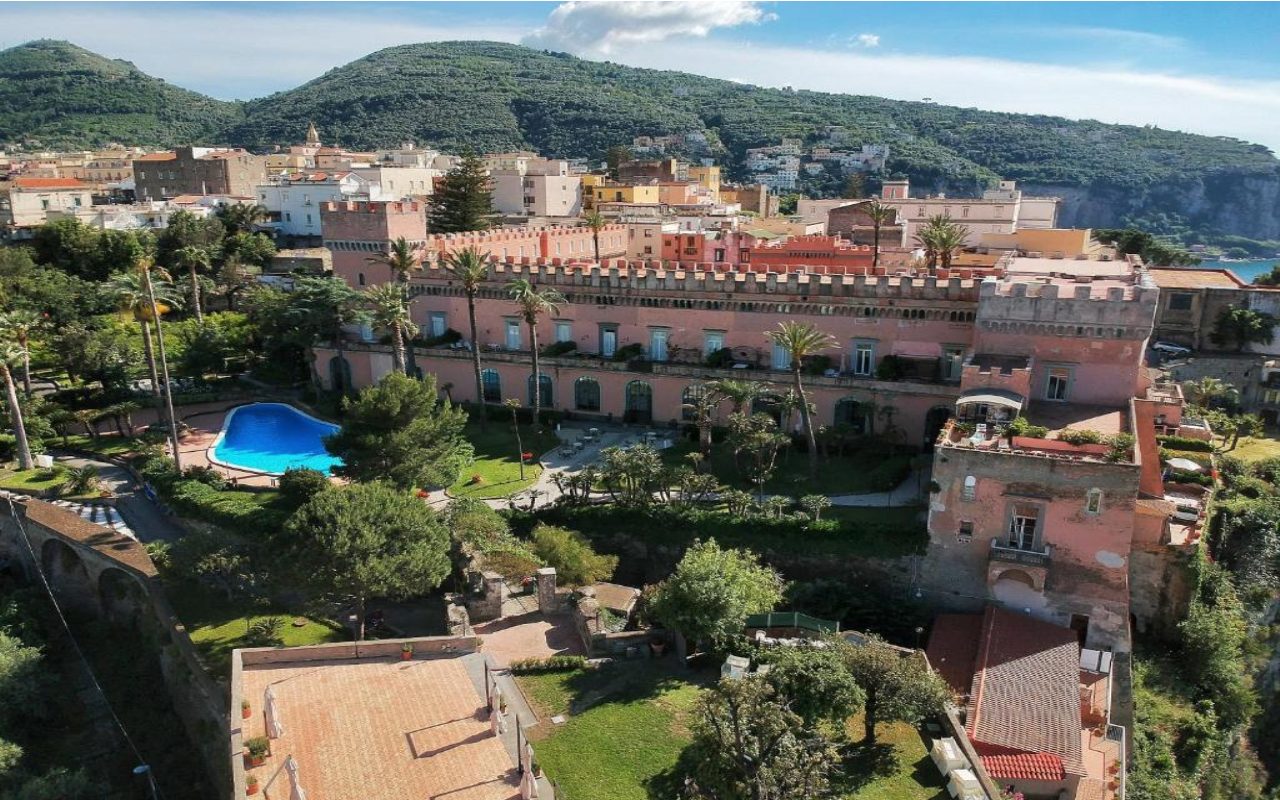 Giusso Castle: the legends of Vico Equense
Built at the end of the 13th century, Giusso Castle was designed as both a military fortress and a residence.Read more
-
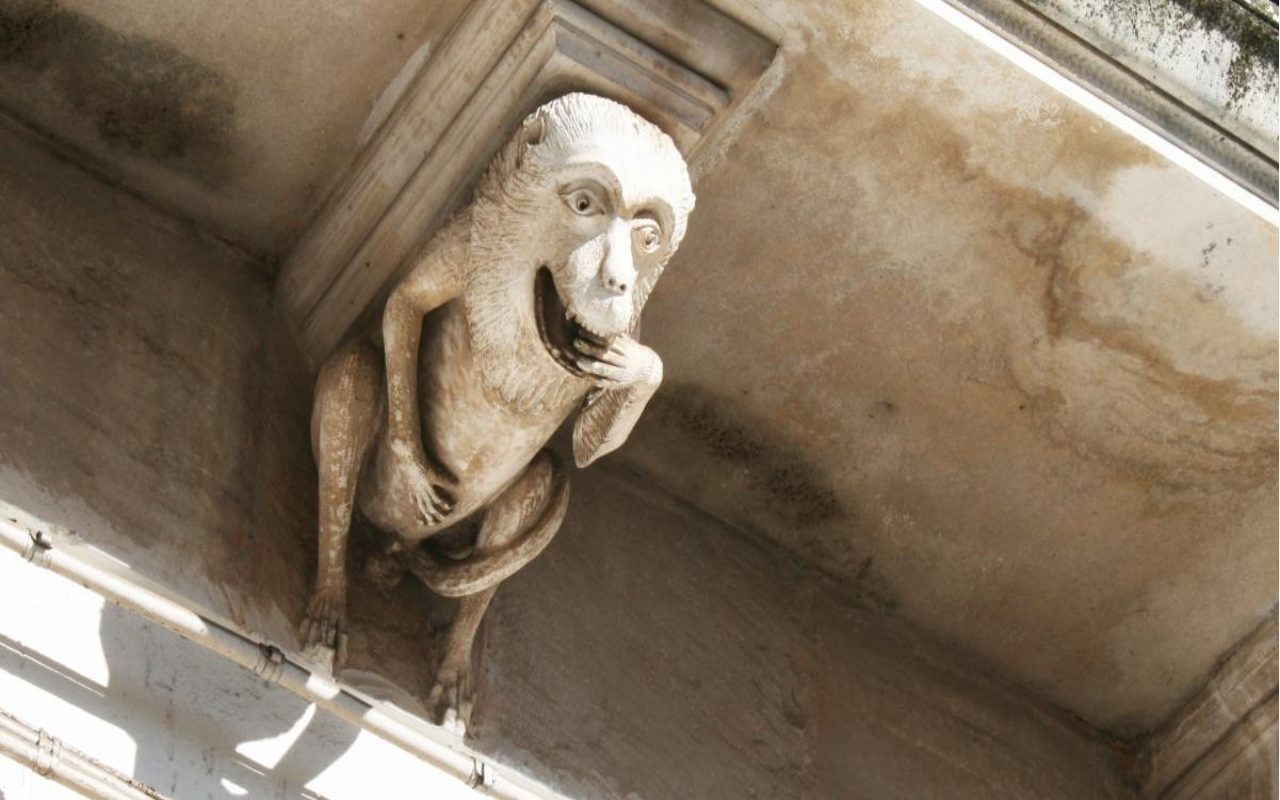 The apotropaic stone masks of lava rock and marble
Neapolitan apotropaic masks are truly fascinating works of art that can be admired on numerous historic buildings...Read more
-
 THE ROYAL PALACE OF CARDITELLO
The Tenuta Storica di Carditello (Historic Estate of Carditello), also known as the Reggia di Carditello (Royal...Read more
Leave a comment