



Born poor in Terra di Lavoro, Michelina Di Cesare chose the maquis and the rifle against a newly united Italy. A...
Latest posts
-
 Michelina Di Cesare, the brigantessa who defied a kingdomRead more
 -
 Neapolitan Hoodies: The Autumn 2026 Style GuideRead more
When the air turns crisp, in Naples people don't just reach for a hoodie: they reach for a piece of identity. Here's...
-
 Maradona Stadium: City Council allocates €50 million for Euro 2032Read more
The City Council has allocated €50 million for the redevelopment of the Diego Armando Maradona stadium, ahead of...
-
 Pizza Maxima 2026: Franco Pepe Is Once Again Best Pizzeria in ItalyRead more
At the fifth edition of Pizza Maxima, the Oscars of Italian pizza, Franco Pepe confirms his title as Best Pizzeria in...
-
 ‘L’acqua è poca e ‘a papera nun galleggia’: what it meansRead more
When the means are few, so is the result. Let's discover the most realistic Neapolitan saying there is.
-
 Avanti Scugnizzi: the story of the year's most loved T-shirtRead more
One word, ‘scugnizzo’ (Neapolitan street kid), and it holds the whole of Naples inside it. We tell you how the year's...
-
 'Chi chiagne fotte a chi ride': what it means and why it's truer than everRead more
At the market, at the counter, in the family: there's always someone who complains and gets more. It's the sharp...
-
 San Gennà, futtatenne! (Saint Januarius, don't worry about it!) San Gennaro, 19 September and the patron saint's t-shirtRead more
Who San Gennaro was, the miracle of the blood that liquefies, and the feast on 19 September. Plus that close,...
-
 'O purpo se coce int'a ll'acqua soja: what it means (o purpo se coce meaning)Read more
Someone has wronged you, and instead of reacting, you wait in silence with a smile? Here's the Neapolitan proverb...
-
 Cazzimma: meaning, origin and why it can't be translatedRead more
There's a word that explains everything in Naples and can't be translated into any language. It's called cazzimma,...
Blog categories
Search in blog
Archived posts
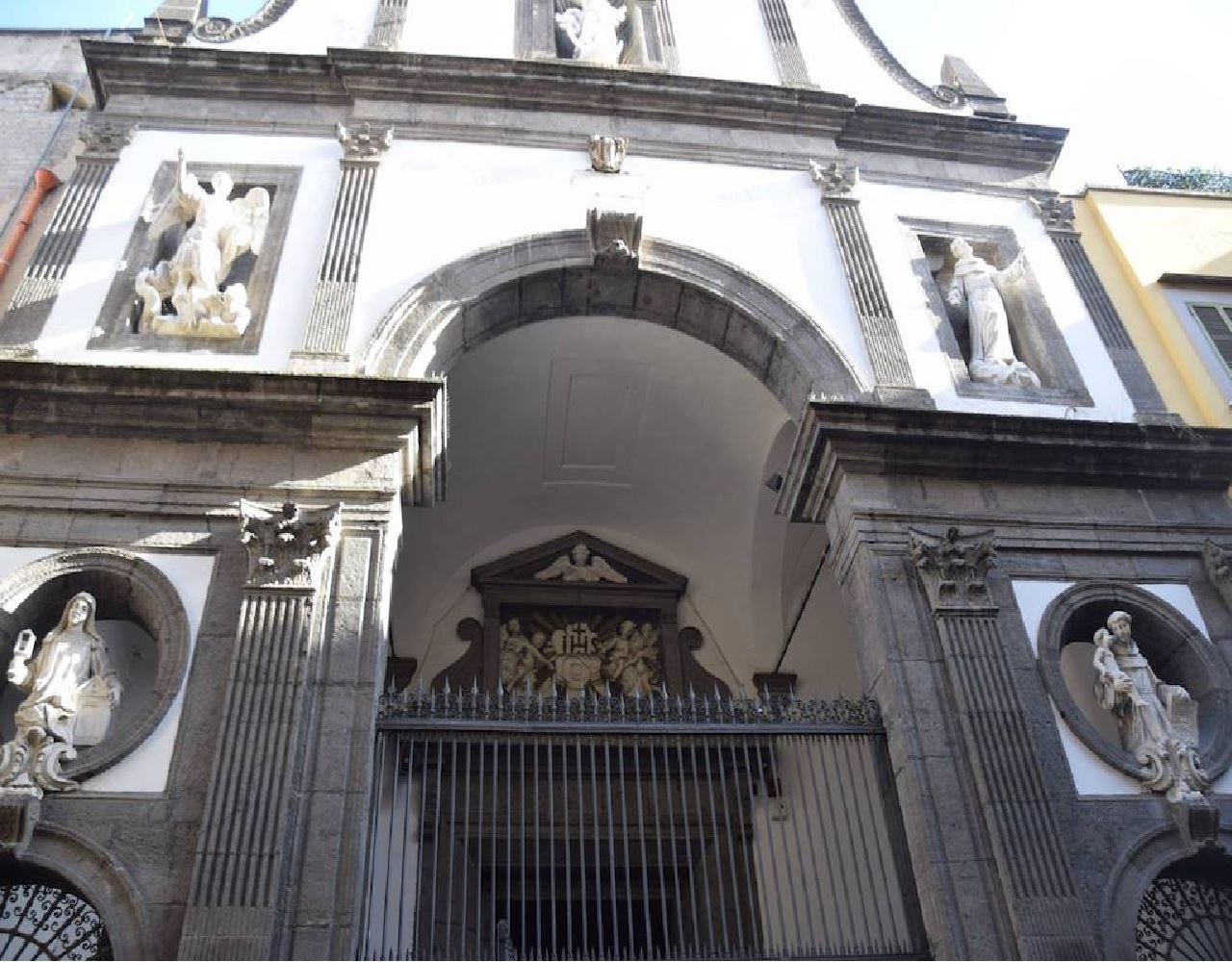
Chiesa del Gesù delle Monache (Church of the Jesus of the Nuns)
The Chiesa del Gesù delle Monache (Church of the Jesus of the Nuns) is a church in Naples, located near Piazza Cavour, just beyond Porta San Gennaro (St Januarius' Gate), in the historic centre: flanked by a convent, it serves as a parish church, a title it inherited from the nearby, now-destroyed church of San Giovanni in Porta (St John in Porta).
History
Both Giovanna II and Giovanna III supported the convent of Santa Maria del Gesù with numerous donations, a place chosen for the burial of members of the Aragonese dynasty: it was Giovanna II herself, widowed by her husband Ferdinando I of Naples, who decided to build a church near the convent at the beginning of the 16th century. According to her plans, the church was meant to become the family's pantheon: however, both because of the fall of the Aragonese crown and the lack of funds, this wish was never fulfilled. The church was only completed in 1582, as documented by a memorial stone, thanks to funds donated by Lucrezia Dentice and the Montalto family.
During the 17th century the interior underwent a process of decoration in keeping with the taste of the time, namely the Baroque style, which altered its 16th-century appearance and continued throughout the whole of the 18th century as well: artists such as Arcangelo Guglielmelli, Lorenzo Vaccaro, Giuseppe Troise and Nicola Cacciapuoti worked on the church. Further restoration work took place in 1731, designed by Father Enrico Pini, affecting the area of the presbytery. In 1862 the church was granted the title of parish following the demolition of the nearby church of San Giovanni in Porta (St John in Porta).
Description
The church's façade is in late Renaissance style and enjoyed enormous success, especially during the 17th century, so much so that it was echoed more than once in structures designed by Cosimo Fanzago; it is arranged in three sections, divided by two entablatures: the lower part features a wide access arch that also takes up part of the second section, flanked at the sides by two smaller arches topped with a niche holding statues, a decorative motif that is repeated equally in the central part of the façade; the third section is marked at its centre by a niche with a statue and ends at the sides with spires: an iron cross sits on the pediment; all the statues present were made in the 18th century. The wide arch leads into the atrium where the entrance portal stands: this is made of carved wood and was created in the second half of the 16th century.
The interior, in Baroque style, has a single nave, with four chapels on each side, a short transept that does not project beyond the church's perimeter, where the presbytery is also located, a wooden coffered ceiling with gilded carvings and floral motifs, made in the 17th century, and a tiled floor dating from the 19th century, commissioned from the Giustiniani firm. On the counter-façade is a painting by Francesco Solimena depicting Saint John the Evangelist and Cardinal Innico Caracciolo, dated 1658 and coming from the destroyed church of San Giovanni in Porta (St John in Porta); along the upper part of the nave are paintings by Nicola Cacciapuoti, executed between 1730 and 1731, while on the arch of the fourth chapel on the right-hand side stands the organ, dating from the late 17th century, decorated with carved and gilded wood.
The first chapel on the left features stucco decorations by Giuseppe Troise and Lorenzo Vaccaro: on the altar is a canvas depicting Saint Anthony in Glory by an unknown Neapolitan artist of the 17th century, while on the side walls are two works by Luca Giordano from 1683, namely Saint Anthony Preaching to the Fish and Saint Anthony Healing an Injured Man's Foot. The second chapel is likewise decorated with stuccoes by Lorenzo Vaccaro and Giuseppe Troise, joined by Francesco Solimena, who painted the vault frescoes of the Glory of the Virgin and Putti, as well as two canvases on the side walls, the Annunciation and the Marriage of the Virgin; on the altar is a canvas by Luca Giordano: Immaculate Conception, Saint Teresa and Saint Clare, from 1683. The third chapel features on its altar a late-16th-century painting, Madonna and Child, with a crown and votive offerings from the 19th and 20th centuries, by an unknown author, as are the canvases on the side walls, dating from the second half of the 17th century and depicting Christ Carrying the Cross and Christ Flagellated, the latter a copy after Jusepe de Ribera; the chapel's floor is tiled with majolica made by the Giustiniani firm. The fourth chapel is actually the ante-sacristy and houses the Mystic Wine-Press, an iconographic panel from the second half of the 16th century, and Saint John the Baptist, a panel by Solimena.
The first chapel on the right-hand side is dedicated to Saint Teresa of Ávila: it displays an imposing work of stuccoes, with the geometric parts by Giuseppe Troise and the figurative parts by Lorenzo Vaccaro; on the altar is a late-17th-century canvas by an unknown Neapolitan artist, depicting Saint Teresa, while on the side walls are two canvases attributed to Andrea Malinconico, the Miracle of Saint Teresa and the Death of Saint Teresa; the floor of polychrome majolica tiles is particularly striking. The second chapel is dedicated to Saint Clare and features on its altar Saint Clare in Glory among Saints Bonaventure, John of Capistrano and Louis of Toulouse by Francesco Solimena, dated 1684, while on the walls are two works by Paolo De Matteis from 1696, entitled respectively The Taking of the Veil by Saint Clare and Saint Clare Driving Away the Saracens; the decoration is completed by stuccoes by Lorenzo Vaccaro and Giuseppe Troise and the vault frescoes, the Glory of Saint Clare and Putti, by Solimena. The third chapel has on its altar Madonna and Child among Saints Francis, Clare, Peter and Paul, by Fabrizio Santafede, while on the walls are two octagonal paintings by Michele Ragolia from the late 17th century, the Stigmata of Saint Francis and Saint Francis and Saint Clare Interceding for a Burning Convent; the majolica floor is one of the first works carried out by the Giustiniani factory after their move to Naples, which took place around 1760. The fourth chapel houses a polyptych, in a carved and gilded wooden frame, by Giovanni Filippo Criscuolo: it is divided into two registers, with the Dormitio Virginis and the Assumption at the centre, Saints at the sides, and, in the upper part, the Trinity and the Adoration of the Child; on the left-hand wall is a painting by an unknown artist from the late 16th century depicting the Flagellation of Christ at the Column.
The presbytery area, designed by Enrico Pini and also incorporating the transept, houses the high altar in polychrome marbles and semi-precious stones, the same materials used for the ciborium; the tabernacle door, in semi-precious stones and mother-of-pearl, is also worthy of note. On the walls of the presbytery are several works by Giovanni Bernardo Lama and his workshop: in particular two paintings on the theme of the Redeemer Blessing Saint Francis and the Virgin Blessing Saint Clare, while further down are two octagonal panels representing Charity and Faith. The dome above the presbytery was frescoed around 1680 by Arcangelo Guglielmelli. The panel kept behind the high altar, in the apse, is also by Lama, dated to the end of the 16th century, and depicts the Circumcision: around it is a decorative arrangement in carved and gilded wood and papier-mâché by Arcangelo Guglielmelli, and in the upper part is placed an oval panel, Baby Jesus, by Luca Giordano. The area is completed by monochrome paintings made between 1730 and 1731 by Nicola Cacciapuoti.
Adjacent to the church is the convent: of particular note is the refectory, which features decorations by Arcangelo Guglielmelli.
Posted in:
Places in Naples
Related posts
-
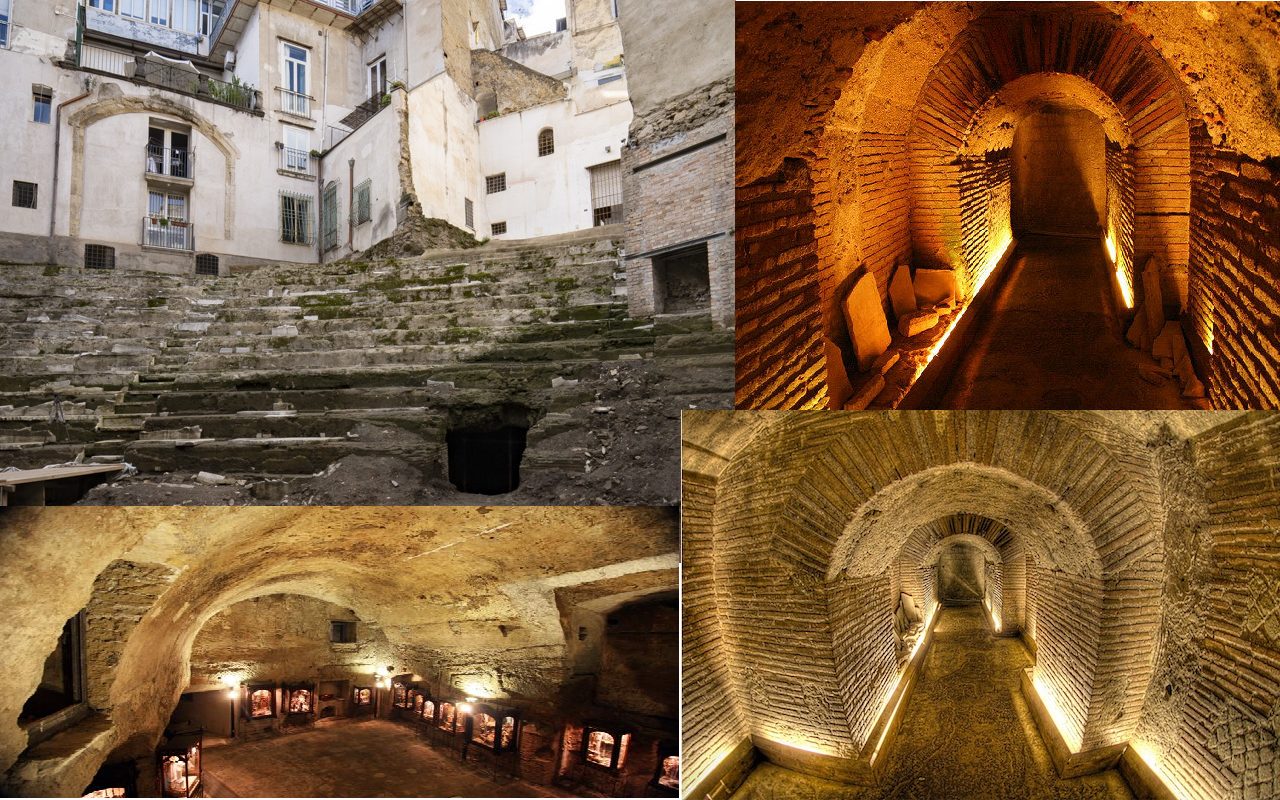 The Roman Theatre of Neapolis
Among the many wonders of Naples' historic centre stands the ancient Roman Theatre of Neapolis, between what are now...Read more
The Roman Theatre of Neapolis
Among the many wonders of Naples' historic centre stands the ancient Roman Theatre of Neapolis, between what are now...Read more -
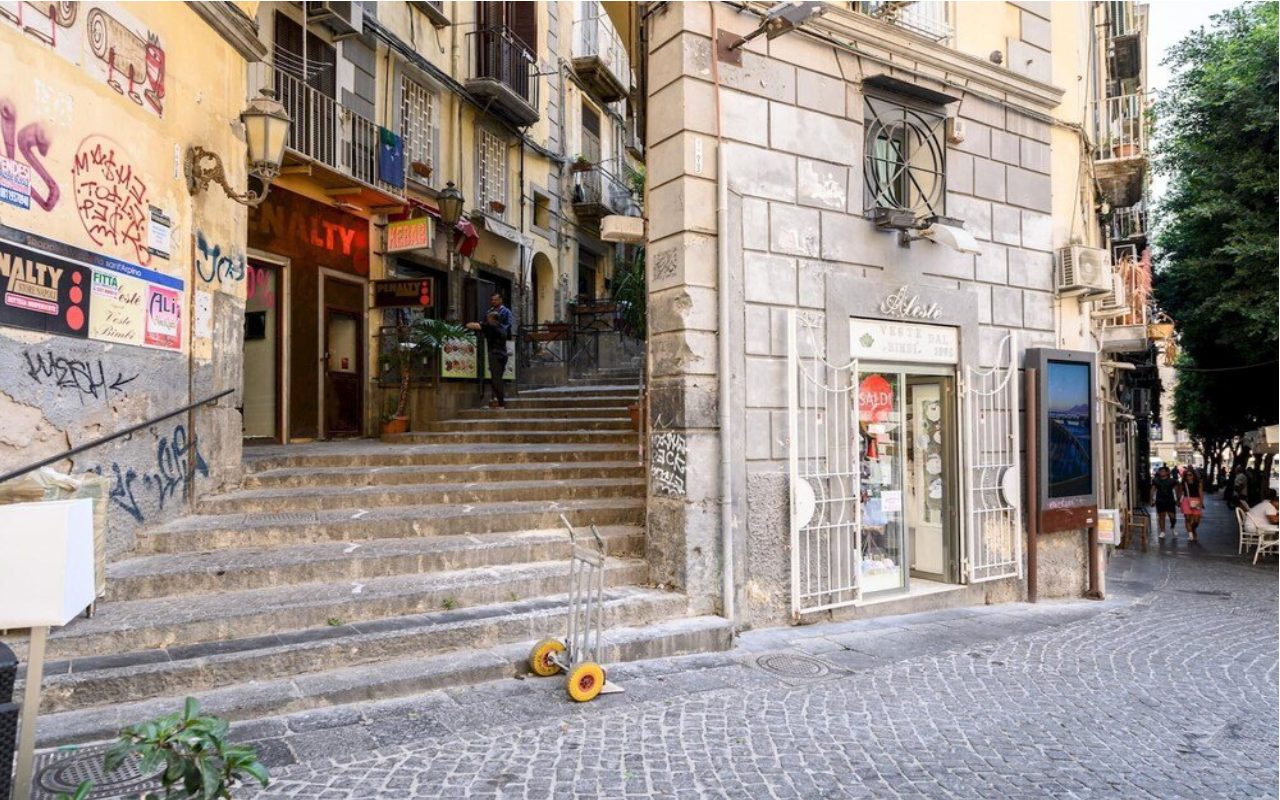 Discover Vicoletto Sant'Arpino: History and Beauty of Naples
There are corners of Naples that tell incredible stories, that take your breath away and make it unique, sincere and...Read more
Discover Vicoletto Sant'Arpino: History and Beauty of Naples
There are corners of Naples that tell incredible stories, that take your breath away and make it unique, sincere and...Read more -
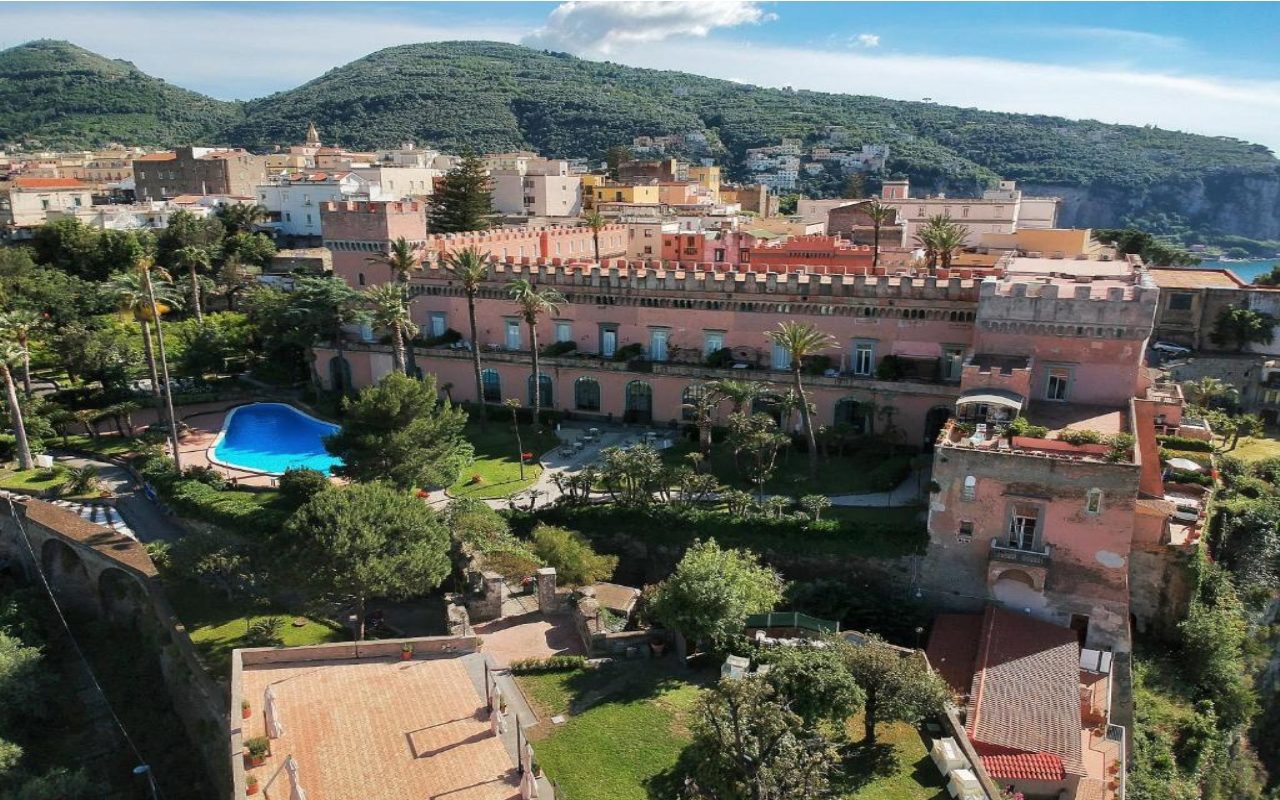 Giusso Castle: the legends of Vico Equense
Built at the end of the 13th century, Giusso Castle was designed as both a military fortress and a residence.Read more
Giusso Castle: the legends of Vico Equense
Built at the end of the 13th century, Giusso Castle was designed as both a military fortress and a residence.Read more -
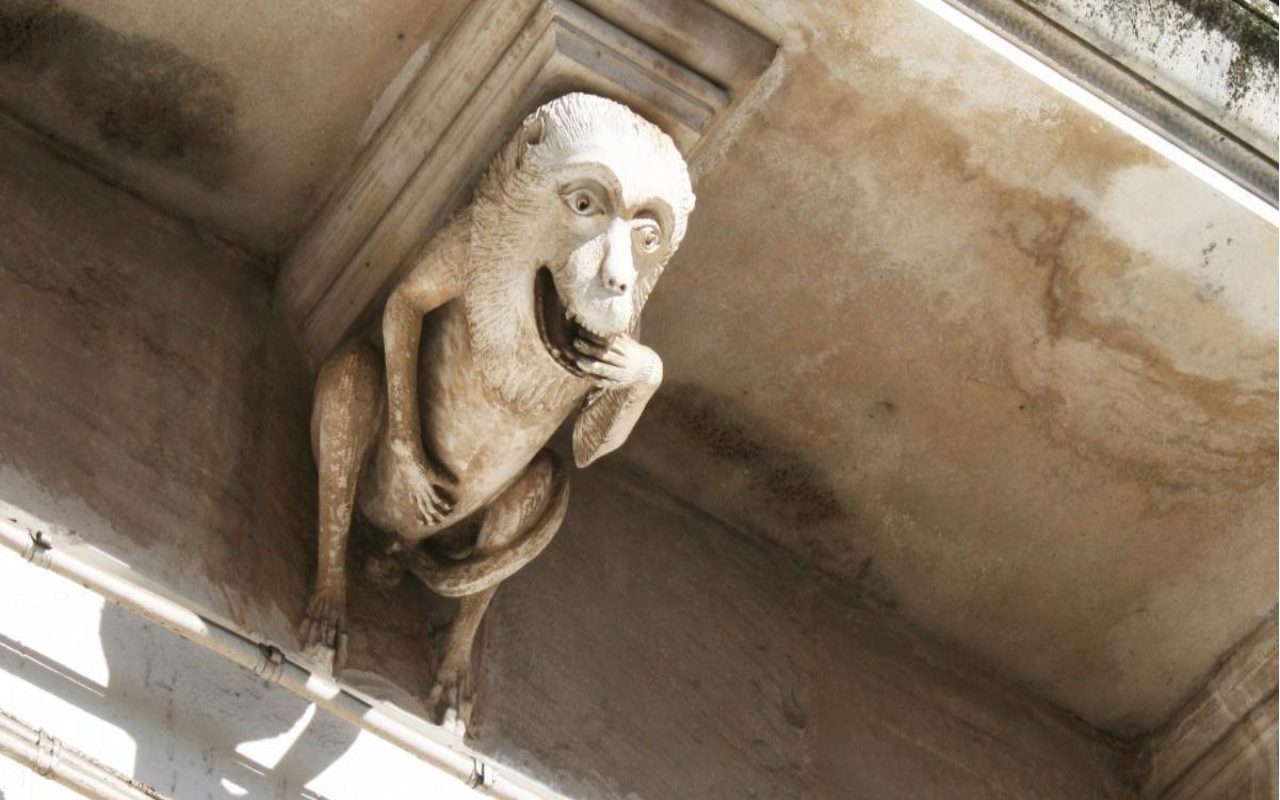 The apotropaic stone masks of lava rock and marble
Neapolitan apotropaic masks are truly fascinating works of art that can be admired on numerous historic buildings...Read more
The apotropaic stone masks of lava rock and marble
Neapolitan apotropaic masks are truly fascinating works of art that can be admired on numerous historic buildings...Read more -
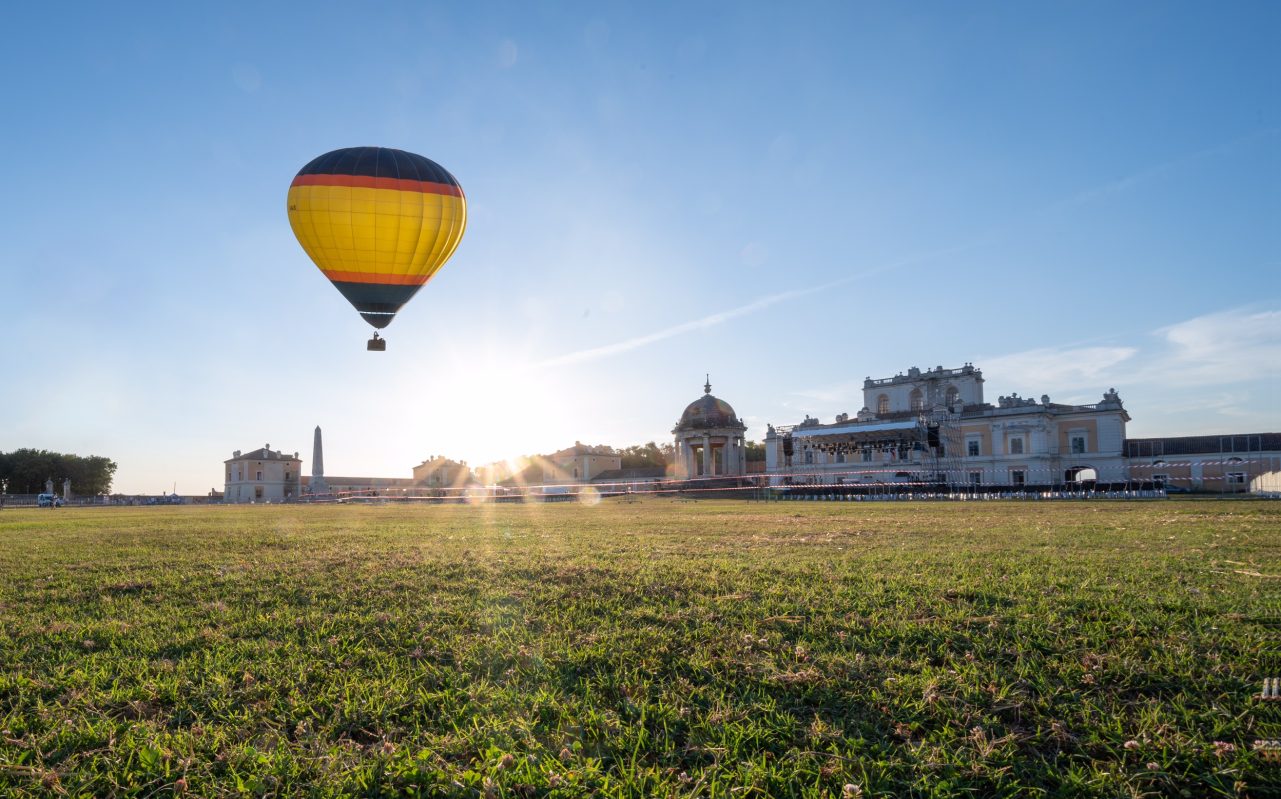 THE ROYAL PALACE OF CARDITELLO
The Tenuta Storica di Carditello (Historic Estate of Carditello), also known as the Reggia di Carditello (Royal...Read more
THE ROYAL PALACE OF CARDITELLO
The Tenuta Storica di Carditello (Historic Estate of Carditello), also known as the Reggia di Carditello (Royal...Read more
Leave a comment