



In Naples, a graduation is never a private affair: it's a neighbourhood celebration. Here's how to choose an original...
Latest posts
-
 Original Neapolitan graduation gift: ideas for the graduate (him and her)Read more
-
 Asso 'e mazze: meaning and history of the Neapolitan ace of clubsRead more
The strongest card on the green table becomes, in Naples, the most elegant way to say who really calls the shots....
-
 Michelina Di Cesare, the brigantessa who defied a kingdomRead more
Born poor in Terra di Lavoro, Michelina Di Cesare chose the maquis and the rifle against a newly united Italy. A...
-
 Neapolitan Hoodies: The Autumn 2026 Style GuideRead more
When the air turns crisp, in Naples people don't just reach for a hoodie: they reach for a piece of identity. Here's...
-
 Maradona Stadium: City Council allocates €50 million for Euro 2032Read more
The City Council has allocated €50 million for the redevelopment of the Diego Armando Maradona stadium, ahead of...
-
 Pizza Maxima 2026: Franco Pepe Is Once Again Best Pizzeria in ItalyRead more
At the fifth edition of Pizza Maxima, the Oscars of Italian pizza, Franco Pepe confirms his title as Best Pizzeria in...
-
 ‘L’acqua è poca e ‘a papera nun galleggia’: what it meansRead more
When the means are few, so is the result. Let's discover the most realistic Neapolitan saying there is.
-
 Avanti Scugnizzi: the story of the year's most loved T-shirtRead more
One word, ‘scugnizzo’ (Neapolitan street kid), and it holds the whole of Naples inside it. We tell you how the year's...
-
 'Chi chiagne fotte a chi ride': what it means and why it's truer than everRead more
At the market, at the counter, in the family: there's always someone who complains and gets more. It's the sharp...
-
 San Gennà, futtatenne! (Saint Januarius, don't worry about it!) San Gennaro, 19 September and the patron saint's t-shirtRead more
Who San Gennaro was, the miracle of the blood that liquefies, and the feast on 19 September. Plus that close,...
Blog categories
Search in blog
Archived posts
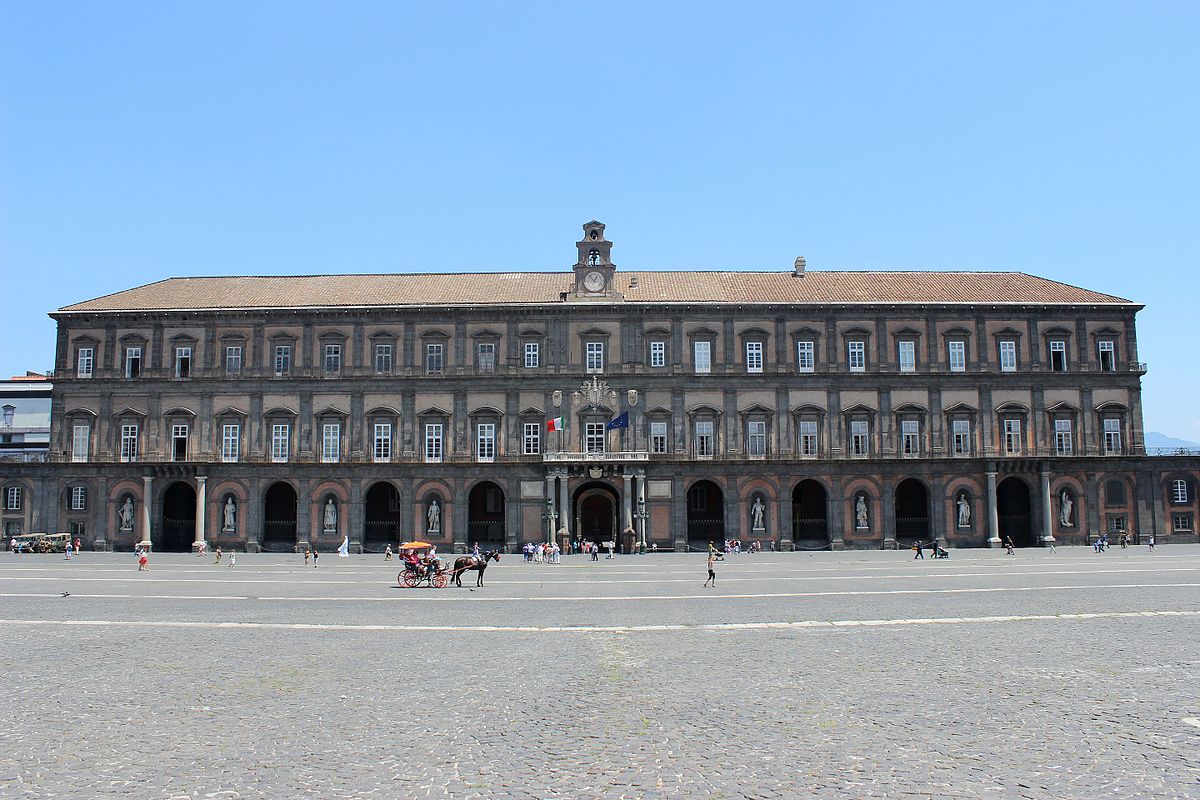
The Royal Palace of Naples: the soul of Piazza Plebiscito
We're talking, of course, about the Royal Palace, located in Piazza Plebiscito, where the main entrance stands, although the entire complex, including the gardens and the San Carlo theatre, also faces onto Piazza Trieste e Trento, Piazza del Municipio and Via Acton.
It dominates the city's most important and monumental square and, with its grandeur and splendour, harks back to a golden age, when Naples was the moral and geographical capital of the Kingdom of the Two Sicilies.
Commissioned by the Spanish viceroys, whose residence it was for over a hundred and fifty years, it later belonged to the Bourbon dynasty and, after the Unification of Italy, in 1919, was handed over to the state and turned into a museum complex.
Its construction began in 1600 and was officially completed in 1858, when it finally took on its definitive appearance. It was built by several architects, chiefly Domenico Fontana, Gaetano Genovese, Luigi Vanvitelli, Ferdinando Sanfelice and Francesco Antonio Picchiatti, commissioned by Viceroy Fernando Ruiz de Castro, who wanted to host, in a spacious and comfortable residence, King Philip III of Spain on an official visit to Naples, capital of the viceroyalty.
In fact, this occasion never came about, given the fickleness of King Philip III, who decided to cancel the visit. So Naples found itself, almost by chance, with a royal residence, which, among other things, became one of the most magnificent and prestigious, enriched with artistic masterpieces and precious objects belonging to four dynasties.
The final project also involved the famous Luigi Vanvitelli, architect of the Royal Palace of Caserta, and Genovese, who, commissioned by Ferdinand II of Bourbon, restored the entire façade after the fire that destroyed it in 1837.
It is Genovese we owe the imposing marble staircase at the entrance of the Palace and the festival wing, which now houses the National Library.
What to visit
Not to be missed is the Historic Apartment, which includes the Court Theatre, the Throne Room, the Room of Maria Cristina of Savoy and the Royal Chapel. Here you can admire masterpieces by artists such as Guercino, Andrea Vaccaro, Mattia Preti, Massimo Stanzione, Francesco De Mura, Battistello Caracciolo, Luca Giordano, Filippo and Nicola Palizzi and Consalvo Carelli.
Outside, meanwhile, a walk through the Cortile d'Onore (Courtyard of Honour, from which you can also access the royal gardens), the carriage courtyard, the belvedere courtyard and the hanging gardens, with a splendid view of the Gulf, is a must.
How to get there
By car:
from the motorway or ring road, take the Centro – Porto exit, then Via Marina as far as Piazza Municipio. From there it's a 10-minute walk to Piazza del Plebiscito.
By plane:
from the airport, take the Alibus as far as Piazza Municipio. From there it's a 10-minute walk to Piazza del Plebiscito.
By train:
from Piazza Garibaldi railway station, take Metro Line 1 towards Piscinola, alighting at Municipio. From there it's a 10-minute walk to Piazza del Plebiscito.
By metro:
Line 1, Municipio stop.
By bus:
from Piazza Garibaldi, the R2 as far as Piazza Municipio;
from Piazza Vittoria, tram 1 as far as Piazza Municipio.
By funicular:
from Piazza Fuga (Vomero), take the Funicolare Centrale to its last stop in Piazzetta Duca d'Aosta.
Posted in:
Places in Naples
Related posts
-
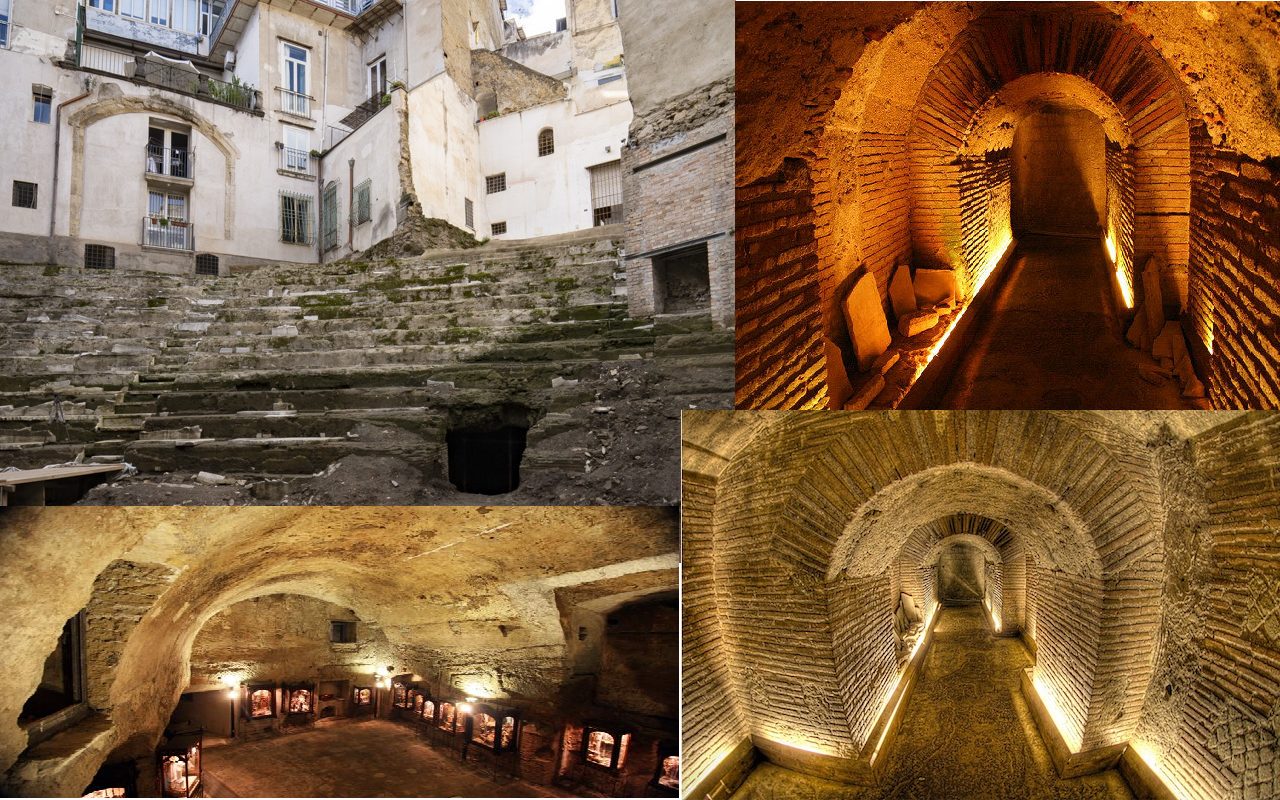 The Roman Theatre of Neapolis
Among the many wonders of Naples' historic centre stands the ancient Roman Theatre of Neapolis, between what are now...Read more
-
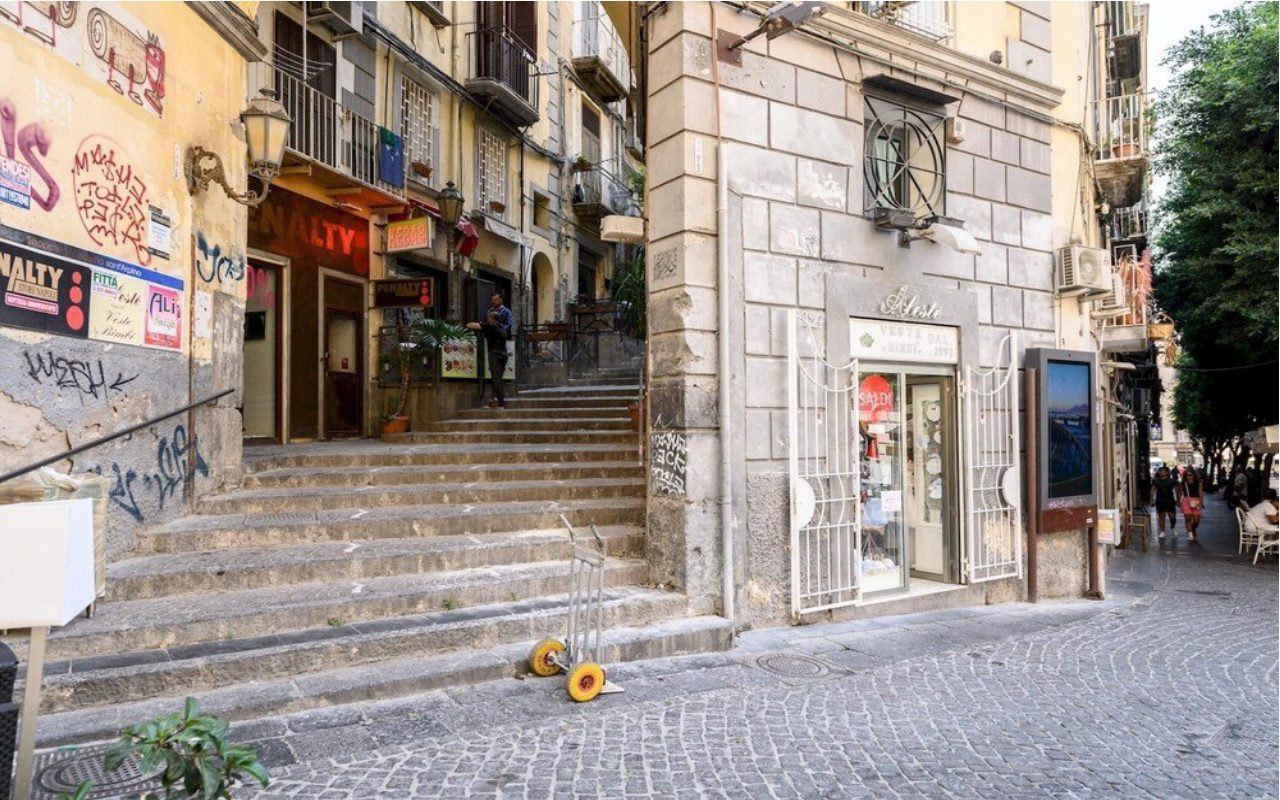 Discover Vicoletto Sant'Arpino: History and Beauty of Naples
There are corners of Naples that tell incredible stories, that take your breath away and make it unique, sincere and...Read more
-
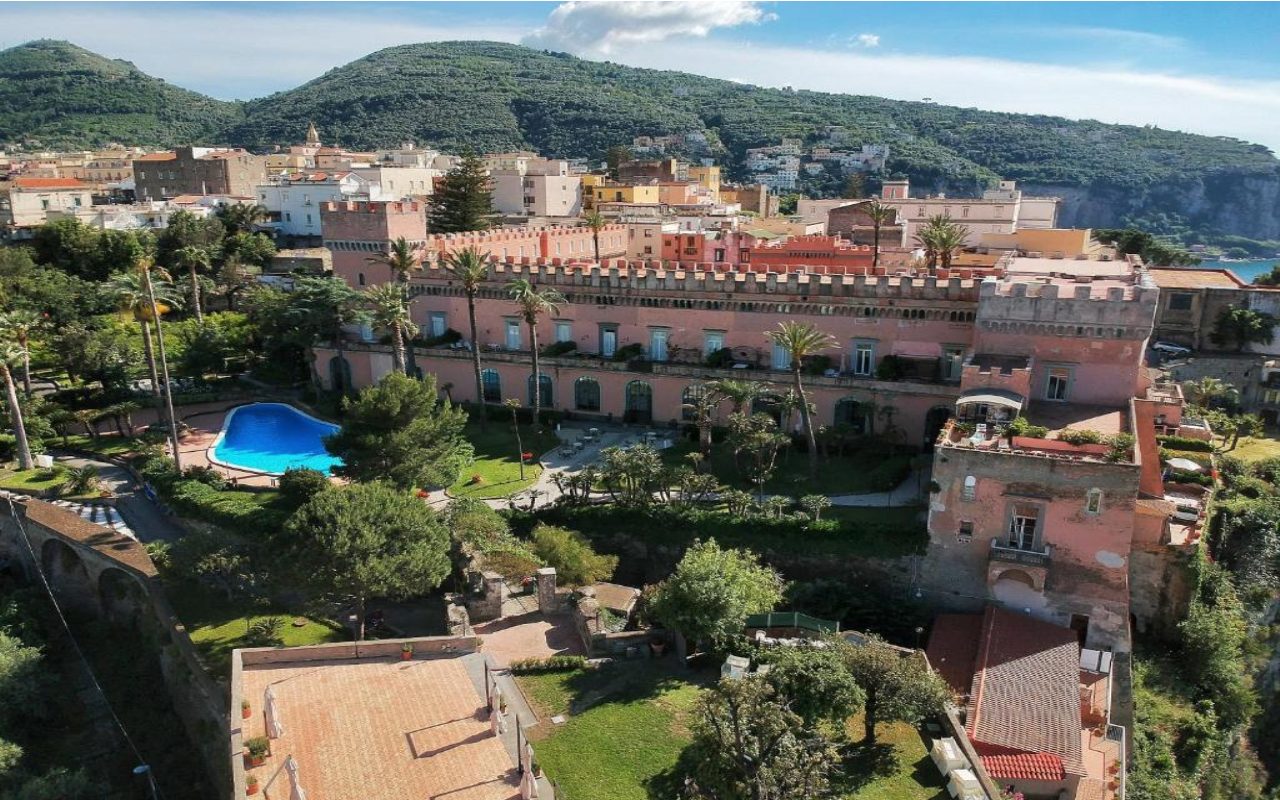 Giusso Castle: the legends of Vico Equense
Built at the end of the 13th century, Giusso Castle was designed as both a military fortress and a residence.Read more
-
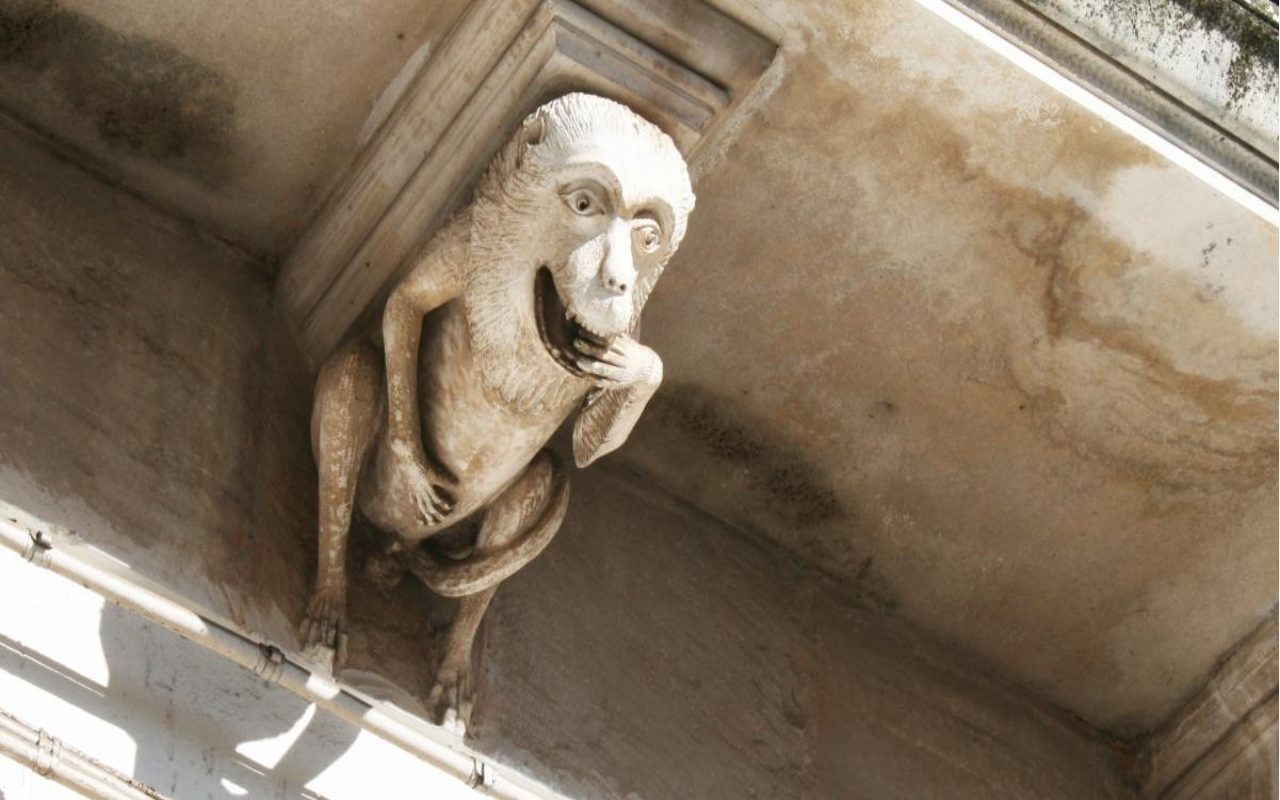 The apotropaic stone masks of lava rock and marble
Neapolitan apotropaic masks are truly fascinating works of art that can be admired on numerous historic buildings...Read more
-
 THE ROYAL PALACE OF CARDITELLO
The Tenuta Storica di Carditello (Historic Estate of Carditello), also known as the Reggia di Carditello (Royal...Read more
Leave a comment