



In Naples, a graduation is never a private affair: it's a neighbourhood celebration. Here's how to choose an original...
Latest posts
-
 Original Neapolitan graduation gift: ideas for the graduate (him and her)Read more
-
 Asso 'e mazze: meaning and history of the Neapolitan ace of clubsRead more
The strongest card on the green table becomes, in Naples, the most elegant way to say who really calls the shots....
-
 Michelina Di Cesare, the brigantessa who defied a kingdomRead more
Born poor in Terra di Lavoro, Michelina Di Cesare chose the maquis and the rifle against a newly united Italy. A...
-
 Neapolitan Hoodies: The Autumn 2026 Style GuideRead more
When the air turns crisp, in Naples people don't just reach for a hoodie: they reach for a piece of identity. Here's...
-
 Maradona Stadium: City Council allocates €50 million for Euro 2032Read more
The City Council has allocated €50 million for the redevelopment of the Diego Armando Maradona stadium, ahead of...
-
 Pizza Maxima 2026: Franco Pepe Is Once Again Best Pizzeria in ItalyRead more
At the fifth edition of Pizza Maxima, the Oscars of Italian pizza, Franco Pepe confirms his title as Best Pizzeria in...
-
 ‘L’acqua è poca e ‘a papera nun galleggia’: what it meansRead more
When the means are few, so is the result. Let's discover the most realistic Neapolitan saying there is.
-
 Avanti Scugnizzi: the story of the year's most loved T-shirtRead more
One word, ‘scugnizzo’ (Neapolitan street kid), and it holds the whole of Naples inside it. We tell you how the year's...
-
 'Chi chiagne fotte a chi ride': what it means and why it's truer than everRead more
At the market, at the counter, in the family: there's always someone who complains and gets more. It's the sharp...
-
 San Gennà, futtatenne! (Saint Januarius, don't worry about it!) San Gennaro, 19 September and the patron saint's t-shirtRead more
Who San Gennaro was, the miracle of the blood that liquefies, and the feast on 19 September. Plus that close,...
Blog categories
Search in blog
Archived posts
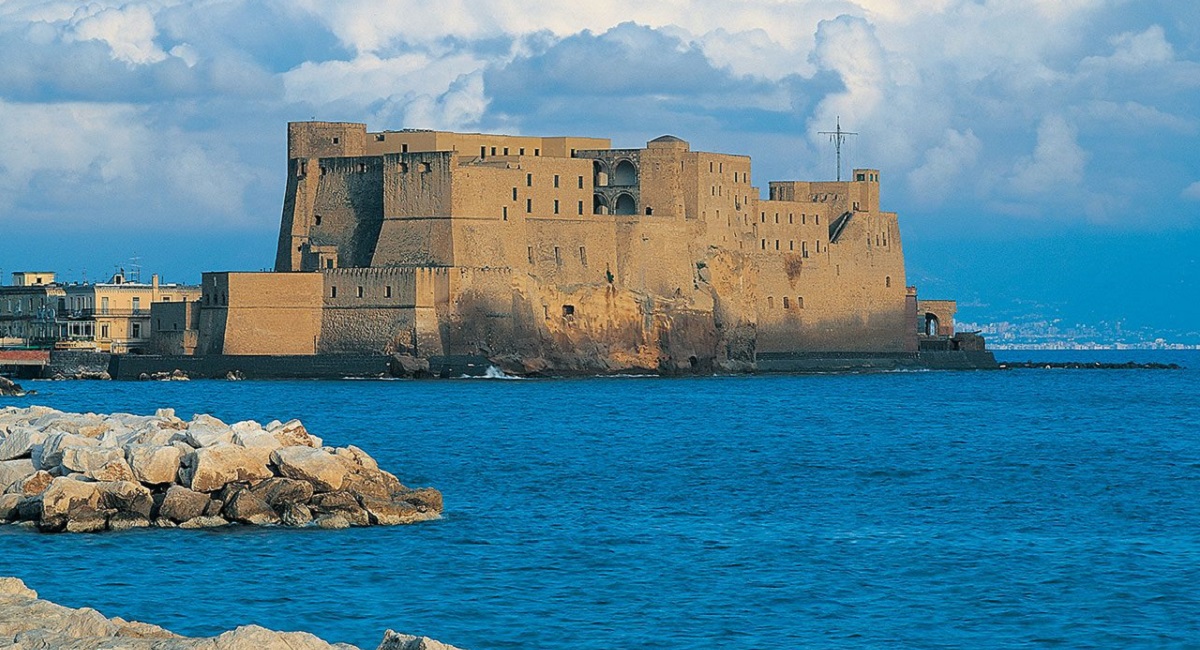
Castel dell'Ovo: remains of an ancient Greek port emerge
The site is linked above all to the legend of the mermaid Parthenope, generating goddess of Naples: according to tradition, even before the founding of Neapolis, the mermaid's body — who let herself die after being rejected by Ulysses — was carried here by the currents and remained buried here.
by Silvia Semonella
Castel dell'Ovo (Egg Castle) stands on the famous little island of Megaride, once separated from the mainland but today one with it.
In truth, however, this is not the only legend the island is at the heart of: one of the most famous features Lucius Licinius Lucullus, a mighty warrior of the Roman imperial age, who built on the island — home to the Nereids and the Dryads — what until late Roman times was known as the Castrum Lucullanum: the fortified villa of Megaride. The building housed wonderful libraries, moray eel breeding pools, and orchards of cherry trees brought from Persia and Cerasunta (an ancient Greek colony on the Black Sea from which the Neapolitan word “cerasa” [cherry] derives): Lucullus personally designed gardens and lawns and drove the gods from the dwelling, appropriating it entirely for himself. Banquets, bacchanals and spectacles were held there, but the most important event was the arrival of the wonderful sister of Cato, Lucullus's wife, Servilia, whose beauty astonished everyone, even the gods.
As Matilde Serao recounts in her “Leggende Napoletane” (Neapolitan Legends), Servilia began comparing herself to the various goddesses, going so far as to claim she surpassed even Venus in beauty. All this was overheard by the ocean nymphs and by Poseidon, who decided to punish her by condemning Megaride to erosion and to eventual disappearance.
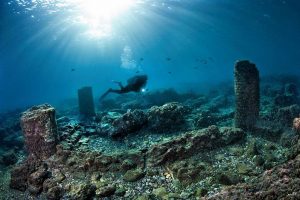
It is precisely on the seabed of the legendary little island, exactly on the right-hand side of the castle, that in mid-March an ancient Greek port was discovered, dating back some 25 centuries.
Archaeologists from the self-funded project “Sea Research Neapolis” have discovered four submerged tunnels, a three-metre-wide road furrowed by carts, and a long trench for soldiers, who would have protected the landing place.
«This is a discovery that opens up a new scenario for the reconstruction of the old structure of Palepolis» explained Mario Negri, the Neapolitan archaeologist who made the discovery. In May, underwater research resumed, opening up new possibilities from a tourism perspective too. «We'll need to dig — he added — searching for artefacts, even though the seabed is disturbed because it lies in a heavily built-up area; we also hope to find datable objects. Let's remember, though, that we're still very much in the realm of hypothesis».
Posted in:
Places in Naples
Related posts
-
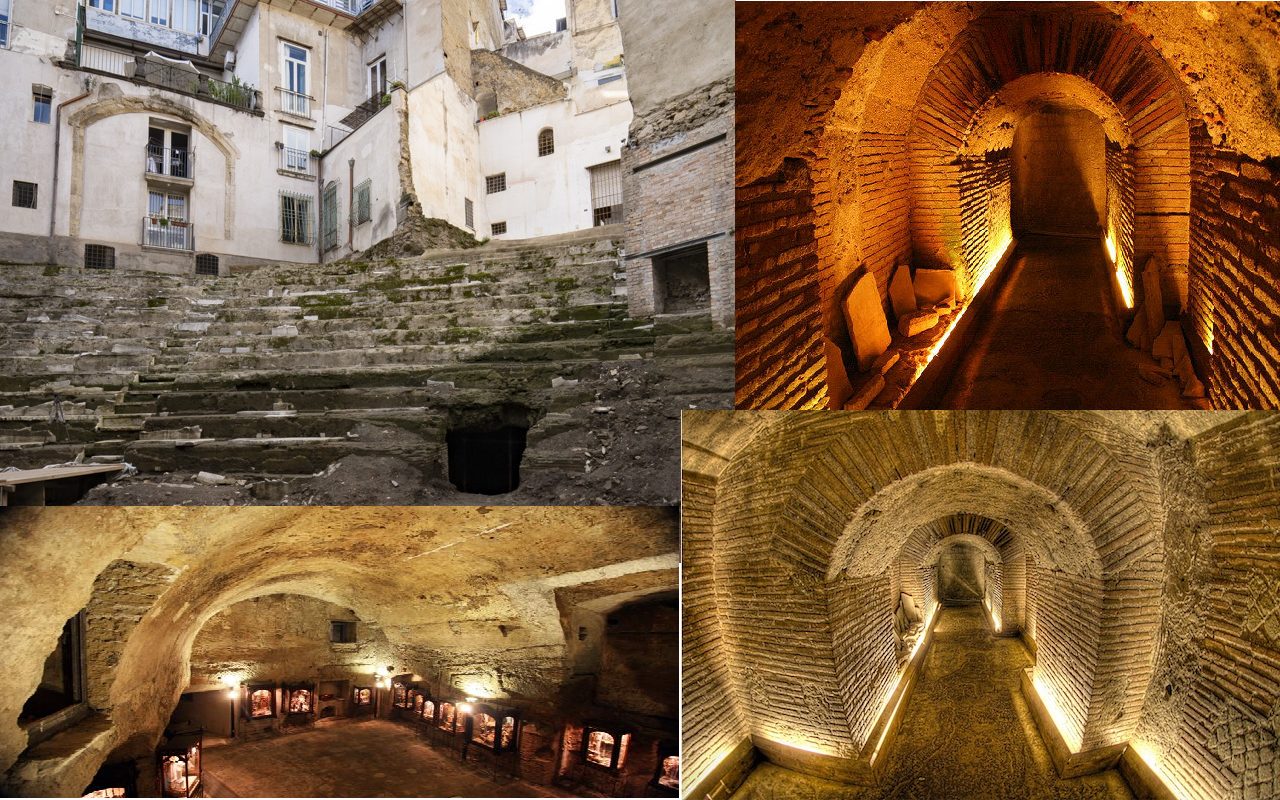 The Roman Theatre of Neapolis
Among the many wonders of Naples' historic centre stands the ancient Roman Theatre of Neapolis, between what are now...Read more
-
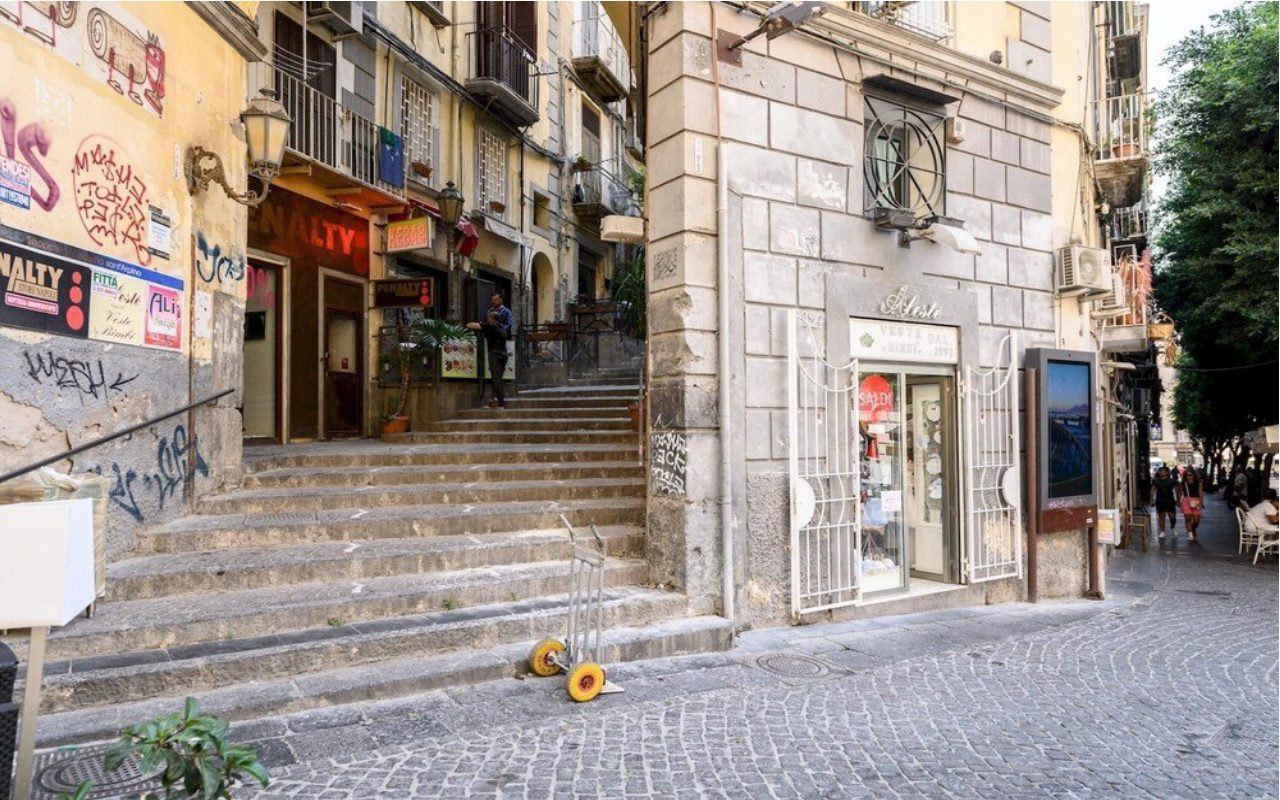 Discover Vicoletto Sant'Arpino: History and Beauty of Naples
There are corners of Naples that tell incredible stories, that take your breath away and make it unique, sincere and...Read more
-
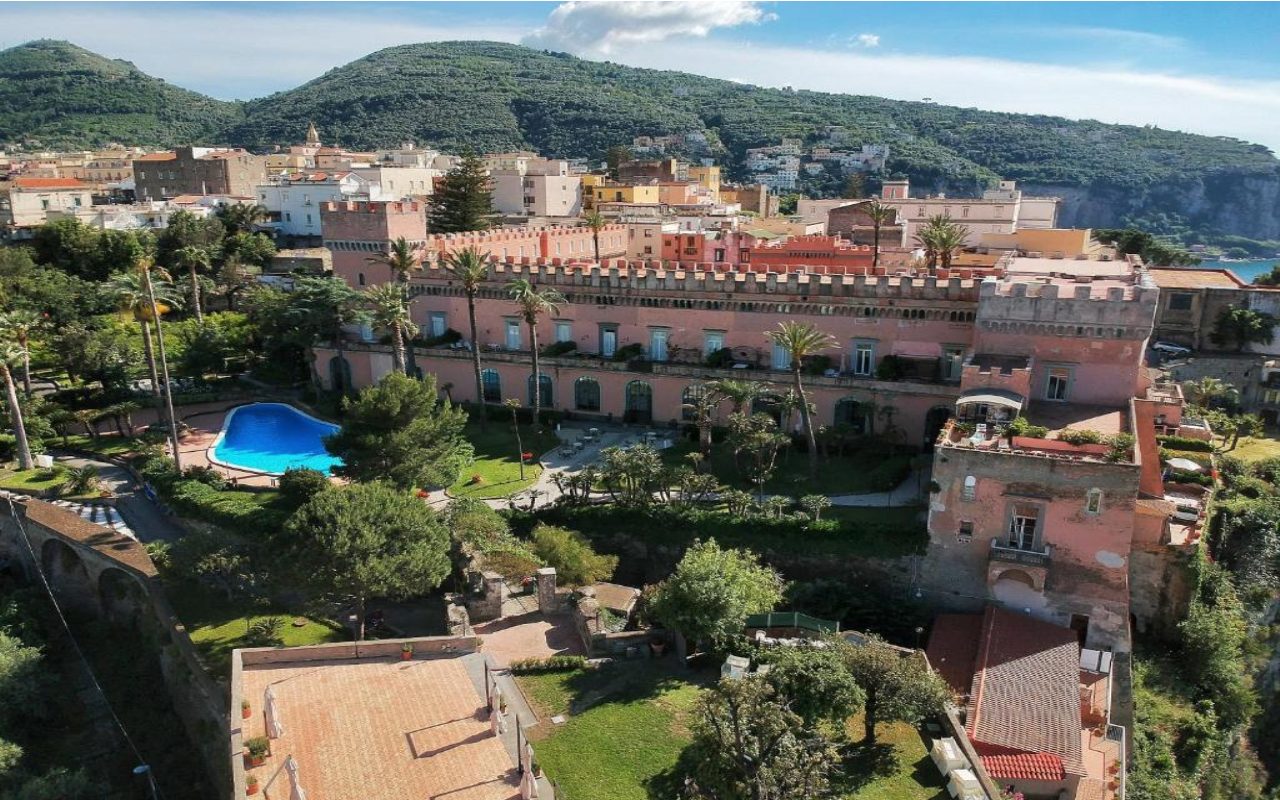 Giusso Castle: the legends of Vico Equense
Built at the end of the 13th century, Giusso Castle was designed as both a military fortress and a residence.Read more
-
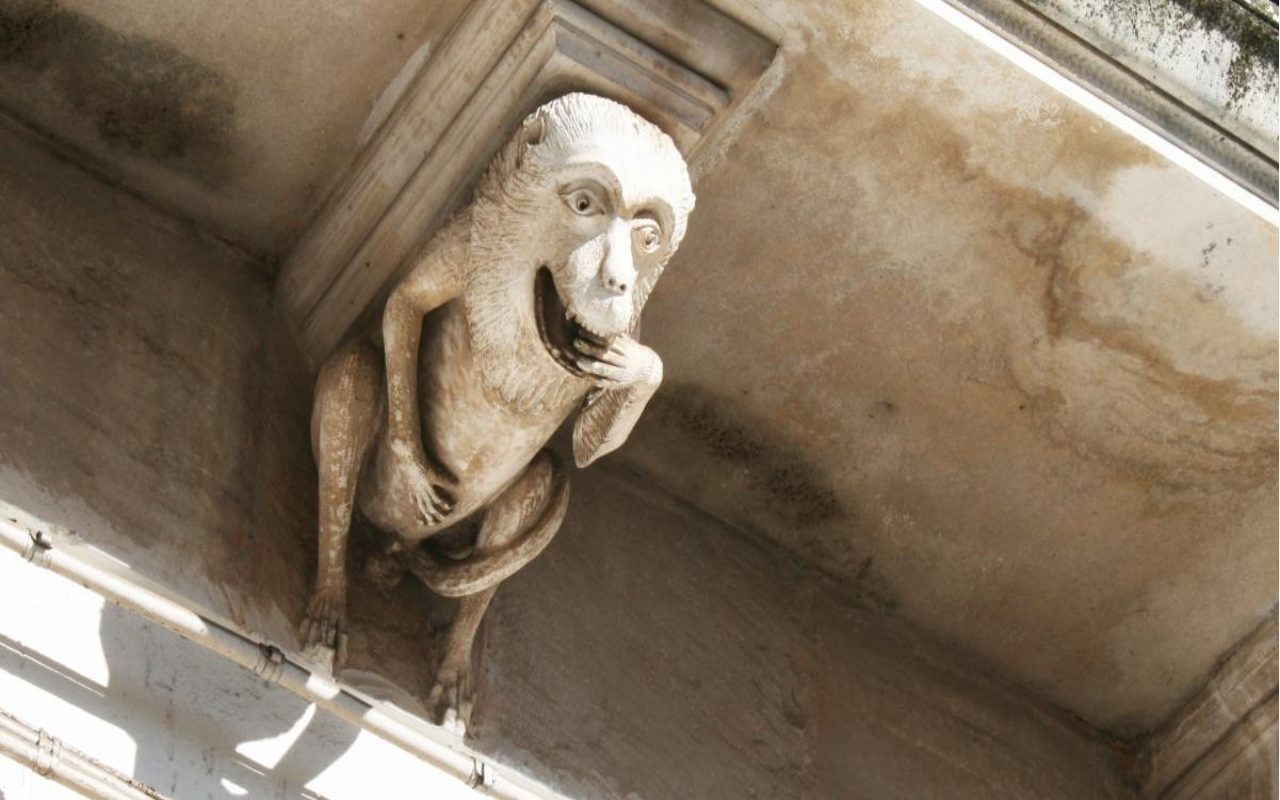 The apotropaic stone masks of lava rock and marble
Neapolitan apotropaic masks are truly fascinating works of art that can be admired on numerous historic buildings...Read more
-
 THE ROYAL PALACE OF CARDITELLO
The Tenuta Storica di Carditello (Historic Estate of Carditello), also known as the Reggia di Carditello (Royal...Read more
Leave a comment