



Born poor in Terra di Lavoro, Michelina Di Cesare chose the maquis and the rifle against a newly united Italy. A...
Latest posts
-
 Michelina Di Cesare, the brigantessa who defied a kingdomRead more
 -
 Neapolitan Hoodies: The Autumn 2026 Style GuideRead more
When the air turns crisp, in Naples people don't just reach for a hoodie: they reach for a piece of identity. Here's...
-
 Maradona Stadium: City Council allocates €50 million for Euro 2032Read more
The City Council has allocated €50 million for the redevelopment of the Diego Armando Maradona stadium, ahead of...
-
 Pizza Maxima 2026: Franco Pepe Is Once Again Best Pizzeria in ItalyRead more
At the fifth edition of Pizza Maxima, the Oscars of Italian pizza, Franco Pepe confirms his title as Best Pizzeria in...
-
 ‘L’acqua è poca e ‘a papera nun galleggia’: what it meansRead more
When the means are few, so is the result. Let's discover the most realistic Neapolitan saying there is.
-
 Avanti Scugnizzi: the story of the year's most loved T-shirtRead more
One word, ‘scugnizzo’ (Neapolitan street kid), and it holds the whole of Naples inside it. We tell you how the year's...
-
 'Chi chiagne fotte a chi ride': what it means and why it's truer than everRead more
At the market, at the counter, in the family: there's always someone who complains and gets more. It's the sharp...
-
 San Gennà, futtatenne! (Saint Januarius, don't worry about it!) San Gennaro, 19 September and the patron saint's t-shirtRead more
Who San Gennaro was, the miracle of the blood that liquefies, and the feast on 19 September. Plus that close,...
-
 'O purpo se coce int'a ll'acqua soja: what it means (o purpo se coce meaning)Read more
Someone has wronged you, and instead of reacting, you wait in silence with a smile? Here's the Neapolitan proverb...
-
 Cazzimma: meaning, origin and why it can't be translatedRead more
There's a word that explains everything in Naples and can't be translated into any language. It's called cazzimma,...
Blog categories
Search in blog
Archived posts
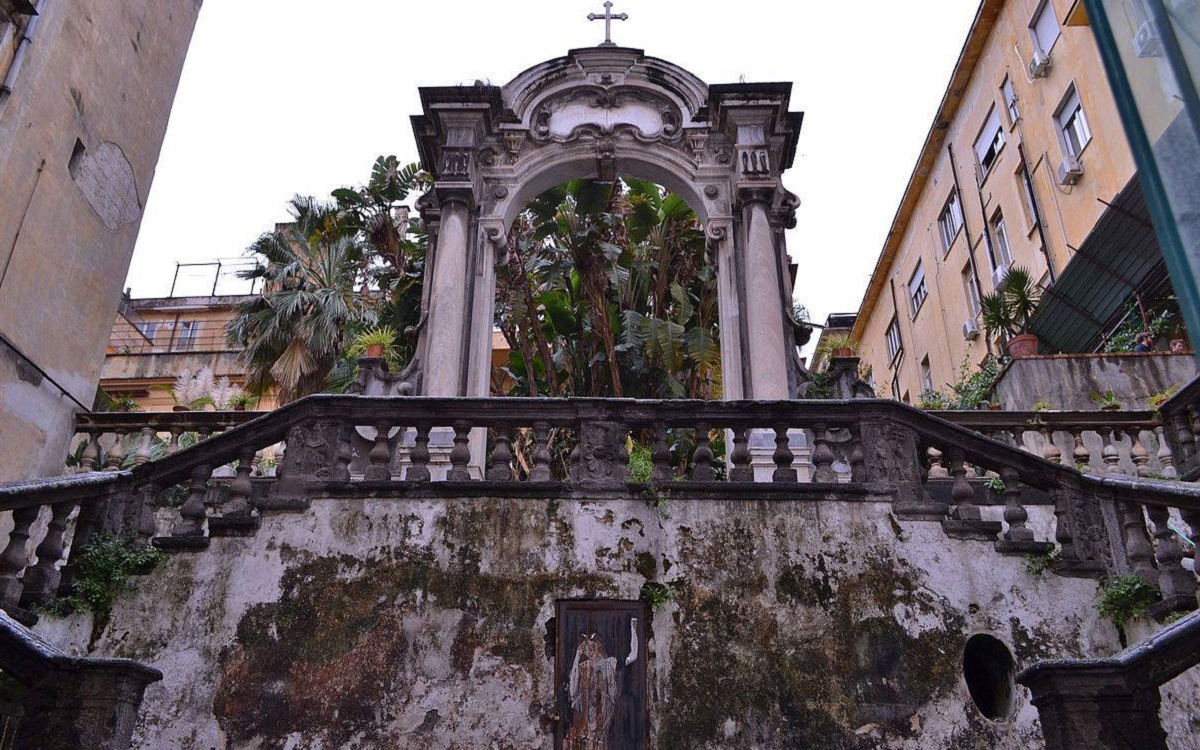
Where the San Gaudioso complex once stood
About three centuries later, the Neapolitan bishop Stefano II decided to restore the buildings, which had by then fallen into ruin, in order to house Benedictine nuns there, and he also added the new construction of the Church of San Gaudioso, dedicated to Santa Fortunata.
In the heart of the historic centre of Naples, along the Cardo, precisely at Vico San Gaudioso, one can see an imposing Fanzago-style staircase, above which stands a splendid portal made of piperno stone. This beautiful arch, which today seems to guard the entrance to a bare garden, was once the doorway into the ancient religious complex of San Gaudioso.
History
This structure was founded around the 5th century thanks to Settimo Celio Gaudioso, bishop of Abitine (Tunisia), and other African clergymen who, after being driven from their homeland for refusing to convert to Arianism, were shipwrecked in Naples and built the complex.
About three centuries later, the Neapolitan bishop Stefano II decided to restore the buildings, which had by then fallen into ruin, in order to house Benedictine nuns there, and he also added the new construction of the Church of San Gaudioso, dedicated to Santa Fortunata. In 1530, the Benedictine nuns were succeeded by the nuns of Santa Maria d'Agnone, who brought with them, into the church, the relics of the Madonna d'Agnone.
Between the 16th and 17th centuries the complex underwent its true expansion, being remodelled according to Renaissance artistic principles. First, the enchanting cloister designed by Giovanni Francesco di Palma was built; later, the piperno staircase, still visible today, was created by the hand of Cosimo Fanzago.
In February 1799, at the time of the proclamation of the Neapolitan Republic, the Church of San Gaudioso was deliberately set on fire to flush out rebels who had taken refuge within its sacred walls. During this tragic event, the nuns of Santa Maria d'Agnone managed to save only a few relics from the flames, such as the blood of San Gaudioso and the sacred image of the Madonna they venerated. As a result, the valuable works of art once kept inside the church — including paintings by Luca Giordano, Battistello Caracciolo, Francesco Solimena and many others — were irremediably destroyed.
The monastery escaped the fire but, later, in modern times, was converted into a university site: it first housed the astronomical observatory and, subsequently, that of the Navy.
In 1920 it was decided to demolish the entire complex to make way for new hospitals, and today all that remains of the structure is the entrance staircase, the portal, and a hint of the cloister.
Sadly, this was one of the many historic buildings that fell victim to the aggressive urbanisation of the city of Naples. Even though only a few remains survive, it continues to be a place of intense charm that certainly deserves a visit.
Posted in:
Places in Naples
Related posts
-
 The Roman Theatre of Neapolis
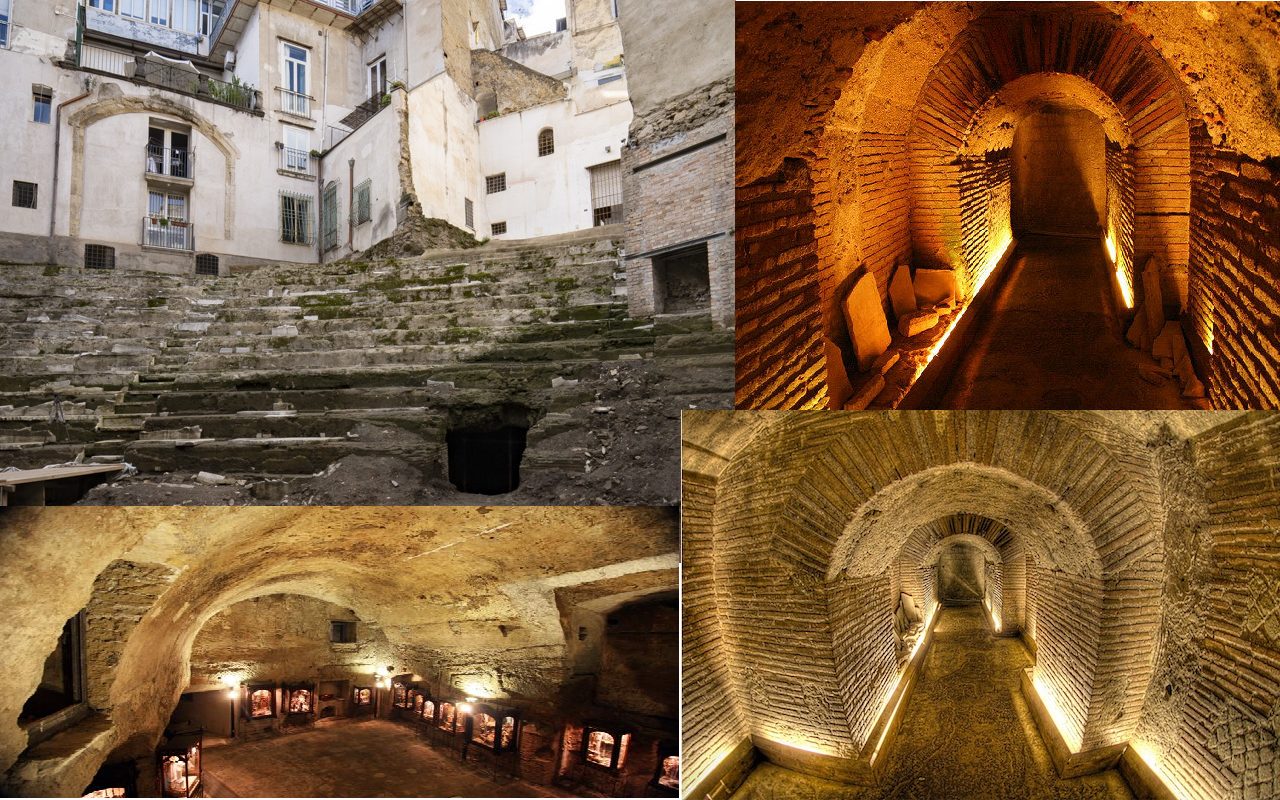
Among the many wonders of Naples' historic centre stands the ancient Roman Theatre of Neapolis, between what are now...Read more
The Roman Theatre of Neapolis
Among the many wonders of Naples' historic centre stands the ancient Roman Theatre of Neapolis, between what are now...Read more -
 Discover Vicoletto Sant'Arpino: History and Beauty of Naples
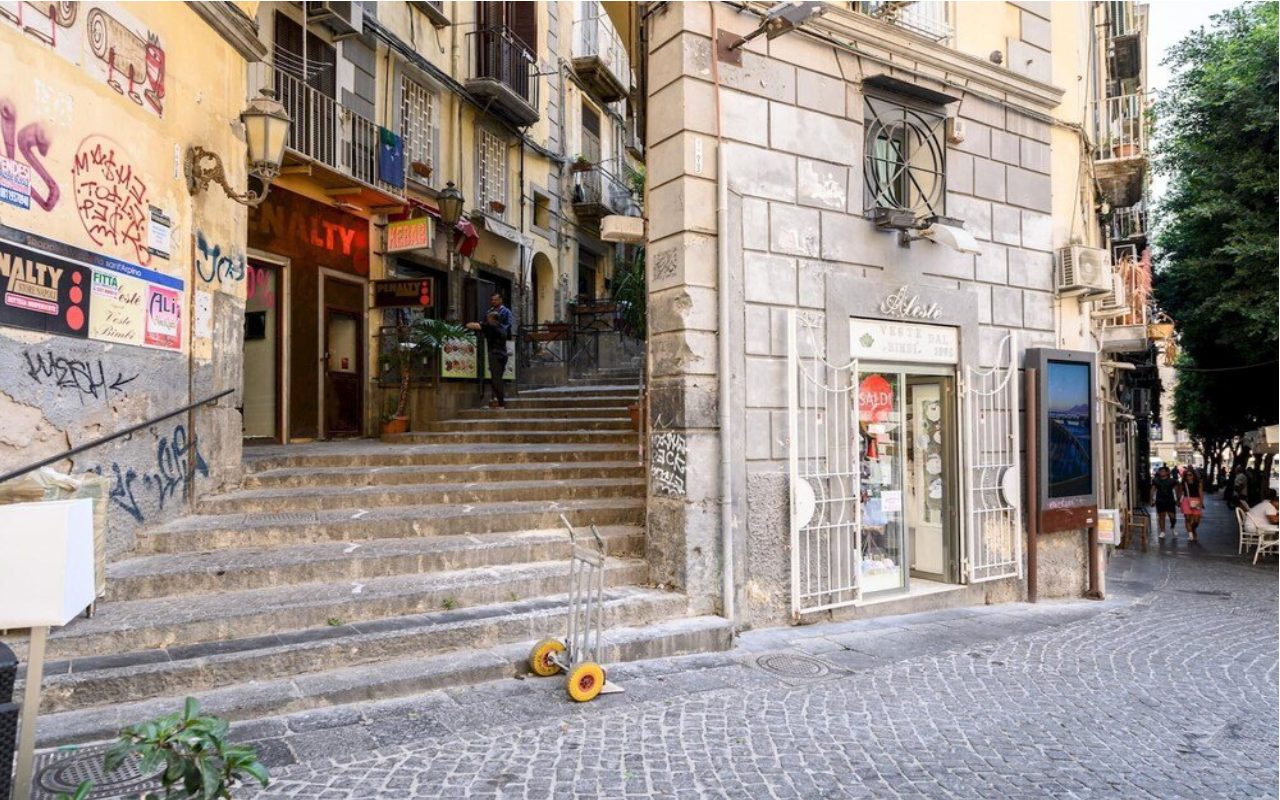
There are corners of Naples that tell incredible stories, that take your breath away and make it unique, sincere and...Read more
Discover Vicoletto Sant'Arpino: History and Beauty of Naples
There are corners of Naples that tell incredible stories, that take your breath away and make it unique, sincere and...Read more -
 Giusso Castle: the legends of Vico Equense
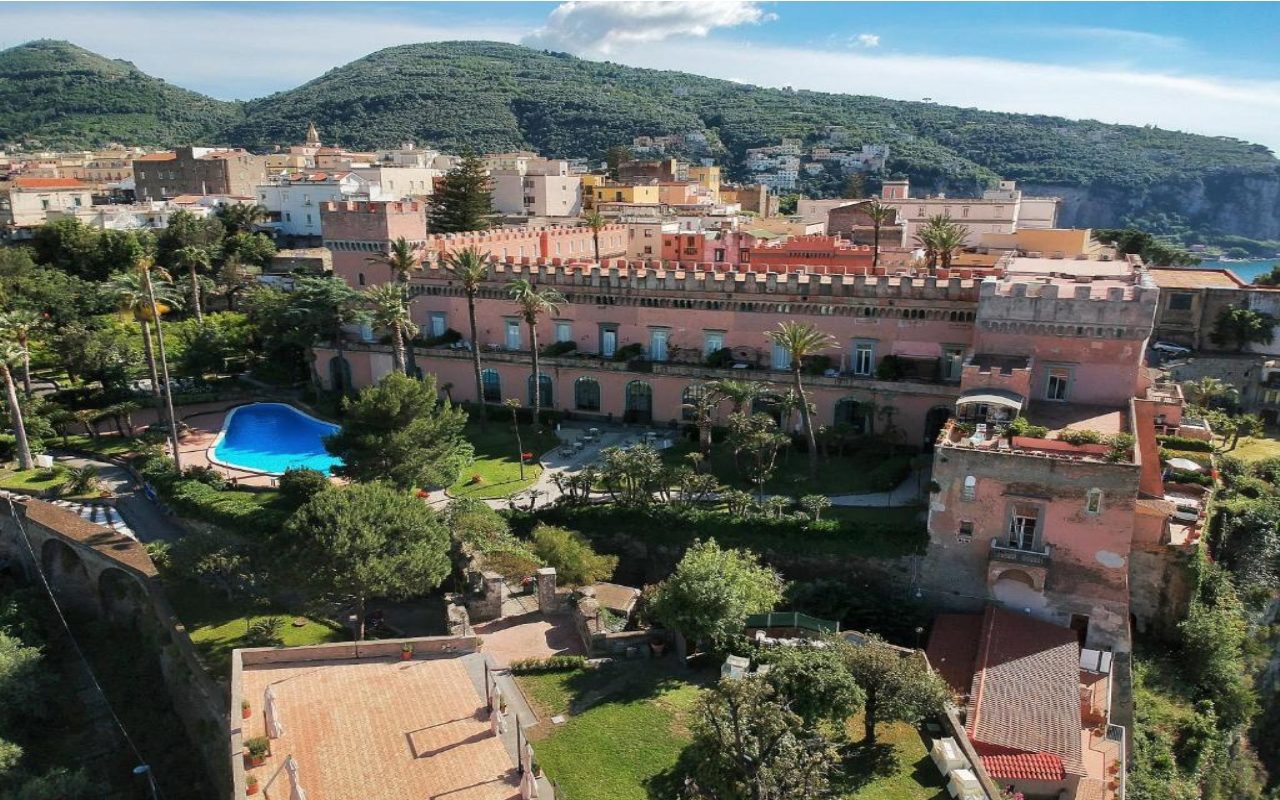
Built at the end of the 13th century, Giusso Castle was designed as both a military fortress and a residence.Read more
Giusso Castle: the legends of Vico Equense
Built at the end of the 13th century, Giusso Castle was designed as both a military fortress and a residence.Read more -
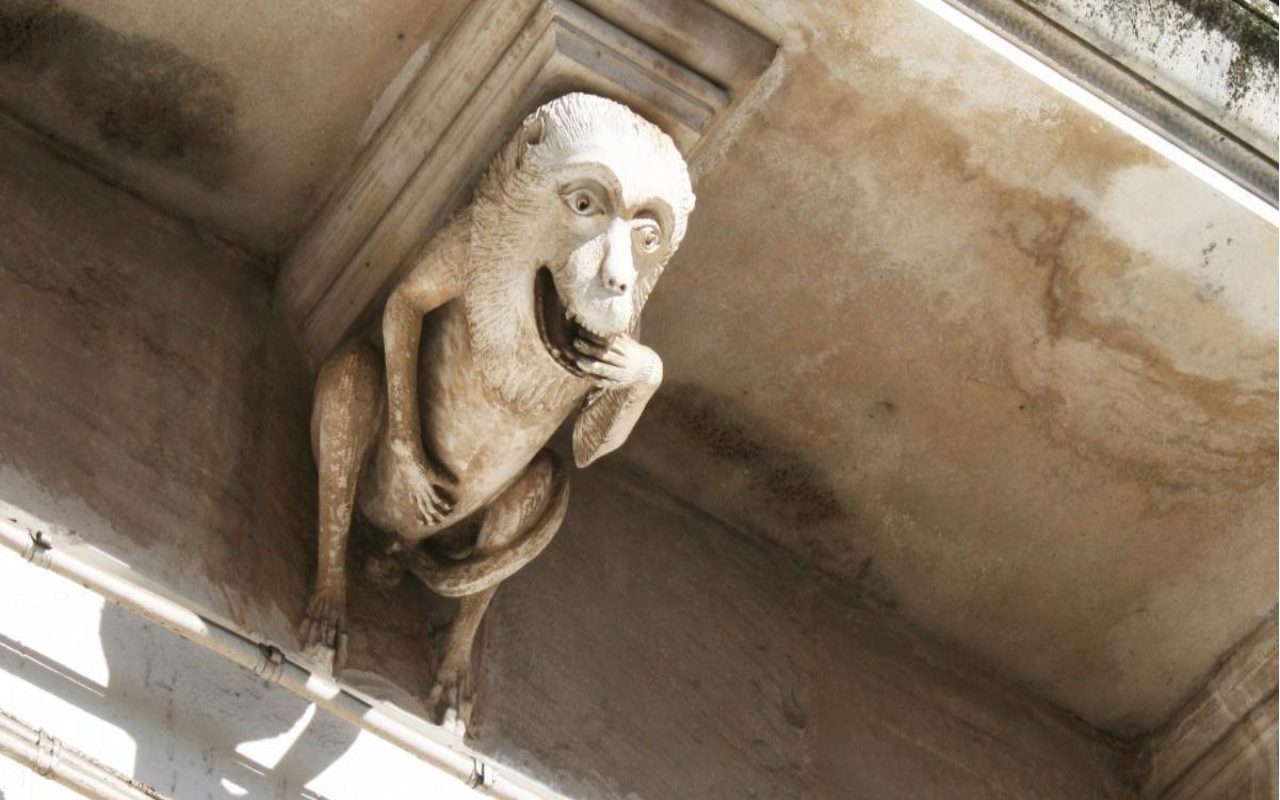 The apotropaic stone masks of lava rock and marble
Neapolitan apotropaic masks are truly fascinating works of art that can be admired on numerous historic buildings...Read more
The apotropaic stone masks of lava rock and marble
Neapolitan apotropaic masks are truly fascinating works of art that can be admired on numerous historic buildings...Read more -
 THE ROYAL PALACE OF CARDITELLO
The Tenuta Storica di Carditello (Historic Estate of Carditello), also known as the Reggia di Carditello (Royal...Read more
THE ROYAL PALACE OF CARDITELLO
The Tenuta Storica di Carditello (Historic Estate of Carditello), also known as the Reggia di Carditello (Royal...Read more
Leave a comment