



In Naples, a graduation is never a private affair: it's a neighbourhood celebration. Here's how to choose an original...
Latest posts
-
 Original Neapolitan graduation gift: ideas for the graduate (him and her)Read more
-
 Asso 'e mazze: meaning and history of the Neapolitan ace of clubsRead more
The strongest card on the green table becomes, in Naples, the most elegant way to say who really calls the shots....
-
 Michelina Di Cesare, the brigantessa who defied a kingdomRead more
Born poor in Terra di Lavoro, Michelina Di Cesare chose the maquis and the rifle against a newly united Italy. A...
-
 Neapolitan Hoodies: The Autumn 2026 Style GuideRead more
When the air turns crisp, in Naples people don't just reach for a hoodie: they reach for a piece of identity. Here's...
-
 Maradona Stadium: City Council allocates €50 million for Euro 2032Read more
The City Council has allocated €50 million for the redevelopment of the Diego Armando Maradona stadium, ahead of...
-
 Pizza Maxima 2026: Franco Pepe Is Once Again Best Pizzeria in ItalyRead more
At the fifth edition of Pizza Maxima, the Oscars of Italian pizza, Franco Pepe confirms his title as Best Pizzeria in...
-
 ‘L’acqua è poca e ‘a papera nun galleggia’: what it meansRead more
When the means are few, so is the result. Let's discover the most realistic Neapolitan saying there is.
-
 Avanti Scugnizzi: the story of the year's most loved T-shirtRead more
One word, ‘scugnizzo’ (Neapolitan street kid), and it holds the whole of Naples inside it. We tell you how the year's...
-
 'Chi chiagne fotte a chi ride': what it means and why it's truer than everRead more
At the market, at the counter, in the family: there's always someone who complains and gets more. It's the sharp...
-
 San Gennà, futtatenne! (Saint Januarius, don't worry about it!) San Gennaro, 19 September and the patron saint's t-shirtRead more
Who San Gennaro was, the miracle of the blood that liquefies, and the feast on 19 September. Plus that close,...
Blog categories
Search in blog
Archived posts
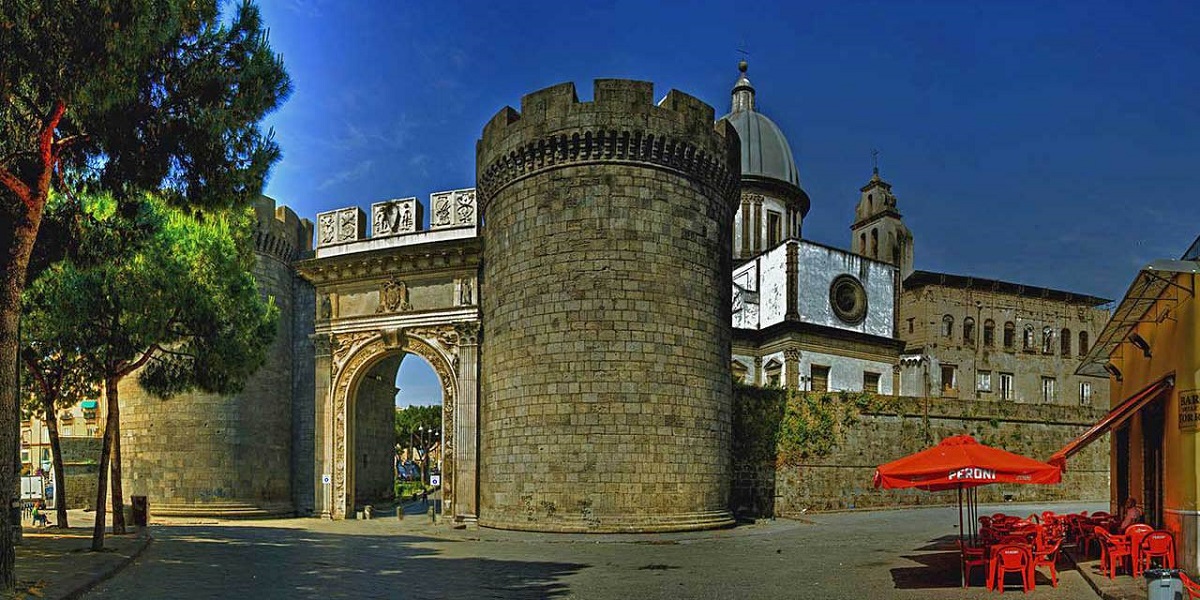
Neapolitan Day: the most famous gates of Naples
After a virtual tour that took us to discover the most beautiful fountains of Naples, now it's time to get to know the city's most famous and monumental gates.
After a virtual tour that took us to discover the most beautiful fountains of Naples, now it's time to get to know the most famous and monumental gates of the city. There are many, built in different eras, some during the Bourbon kingdom, others much earlier, even around the year 1000, erected for the most varied reasons.
Porta San Gennaro
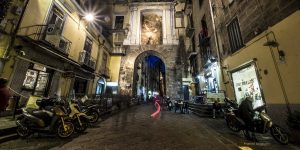
This is the oldest Neapolitan gate still standing; the first records, in fact, date back to 928. It was the only access point for those coming from the northern part of the city and, above all, the only way to reach the catacombs of San Gennaro (Saint Januarius), from whom, indeed, the name derives. The gate was actually also called the tufo gate because the large blocks from the quarries of the Vallone della Sanità passed through it.
In 1537 it was moved, by order of Don Pedro de Toledo, to what is still its final location today, namely on Via Foria, absorbed into the surrounding structures. In 1656, after the devastating plague epidemic, a fresco was added depicting Saints Gennaro, Rosalia and Francesco Saverio imploring protection, as an ex voto. Indeed, precisely because of its position and its proximity to a cemetery for the victims of the many epidemics, the figure of San Gennaro was added, turned towards those who, unlucky on Earth, would be welcomed into the Kingdom of Heaven.
Porta dello Spirito Santo
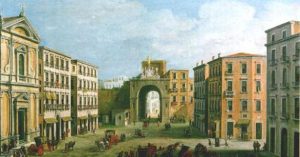
Dating back to classical times, before its demolition it was certainly the oldest gate in Naples. The Porta Reale (as it was called at first), after various demolitions and relocations, was placed at the end of the Via Toledo thoroughfare, opened in 1536 by the viceroy Don Pedro de Toledo, forming the new entrance to the city from the north and from the hilly area. It took the name Porta dello Spirito Santo (Gate of the Holy Spirit) after the opening of the basilica of the Spirito Santo. Its demolition was sanctioned in the 18th century, by royal decree, due to its precarious structural condition and the problems it caused for traffic.
Porta Nolana
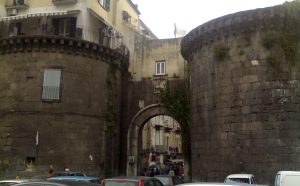
Located in Piazza Nolana, flanked by two piperno-stone towers called the Torre della Fede (Tower of Faith, or Cara Fè), to the south, and the Torre della Speranza (Tower of Hope), to the north, it was built in the 15th century by Giuliano da Maiano. It was so named because from here a road set off towards the ancient borough of what is now Nola. Built in Renaissance style, it features a round marble arch, and on the façade facing Via Nolana there is a seventeenth-century bust depicting San Gaetano
Thiene (Saint Cajetan).
Porta Capuana (cover image)
Always an important crossroads of different routes and an access point for those coming from the east towards the city centre, it stands close to Castel Capuano and was built in 1484 by King Ferrante d'Aragona. It takes its name from being oriented towards the city of Capua; it consists of a white marble arch richly adorned with bas-reliefs, flanked by two towers (symbolising honour and virtue).
Port'Alba
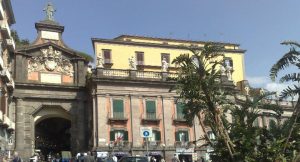
Located on the left side of the semicircle of Piazza Dante (once known as Largo Mercatello), it takes its name from Don Antonio Álvarez de Toledo, Duke of Alba and descendant of Don Pedro de Toledo, the Spanish viceroy who had it built in 1625. The gate came about following the initiative of the local population to open a "pertuso" (a breach, or little opening) in the old Angevin city walls, to make it easier to pass from one area of the city to another. The rebuilding and extension works, which gave the gate its current appearance, were carried out in 1797, and the inscription placed there in honour of Ferdinando IV di Borbone (Bourbon) was torn down during the Neapolitan Republic of 1799.
Porta Medina
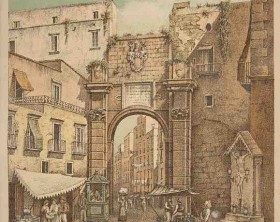
The last gate, in chronological order of construction, is Porta Medina, built in 1597 during the viceroyalty of the Count of Olivares Enrique de Guzmán. This one too was built following a "pertuso" (a breach) opened by the local population, to make it easier for those coming from the hilly area to get through, who otherwise had to travel all the way to the Porta dello Spirito Santo to enter the city. Cosimo Fanzago, commissioned by the viceroy, the Duke of Medina, took charge of regularising the "pertuso", so much so that the gate continued to be nicknamed by the people "Porta Pertuso" (Breach Gate).
Posted in:
Places in Naples
Related posts
-
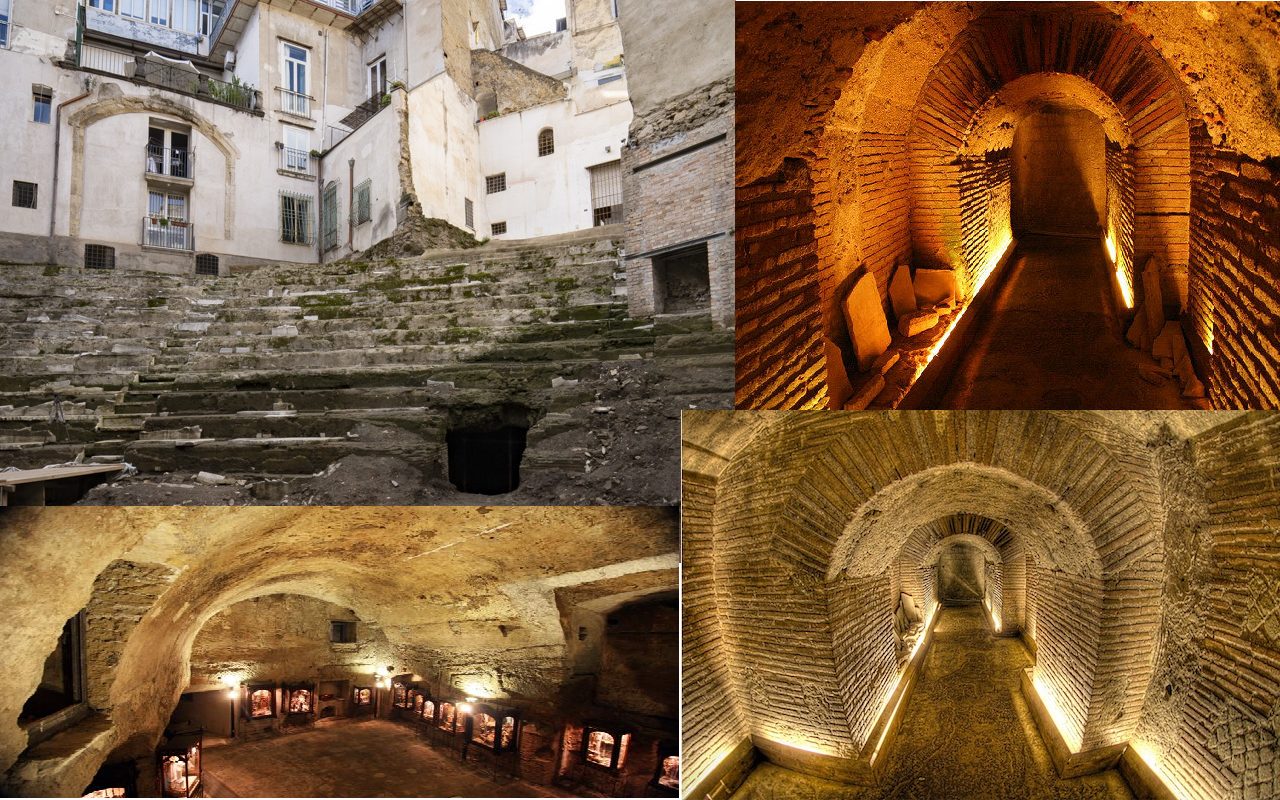 The Roman Theatre of Neapolis
Among the many wonders of Naples' historic centre stands the ancient Roman Theatre of Neapolis, between what are now...Read more
-
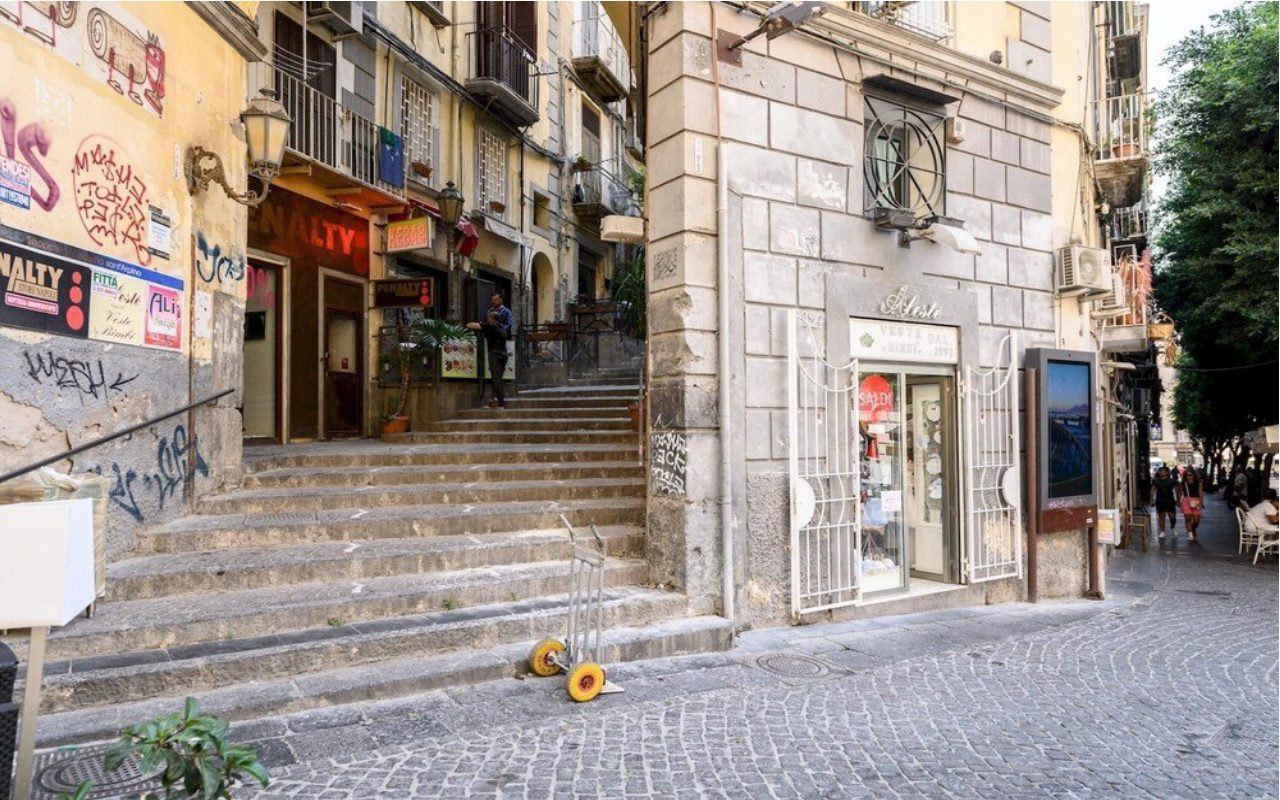 Discover Vicoletto Sant'Arpino: History and Beauty of Naples
There are corners of Naples that tell incredible stories, that take your breath away and make it unique, sincere and...Read more
-
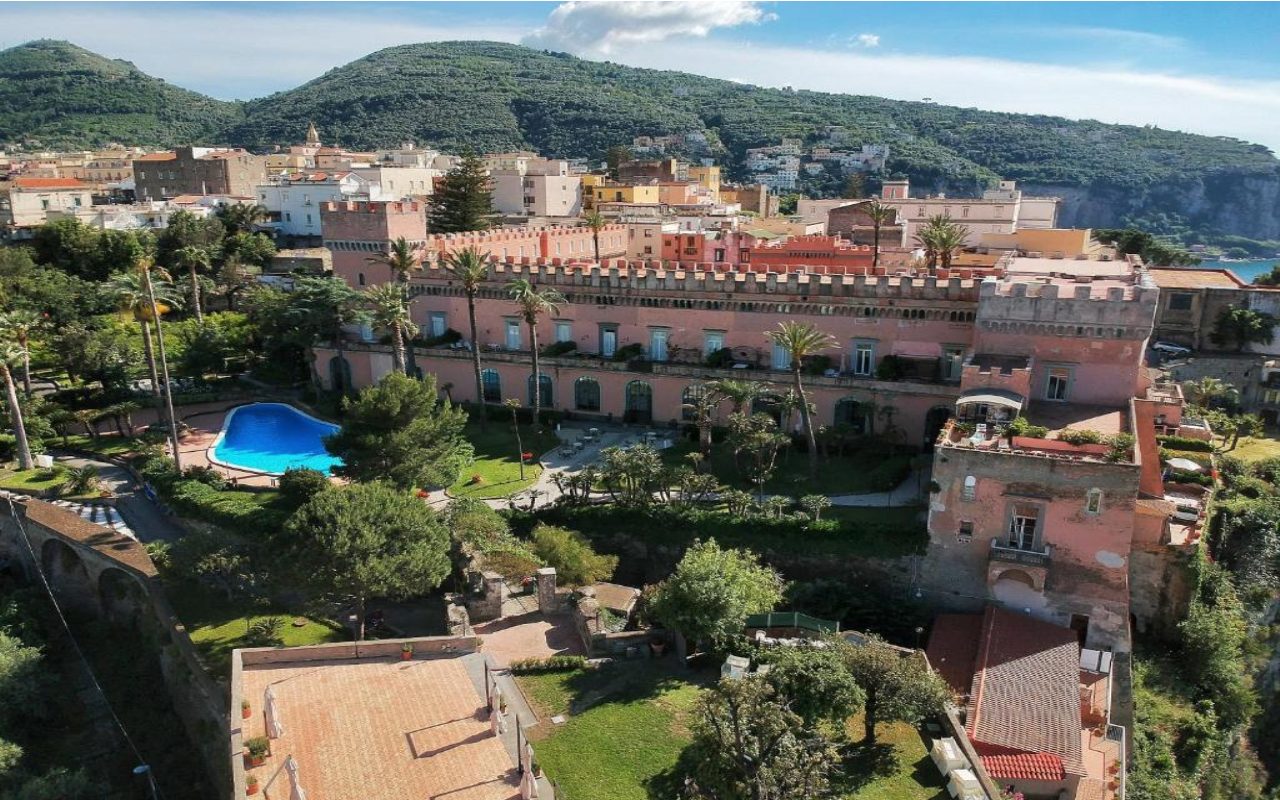 Giusso Castle: the legends of Vico Equense
Built at the end of the 13th century, Giusso Castle was designed as both a military fortress and a residence.Read more
-
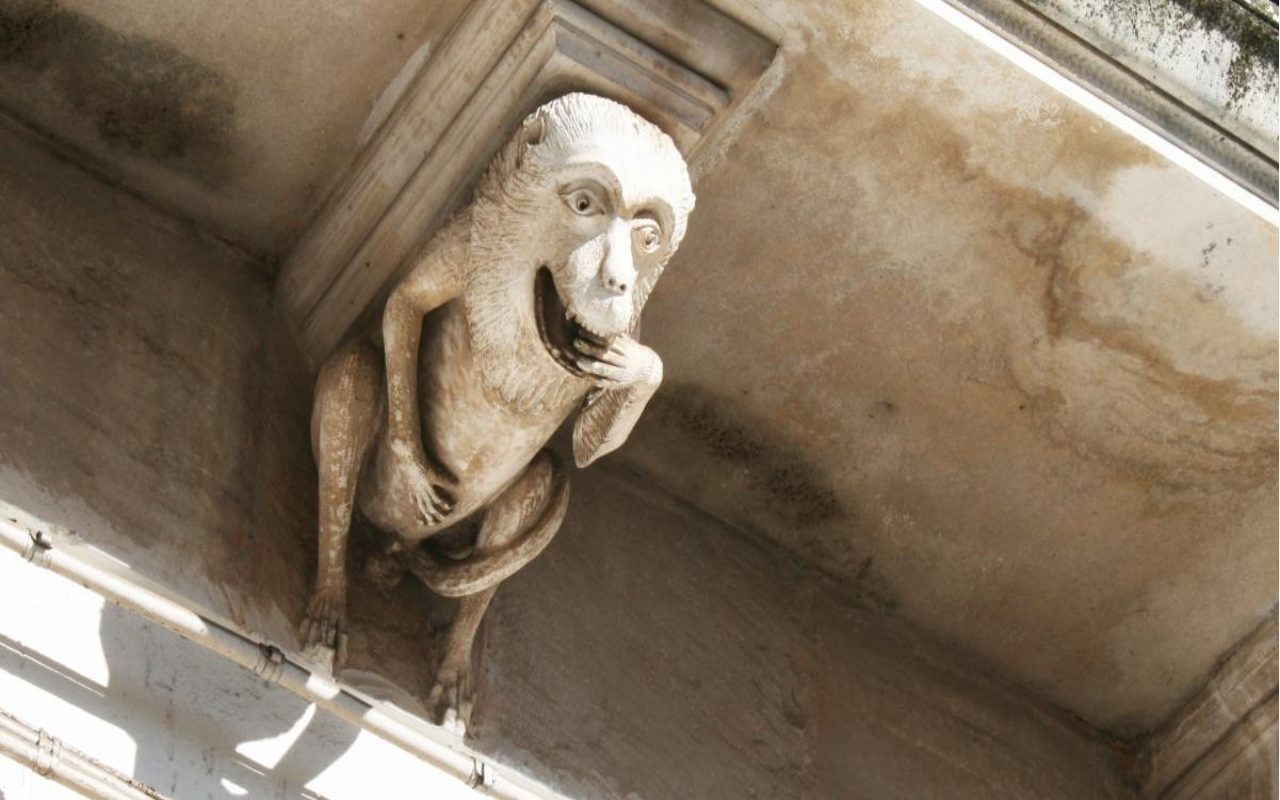 The apotropaic stone masks of lava rock and marble
Neapolitan apotropaic masks are truly fascinating works of art that can be admired on numerous historic buildings...Read more
-
 THE ROYAL PALACE OF CARDITELLO
The Tenuta Storica di Carditello (Historic Estate of Carditello), also known as the Reggia di Carditello (Royal...Read more
Leave a comment