



Born poor in Terra di Lavoro, Michelina Di Cesare chose the maquis and the rifle against a newly united Italy. A...
Latest posts
-
 Michelina Di Cesare, the brigantessa who defied a kingdomRead more
 -
 Neapolitan Hoodies: The Autumn 2026 Style GuideRead more
When the air turns crisp, in Naples people don't just reach for a hoodie: they reach for a piece of identity. Here's...
-
 Maradona Stadium: City Council allocates €50 million for Euro 2032Read more
The City Council has allocated €50 million for the redevelopment of the Diego Armando Maradona stadium, ahead of...
-
 Pizza Maxima 2026: Franco Pepe Is Once Again Best Pizzeria in ItalyRead more
At the fifth edition of Pizza Maxima, the Oscars of Italian pizza, Franco Pepe confirms his title as Best Pizzeria in...
-
 ‘L’acqua è poca e ‘a papera nun galleggia’: what it meansRead more
When the means are few, so is the result. Let's discover the most realistic Neapolitan saying there is.
-
 Avanti Scugnizzi: the story of the year's most loved T-shirtRead more
One word, ‘scugnizzo’ (Neapolitan street kid), and it holds the whole of Naples inside it. We tell you how the year's...
-
 'Chi chiagne fotte a chi ride': what it means and why it's truer than everRead more
At the market, at the counter, in the family: there's always someone who complains and gets more. It's the sharp...
-
 San Gennà, futtatenne! (Saint Januarius, don't worry about it!) San Gennaro, 19 September and the patron saint's t-shirtRead more
Who San Gennaro was, the miracle of the blood that liquefies, and the feast on 19 September. Plus that close,...
-
 'O purpo se coce int'a ll'acqua soja: what it means (o purpo se coce meaning)Read more
Someone has wronged you, and instead of reacting, you wait in silence with a smile? Here's the Neapolitan proverb...
-
 Cazzimma: meaning, origin and why it can't be translatedRead more
There's a word that explains everything in Naples and can't be translated into any language. It's called cazzimma,...
Blog categories
Search in blog
Archived posts
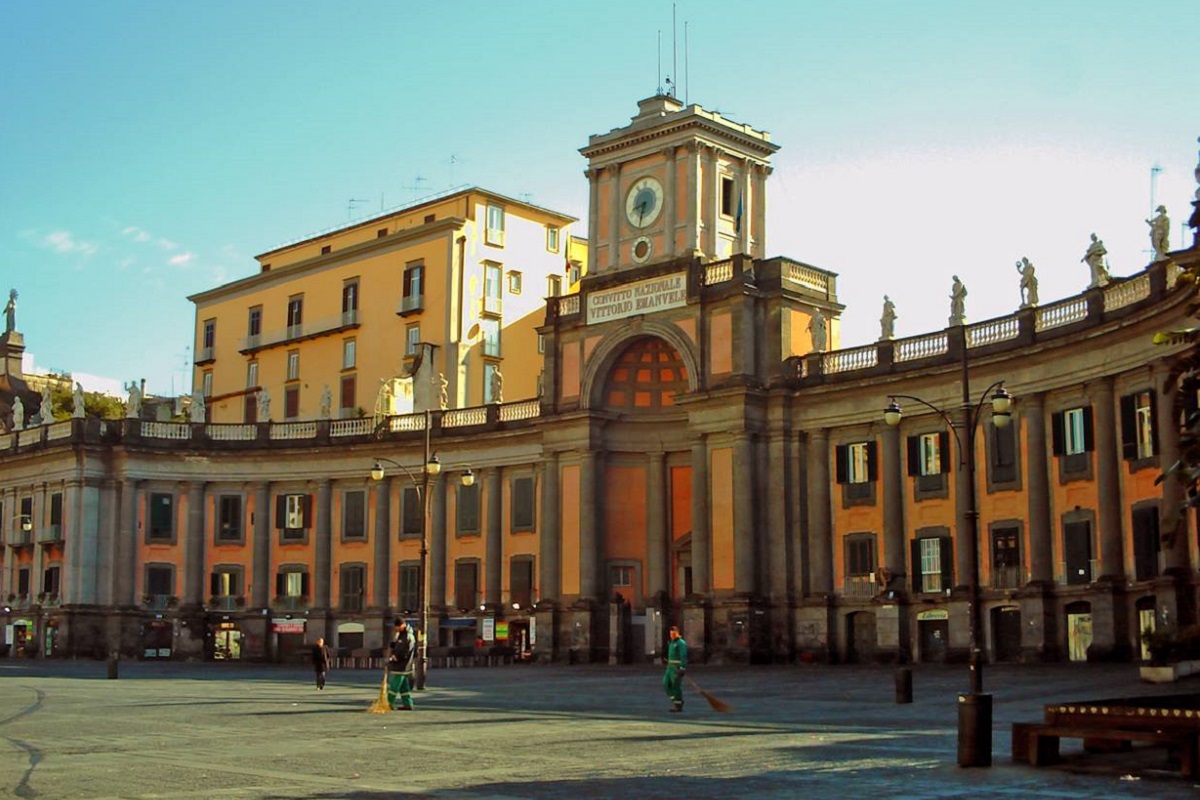
Piazza Dante and the history of the Convitto Nazionale complex
It was precisely in 1625 that the piazza was officially born, when the local people made an unauthorised "pertuso" (breach) in the city wall, so as to connect with the surrounding boroughs, in particular that of the Avvocata, which was expanding by the day.
Standing right in the heart of the historic centre, Piazza Dante is one of the city's key squares; it marks the start of Via Toledo and the entrance to Port'Alba.
The square, however, had already become a centre of city life back in 1588, when it began hosting the city's second market, after that of Piazza Mercato; for this reason, it earned the name "Largo Mercatello" (Little Market Square).
Until the mid-nineteenth century it housed, to the north, the grain-pit building and, to the south, the oil cisterns (the city's main food stores), as well as offices, hospitals and well-known cafés.
The square took on its final layout, the one we all know today, in the second half of the eighteenth century thanks to the architect Luigi Vanvitelli, who was commissioned to build the "Foro Carolino", a monument celebrating King Charles III of Bourbon. For this very reason, the structure, which features two curved side wings, was adorned with twenty-six statues representing the virtues of Charles (three of which were carved by Giuseppe Sammartino).
The history of the Convitto Nazionale
In 1768, Ferdinand IV of Bourbon, after expelling the Jesuits from the kingdom, founded the Casa del Salvatore (House of the Saviour) here, which in 1807 became the Collegio del Gesù Vecchio, then the Real Collegio di Napoli (Royal College of Naples) and, finally, with the authorisation of Gioacchino Murat, the Liceo del Salvatore.
After serving as the seat of the Chamber of Parliament, in 1820 it was once again transformed, this time into a music conservatory, and handed back to the Jesuits, who founded a public school here, opening an entrance to the Convitto right in the central niche of the Foro Carolino.
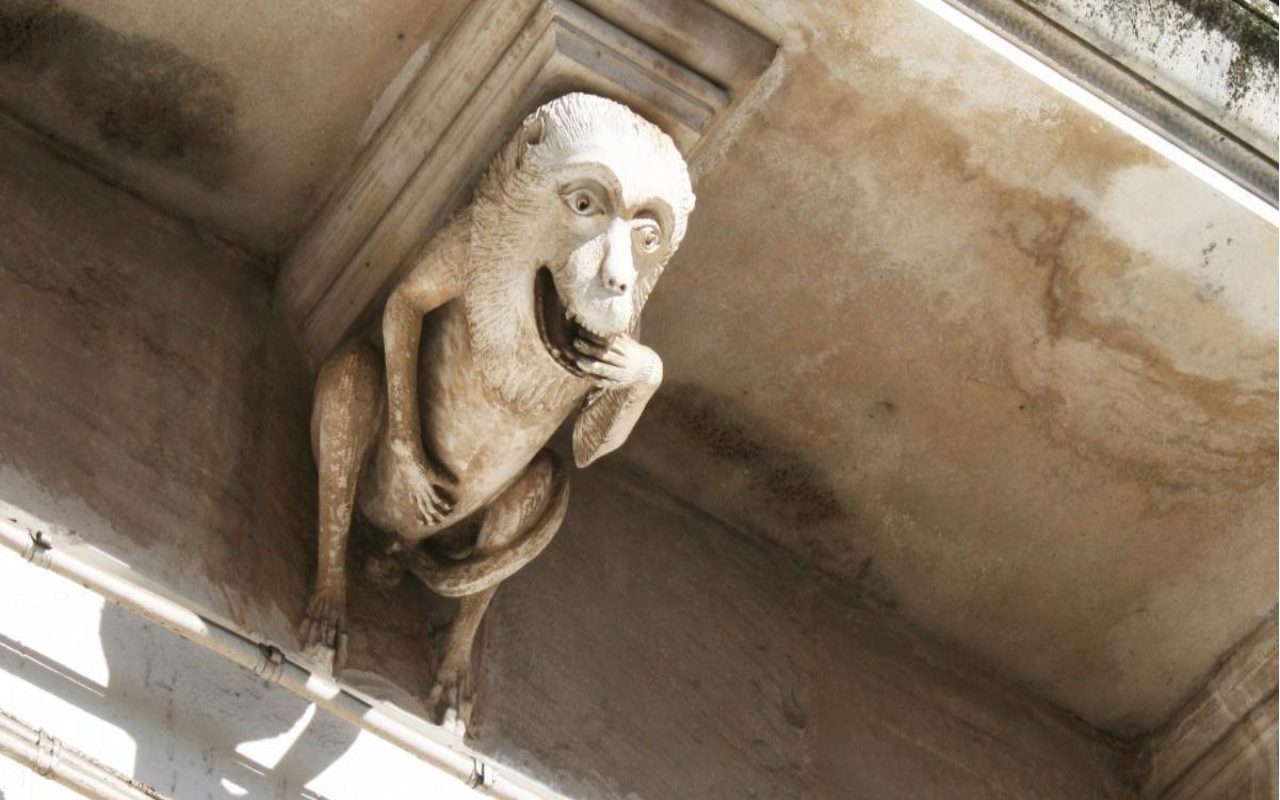
The oldest surviving element of the complex that can still be admired today is the small cloister, which has a square plan and two tiers: the first, probably the oldest still standing in Naples (early 14th century), features columns and zoomorphic and anthropomorphic capitals supporting the arches; the second, dating from the seventeenth century, is built with square piperno pillars supporting round arches. In the fifteenth and sixteenth centuries the convent was extended to the north, with the construction of the large cloister, in Renaissance style.
With the arrival of Garibaldi in 1860, the Jesuits were once again expelled and their property confiscated and nationalised. The building therefore officially became the "Convitto Nazionale Vittorio Emanuele II", which today houses a primary school, a middle school, a European Classical Lyceum, a traditional Scientific Lyceum and a Sports Scientific Lyceum.
Posted in:
Places in Naples
Related posts
-
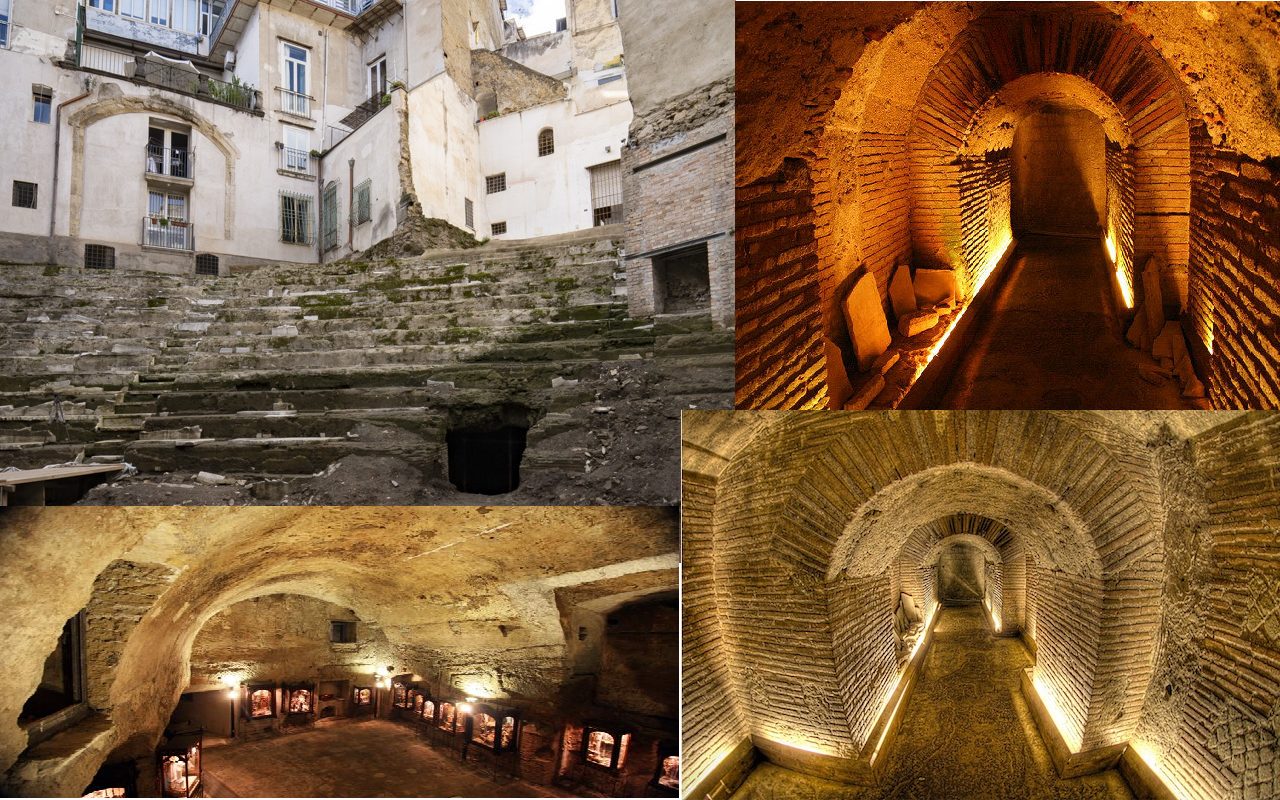 The Roman Theatre of Neapolis
Among the many wonders of Naples' historic centre stands the ancient Roman Theatre of Neapolis, between what are now...Read more
The Roman Theatre of Neapolis
Among the many wonders of Naples' historic centre stands the ancient Roman Theatre of Neapolis, between what are now...Read more -
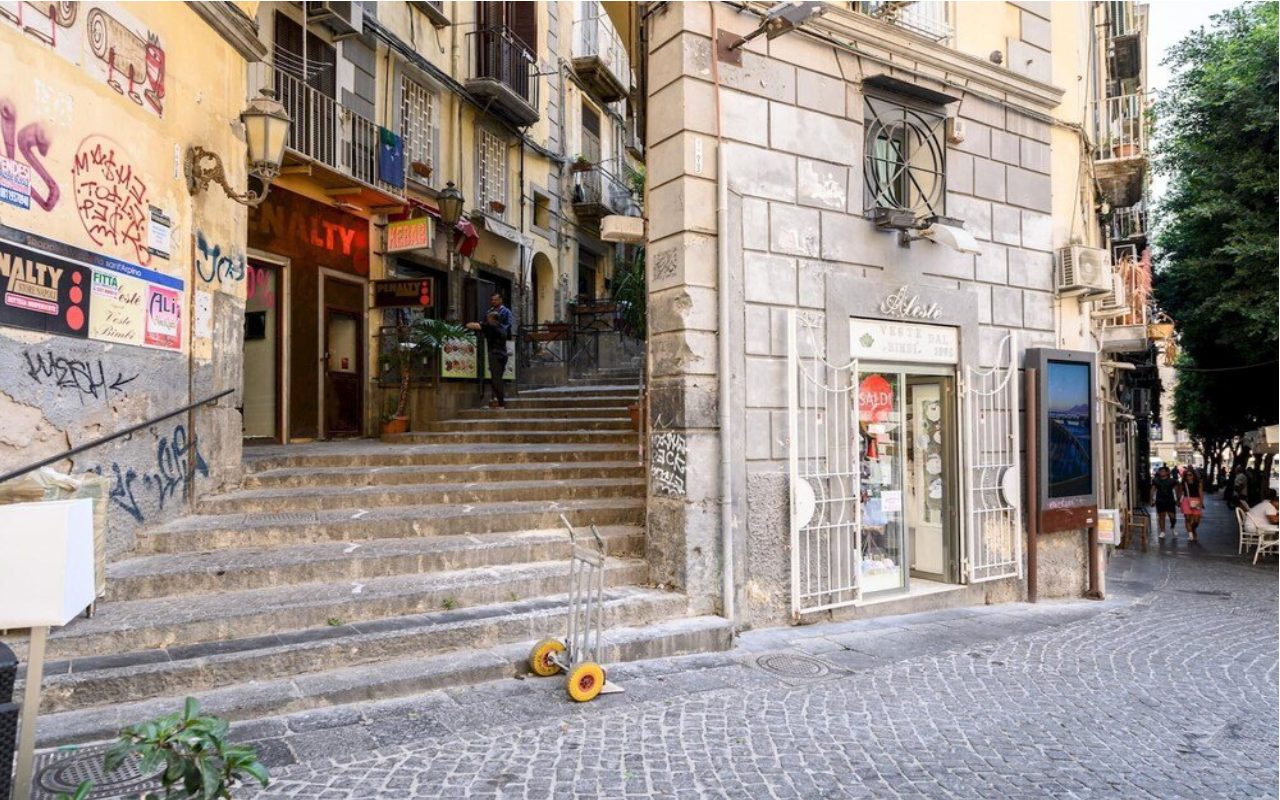 Discover Vicoletto Sant'Arpino: History and Beauty of Naples
There are corners of Naples that tell incredible stories, that take your breath away and make it unique, sincere and...Read more
Discover Vicoletto Sant'Arpino: History and Beauty of Naples
There are corners of Naples that tell incredible stories, that take your breath away and make it unique, sincere and...Read more -
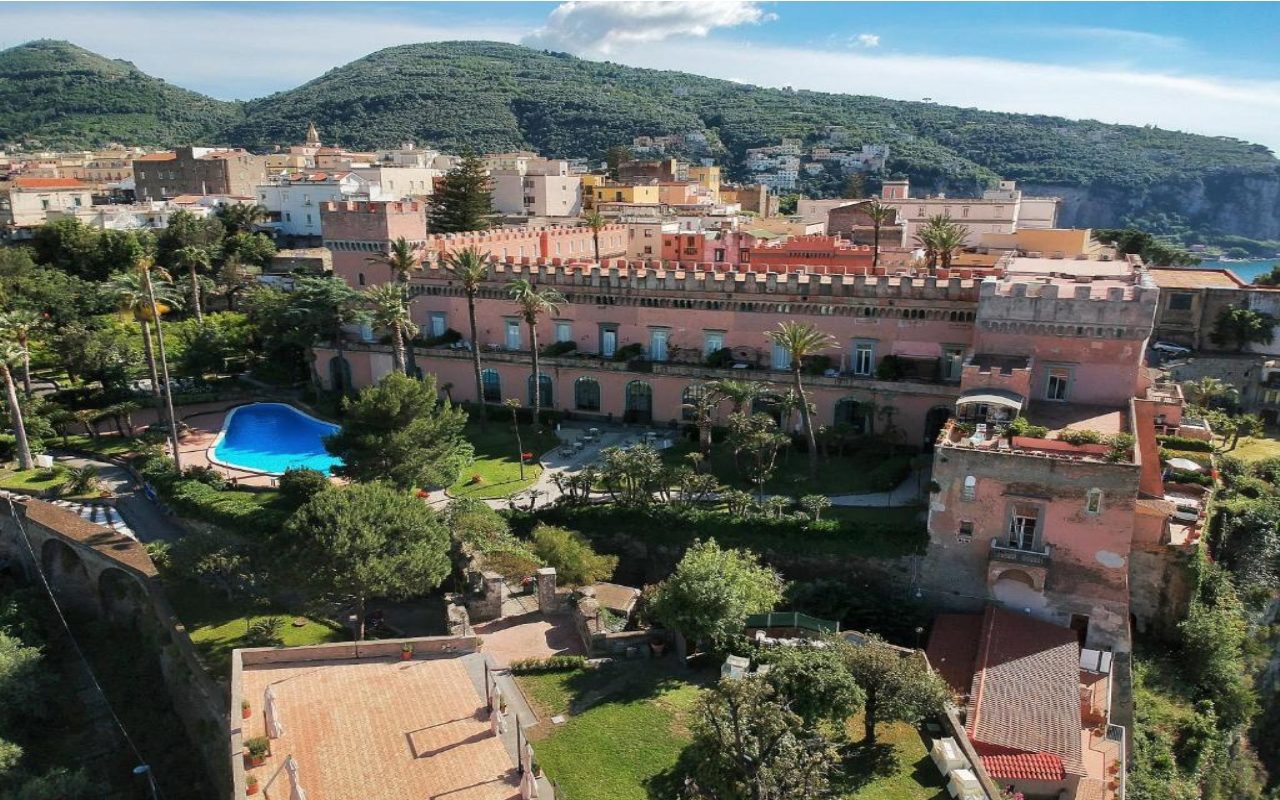 Giusso Castle: the legends of Vico Equense
Built at the end of the 13th century, Giusso Castle was designed as both a military fortress and a residence.Read more
Giusso Castle: the legends of Vico Equense
Built at the end of the 13th century, Giusso Castle was designed as both a military fortress and a residence.Read more -
 The apotropaic stone masks of lava rock and marble
Neapolitan apotropaic masks are truly fascinating works of art that can be admired on numerous historic buildings...Read more
The apotropaic stone masks of lava rock and marble
Neapolitan apotropaic masks are truly fascinating works of art that can be admired on numerous historic buildings...Read more -
 THE ROYAL PALACE OF CARDITELLO
The Tenuta Storica di Carditello (Historic Estate of Carditello), also known as the Reggia di Carditello (Royal...Read more
THE ROYAL PALACE OF CARDITELLO
The Tenuta Storica di Carditello (Historic Estate of Carditello), also known as the Reggia di Carditello (Royal...Read more
Leave a comment