



In Naples, a graduation is never a private affair: it's a neighbourhood celebration. Here's how to choose an original...
Latest posts
-
 Original Neapolitan graduation gift: ideas for the graduate (him and her)Read more
-
 Asso 'e mazze: meaning and history of the Neapolitan ace of clubsRead more
The strongest card on the green table becomes, in Naples, the most elegant way to say who really calls the shots....
-
 Michelina Di Cesare, the brigantessa who defied a kingdomRead more
Born poor in Terra di Lavoro, Michelina Di Cesare chose the maquis and the rifle against a newly united Italy. A...
-
 Neapolitan Hoodies: The Autumn 2026 Style GuideRead more
When the air turns crisp, in Naples people don't just reach for a hoodie: they reach for a piece of identity. Here's...
-
 Maradona Stadium: City Council allocates €50 million for Euro 2032Read more
The City Council has allocated €50 million for the redevelopment of the Diego Armando Maradona stadium, ahead of...
-
 Pizza Maxima 2026: Franco Pepe Is Once Again Best Pizzeria in ItalyRead more
At the fifth edition of Pizza Maxima, the Oscars of Italian pizza, Franco Pepe confirms his title as Best Pizzeria in...
-
 ‘L’acqua è poca e ‘a papera nun galleggia’: what it meansRead more
When the means are few, so is the result. Let's discover the most realistic Neapolitan saying there is.
-
 Avanti Scugnizzi: the story of the year's most loved T-shirtRead more
One word, ‘scugnizzo’ (Neapolitan street kid), and it holds the whole of Naples inside it. We tell you how the year's...
-
 'Chi chiagne fotte a chi ride': what it means and why it's truer than everRead more
At the market, at the counter, in the family: there's always someone who complains and gets more. It's the sharp...
-
 San Gennà, futtatenne! (Saint Januarius, don't worry about it!) San Gennaro, 19 September and the patron saint's t-shirtRead more
Who San Gennaro was, the miracle of the blood that liquefies, and the feast on 19 September. Plus that close,...
Blog categories
Search in blog
Archived posts
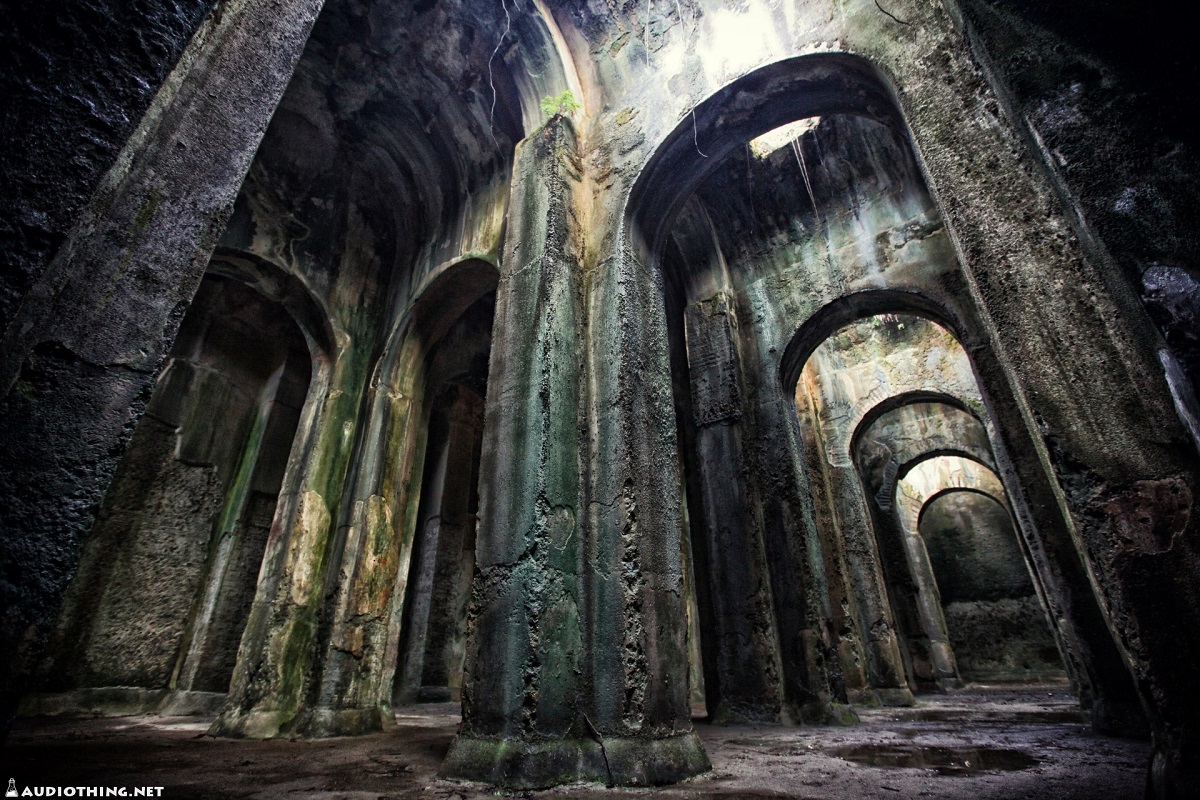
Piscina Mirabilis: the underground enchantment of Bacoli
There is a wealth of evidence of the various peoples who found refuge among the gentle inlets of Campania. Those who left the deepest mark on this land were, without doubt, the Romans: an incredible people who scattered our territory with testimonies of their power.
We remember them for the speed, precision and skill with which they carried out, in ancient times, immense works that were utterly innovative for their era, such as the many aqueducts that carried water for miles and miles. One of the most majestic and astonishing of these works is found to the north-west of the Gulf of Naples, precisely in the town of Bacoli, and it is the Piscina Mirabilis. This is a water cistern, the largest ever built in Roman times, carved into the hillside that looks down over the port of Misenum, comparable in size and magnificence only to the one in Istanbul. It was built to collect water arriving from the "Fontis Augustei Aquaeductum" (the Fountain of the Augustan Aqueduct), that is, the Roman aqueduct of Serino, and to guarantee the water supply to the "Classis Praetoria Misenensis" (the Praetorian Fleet of Misenum), the fleet stationed at the port of Miseno (as well as to the town itself). Water was drawn through small wells at the top of the quarry using hydraulic machines that lifted it and carried it down to the port beneath the hill.
Inside the cistern
Once inside the quarry, you are left spellbound by the beauty of this place, which, with its rows of tall pillars and barrel vaults, feels more like a cathedral than a simple water tank. The interior, carved out of tufa stone, is 15 metres deep and could hold as much as 12,600 cubic metres of water. The space, laid out on a quadrangular plan, is divided into five long aisles and thirteen short ones, with four rows of twelve cross-shaped pillars supporting the barrel vaults. The inner walls are lined with "opus signinum", a mixture known today as cocciopesto, made of crushed brick and lime, which made the structure waterproof. Set into the floor of the central aisle is a piscina limaria (settling pool) which, measuring 20 by 5 metres and 1.10 metres deep, served as a decanting tank used to clean the cistern.
Because of its charm, the Piscina Mirabilis became a much sought-after destination for the Grand Tour, the journey that aristocrats of the age used to undertake during the Renaissance to broaden their knowledge. As proof of this, several inscriptions are carved into the walls of the cistern bearing witness to the passage of these young nobles, including Dumas, Goethe and Mozart.
Information
Address: Via Piscina Mirabile, 80070 Bacoli NA, Italy
 Opening hours: 09:00–18:00
Cost: free donation
Bookings: 081 523 3199 (caretaker); 0815235968 (Tourism and Cultural Heritage Office of the Municipality of Bacoli)
A booking is required in order to visit the Piscina Mirabilis.
Posted in:
Places in Naples
Related posts
-
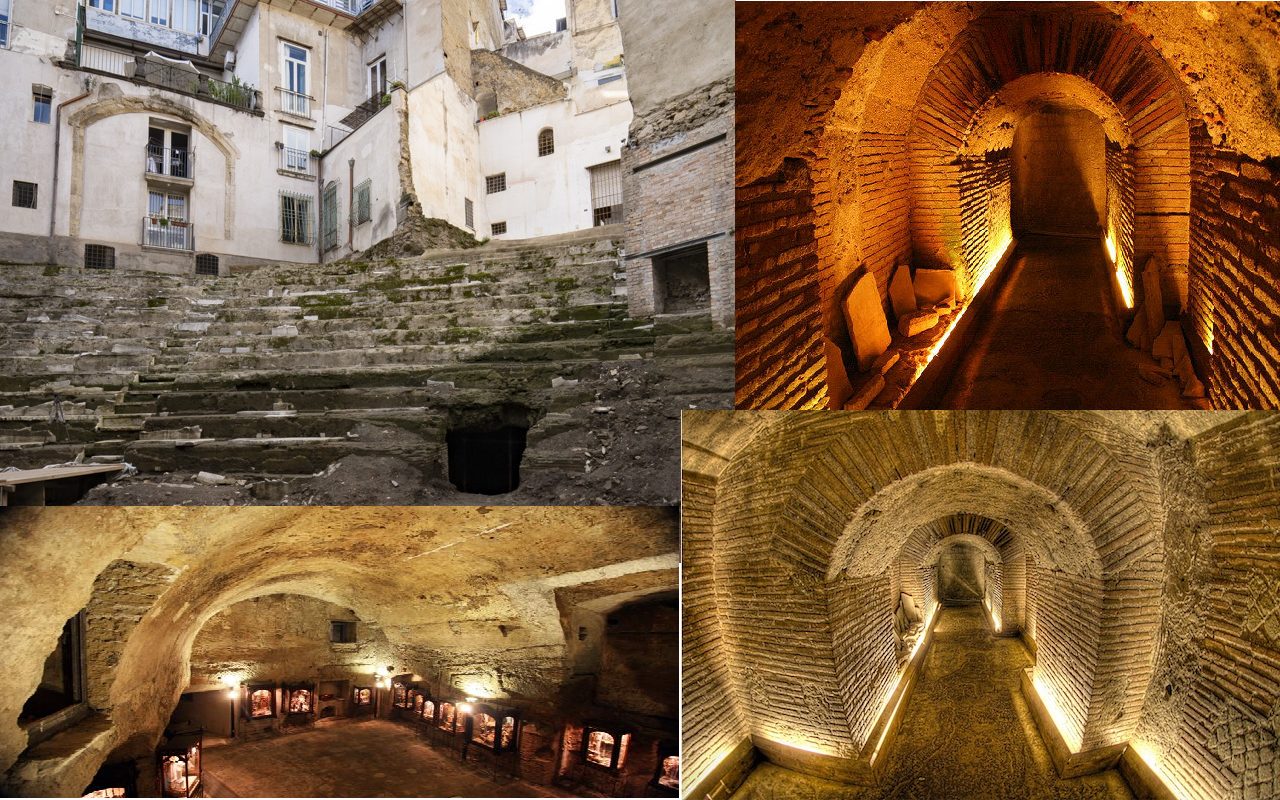 The Roman Theatre of Neapolis
Among the many wonders of Naples' historic centre stands the ancient Roman Theatre of Neapolis, between what are now...Read more
-
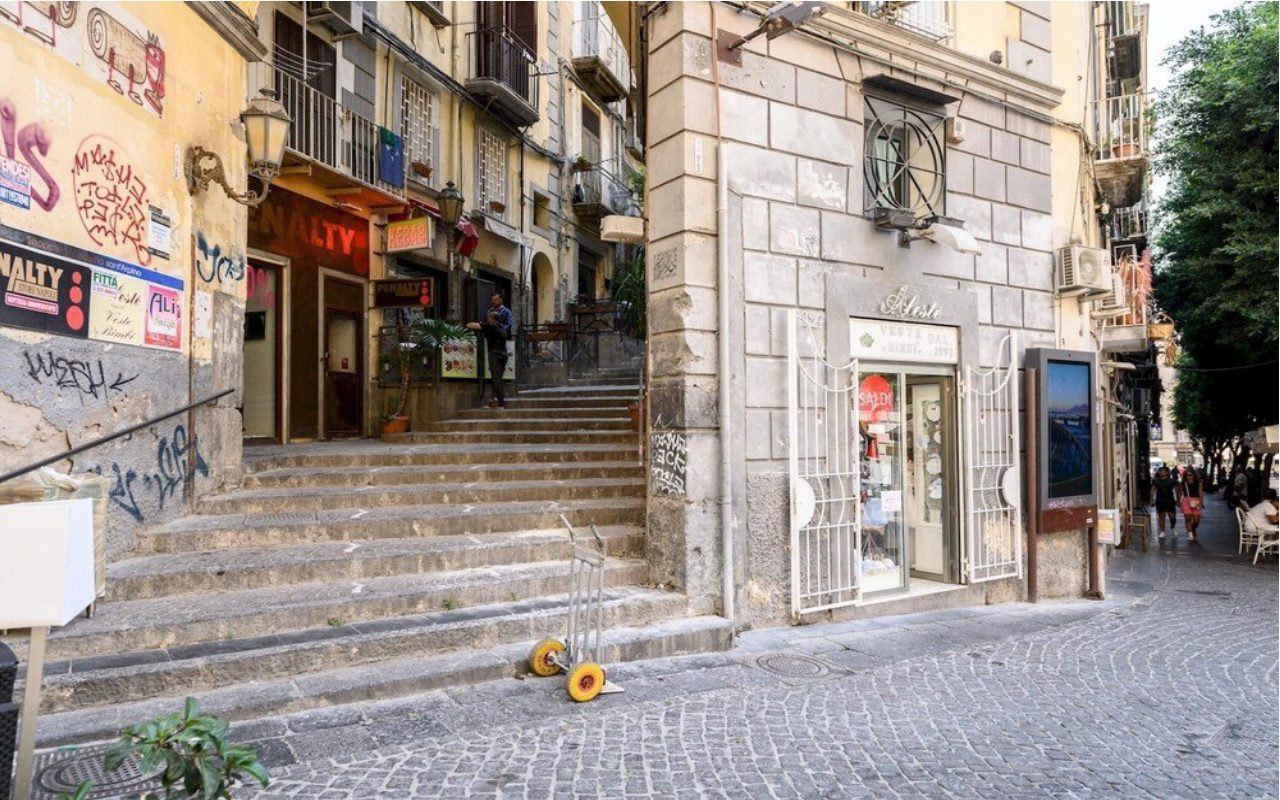 Discover Vicoletto Sant'Arpino: History and Beauty of Naples
There are corners of Naples that tell incredible stories, that take your breath away and make it unique, sincere and...Read more
-
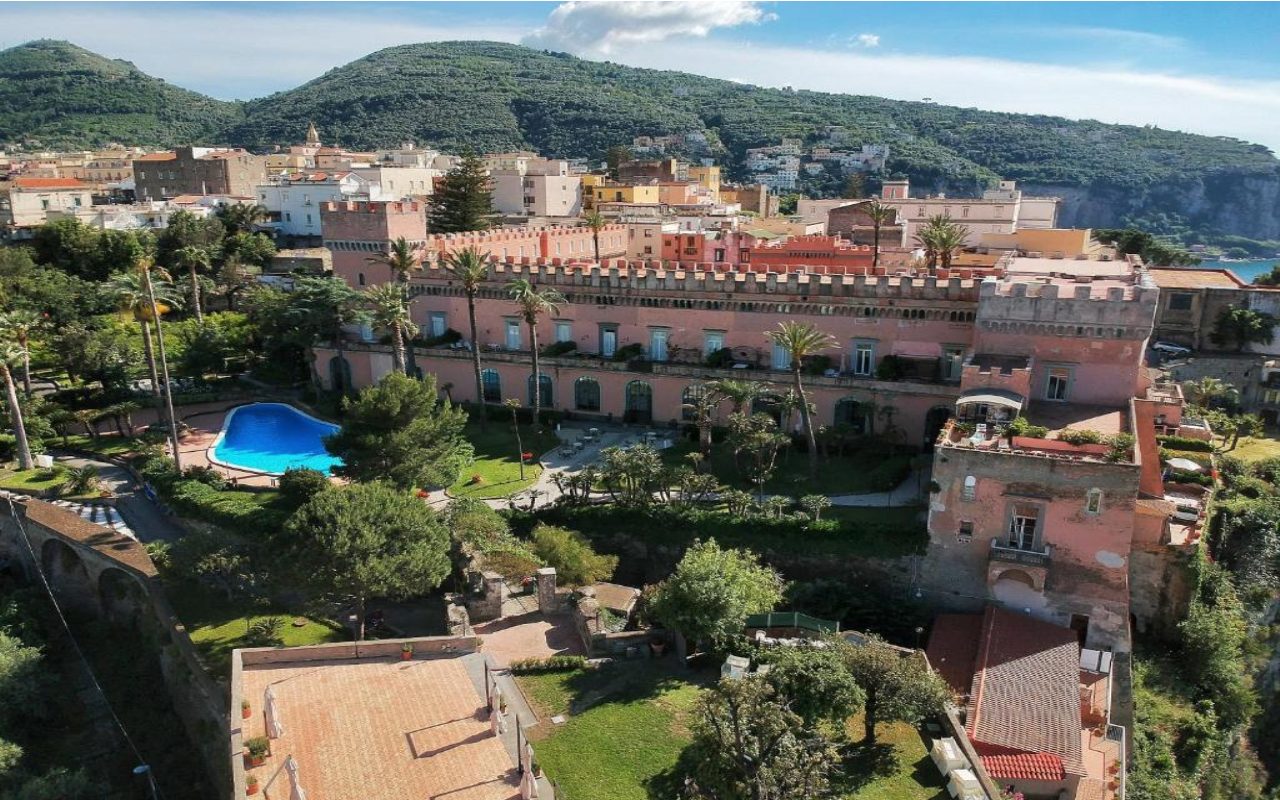 Giusso Castle: the legends of Vico Equense
Built at the end of the 13th century, Giusso Castle was designed as both a military fortress and a residence.Read more
-
 The apotropaic stone masks of lava rock and marble
Neapolitan apotropaic masks are truly fascinating works of art that can be admired on numerous historic buildings...Read more
-
 THE ROYAL PALACE OF CARDITELLO
The Tenuta Storica di Carditello (Historic Estate of Carditello), also known as the Reggia di Carditello (Royal...Read more
Leave a comment