



In Naples, a graduation is never a private affair: it's a neighbourhood celebration. Here's how to choose an original...
Latest posts
-
 Original Neapolitan graduation gift: ideas for the graduate (him and her)Read more
-
 Asso 'e mazze: meaning and history of the Neapolitan ace of clubsRead more
The strongest card on the green table becomes, in Naples, the most elegant way to say who really calls the shots....
-
 Michelina Di Cesare, the brigantessa who defied a kingdomRead more
Born poor in Terra di Lavoro, Michelina Di Cesare chose the maquis and the rifle against a newly united Italy. A...
-
 Neapolitan Hoodies: The Autumn 2026 Style GuideRead more
When the air turns crisp, in Naples people don't just reach for a hoodie: they reach for a piece of identity. Here's...
-
 Maradona Stadium: City Council allocates €50 million for Euro 2032Read more
The City Council has allocated €50 million for the redevelopment of the Diego Armando Maradona stadium, ahead of...
-
 Pizza Maxima 2026: Franco Pepe Is Once Again Best Pizzeria in ItalyRead more
At the fifth edition of Pizza Maxima, the Oscars of Italian pizza, Franco Pepe confirms his title as Best Pizzeria in...
-
 ‘L’acqua è poca e ‘a papera nun galleggia’: what it meansRead more
When the means are few, so is the result. Let's discover the most realistic Neapolitan saying there is.
-
 Avanti Scugnizzi: the story of the year's most loved T-shirtRead more
One word, ‘scugnizzo’ (Neapolitan street kid), and it holds the whole of Naples inside it. We tell you how the year's...
-
 'Chi chiagne fotte a chi ride': what it means and why it's truer than everRead more
At the market, at the counter, in the family: there's always someone who complains and gets more. It's the sharp...
-
 San Gennà, futtatenne! (Saint Januarius, don't worry about it!) San Gennaro, 19 September and the patron saint's t-shirtRead more
Who San Gennaro was, the miracle of the blood that liquefies, and the feast on 19 September. Plus that close,...
Blog categories
Search in blog
Archived posts
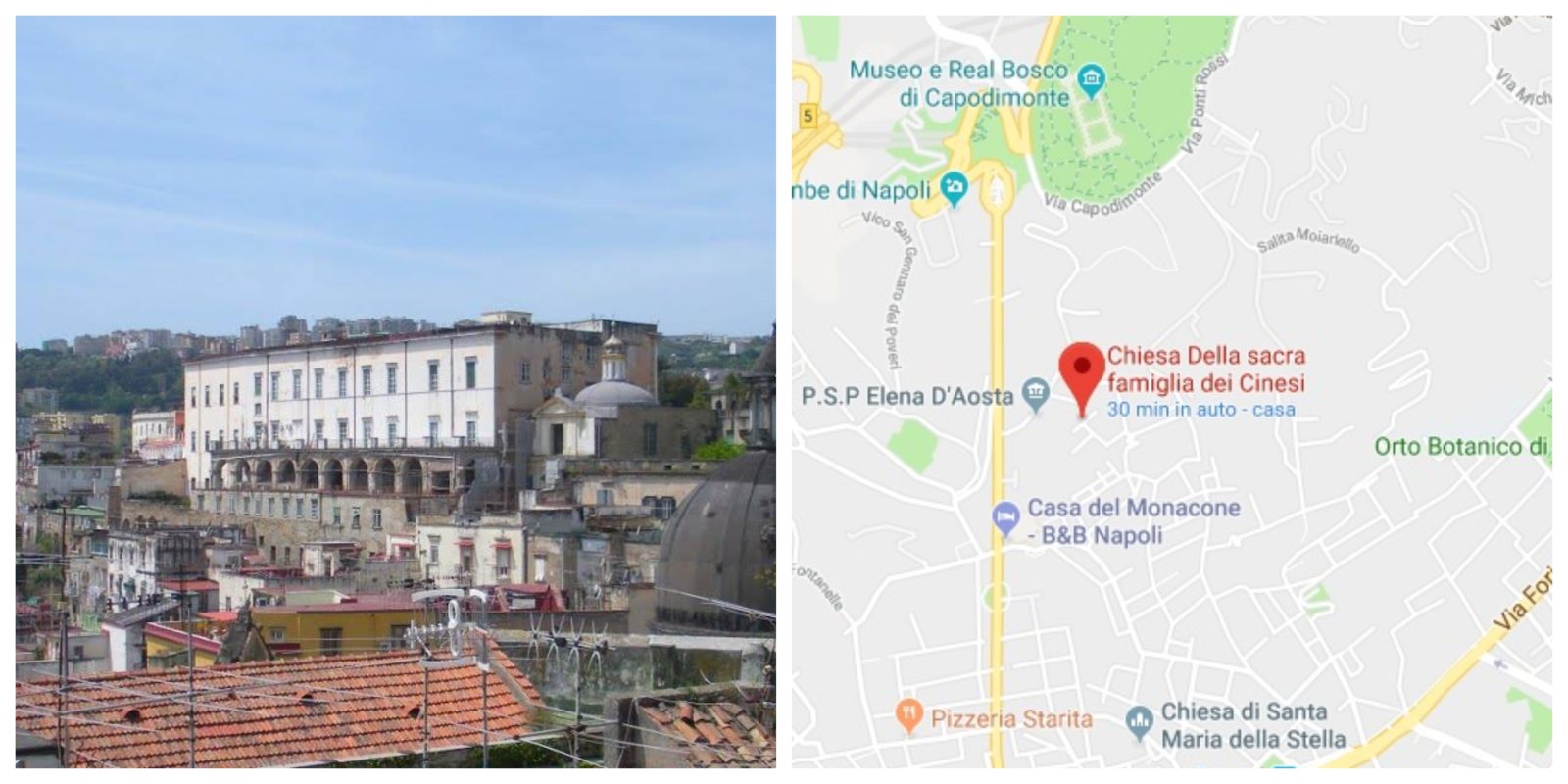
The Complesso dei Cinesi: from a place of worship to the Royal Oriental Institute of Naples
In the historic centre of Naples, more precisely on the Pirozzoli hill, the most panoramic spot in the whole Vergini district, stand a church and a convent which together make up the Complesso dei Cinesi (Chinese Complex).
History
Over the centuries, the complex passed through the hands of numerous influential Neapolitan figures. It was first built on that scenic hilltop in the 17th century by Princess Gallicane, who used it as her out-of-town villa. Many owners followed one another afterwards, among whom we should also mention the celebrated Carafa family and Benedetto Valdarno, who in turn passed it on to the Orvietan Fathers, who gave the complex an architectural form more suited to its religious functions. To do so, they added several architectural elements such as the arcaded loggia, still visible today, and the two entrances, one from Salita dei Cinesi and the other (now closed) from Vico dei Cinesi. In 1729, probably due to difficulties in connecting with the city, the Orvietan monastic order sold the complex to Matteo Ripa, who turned it into the Collegio dei Cinesi, degli Indiani e di altre nazioni infedeli (College of the Chinese, Indians and Other Infidel Nations). Ripa had, in fact, been a missionary in China for as long as 13 years, and in 1724, once back home, he decided to use the buildings as places where he could carry on the education of the young Chinese children he had brought back with him from his travels. This educational endeavour, of course, was not an end in itself, but part of a wider project of Ripa's: to educate young Chinese boys in Christian principles in order to form a native clergy that could later be sent back to China to carry out the evangelisation of that people.
Following the Unification of Italy, religious orders were suppressed, but given the cultural importance of the Collegio dei Cinesi, it was not closed down, only "secularised", becoming the "Royal Oriental Institute of Naples", dedicated to the teaching of Oriental and African languages; it was also moved to Largo San Giovanni Maggiore. The complex of buildings thus lost its original purpose and first became a college for young orphans run by the Oblate Sisters of Santa Rosa, and later a hospital for chronically ill patients thanks to the work carried out by the Congregation of the Pio Monte della Misericordia.
The church
The church of the Complesso dei Cinesi was built in 1732 and later reworked in 1814. Although it has been closed to the public for ten years and is in a state of neglect, it still preserves inside features, such as the succession of arches and vaults, that recall Neapolitan Baroque style. The interior is arranged as a single marble nave flanked by walls punctuated by pilasters supporting eighteenth-century vaults. Above the nave reigns the great dome, accompanied by a small lantern. Above the vestibule, meanwhile, one can observe the choir, characterised by an inlaid wooden balustrade and a floor of majolica-tiled terracotta, which houses two splendid organs, several canvases and period furnishings. There are also a number of fine artworks within the sacred building, first among them a canvas placed on the high altar depicting the Holy Family, painted by Antonio Sarnelli. Also of great value are the paintings placed to the right and left of the altar, depicting the Annunciation and the Visitation.
Sadly, today this splendid complex lies in a state of semi-abandonment, which is truly a shame, given that, besides being architecturally a superb site, it stands as tangible testimony to Naples' ties with other cultures, as well as a trace of the history of the Chinese people in this city.
Info
Address: Vicoletto Cinesi, 80136 Naples NA
Posted in:
Places in Naples
Related posts
-
 The Roman Theatre of Neapolis
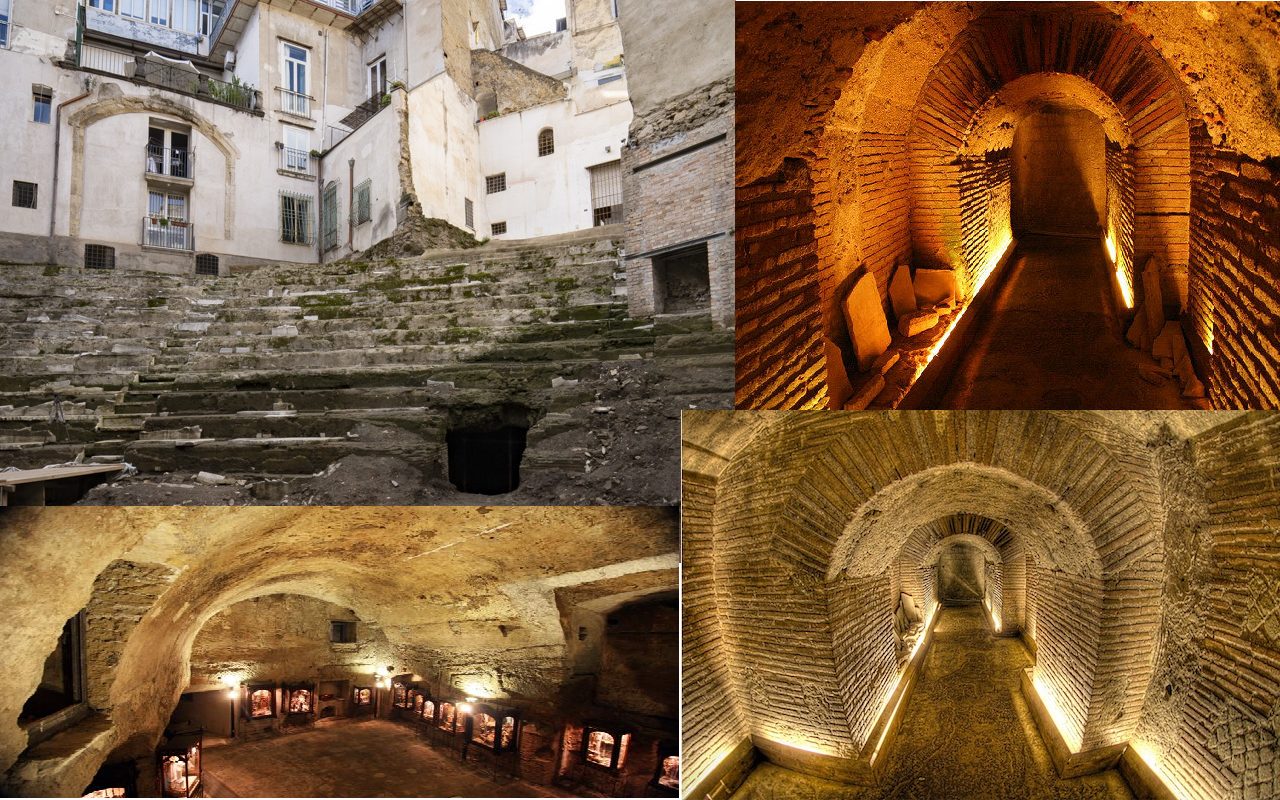
Among the many wonders of Naples' historic centre stands the ancient Roman Theatre of Neapolis, between what are now...Read more
-
 Discover Vicoletto Sant'Arpino: History and Beauty of Naples
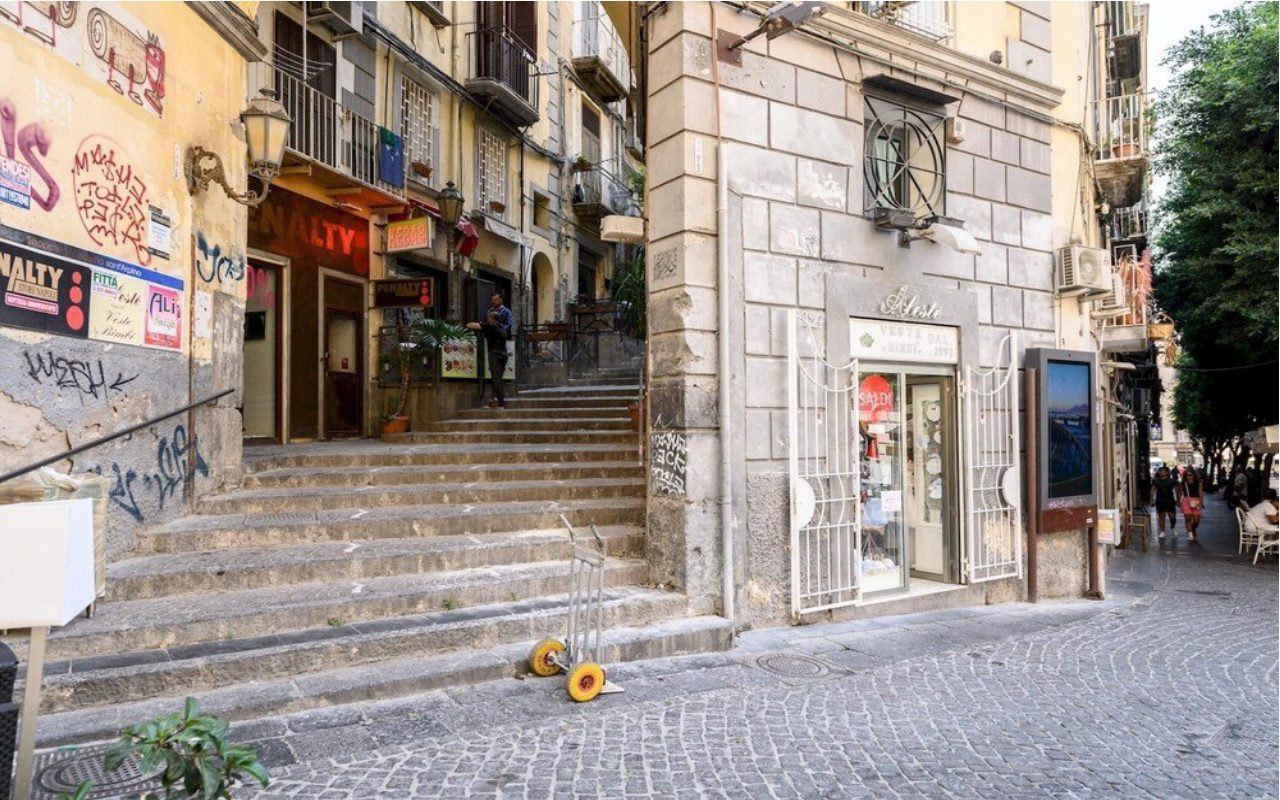
There are corners of Naples that tell incredible stories, that take your breath away and make it unique, sincere and...Read more
-
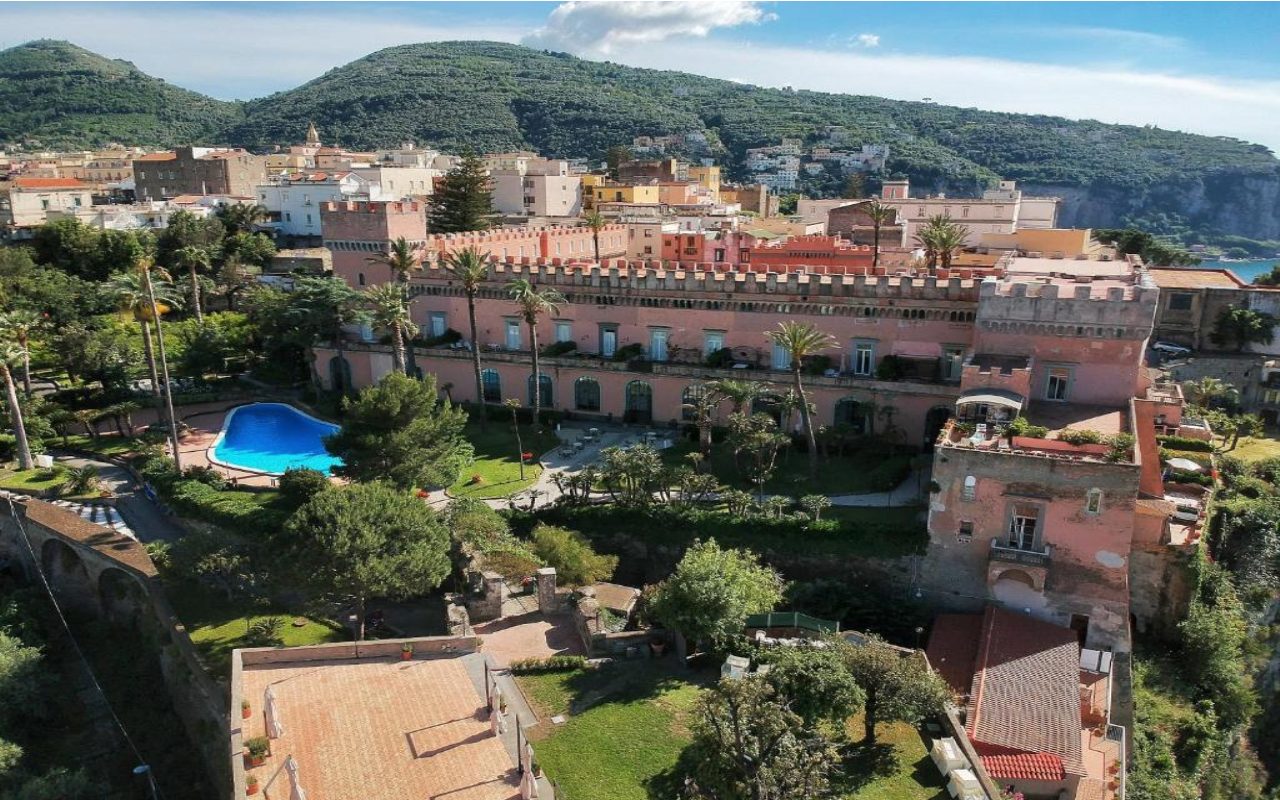 Giusso Castle: the legends of Vico Equense
Built at the end of the 13th century, Giusso Castle was designed as both a military fortress and a residence.Read more
-
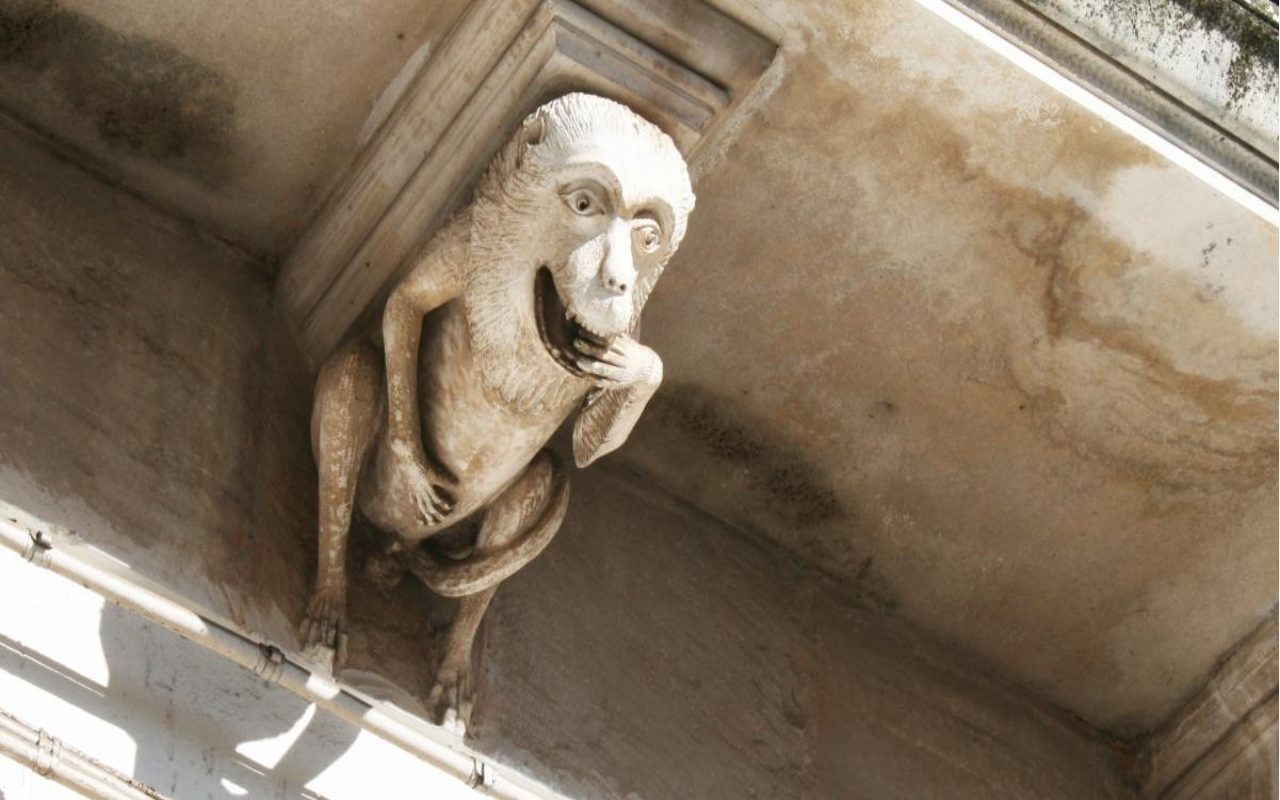 The apotropaic stone masks of lava rock and marble
Neapolitan apotropaic masks are truly fascinating works of art that can be admired on numerous historic buildings...Read more
-
 THE ROYAL PALACE OF CARDITELLO
The Tenuta Storica di Carditello (Historic Estate of Carditello), also known as the Reggia di Carditello (Royal...Read more
Leave a comment