



In Naples, a graduation is never a private affair: it's a neighbourhood celebration. Here's how to choose an original...
Latest posts
-
 Original Neapolitan graduation gift: ideas for the graduate (him and her)Read more
-
 Asso 'e mazze: meaning and history of the Neapolitan ace of clubsRead more
The strongest card on the green table becomes, in Naples, the most elegant way to say who really calls the shots....
-
 Michelina Di Cesare, the brigantessa who defied a kingdomRead more
Born poor in Terra di Lavoro, Michelina Di Cesare chose the maquis and the rifle against a newly united Italy. A...
-
 Neapolitan Hoodies: The Autumn 2026 Style GuideRead more
When the air turns crisp, in Naples people don't just reach for a hoodie: they reach for a piece of identity. Here's...
-
 Maradona Stadium: City Council allocates €50 million for Euro 2032Read more
The City Council has allocated €50 million for the redevelopment of the Diego Armando Maradona stadium, ahead of...
-
 Pizza Maxima 2026: Franco Pepe Is Once Again Best Pizzeria in ItalyRead more
At the fifth edition of Pizza Maxima, the Oscars of Italian pizza, Franco Pepe confirms his title as Best Pizzeria in...
-
 ‘L’acqua è poca e ‘a papera nun galleggia’: what it meansRead more
When the means are few, so is the result. Let's discover the most realistic Neapolitan saying there is.
-
 Avanti Scugnizzi: the story of the year's most loved T-shirtRead more
One word, ‘scugnizzo’ (Neapolitan street kid), and it holds the whole of Naples inside it. We tell you how the year's...
-
 'Chi chiagne fotte a chi ride': what it means and why it's truer than everRead more
At the market, at the counter, in the family: there's always someone who complains and gets more. It's the sharp...
-
 San Gennà, futtatenne! (Saint Januarius, don't worry about it!) San Gennaro, 19 September and the patron saint's t-shirtRead more
Who San Gennaro was, the miracle of the blood that liquefies, and the feast on 19 September. Plus that close,...
Blog categories
Search in blog
Archived posts
Wonders from around the world: the Vallone dei Mulini in Sorrento
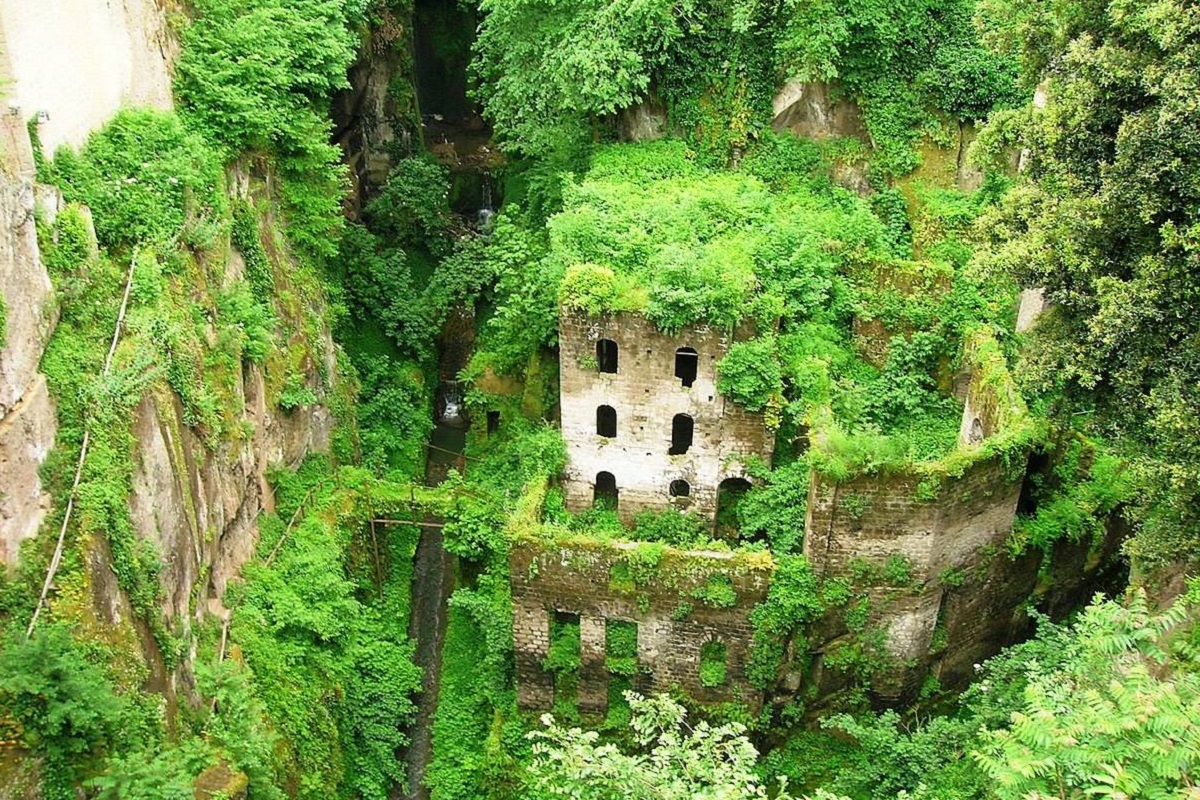
During Roman times, Sorrento was crossed by three interconnected valleys: besides the Vallone dei Mulini (Valley of the Mills), there was also a valley that ended at Marina Grande and another that stretched inland, into the hills of the town. The latter two have now almost entirely disappeared, replaced by roads and buildings. The Vallone dei Mulini, however, is still visible today and continues to charm tourists from all over the world with its striking appearance.
by Alessia Giannino
The Vallone dei Mulini is a striking valley located in Sorrento, and it owes its name to the presence of a mill once used for grinding wheat.
The history
Its formation dates back thirty-five thousand years, when a violent eruption of the Campi Flegrei (Phlegraean Fields) covered the area between Punta Scutolo and Capo di Sorrento with debris: as a result, spring waters carved out a narrow, deep gorge as they sought a way down to the sea. In the 16th century, the area belonged to the Tasso family, but control later passed to the Correale family, who had a harbour built at the mouth of the valley, on the site where Marina Piccola now stands. Later on, at the bottom of the valley, a mill was built which harnessed the waters of the stream to grind wheat for sale, along with a sawmill that processed timber later used by local craftsmen. The valley's slopes were also quarried for tufa stone, providing the blocks used to build Sorrento's buildings, and the caves that formed as a result were used as wells for collecting water.
At the time, Sorrento was connected to the rest of the coast by a bridge that spanned the valley. In 1866 this structure was removed and replaced by a square. The Vallone dei Mulini was thus split in two: on one side, the outlet towards the sea, and on the other, a small industrial complex, which fell into ruin during the 20th century, due both to a lack of water and to changing climate conditions.
Today the Vallone dei Mulini can be admired from above, appearing as a great basin home to a huge variety of plants, including carnivorous species.
Posted in:
Places in Naples
Related posts
-
 The Roman Theatre of Neapolis
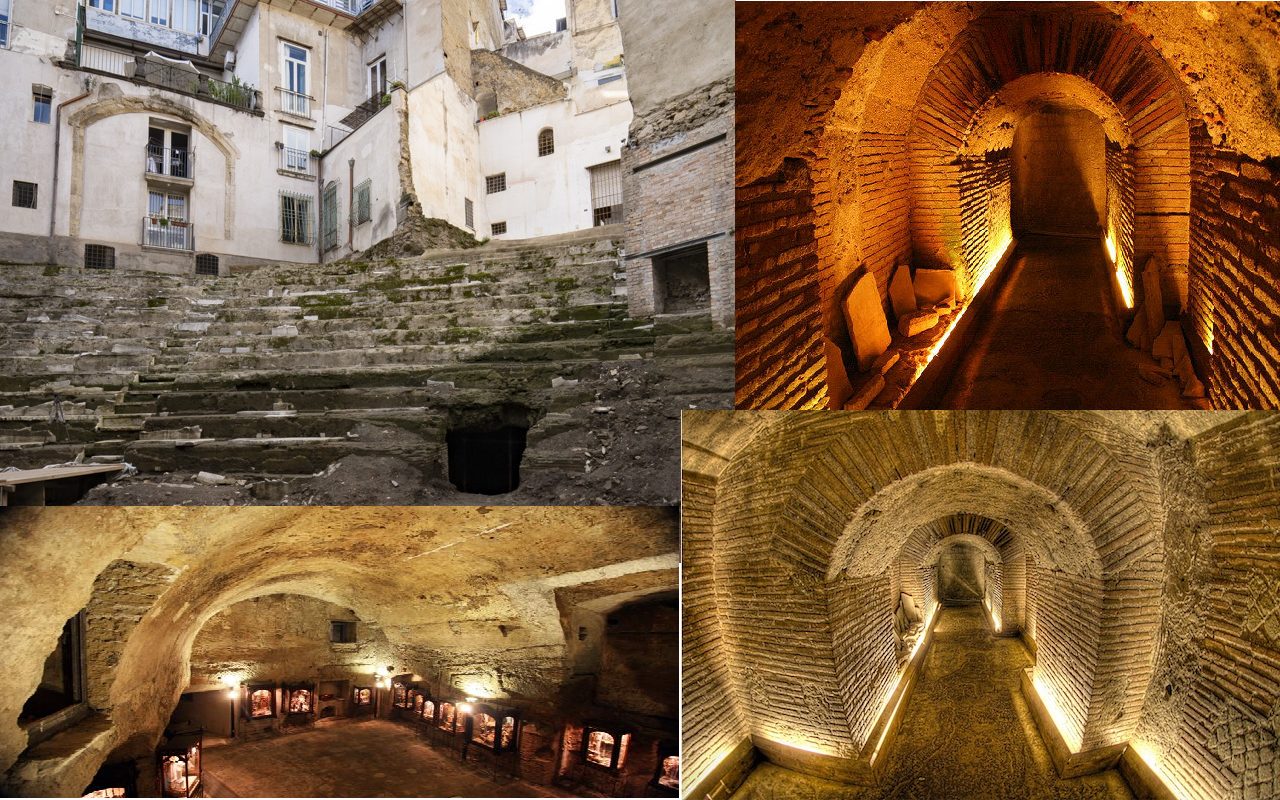
Among the many wonders of Naples' historic centre stands the ancient Roman Theatre of Neapolis, between what are now...Read more
-
 Discover Vicoletto Sant'Arpino: History and Beauty of Naples
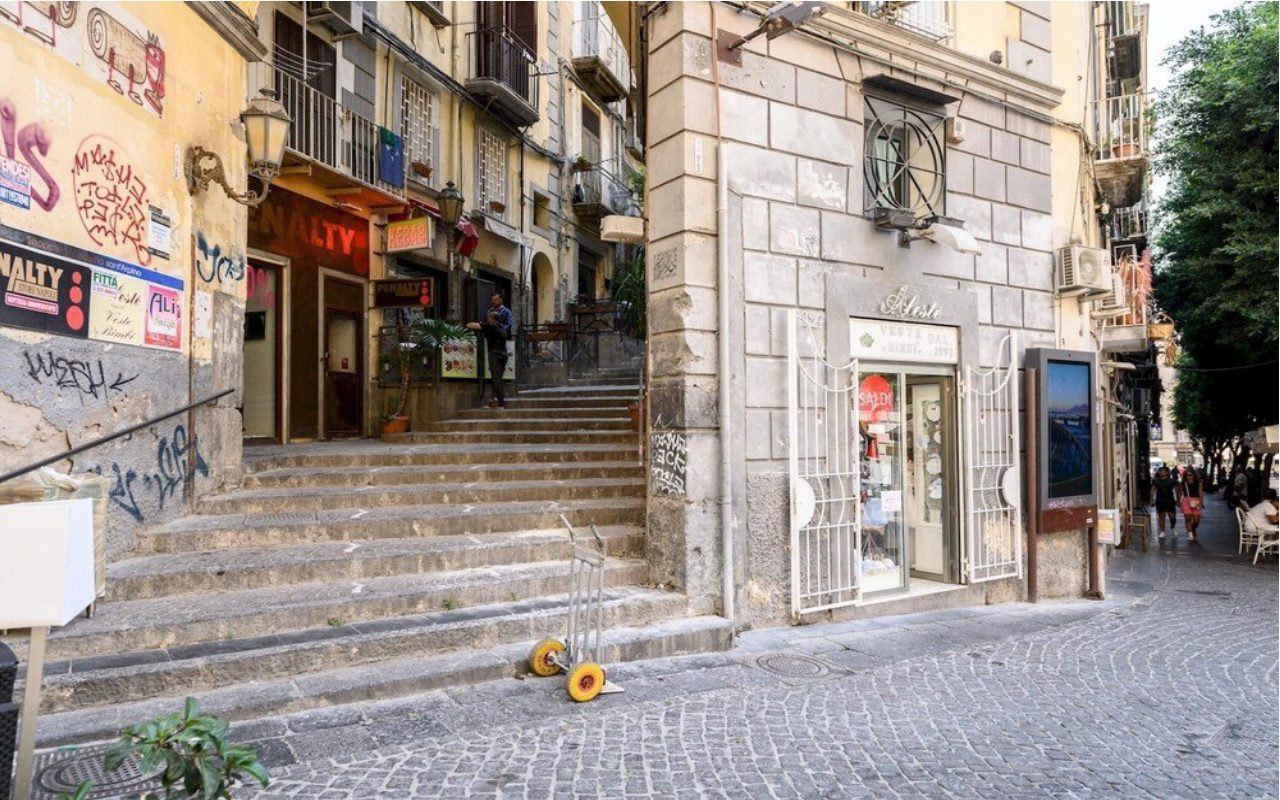
There are corners of Naples that tell incredible stories, that take your breath away and make it unique, sincere and...Read more
-
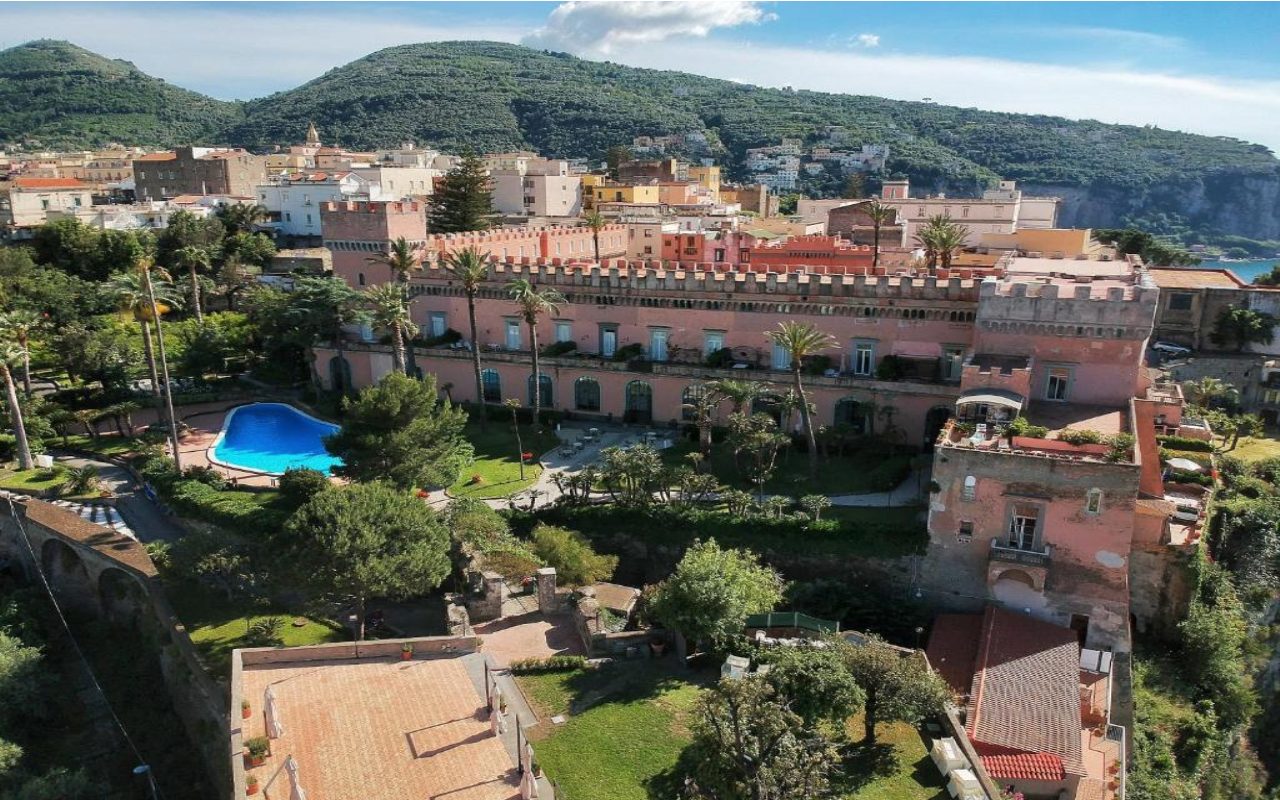 Giusso Castle: the legends of Vico Equense
Built at the end of the 13th century, Giusso Castle was designed as both a military fortress and a residence.Read more
-
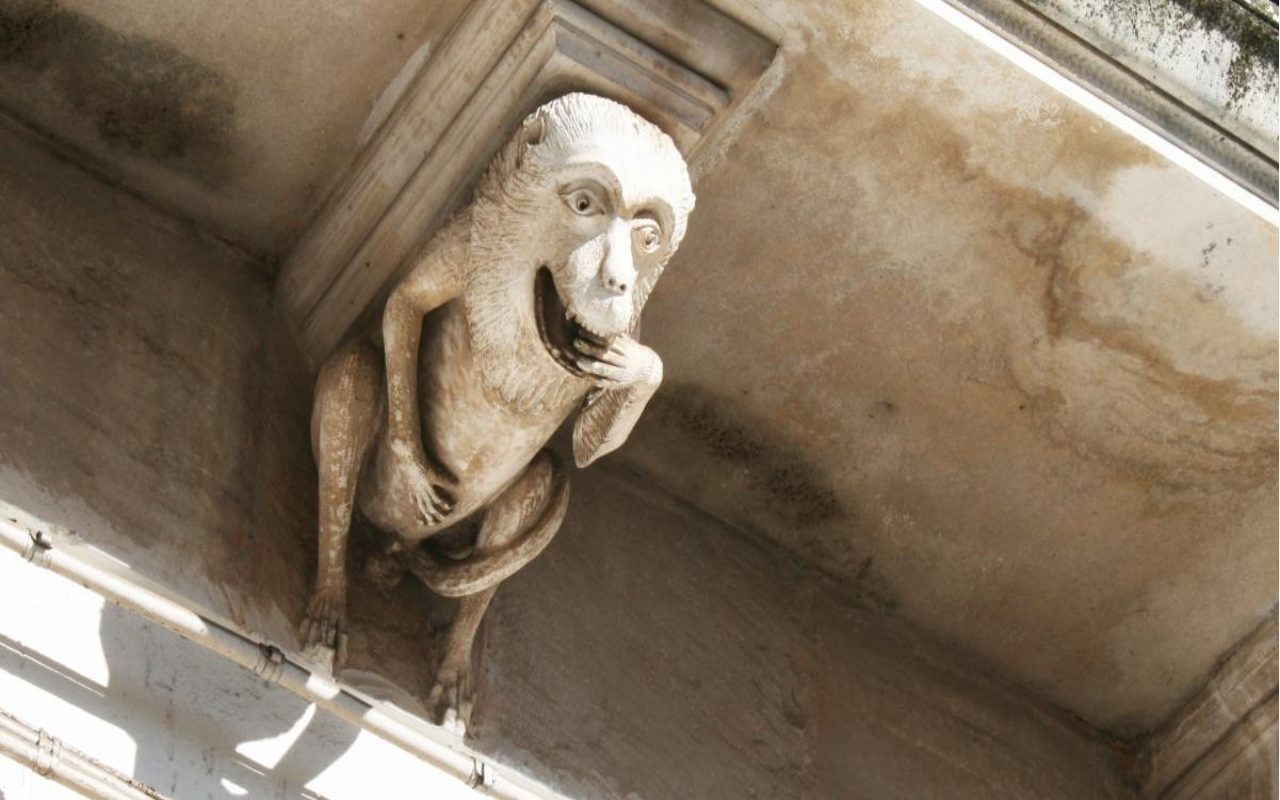 The apotropaic stone masks of lava rock and marble
Neapolitan apotropaic masks are truly fascinating works of art that can be admired on numerous historic buildings...Read more
-
 THE ROYAL PALACE OF CARDITELLO
The Tenuta Storica di Carditello (Historic Estate of Carditello), also known as the Reggia di Carditello (Royal...Read more
Leave a comment