



Born poor in Terra di Lavoro, Michelina Di Cesare chose the maquis and the rifle against a newly united Italy. A...
Latest posts
-
 Michelina Di Cesare, the brigantessa who defied a kingdomRead more
 -
 Neapolitan Hoodies: The Autumn 2026 Style GuideRead more
When the air turns crisp, in Naples people don't just reach for a hoodie: they reach for a piece of identity. Here's...
-
 Maradona Stadium: City Council allocates €50 million for Euro 2032Read more
The City Council has allocated €50 million for the redevelopment of the Diego Armando Maradona stadium, ahead of...
-
 Pizza Maxima 2026: Franco Pepe Is Once Again Best Pizzeria in ItalyRead more
At the fifth edition of Pizza Maxima, the Oscars of Italian pizza, Franco Pepe confirms his title as Best Pizzeria in...
-
 ‘L’acqua è poca e ‘a papera nun galleggia’: what it meansRead more
When the means are few, so is the result. Let's discover the most realistic Neapolitan saying there is.
-
 Avanti Scugnizzi: the story of the year's most loved T-shirtRead more
One word, ‘scugnizzo’ (Neapolitan street kid), and it holds the whole of Naples inside it. We tell you how the year's...
-
 'Chi chiagne fotte a chi ride': what it means and why it's truer than everRead more
At the market, at the counter, in the family: there's always someone who complains and gets more. It's the sharp...
-
 San Gennà, futtatenne! (Saint Januarius, don't worry about it!) San Gennaro, 19 September and the patron saint's t-shirtRead more
Who San Gennaro was, the miracle of the blood that liquefies, and the feast on 19 September. Plus that close,...
-
 'O purpo se coce int'a ll'acqua soja: what it means (o purpo se coce meaning)Read more
Someone has wronged you, and instead of reacting, you wait in silence with a smile? Here's the Neapolitan proverb...
-
 Cazzimma: meaning, origin and why it can't be translatedRead more
There's a word that explains everything in Naples and can't be translated into any language. It's called cazzimma,...
Blog categories
Search in blog
Archived posts
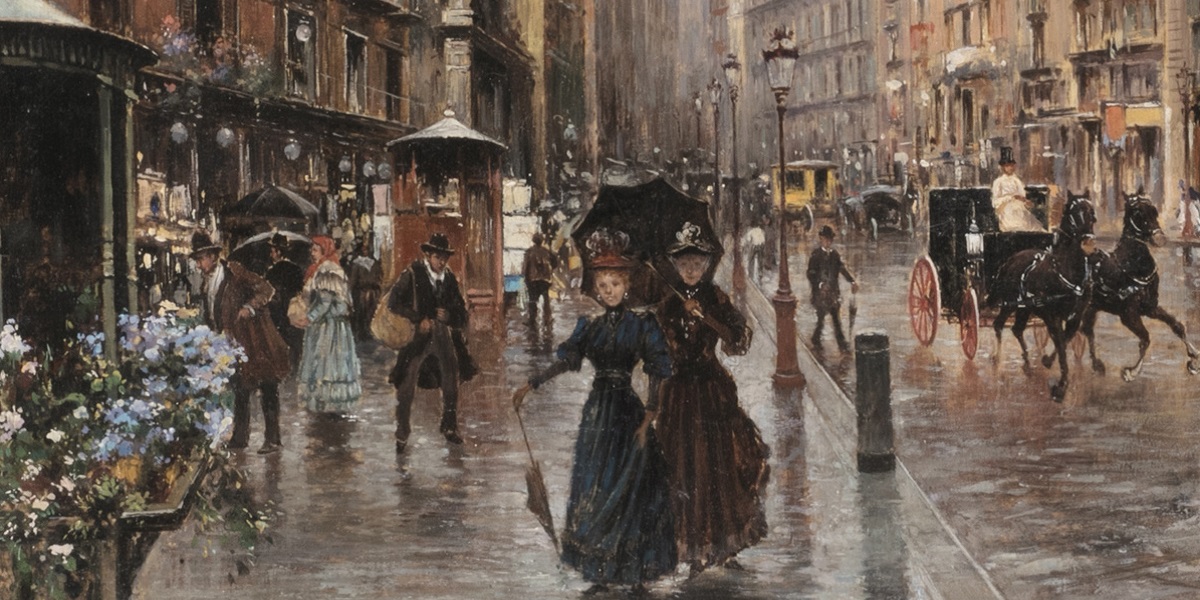
When Via Toledo was called Via Roma
A walk of over a kilometre, a constant flow of tourists, locals and workers, a host of affordable shops and stores with three-zero price tags, home to magnificent monumental palaces, churches, important side streets and eateries offering tempting street food that scents the whole route with its aromas: this and much more is Via Toledo, in Naples.
by Simona Vitagliano
But anyone who lives in the city, and happens to chat with an older relative, knows that this street hasn't always had the same name throughout its history: until not so many years ago, in fact, this very urban route was called "Via Roma", and there are still grandparents and uncles who refer to this part of Naples by that name.
Behind this apparent confusion, in truth, there are not only historical reasons but also heated disputes and protests that saw the people of Naples clash with those in power.
The history
Our Via Toledo starts at Piazza Dante and ends at Piazza Trieste e Trento, but what many people don't know is that its original layout came about because the street, commissioned in 1536 by Viceroy Pedro Álvarez de Toledo, with the project entrusted to the royal architects Ferdinando Manlio and Giovanni Benincasa, ran along the old Aragonese city walls, which Don Pedro himself had torn down while carrying out the new defensive expansions.
The viceroy aimed to connect Largo di Mercato (today's Piazza Dante) to Chiaia, while covering over what was known as the "chiavicone" (the big drain), an open sewer that carried wastewater from the hilly Vomero area down to the sea.
This "piece of Naples", then, has existed for almost 500 years, and that is exactly why it is such a fundamental piece of the puzzle that makes up Neapolitan identity, running through songs and famous quotations credited to some of the most influential figures in the history of Italy and the world ever since. Just think of Stendhal, who wrote in his "Rome, Naples et Florence": "Parto. Non dimenticherò né la via Toledo né tutti gli altri quartieri di Napoli; ai miei occhi è, senza nessun paragone, la città più bella dell'universo" (I am leaving. I shall forget neither Via Toledo nor all the other districts of Naples; in my eyes, it is, without comparison, the most beautiful city in the universe).
Indeed, Via Toledo was always a fixed stop on the famous Grand Tour, those European cultural journeys undertaken by wealthy young scions of French families to broaden their cultural, artistic and political horizons.
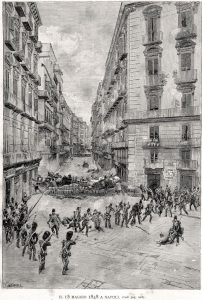
15 May 1848.
Source: Wikipedia
After it was built, besides establishing itself as the city's nerve centre for trade and business, Via Toledo also saw barricades rise up on its cobblestones on 15 May 1848, when Ferdinand II carried out the crackdown against the Neapolitan liberals; that episode, too, claimed many lives.
To reach the true turning point in this story, though, we must wait until 1870: on 10 October of that year, in fact, Paolo Emilio Imbriani, Mayor of Naples, decided it was the right moment to start revolutionising the city's layout in order to erase every Bourbon reference; to this end, he proposed renaming the old Via Toledo after the new capital of the Kingdom of Italy: and that is how, from that moment on, Via Roma came into being.
Needless to say, the people remained divided over the matter: when the issue came up for discussion in the city council, many felt it was rather reckless to rename such a renowned and important place after 334 years. On the other hand, the Bourbons and the Spanish viceroyalty may have belonged to the fairly recent past, but they were most certainly still very much alive in people's hearts; so the old names weren't meant to evoke political realities, they had simply become part of the city's traditional fabric. On the flip side, of course, there were also those who believed that by erasing those references, Naples would reclaim the dignity it had lost under foreign rule.
Naturally, it was all rather futile: history cannot be erased with a mere "change of name", and what has happened remains real even if everyone were to forget it; in any case, in search of a middle ground between the two most extreme factions, it was decided to call the street "Via Roma già Via Toledo" (Via Roma, formerly Via Toledo).
But Neapolitans have never much cared for half-measures: so the famous "Comitato Pro via Toledo" (Pro Via Toledo Committee) was formed, led by the historian Bartolomeo Capasso, which also gained the support of several illustrious figures.
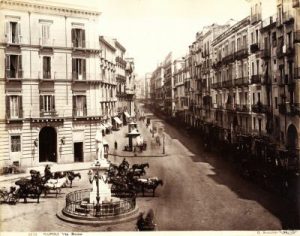
Ph: Giorgio Sommer
Despite everything, for over 100 years (until 1980) the Mayor's decision remained unchallenged: the old street signs were replaced and the street changed name, although for some time it was necessary to keep watch over them at night, to prevent vandalism and mischief from the part of the population that remained opposed.
On that occasion, in fact, an ironic little rhyme was born, which is still remembered by the older generation: "Nu' ritto antico, e 'o proverbio se noma, rice: tutte 'e vie menano a Roma; Imbriani, 'a toja è molto diversa, non mena a Roma ma mena a Aversa" (There's an old saying, a proverb they call it, which goes: all roads lead to Rome; Imbriani, yours is quite different, it doesn't lead to Rome but to Aversa). Indeed, Aversa was home to the Real Casa dei Matti (Royal House of the Mad), the very first Italian mental asylum ever built!
Fortunately, the change of name wasn't the ruin of this important Neapolitan crossroads: Via Roma was, in fact, an important street for the "struscio" (the leisurely evening stroll) during the Belle Époque, and was proudly immortalised in the film "Naples" by the Lumière Brothers (1898).
Meanwhile, in the 1930s and the years immediately following, some forced physical changes took place, in what became known as the redevelopment of the then Rione Carità (Charity District).
With the return to the original name, thanks to the Valenzi Council in 1980, the ground was also laid for what would, in 2012, become known as "Stazione Toledo" (Toledo Station) on the Naples Metro, a winner of awards and acclaim across the world for its extraordinary, innovative atmosphere and its truly one-of-a-kind beauty.
Posted in:
Places in Naples
Related posts
-
 The Roman Theatre of Neapolis
Among the many wonders of Naples' historic centre stands the ancient Roman Theatre of Neapolis, between what are now...Read more
The Roman Theatre of Neapolis
Among the many wonders of Naples' historic centre stands the ancient Roman Theatre of Neapolis, between what are now...Read more -
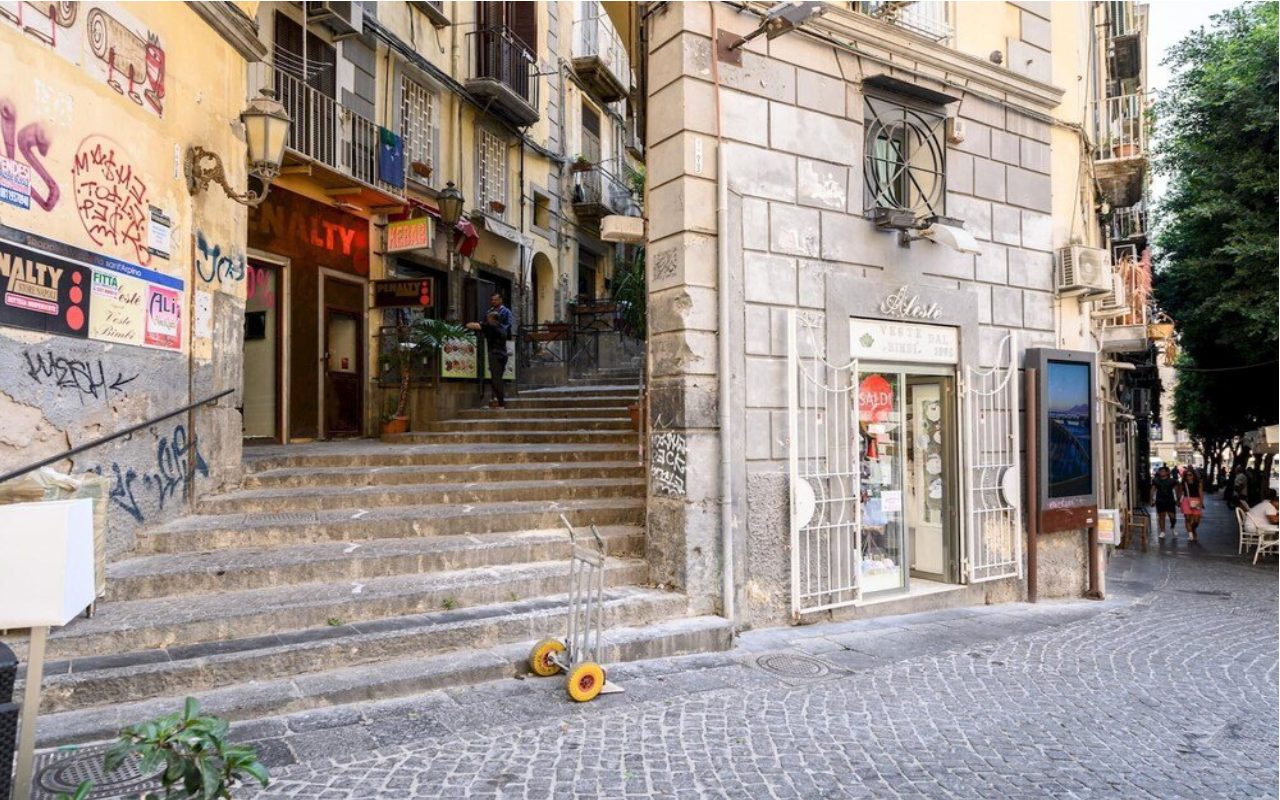 Discover Vicoletto Sant'Arpino: History and Beauty of Naples
There are corners of Naples that tell incredible stories, that take your breath away and make it unique, sincere and...Read more
Discover Vicoletto Sant'Arpino: History and Beauty of Naples
There are corners of Naples that tell incredible stories, that take your breath away and make it unique, sincere and...Read more -
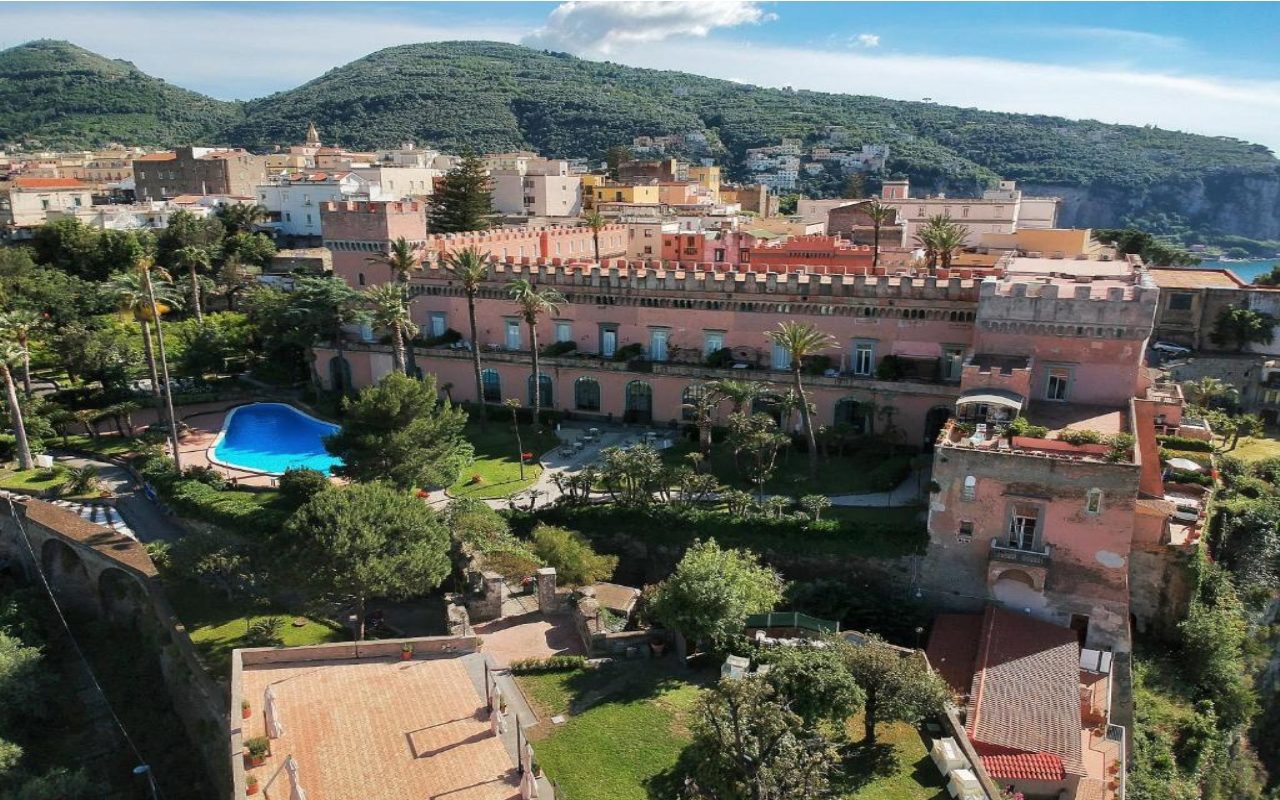 Giusso Castle: the legends of Vico Equense
Built at the end of the 13th century, Giusso Castle was designed as both a military fortress and a residence.Read more
Giusso Castle: the legends of Vico Equense
Built at the end of the 13th century, Giusso Castle was designed as both a military fortress and a residence.Read more -
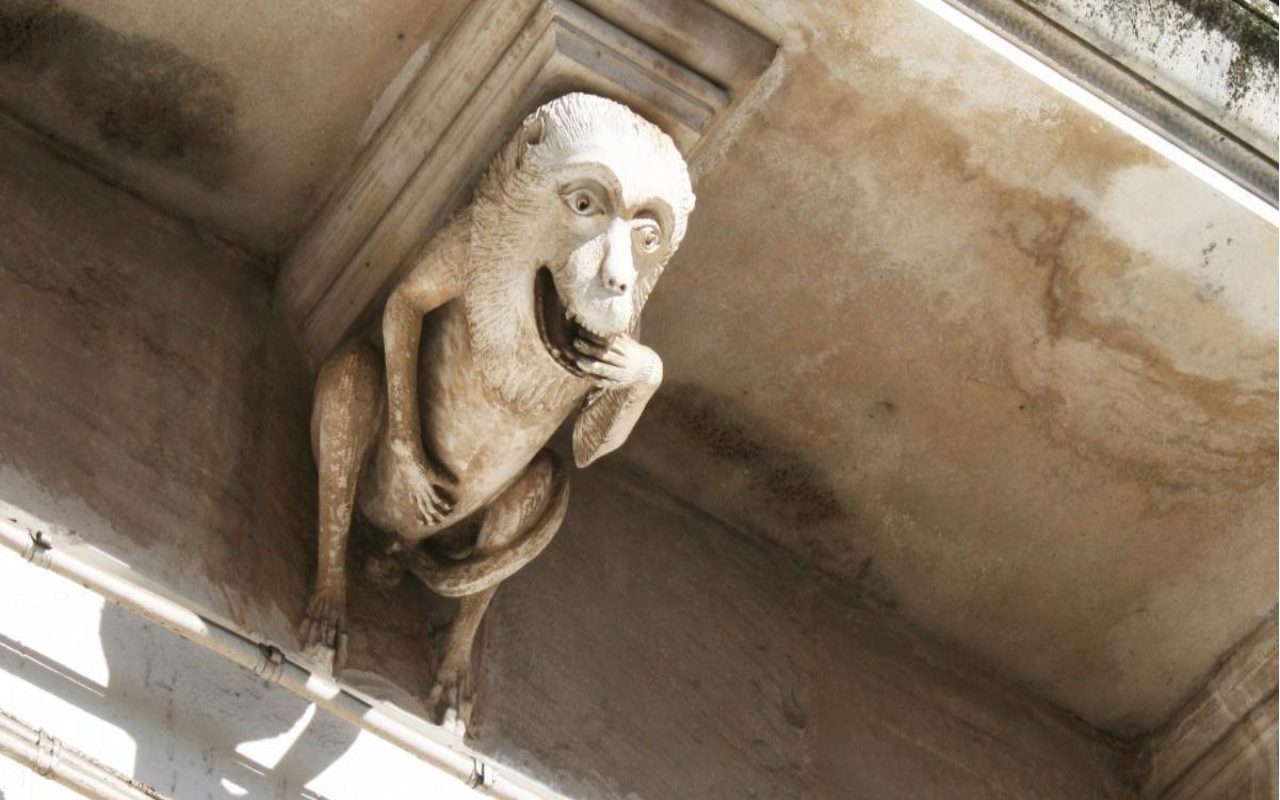 The apotropaic stone masks of lava rock and marble
Neapolitan apotropaic masks are truly fascinating works of art that can be admired on numerous historic buildings...Read more
The apotropaic stone masks of lava rock and marble
Neapolitan apotropaic masks are truly fascinating works of art that can be admired on numerous historic buildings...Read more -
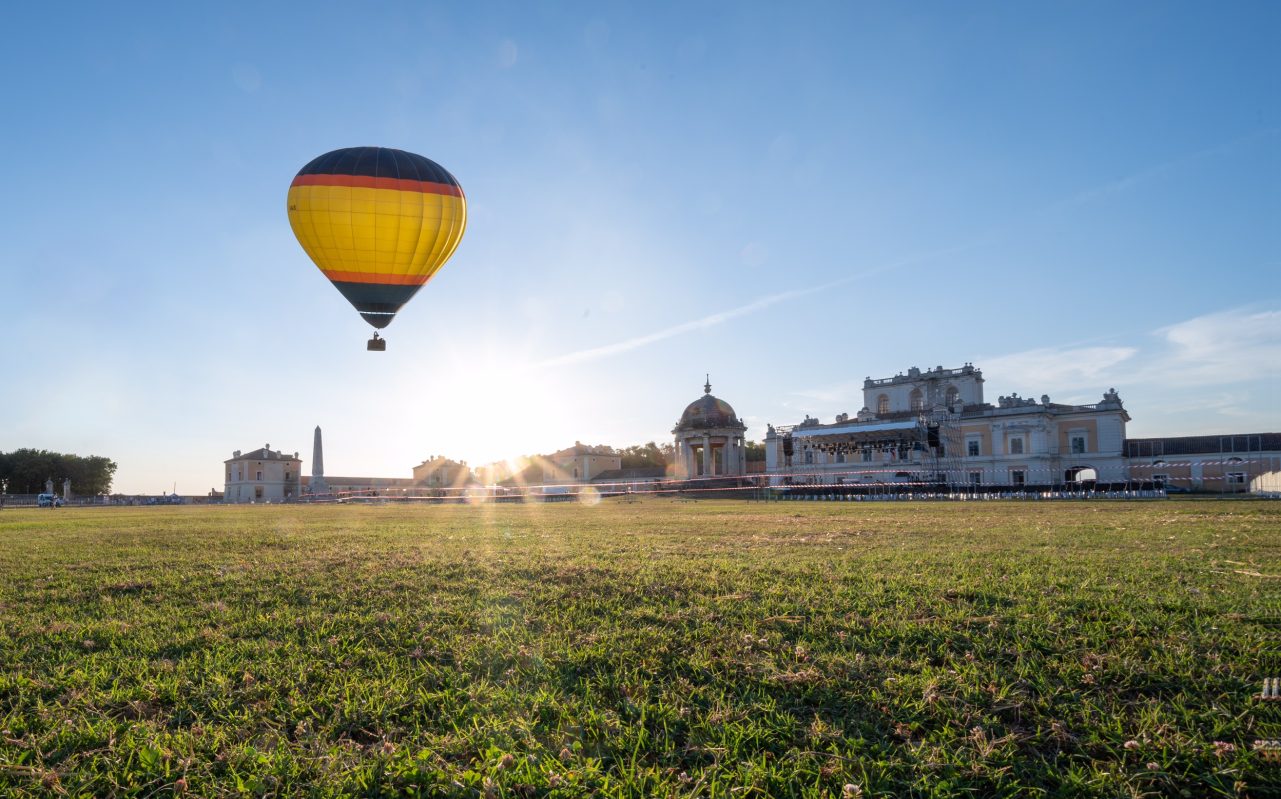 THE ROYAL PALACE OF CARDITELLO
The Tenuta Storica di Carditello (Historic Estate of Carditello), also known as the Reggia di Carditello (Royal...Read more
THE ROYAL PALACE OF CARDITELLO
The Tenuta Storica di Carditello (Historic Estate of Carditello), also known as the Reggia di Carditello (Royal...Read more
Leave a comment