



Born poor in Terra di Lavoro, Michelina Di Cesare chose the maquis and the rifle against a newly united Italy. A...
Latest posts
-
 Michelina Di Cesare, the brigantessa who defied a kingdomRead more
 -
 Neapolitan Hoodies: The Autumn 2026 Style GuideRead more
When the air turns crisp, in Naples people don't just reach for a hoodie: they reach for a piece of identity. Here's...
-
 Maradona Stadium: City Council allocates €50 million for Euro 2032Read more
The City Council has allocated €50 million for the redevelopment of the Diego Armando Maradona stadium, ahead of...
-
 Pizza Maxima 2026: Franco Pepe Is Once Again Best Pizzeria in ItalyRead more
At the fifth edition of Pizza Maxima, the Oscars of Italian pizza, Franco Pepe confirms his title as Best Pizzeria in...
-
 ‘L’acqua è poca e ‘a papera nun galleggia’: what it meansRead more
When the means are few, so is the result. Let's discover the most realistic Neapolitan saying there is.
-
 Avanti Scugnizzi: the story of the year's most loved T-shirtRead more
One word, ‘scugnizzo’ (Neapolitan street kid), and it holds the whole of Naples inside it. We tell you how the year's...
-
 'Chi chiagne fotte a chi ride': what it means and why it's truer than everRead more
At the market, at the counter, in the family: there's always someone who complains and gets more. It's the sharp...
-
 San Gennà, futtatenne! (Saint Januarius, don't worry about it!) San Gennaro, 19 September and the patron saint's t-shirtRead more
Who San Gennaro was, the miracle of the blood that liquefies, and the feast on 19 September. Plus that close,...
-
 'O purpo se coce int'a ll'acqua soja: what it means (o purpo se coce meaning)Read more
Someone has wronged you, and instead of reacting, you wait in silence with a smile? Here's the Neapolitan proverb...
-
 Cazzimma: meaning, origin and why it can't be translatedRead more
There's a word that explains everything in Naples and can't be translated into any language. It's called cazzimma,...
Blog categories
Search in blog
Archived posts
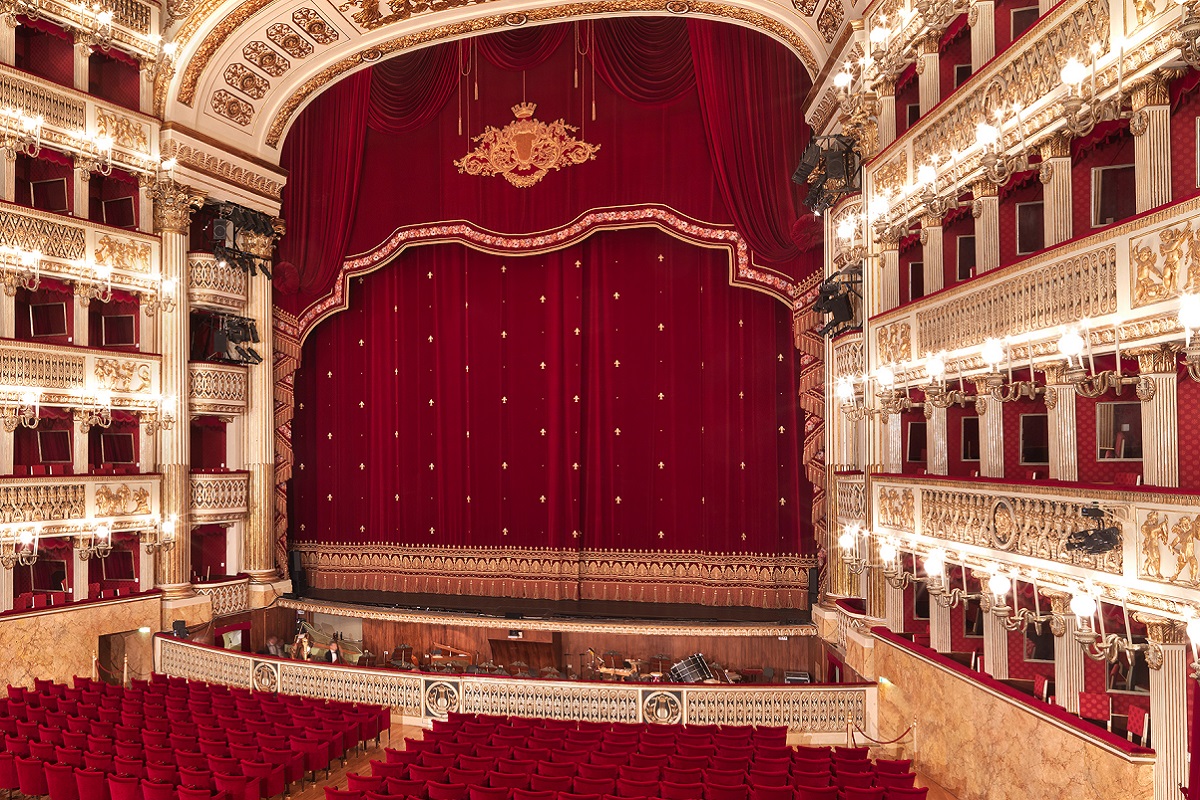
The Teatro San Carlo, from construction to today
It was 1737 when Naples gave birth to the oldest opera house in the world, preceding Milan's La Scala by 41 years and Venice's La Fenice by 55.
by Silvia Semonella
“Vuoi tu sapere se qualche scintilla brucia in te? Corri, vola a Napoli ad ascoltare i capolavori di Leo, Durante, Jommelli, Pergolesi” (Do you want to know whether any spark burns in you? Run, fly to Naples to hear the masterpieces of Leo, Durante, Jommelli, Pergolesi).
Jean-Jacques Rousseau, Dictionnaire de Musique.
We are, of course, talking about the Teatro San Carlo, built next to Piazza Plebiscito and now a symbol of the city; commissioned by King Charles III of Bourbon, its purpose was to give the city a new theatre that would represent royal power.
The project was entrusted to the architect Giovanni Antonio Medrano, a Spanish Colonel Brigadier stationed in Naples, and to Angelo Carasale, former director of the San Bartolomeo, who completed the “real fabrica” (royal building) in around eight months at a cost of 75,000 ducats. Medrano's design called for a hall 28.6 metres long and 22.5 metres wide, with 184 boxes, including the proscenium boxes, arranged over six tiers, plus a royal box able to seat ten people, for a total of 1,379 seats.
The artists
In the theatre's first four years, the most performed composers were Leonardo Leo, Niccolò Porpora, Leonardo Vinci, Domenico Sarro, Johann Adolf Hasse “il Sassone” (the Saxon), Gaetano Latilla, Niccolò Jommelli, Baldassarre Galuppi, Niccolò Piccinni, Antonio Maria Gaspare Sacchini, Tommaso Traetta and, finally, Giacomo Tritto.
Among the most acclaimed performers, meanwhile, were Vittoria Tesi, present since the opening night, Angelo Amorevoli, Anna Lucia De Amicis, Celeste Coltellini, as well as the “evirati cantori” (castrato singers), such as Carlo Broschi, known as Farinelli. Naples crowned Caffariello (Gaetano Majorano) its public favourite, a protégé of Porpora and one of the most famous castrati of his time, alongside Gizziello (Gioacchino Conti) and Gian Battista Velluti.
The city's four conservatories (San Pietro a Majella, Santa Maria di Loreto in the Mercato district, Sant'Onofrio a Capuana near the Vicaria, and the Pietà dei Turchini in Via Medina) also provided a constant flow of talent and artistic nourishment to the theatre during this period, giving rise to what is remembered as the Scuola Napoletana (Neapolitan School). Immeasurable masters of this tradition were Domenico Cimarosa and Giovanni Paisiello, who in 1787 were given the task of “sovrintendere all'Orchestra del San Carlo” (overseeing the San Carlo Orchestra), carrying out a radical reform. That same year, commissioned by Ferdinand IV, he wrote the “Inno Nazionale delle Due Sicilie” (National Anthem of the Two Sicilies).
The Neapolitan Republic
1799 was an unforgettable year in the history of Naples: the year of the Neapolitan Republic.
A few months of Jacobin fervour, in which women and men, from the stage of the San Carlo — renamed the National Theatre of San Carlo — championed ideals of liberty, fraternity and equality. Only a few months later this liberal interlude was drowned in blood and the Bourbons returned to the throne, though they could not prevent intellectuals such as Eleonora Pimentel Fonseca, Luisa Sanfelice, Domenico Cirillo, Francesco Caracciolo, Melchiorre Delfico and Cimarosa himself from leaving an indelible mark on the arduous process of building Italian identity.
The 19th century
At the start of the 19th century, Naples shone among the cities of Europe, with almost half a million inhabitants and a steady flow of visitors drawn by the fashion for the Grand Tour. With Murat's rise to the throne in 1808, and with Domenico Barbaja's management from July 1809, a new chapter opened in the history of the Teatro San Carlo. With the “Principe degli impresari” (Prince of impresarios), the era of great seasons directed by Rossini and Donizetti began, and the “Real Teatro” (Royal Theatre) also became a theatre of the people.
The building's renovation dates back to those years, the work of Antonio Niccolini, who made it the true symbol of the city. On the night of 13 February 1816, however, a fire devastated the entire structure. Only the perimeter walls and the annexed wing survived intact. The reconstruction, completed within nine months, was again entrusted to Antonio Niccolini, who largely recreated the 1812 hall.
On 4 October 1815, a 23-year-old composer, Gioacchino Rossini, premiered his first opera at the San Carlo, "Elisabetta Regina d'Inghilterra" (Elizabeth, Queen of England), with a stellar cast. “Furore!” (A sensation!) the musician wrote the day after his Neapolitan debut, delighted to be on the bill of the “theatre of the greats”. From then on, the San Carlo stage filled with Rossini's operas such as "Armida", "Mosè in Egitto", "Ricciardo", "Zoraide" and also "Ermione", "La Gazza Ladra" and "Zelmira".
The composer who wrote 17 operas for the San Carlo, meanwhile, was Gaetano Donizetti, from Bergamo; among them "Maria Stuarda", "Roberto Devereux" and the immortal "Lucia di Lammermoor", which premiered right there at the San Carlo on 26 September 1835.
The writer Stendhal, at the reopening on 12 January 1817, not even a year after the fire that had devastated the theatre, wrote: “There is nothing in the whole of Europe that even comes close to giving the faintest idea of this theatre. This hall, rebuilt in three hundred days, is a coup d'état. It guarantees the king, better than the most perfect law, the people's favour... Anyone wishing to be stoned need only find fault with it. The moment you mention Ferdinand, they tell you: 'he rebuilt the San Carlo!'”.
On the evening of the great reopening, “Il sogno di Partenope” (The Dream of Parthenope) by Giovanni Simone Mayr was staged, followed by a ballet created by Salvatore Viganò. The image of the Romantic ballerina was shaped by the Austrian Fanny Elssler, the “Swedish” Maria Taglioni and the Neapolitan Fanny Cerrito, one of the first female choreographers, whose ballet shoes are reverently preserved in the Musée de l'Opéra in Paris.
Many great artists have trodden the boards of the theatre, such as Niccolò Paganini, who gave no fewer than two concerts there in 1819. The Neapolitan stage was so prestigious that Vincenzo Bellini too fell in love with it, making his debut there in 1826 with "Bianca e Gernando", his first opera, written specifically for the San Carlo.
During Ferdinand's reign, the grip of censorship grew ever tighter: after Bellini's opera title was changed from "Bianca e Fernando" to "Bianca e Gernando", there were further instances of censorship affecting Giuseppe Verdi. Two important Verdi operas, for example, were banned from the stage: "Il trovatore" in 1853 and "Un ballo in maschera" (staged under the title "Una vendetta in domino").
After the Unification of Italy
With the Unification of Italy in 1861, the San Carlo's activity declined considerably to the advantage of other theatres, above all Milan's Teatro alla Scala.
During the two world wars, the theatre's activity, though marked by the conflicts, still reflected the trends sweeping the international scene. After the Second World War, the theatre was the first in Italy to reopen.
Great names, past and present
Among the singers who performed at the San Carlo over the last century are remembered the tenors Fernando De Lucia, Beniamino Gigli, Ferruccio Tagliavini, Luciano Pavarotti, Plácido Domingo, José Carreras, Enrico Caruso (who gave his last, much-discussed Neapolitan performance right there at the San Carlo), Giuseppe Di Stefano and Alfredo Kraus, as well as the sopranos Renata Tebaldi, Maria Callas, Magda Olivero, Maria Caniglia and Toti Dal Monte.
Among the musicians who have performed at the San Carlo are: Jascha Heifetz, Fritz Kreisler, Arturo Benedetti Michelangeli, Maurizio Pollini, Salvatore Accardo, Gidon Kremer, Aldo Ciccolini, Mischa Maisky, Arthur Rubinstein and many others.
Among the conductors, meanwhile, are: Arturo Toscanini, Igor Stravinsky, Leonard Bernstein, Wolfgang Sawallisch, Dimitri Mitropoulos, Riccardo Muti, Claudio Abbado, Ferruccio Busoni, Giuseppe Sinopoli, Carlo Maria Giulini, Sergiu Celibidache, Wilhelm Furtwängler, Karl Böhm and several others.
«Finally, a true royal box, certainly more beautiful than the one at Covent Garden»
Princess Margaret of England, during a visit to the theatre on the occasion of the 250th anniversary of its founding.
Posted in:
Places in Naples
Related posts
-
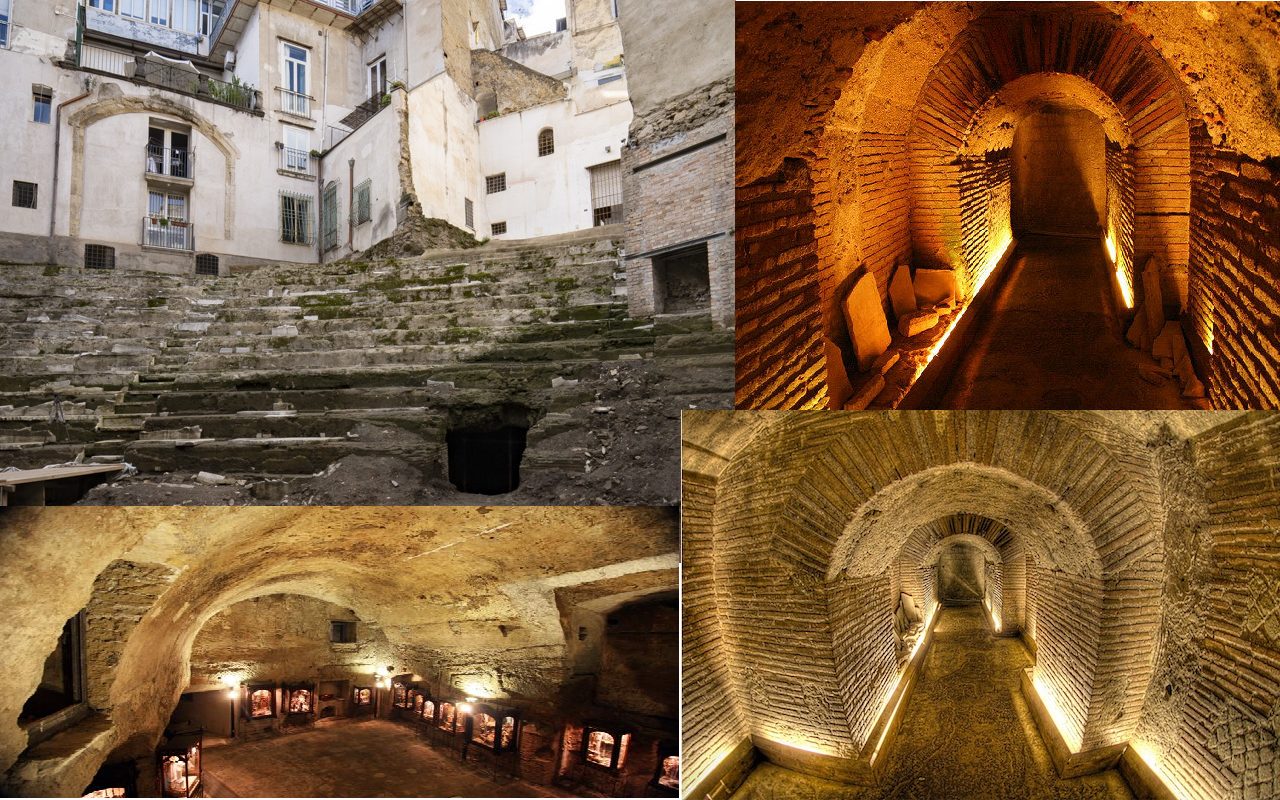 The Roman Theatre of Neapolis
Among the many wonders of Naples' historic centre stands the ancient Roman Theatre of Neapolis, between what are now...Read more
The Roman Theatre of Neapolis
Among the many wonders of Naples' historic centre stands the ancient Roman Theatre of Neapolis, between what are now...Read more -
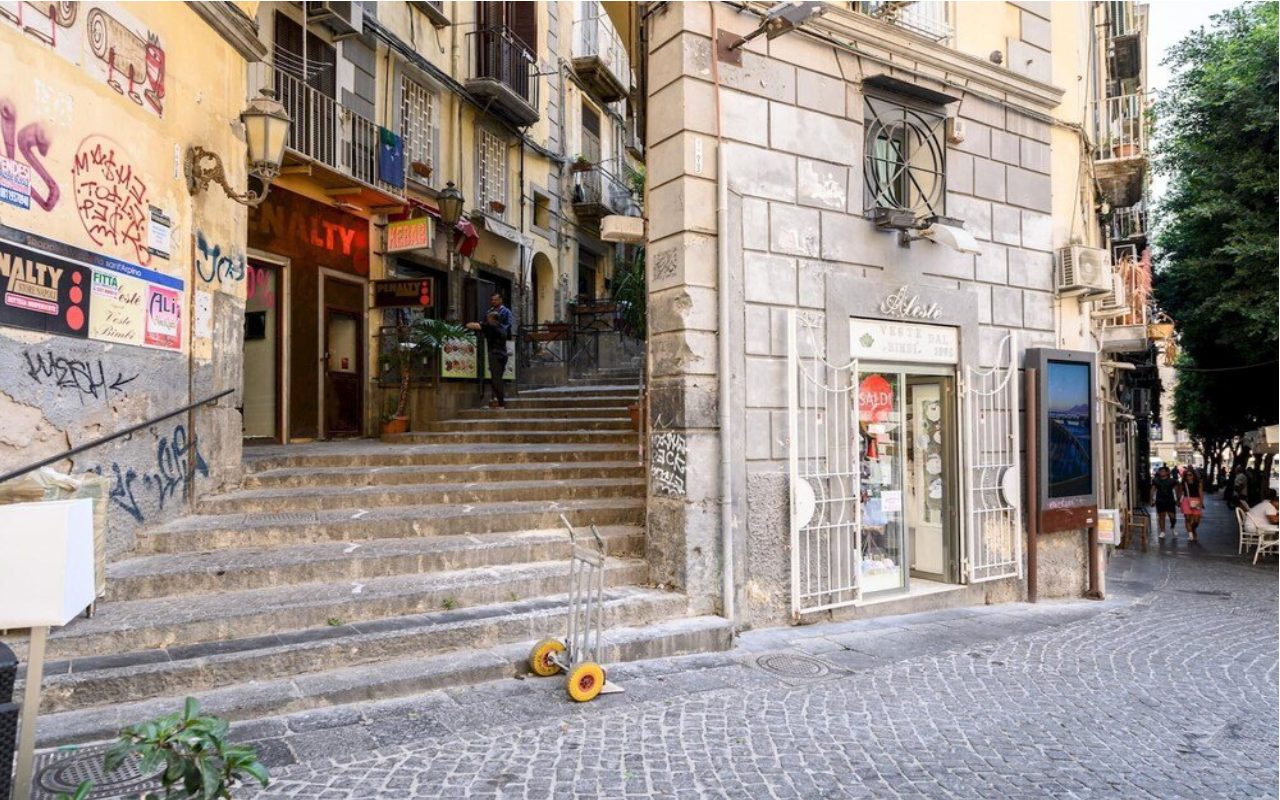 Discover Vicoletto Sant'Arpino: History and Beauty of Naples
There are corners of Naples that tell incredible stories, that take your breath away and make it unique, sincere and...Read more
Discover Vicoletto Sant'Arpino: History and Beauty of Naples
There are corners of Naples that tell incredible stories, that take your breath away and make it unique, sincere and...Read more -
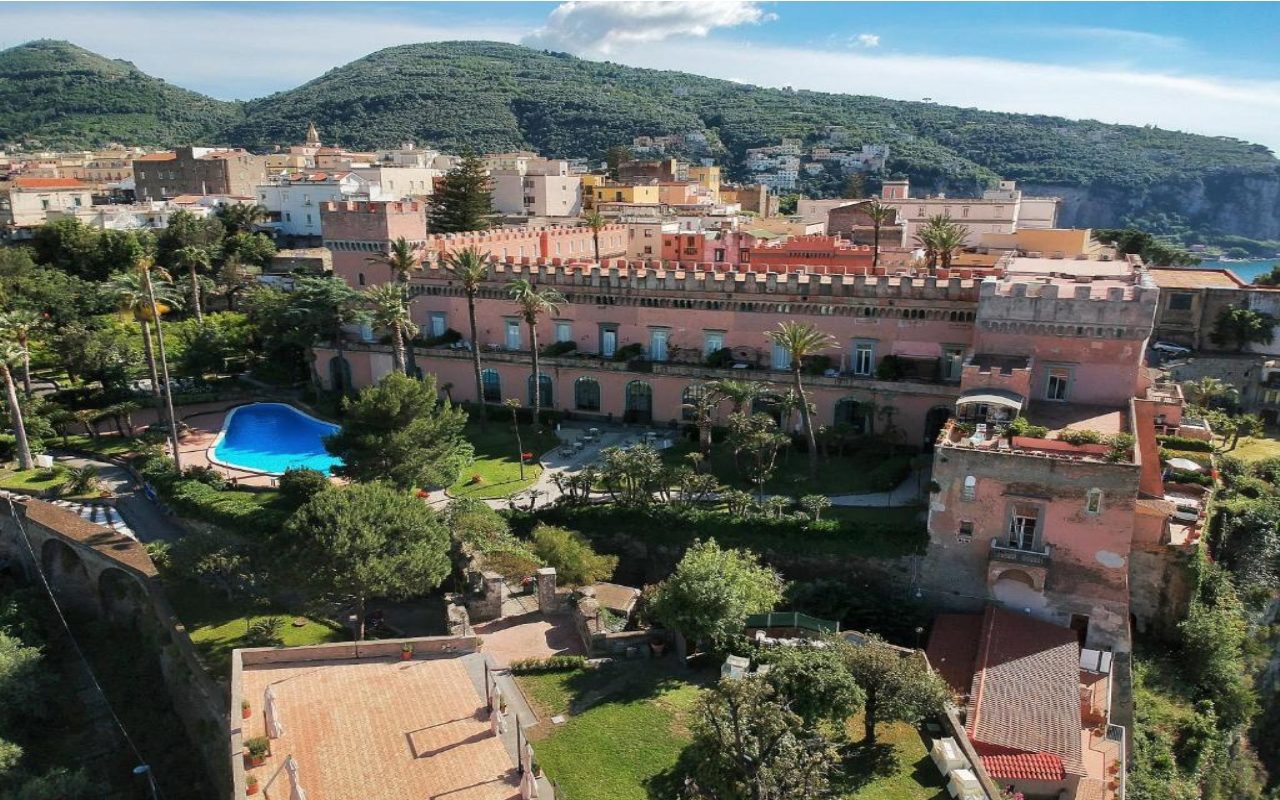 Giusso Castle: the legends of Vico Equense
Built at the end of the 13th century, Giusso Castle was designed as both a military fortress and a residence.Read more
Giusso Castle: the legends of Vico Equense
Built at the end of the 13th century, Giusso Castle was designed as both a military fortress and a residence.Read more -
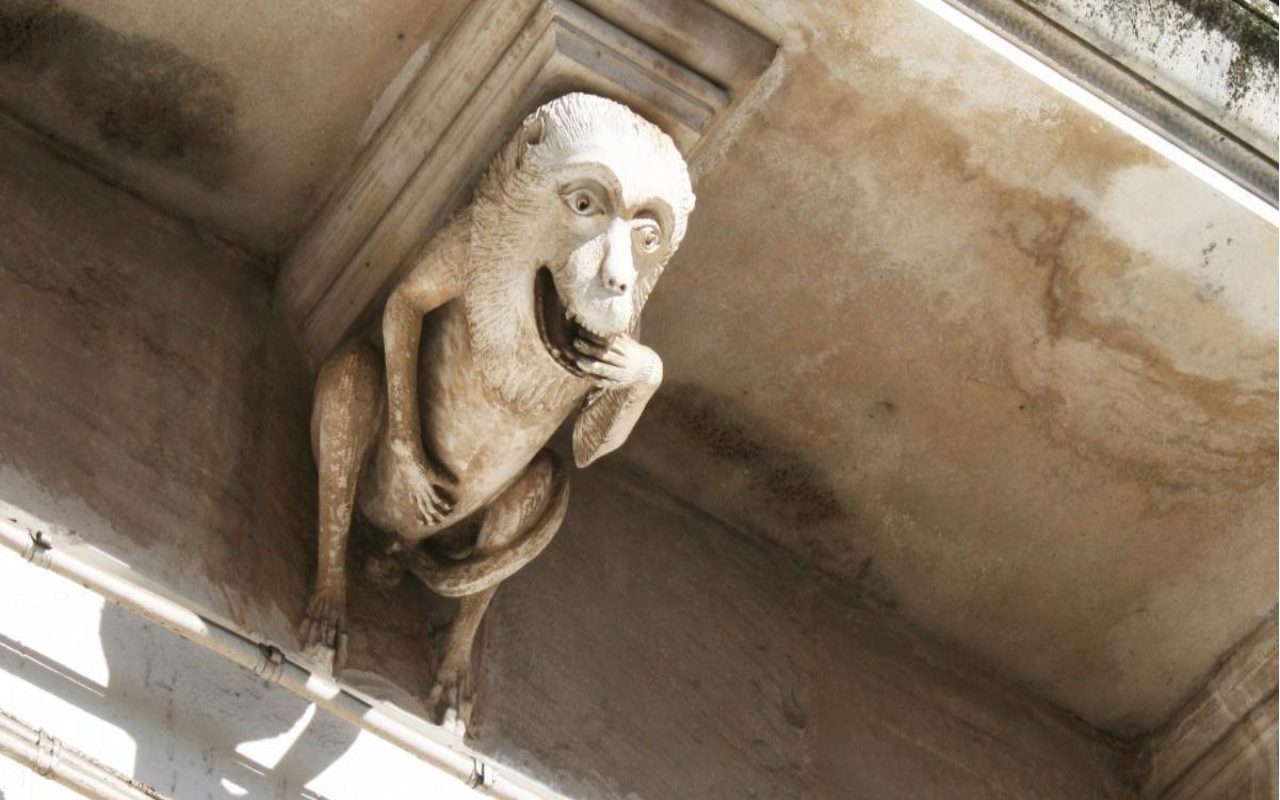 The apotropaic stone masks of lava rock and marble
Neapolitan apotropaic masks are truly fascinating works of art that can be admired on numerous historic buildings...Read more
The apotropaic stone masks of lava rock and marble
Neapolitan apotropaic masks are truly fascinating works of art that can be admired on numerous historic buildings...Read more -
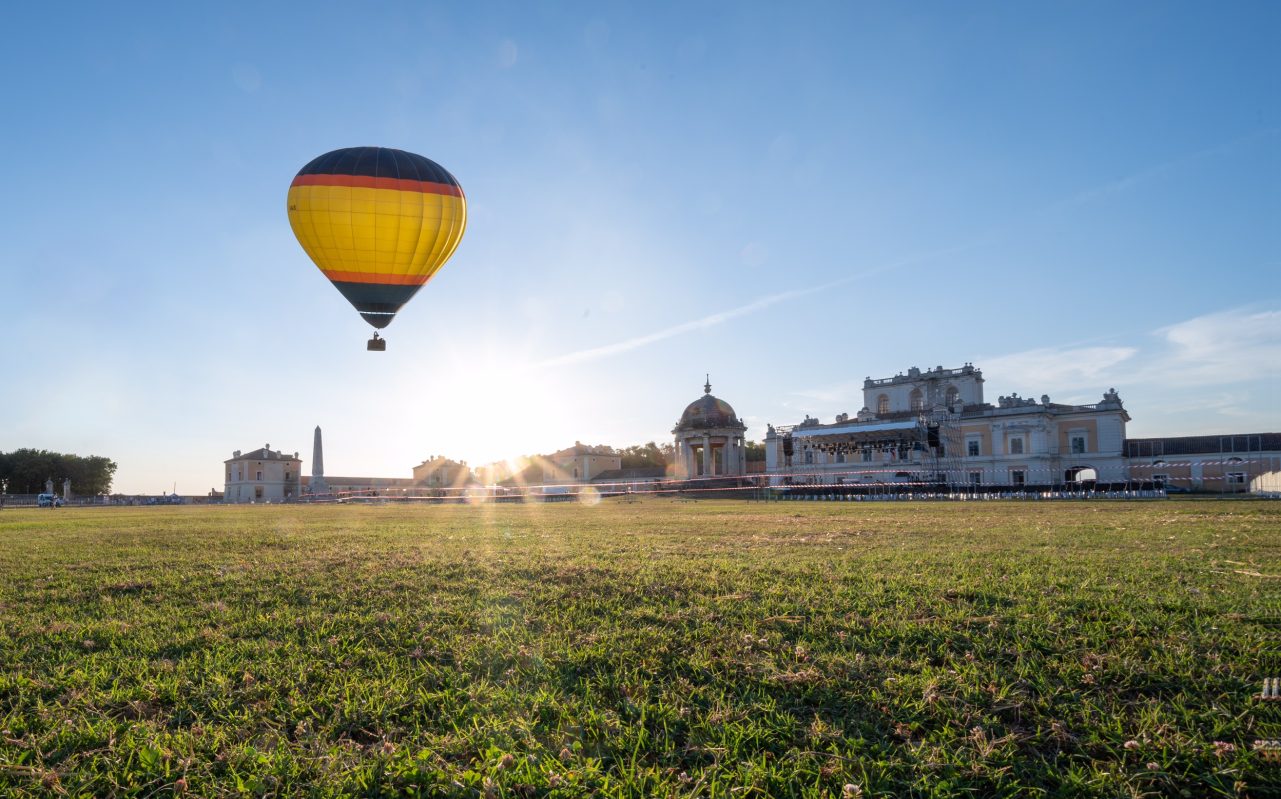 THE ROYAL PALACE OF CARDITELLO
The Tenuta Storica di Carditello (Historic Estate of Carditello), also known as the Reggia di Carditello (Royal...Read more
THE ROYAL PALACE OF CARDITELLO
The Tenuta Storica di Carditello (Historic Estate of Carditello), also known as the Reggia di Carditello (Royal...Read more
Leave a comment