



In Naples, a graduation is never a private affair: it's a neighbourhood celebration. Here's how to choose an original...
Latest posts
-
 Original Neapolitan graduation gift: ideas for the graduate (him and her)Read more
-
 Asso 'e mazze: meaning and history of the Neapolitan ace of clubsRead more
The strongest card on the green table becomes, in Naples, the most elegant way to say who really calls the shots....
-
 Michelina Di Cesare, the brigantessa who defied a kingdomRead more
Born poor in Terra di Lavoro, Michelina Di Cesare chose the maquis and the rifle against a newly united Italy. A...
-
 Neapolitan Hoodies: The Autumn 2026 Style GuideRead more
When the air turns crisp, in Naples people don't just reach for a hoodie: they reach for a piece of identity. Here's...
-
 Maradona Stadium: City Council allocates €50 million for Euro 2032Read more
The City Council has allocated €50 million for the redevelopment of the Diego Armando Maradona stadium, ahead of...
-
 Pizza Maxima 2026: Franco Pepe Is Once Again Best Pizzeria in ItalyRead more
At the fifth edition of Pizza Maxima, the Oscars of Italian pizza, Franco Pepe confirms his title as Best Pizzeria in...
-
 ‘L’acqua è poca e ‘a papera nun galleggia’: what it meansRead more
When the means are few, so is the result. Let's discover the most realistic Neapolitan saying there is.
-
 Avanti Scugnizzi: the story of the year's most loved T-shirtRead more
One word, ‘scugnizzo’ (Neapolitan street kid), and it holds the whole of Naples inside it. We tell you how the year's...
-
 'Chi chiagne fotte a chi ride': what it means and why it's truer than everRead more
At the market, at the counter, in the family: there's always someone who complains and gets more. It's the sharp...
-
 San Gennà, futtatenne! (Saint Januarius, don't worry about it!) San Gennaro, 19 September and the patron saint's t-shirtRead more
Who San Gennaro was, the miracle of the blood that liquefies, and the feast on 19 September. Plus that close,...
Blog categories
Search in blog
Archived posts
The Royal Palace of Caserta, the little Versailles
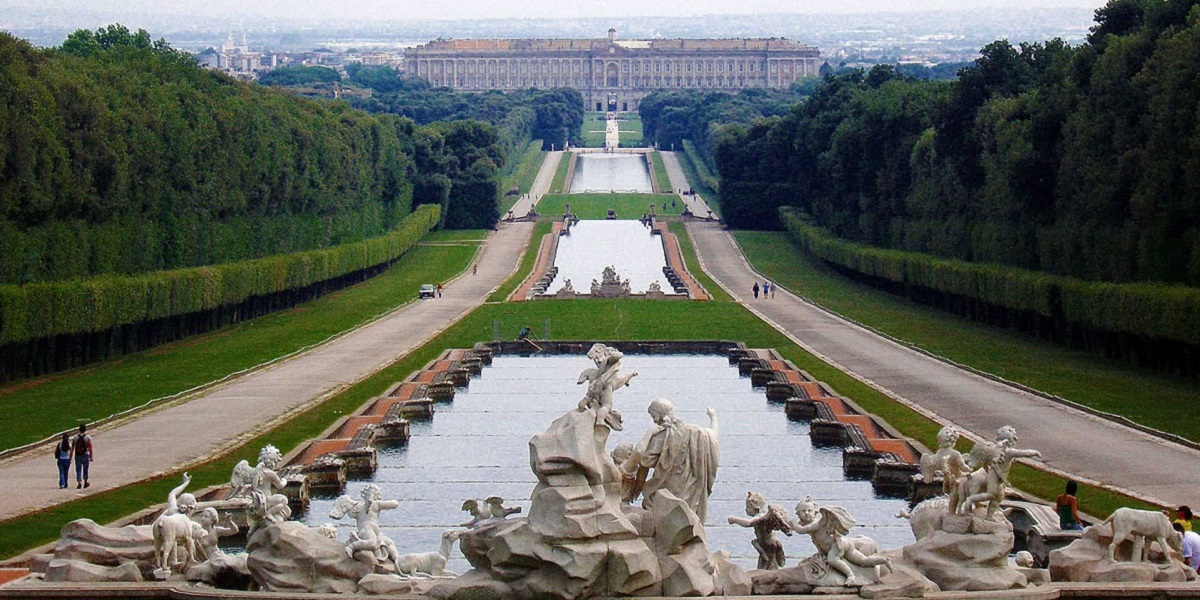
The project, entrusted to the innovative and skilled hands of Luigi Vanvitelli, called for, besides the construction of the Royal Palace itself, the completion of an aqueduct (today’s Carolino Aqueduct), a park, the redevelopment of the surrounding urban area and the building of a grand avenue leading all the way to the city of Naples (this last part was only partly carried out).
by Chiara Scaramella
The Royal Palace of Caserta is the architectural expression of the power of the Bourbon dynasty.
It was, in fact, built to express the magnificence of the now-autonomous Kingdom of Naples. The design of the palace, intended to house the residence of the Bourbon royals, had to be so grand as to be able to compete with the royal residences of the other European powers. Its construction, however, did not take place on Neapolitan soil, given the city’s vulnerability to attacks from the sea, but further inland, precisely in the splendid countryside landscape of the Caserta area.
The project
The project, entrusted to the innovative and skilled hands of Luigi Vanvitelli, called for, besides the construction of the Royal Palace itself, the completion of an aqueduct (today’s Carolino Aqueduct), a park, the redevelopment of the surrounding urban area and the building of a grand avenue leading all the way to the city of Naples (this last part was only partly carried out). Given the importance of the project and the expectations the sovereign had placed in the design of the royal residence, Vanvitelli decided to bring in other architects to carry out the work plan: Marcello Fronton collaborated on the construction of the palace, Francesco Collencini took care of the park and the aqueduct, while the gardening work was entrusted to the Parisian Martin Biancour.
Work began in 1752 and proceeded smoothly and swiftly until, in 1759, Charles III of Bourbon, who had commissioned the project, ascended to the throne in Madrid following the death of the Spanish sovereign. His successors paid little attention to the completion of the royal residence, so much so that the works were only finished in 1845 when, under the reign of Francis I, the Bourbon kingdom was already drawing to a close. The result, however, despite the last stretch of work being carried out with less care, is a sumptuous palace that stands up well in comparison with other European residences, so much so that it has been given the nickname “little Versailles”, in reference to the splendid palace of the French sovereigns.
The structure
The last great achievement of Italian Baroque, the Royal Palace of Caserta was described by Gino Chierici, in 1930, as “one of the most harmonious, most logical, most perfect ground-plan creations in the architecture of all time”. The building, with its rectangular floor plan, covers an area of 47,000 square metres and stands 36 metres high, spread over five floors, divided into 12,000 rooms, all finely decorated; among the most sumptuous are the throne room, which once hosted the wonderful dancing balls of the royals, the bridal chambers, the court theatre and the library. The lower and upper vestibules, the latter leading to the royal apartments, are connected by a monumental ceremonial staircase: with its optical illusion effects and its magnificence, this staircase represents a perfect union of classical and Baroque style and is considered one of Vanvitelli’s finest works. On the piano nobile we also find the splendid Palatine Chapel, another gem of Vanvitelli’s design, which closely echoes the style of the Palace of Versailles, sharing the same symmetry as its French counterpart.
The Royal Park
Making the Royal Palace of Caserta even more spectacular is the great Royal Park, laid out all around the residence and connected to it by an elegant portico, from which two parallel avenues stretch out, interspersed with numerous pools and fountains.
At the farthest point from the palace, exactly in the centre between the two avenues, there is a magnificent waterfall, which serves as the optical vanishing point of the perspective. The park, where the royals could indulge in hunting or simple strolls, is an integral part of the palace project and was itself inspired by the splendid and innovative French gardens, while also blending in the tradition of the more classical Renaissance conception of gardens. The whole extends over an area of 120 hectares, along a length of some 3 kilometres, and boasts a great number of fountains (six main ones), all fed by the Carolino Aqueduct. The gardens are divided into two parts: those in the Italian style and those in the English style. In the area of the Italian gardens we find the fish pond, an artificial lake of about 270 square metres with, at its centre, the little island known as “la pagliara” (the thatched-hut islet). This stretch of water was built for the amusement of Ferdinand IV, who enjoyed staging small naval battles with scale-model ships. Not far away stands the “castelluccia” (little castle), a small fortress likewise built for the king’s amusement and probably intended as a place for the military education of the royal family.
The English garden, finally, came about at the wish of Queen Maria Carolina of Habsburg-Lorraine, who wanted to keep pace with the new Romantic standards for gardens, which favoured a design as faithful as possible to nature. The garden is marked by the seemingly haphazard succession of plants, fountains and ruins, following the emerging fashion inspired by the new archaeological discoveries being made in the excavations of Pompeii and Herculaneum.
In short, the Royal Palace of Caserta, for the refinement and attention to detail of both its interiors and its exteriors, holds its own against the residences of Europe’s sovereigns, and it almost feels reductive to describe it merely as “little Versailles”, since it certainly has a strong personality of its own, born of all the care and attention that went into its creation, especially in its earliest years. What’s more, the climate, the air and the resulting vegetation surrounding the royal residence set it apart, giving it thoroughly Mediterranean qualities.
Posted in:
Places in Naples
Related posts
-
 The Roman Theatre of Neapolis
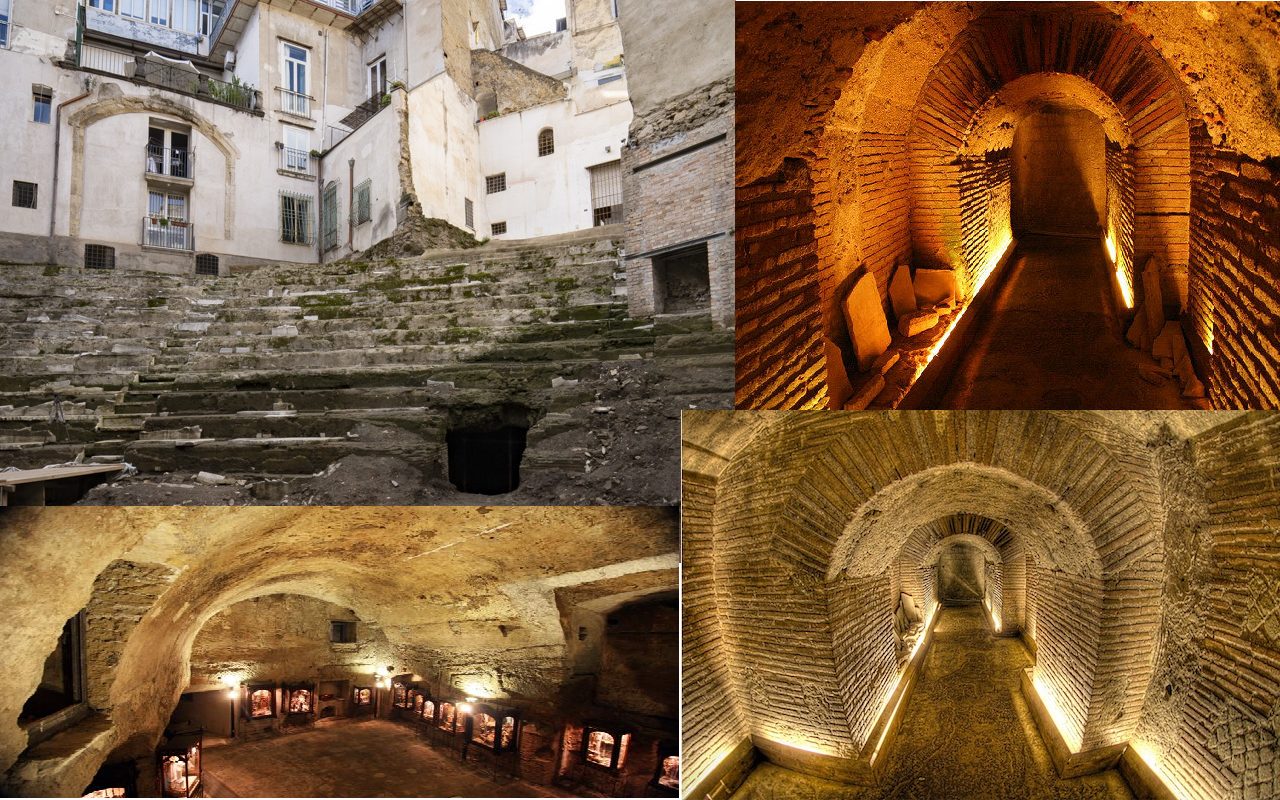
Among the many wonders of Naples' historic centre stands the ancient Roman Theatre of Neapolis, between what are now...Read more
-
 Discover Vicoletto Sant'Arpino: History and Beauty of Naples
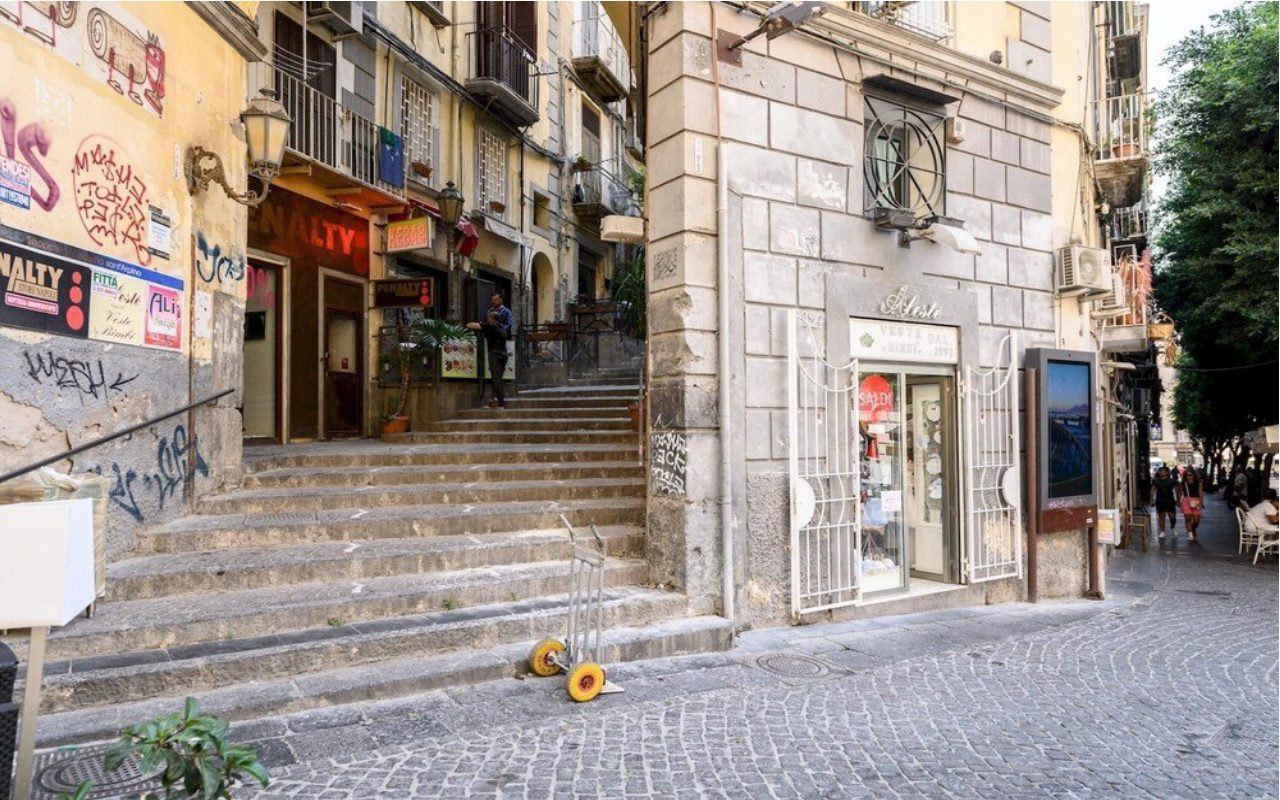
There are corners of Naples that tell incredible stories, that take your breath away and make it unique, sincere and...Read more
-
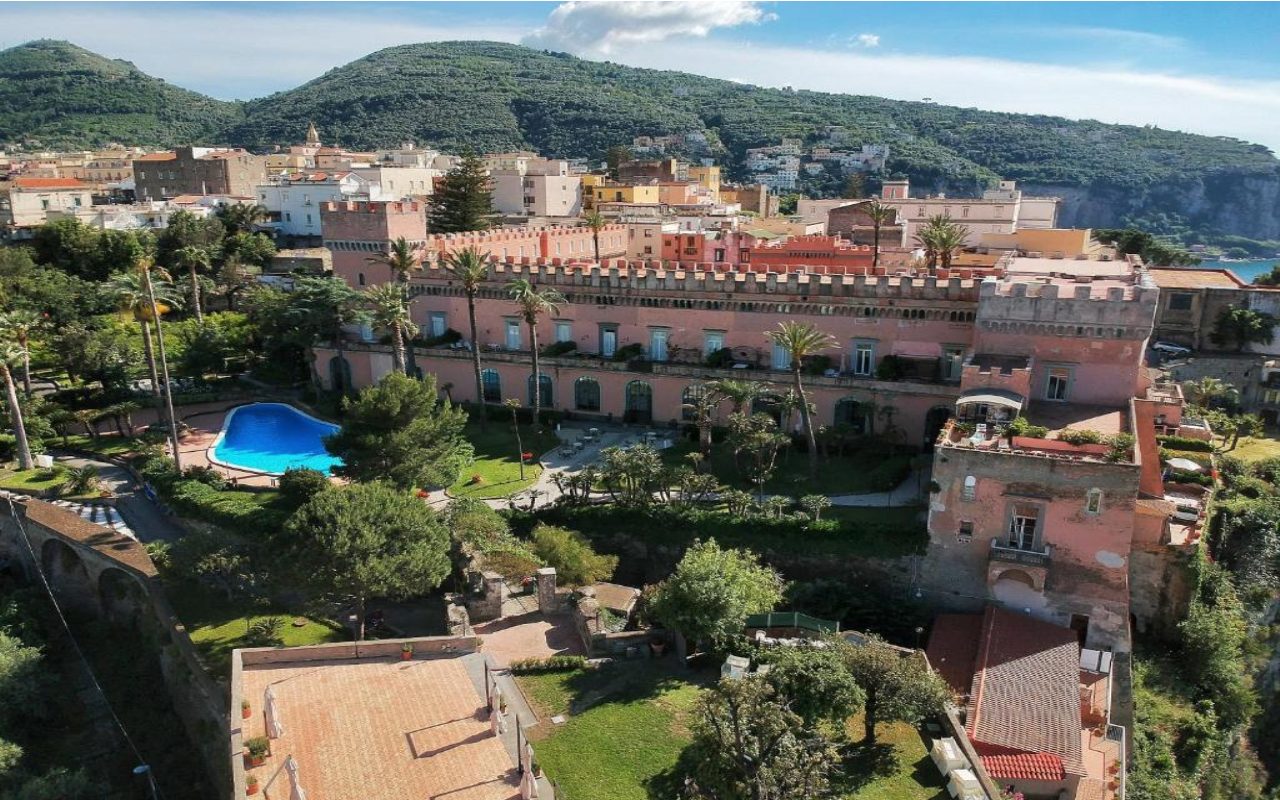 Giusso Castle: the legends of Vico Equense
Built at the end of the 13th century, Giusso Castle was designed as both a military fortress and a residence.Read more
-
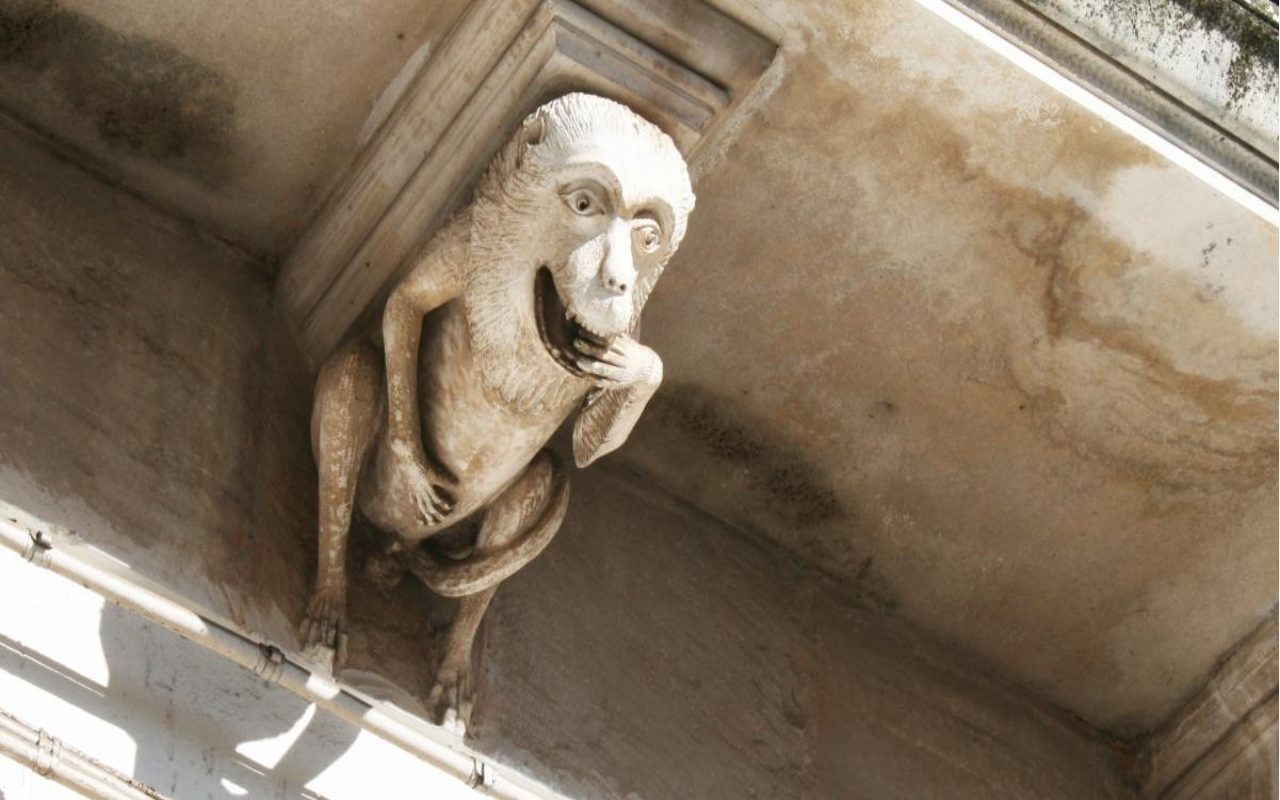 The apotropaic stone masks of lava rock and marble
Neapolitan apotropaic masks are truly fascinating works of art that can be admired on numerous historic buildings...Read more
-
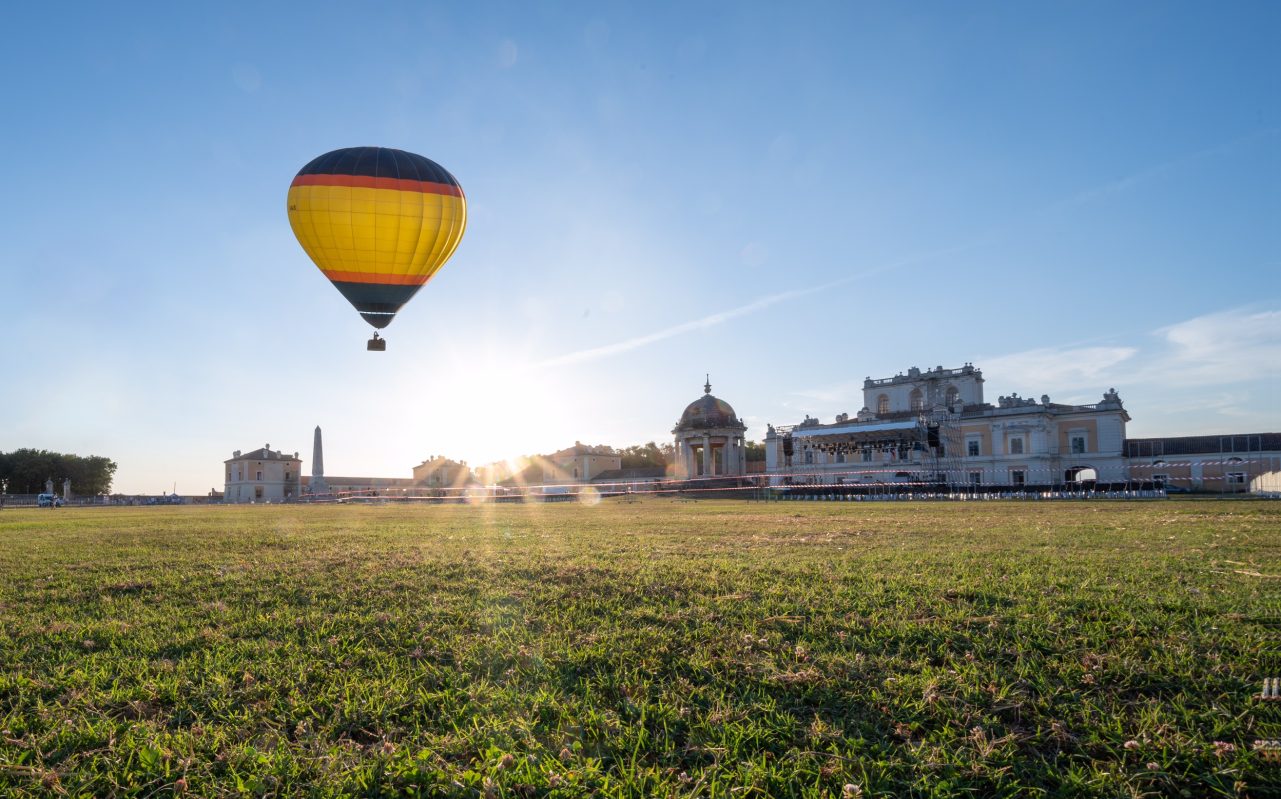 THE ROYAL PALACE OF CARDITELLO
The Tenuta Storica di Carditello (Historic Estate of Carditello), also known as the Reggia di Carditello (Royal...Read more
Leave a comment