



Born poor in Terra di Lavoro, Michelina Di Cesare chose the maquis and the rifle against a newly united Italy. A...
Latest posts
-
 Michelina Di Cesare, the brigantessa who defied a kingdomRead more
 -
 Neapolitan Hoodies: The Autumn 2026 Style GuideRead more
When the air turns crisp, in Naples people don't just reach for a hoodie: they reach for a piece of identity. Here's...
-
 Maradona Stadium: City Council allocates €50 million for Euro 2032Read more
The City Council has allocated €50 million for the redevelopment of the Diego Armando Maradona stadium, ahead of...
-
 Pizza Maxima 2026: Franco Pepe Is Once Again Best Pizzeria in ItalyRead more
At the fifth edition of Pizza Maxima, the Oscars of Italian pizza, Franco Pepe confirms his title as Best Pizzeria in...
-
 ‘L’acqua è poca e ‘a papera nun galleggia’: what it meansRead more
When the means are few, so is the result. Let's discover the most realistic Neapolitan saying there is.
-
 Avanti Scugnizzi: the story of the year's most loved T-shirtRead more
One word, ‘scugnizzo’ (Neapolitan street kid), and it holds the whole of Naples inside it. We tell you how the year's...
-
 'Chi chiagne fotte a chi ride': what it means and why it's truer than everRead more
At the market, at the counter, in the family: there's always someone who complains and gets more. It's the sharp...
-
 San Gennà, futtatenne! (Saint Januarius, don't worry about it!) San Gennaro, 19 September and the patron saint's t-shirtRead more
Who San Gennaro was, the miracle of the blood that liquefies, and the feast on 19 September. Plus that close,...
-
 'O purpo se coce int'a ll'acqua soja: what it means (o purpo se coce meaning)Read more
Someone has wronged you, and instead of reacting, you wait in silence with a smile? Here's the Neapolitan proverb...
-
 Cazzimma: meaning, origin and why it can't be translatedRead more
There's a word that explains everything in Naples and can't be translated into any language. It's called cazzimma,...
Blog categories
Search in blog
Archived posts
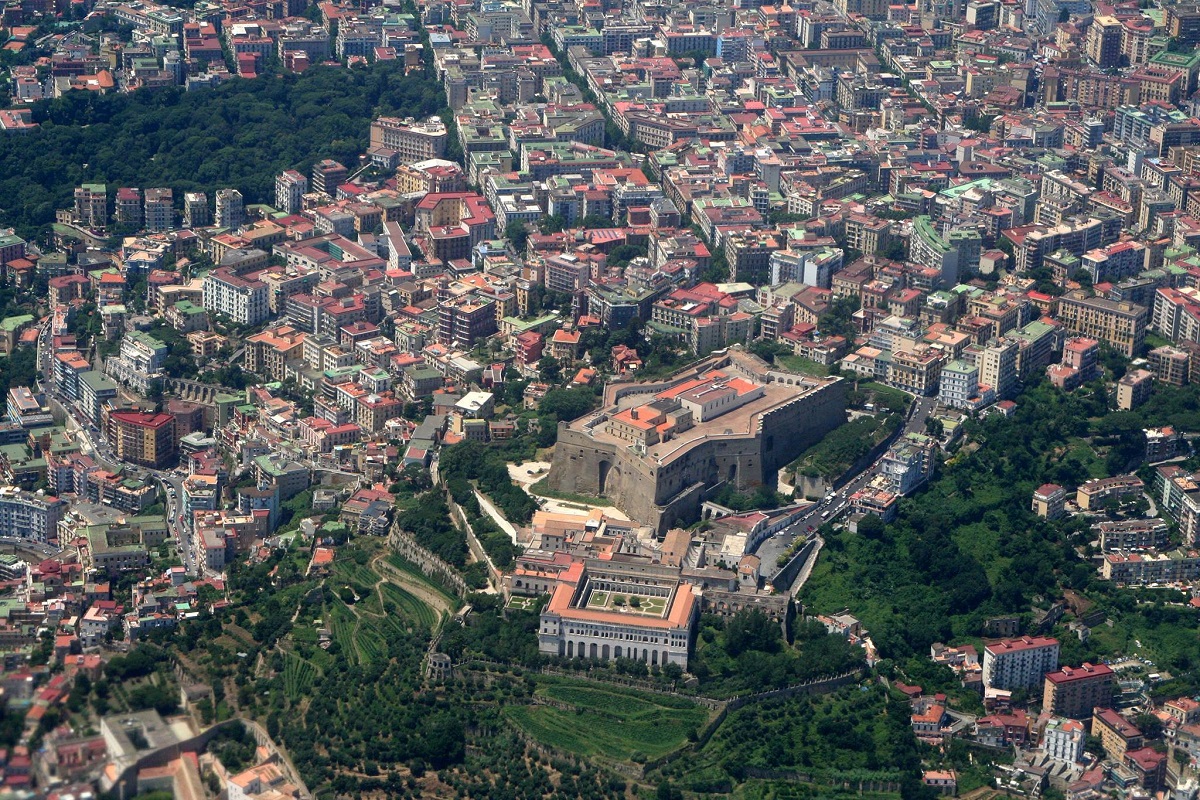
Castel Sant'Elmo: a fortress in the heart of Naples
Work on the “Palatinum Castrium” began in 1329 and was completed, under the reign of Joan of Anjou, in 1343, thanks to designs first drawn up by Tino da Caimano, the Tuscan architect who also designed the well-known Certosa di San Martino (Charterhouse of San Martino), and, after his death, by Attanasio Primario and Francesco di Vico.
by Chiara Scaramella
One of the most panoramic and fascinating places in Naples is certainly Castel Sant’Elmo.
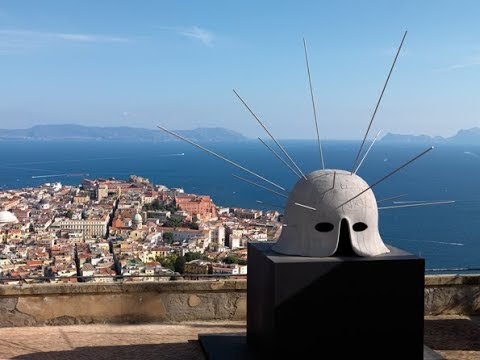
Sitting atop the hill of the same name, precisely in Largo San Martino, it commands a sweeping view of the whole metropolis. It was exactly this feature that made the fortress so important throughout history: from up here, in fact, the entire city could be kept under control. Originally it was a Norman tower called Belforte, and only with the arrival of the Angevin dynasty, specifically by the will of the then king Robert the Wise, was it transformed into a proper fortress.
History
The fortress, probably because of a pre-existing church dedicated to Sant’Erasmo (Saint Erasmus), was at first called, in fact, Castello di Sant’Erasmo, and then, over the years, its name changed to “Sant’Ermo” and “Sant’Elmo”. The castle’s current appearance does not fully match the original design, as it is the result of rebuilding works carried out between 1537 and 1547 following various collapses caused by an earthquake. These later works, commissioned by Viceroy Don Pedro di Toledo to the architect Pedrò Luis Escrivà, turned the castle into a true citadel, complete with its own square (Piazza d’Armi, the Parade Ground).
The fortress perched on the hill of Sant’Elmo has accompanied the city of Naples throughout its history and, alongside it, has lived through the various foreign dominations. Over the years, in fact, it has fallen victim to numerous sieges (French, Austrian, Hungarian, etc.) and has played a leading role in several revolutions. It was right here, for example, that, thanks to the bombardments carried out from this stronghold, the Viceroy Duke of Arcos managed to quell the uprising during Masaniello’s revolt. Its last function, finally, before becoming the museum it is today, was that of a military prison, in which millions of people were held, including the famous Giustino Fortunato, Mario Pagano, Giuliano Colonna and many other celebrated figures.
The structure and its hexagonal plan
The castle, built of solid stone, stands on a hexagonal ground plan which allowed for better control over the intensity and direction of cannon fire from the various bastions. Beyond these technical details, the six-pointed, star-shaped plan carries an iconography whose roots reach back into ancient stories. It is still not known, in fact, whether this shape was chosen by chance or holds a deeper meaning: what is certain is that the six-pointed star appears in a great many cultures: first and foremost, it is the symbol of Jewish culture, but at the same time, in alchemy, it represents cosmic balance and the union of water and fire; furthermore, in the Kabbalah, it represents the opposition between the masculine and feminine universes and the resulting harmony of the universe arising from this contrast.
To enter the fortress, one must first climb a steep ramp and then cross, by way of a bridge, the large moat that surrounds the perimeter of the castle and which once served for its defence. Immediately afterwards you can admire the Grotta dell’Eremita (Hermit’s Grotto), a place that probably housed a hermit in years gone by. Visitors are welcomed by a great portal in piperino stone, on which sits the bas-relief of a double-headed eagle representing the coat of arms of Charles V.
The places absolutely worth visiting are the cells of the common prisoners, which welcome tourists inside through a splendid portal of tuff and piperino stone; the Piazza d’Armi, from which a breathtaking view can be admired; and the adjoining Torre del Castellano (Castellan’s Tower), the place where the castellan resided — that is, the person who held civil and military jurisdiction over the castle. Also not to be missed is the charming little church mentioned above, dedicated to Sant’Erasmo, built to designs by Pietro Prato and later rebuilt by Domenico Fontana.
In recent times, the castle’s inner halls have often hosted various art exhibitions, festivals and theatre and music seasons, made all the more striking by the wonderful setting. Besides these, the fortress is also the permanent home of the Museo Napoli 900, which houses a great many works of art, all Neapolitan, created between 1910 and 1980.
Info
Address: Via Tito Angelini 22, 80129, Naples.
Opening hours: every day from 8:30am to 7:30pm (closed on Tuesdays); the ticket office closes one hour earlier.
Tickets
- Full price: 5 euros;
- Reduced: 2.50 euros (for EU citizens aged between 18 and 25);
- Free: for EU citizens under 18 and over 65.
Posted in:
Places in Naples
Related posts
-
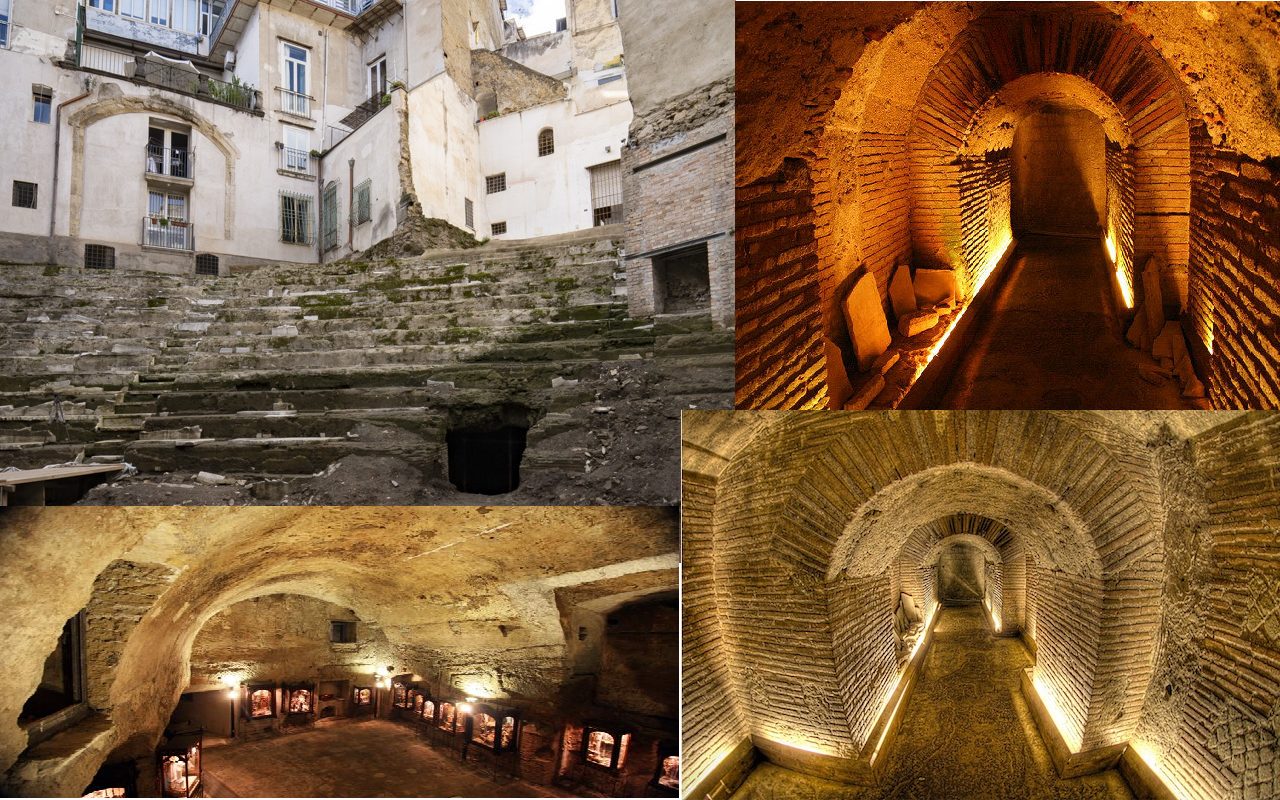 The Roman Theatre of Neapolis
Among the many wonders of Naples' historic centre stands the ancient Roman Theatre of Neapolis, between what are now...Read more
The Roman Theatre of Neapolis
Among the many wonders of Naples' historic centre stands the ancient Roman Theatre of Neapolis, between what are now...Read more -
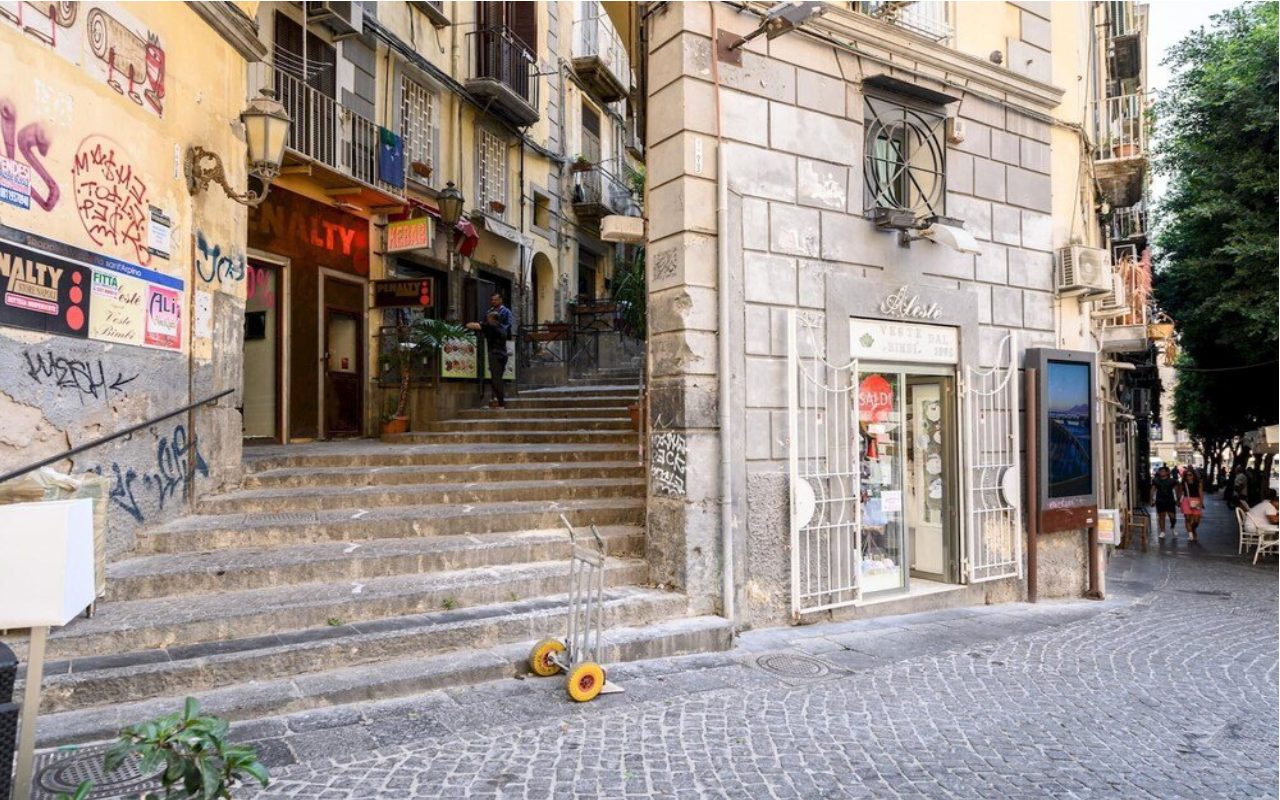 Discover Vicoletto Sant'Arpino: History and Beauty of Naples
There are corners of Naples that tell incredible stories, that take your breath away and make it unique, sincere and...Read more
Discover Vicoletto Sant'Arpino: History and Beauty of Naples
There are corners of Naples that tell incredible stories, that take your breath away and make it unique, sincere and...Read more -
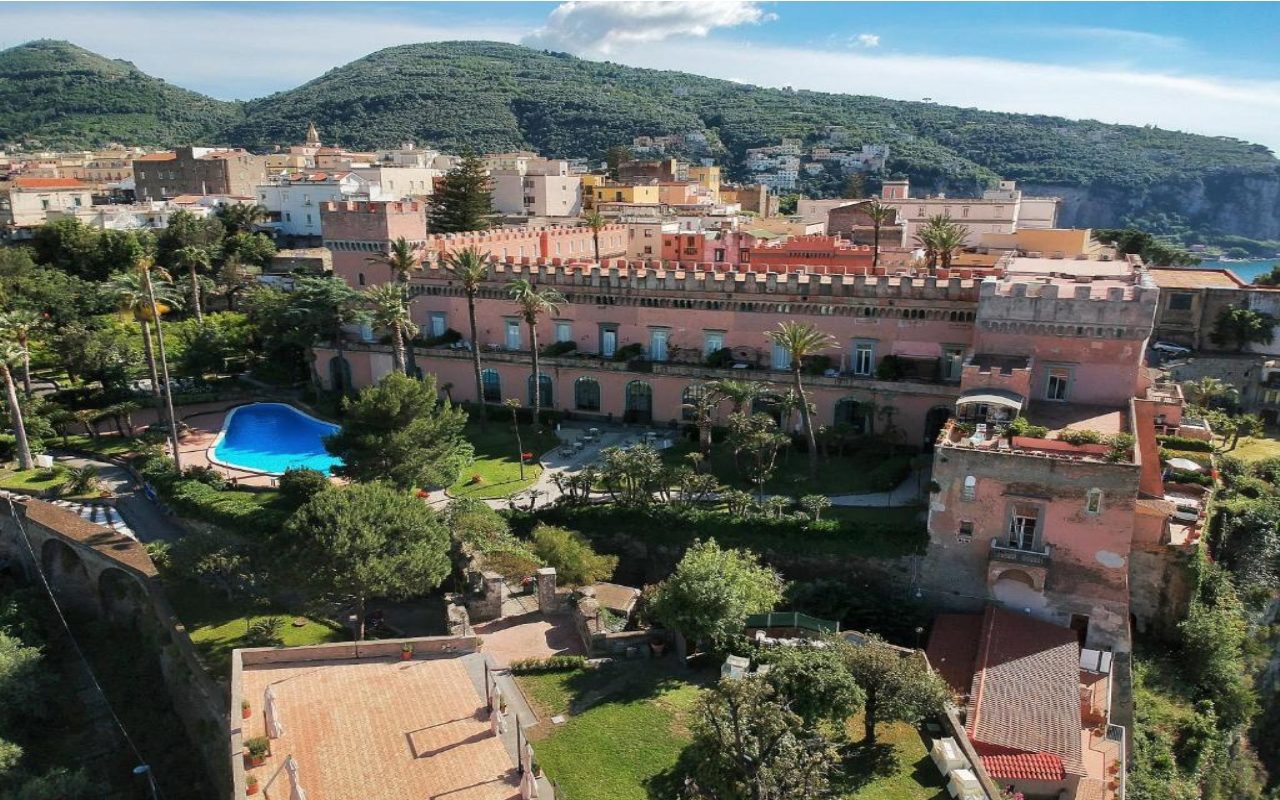 Giusso Castle: the legends of Vico Equense
Built at the end of the 13th century, Giusso Castle was designed as both a military fortress and a residence.Read more
Giusso Castle: the legends of Vico Equense
Built at the end of the 13th century, Giusso Castle was designed as both a military fortress and a residence.Read more -
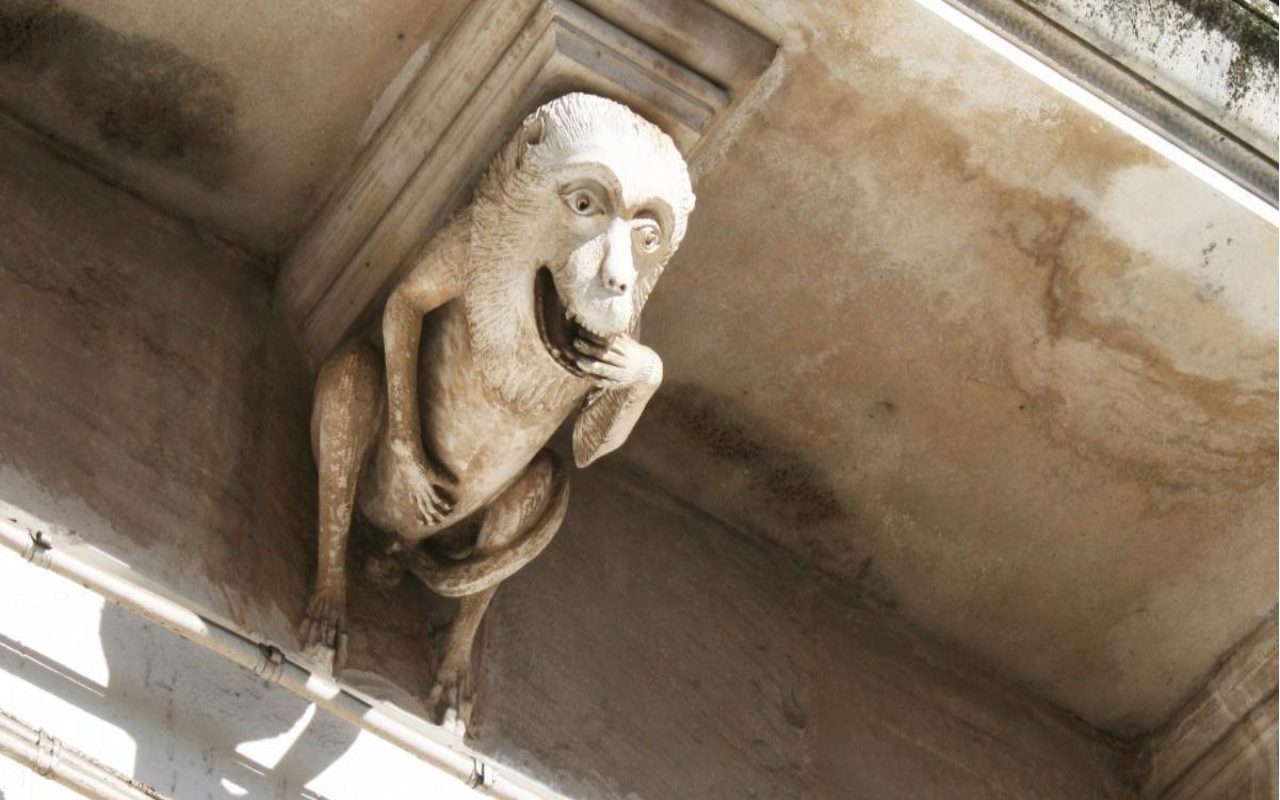 The apotropaic stone masks of lava rock and marble
Neapolitan apotropaic masks are truly fascinating works of art that can be admired on numerous historic buildings...Read more
The apotropaic stone masks of lava rock and marble
Neapolitan apotropaic masks are truly fascinating works of art that can be admired on numerous historic buildings...Read more -
 THE ROYAL PALACE OF CARDITELLO
The Tenuta Storica di Carditello (Historic Estate of Carditello), also known as the Reggia di Carditello (Royal...Read more
THE ROYAL PALACE OF CARDITELLO
The Tenuta Storica di Carditello (Historic Estate of Carditello), also known as the Reggia di Carditello (Royal...Read more
Leave a comment