



In Naples, a graduation is never a private affair: it's a neighbourhood celebration. Here's how to choose an original...
Latest posts
-
 Original Neapolitan graduation gift: ideas for the graduate (him and her)Read more
-
 Asso 'e mazze: meaning and history of the Neapolitan ace of clubsRead more
The strongest card on the green table becomes, in Naples, the most elegant way to say who really calls the shots....
-
 Michelina Di Cesare, the brigantessa who defied a kingdomRead more
Born poor in Terra di Lavoro, Michelina Di Cesare chose the maquis and the rifle against a newly united Italy. A...
-
 Neapolitan Hoodies: The Autumn 2026 Style GuideRead more
When the air turns crisp, in Naples people don't just reach for a hoodie: they reach for a piece of identity. Here's...
-
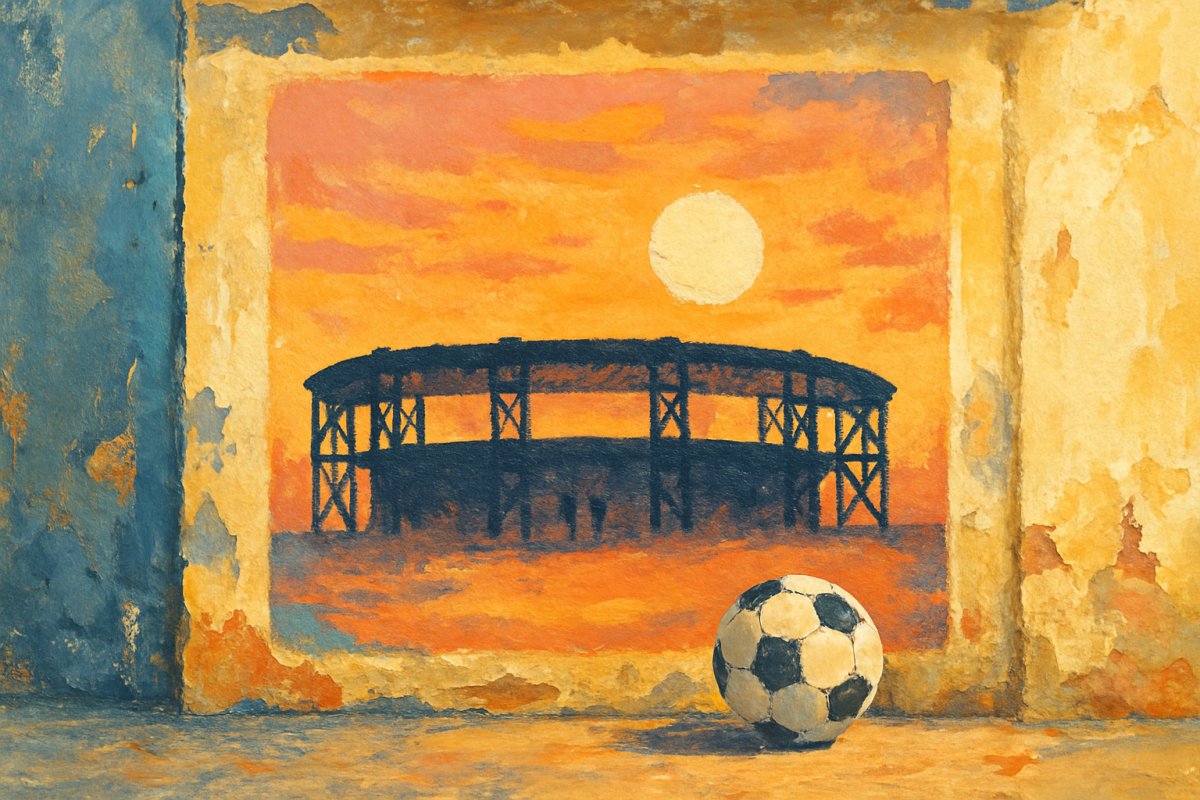 Maradona Stadium: City Council allocates €50 million for Euro 2032Read more
The City Council has allocated €50 million for the redevelopment of the Diego Armando Maradona stadium, ahead of...
-
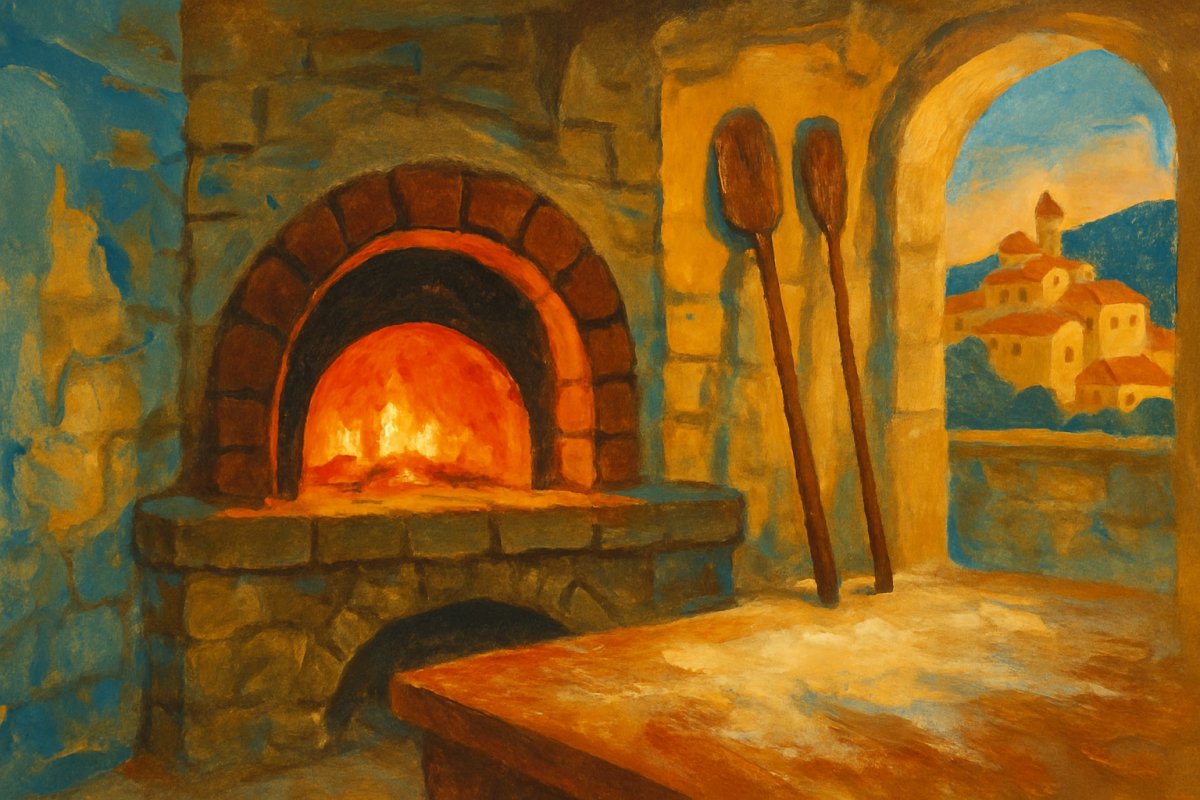 Pizza Maxima 2026: Franco Pepe Is Once Again Best Pizzeria in ItalyRead more
At the fifth edition of Pizza Maxima, the Oscars of Italian pizza, Franco Pepe confirms his title as Best Pizzeria in...
-
 ‘L’acqua è poca e ‘a papera nun galleggia’: what it meansRead more
When the means are few, so is the result. Let's discover the most realistic Neapolitan saying there is.
-
 Avanti Scugnizzi: the story of the year's most loved T-shirtRead more
One word, ‘scugnizzo’ (Neapolitan street kid), and it holds the whole of Naples inside it. We tell you how the year's...
-
 'Chi chiagne fotte a chi ride': what it means and why it's truer than everRead more
At the market, at the counter, in the family: there's always someone who complains and gets more. It's the sharp...
-
 San Gennà, futtatenne! (Saint Januarius, don't worry about it!) San Gennaro, 19 September and the patron saint's t-shirtRead more
Who San Gennaro was, the miracle of the blood that liquefies, and the feast on 19 September. Plus that close,...
Blog categories
Search in blog
Archived posts
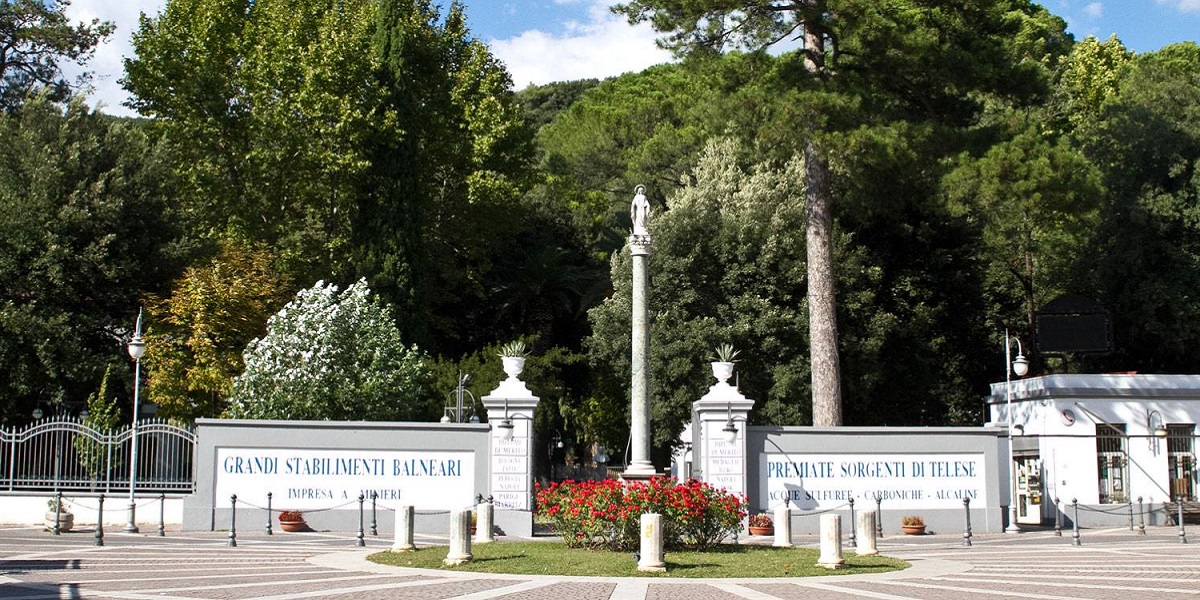
Telese Spa: relaxation in the Benevento area
The Telese Spa has very ancient origins: an earthquake in 1349 caused water to gush out from sulphur springs, and once people began making use of it, its beneficial effects on the skin, digestive system, respiratory system and for the treatment of rheumatism soon became apparent.
The frantic pace of everyday life, with all its routine, often makes a short holiday necessary or, at the very least, a period of relaxation away from daily stress.
What better place than the Telese Spa? Easy to reach, it is situated in the heart of the Valle Telesina (Telesina Valley), 30 km from Benevento, in the town of the same name, Telese Terme, and its waters are sulphurous.
History
In 1856, the pools of sulphur water were finally reclaimed and a small establishment was built, thanks to the contribution of the province of Terra del Lavoro (also known as Campania Felix — “Fertile Campania” — which included Campania, Lazio and Molise). After Telese passed to the province of Benevento in 1877, following various managements that had not improved the complex all that much, Ing. Eduardo Minieri (Engineer Eduardo Minieri) began developing the small facility, extending it and equipping it, until it reached the height of its splendour. The first “Goccioloni” (“Big Drops”) establishment was followed by a much larger complex, today equipped for aerosol therapy, water-drinking cures and other types of treatment.
The first scientific account of the beneficial properties of Telese's water dates back to 1734, the year in which Tommaso Bruni wrote “De acidulis telesinis dissertatio” (“Dissertation on the acidulous waters of Telese”), followed in 1819 by “Memorie sull'indole e sull'uso delle acque minerali di Telese” (“Notes on the nature and use of the mineral waters of Telese”) by Pietro Paolo Perugini, and in 1857 by “Guida medica per l'uso delle acque minerali di Telese” (“Medical guide to the use of the mineral waters of Telese”) by Liberio Marrone.
What makes Telese's waters so unique is the presence, in suspension, of divalent sulphur, a substance also found, among other things, within our own bodies. Being rich in carbon dioxide, moreover, it is particularly recommended for reactivating cardio-circulatory function, as it promotes peripheral blood flow by stimulating capillary vasodilation.
Classified as a sulphurous bicarbonate-calcium-magnesium water, it is also good to drink, besides having clear beneficial effects in the fields of vascular health, bones and joints and, above all, dermatology. The large pools of the Telese complex are, in fact, especially frequented by people suffering from conditions such as psoriasis and seborrhoeic dermatitis.
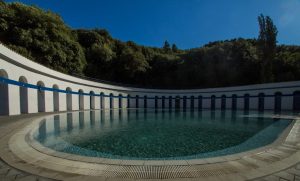
There are five pools available, two cold and three warm; the possibility of moving from one to the other, making use of the hot-cold effect, is precisely the mechanism behind the benefits to blood circulation.
How to reach Telese
By car - for those arriving from the Tyrrhenian coast (whether from Rome, Naples or Calabria), it is advisable to use the motorway. Those coming from the south should continue on and exit at the Caserta toll booth, then join, near Maddaloni, the state road that leads directly to Telese. Those coming from the north should instead exit at the Caianello toll booth, near Teano, joining the SS158 state road, which reaches Telese in under forty kilometres. For those coming from the Adriatic regions, the A16 is recommended, which runs from Canosa di Puglia to Benevento, from where you can then join the road that connects directly to Telese.
By train - you can use the Telese-Cerreto Sannio station, which is on the Caserta-Benevento railway line.
Posted in:
Places in Naples
Related posts
-
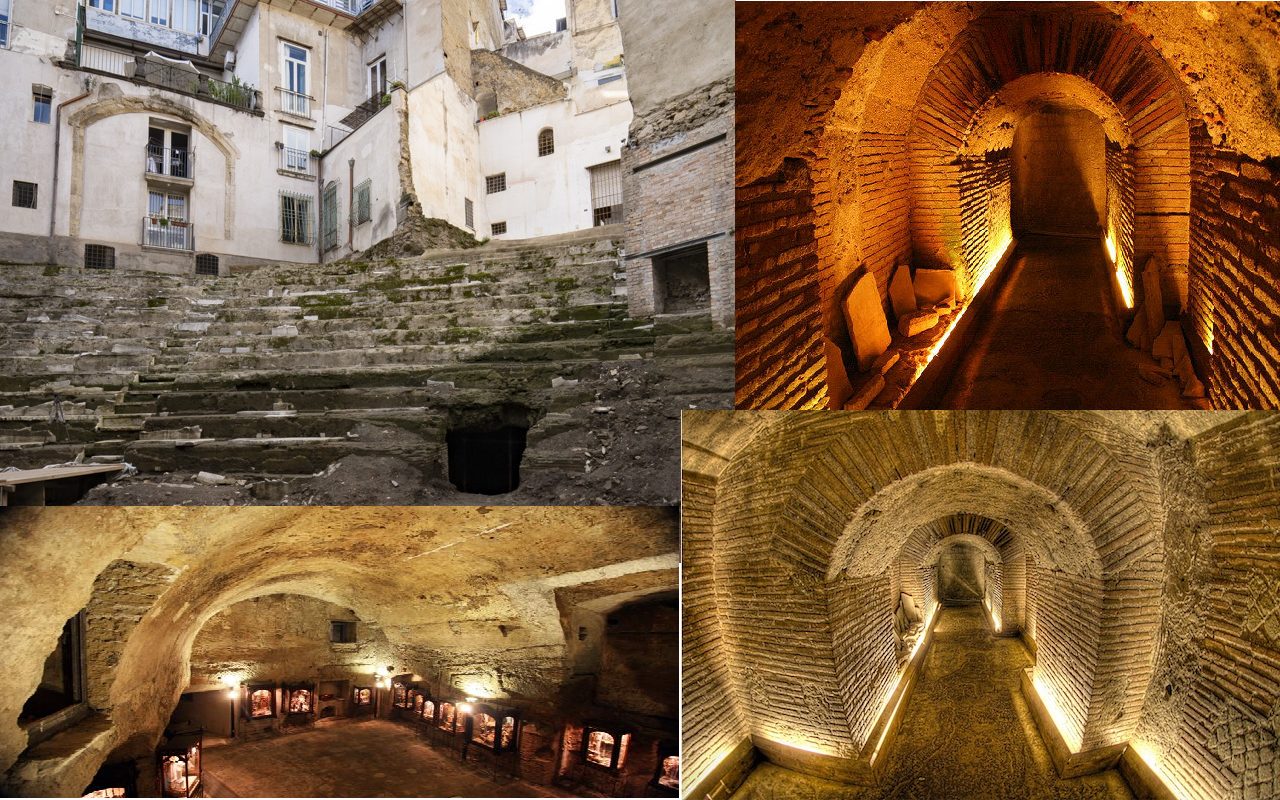 The Roman Theatre of Neapolis
Among the many wonders of Naples' historic centre stands the ancient Roman Theatre of Neapolis, between what are now...Read more
-
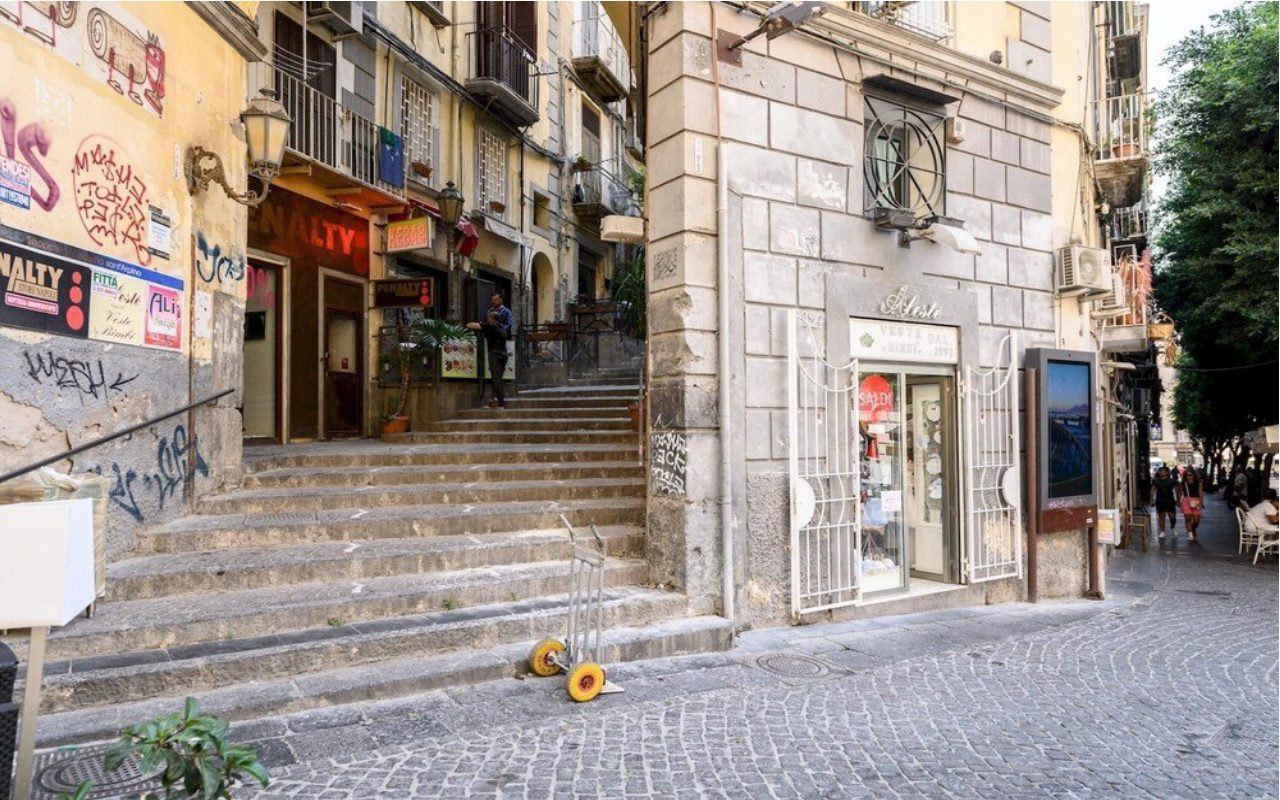 Discover Vicoletto Sant'Arpino: History and Beauty of Naples
There are corners of Naples that tell incredible stories, that take your breath away and make it unique, sincere and...Read more
-
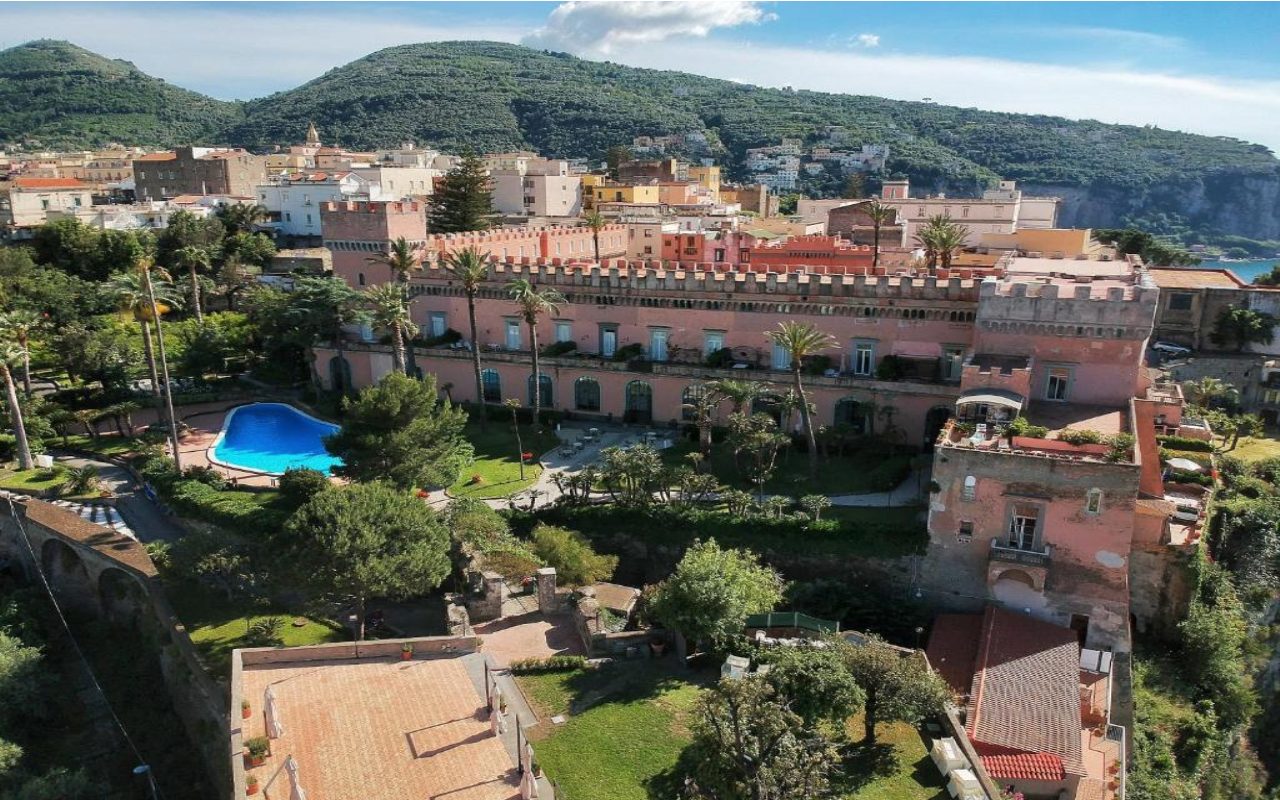 Giusso Castle: the legends of Vico Equense
Built at the end of the 13th century, Giusso Castle was designed as both a military fortress and a residence.Read more
-
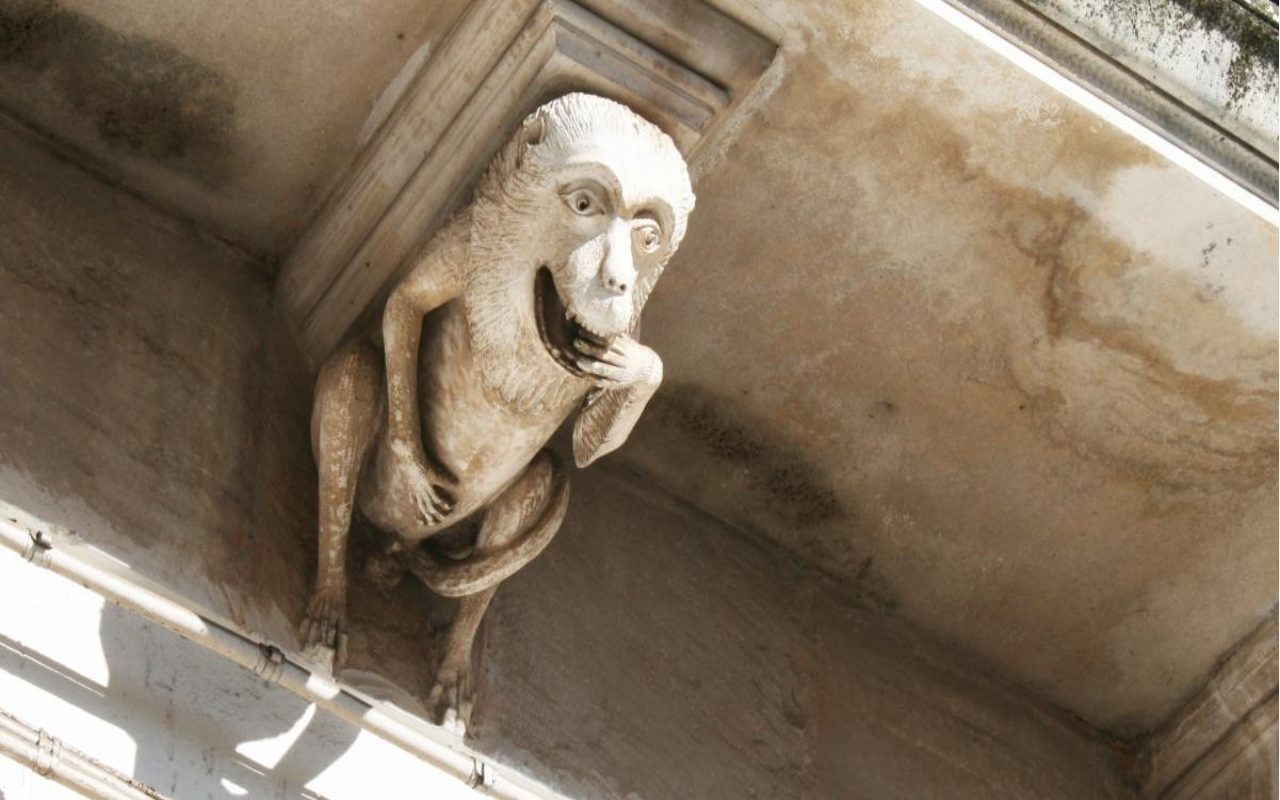 The apotropaic stone masks of lava rock and marble
Neapolitan apotropaic masks are truly fascinating works of art that can be admired on numerous historic buildings...Read more
-
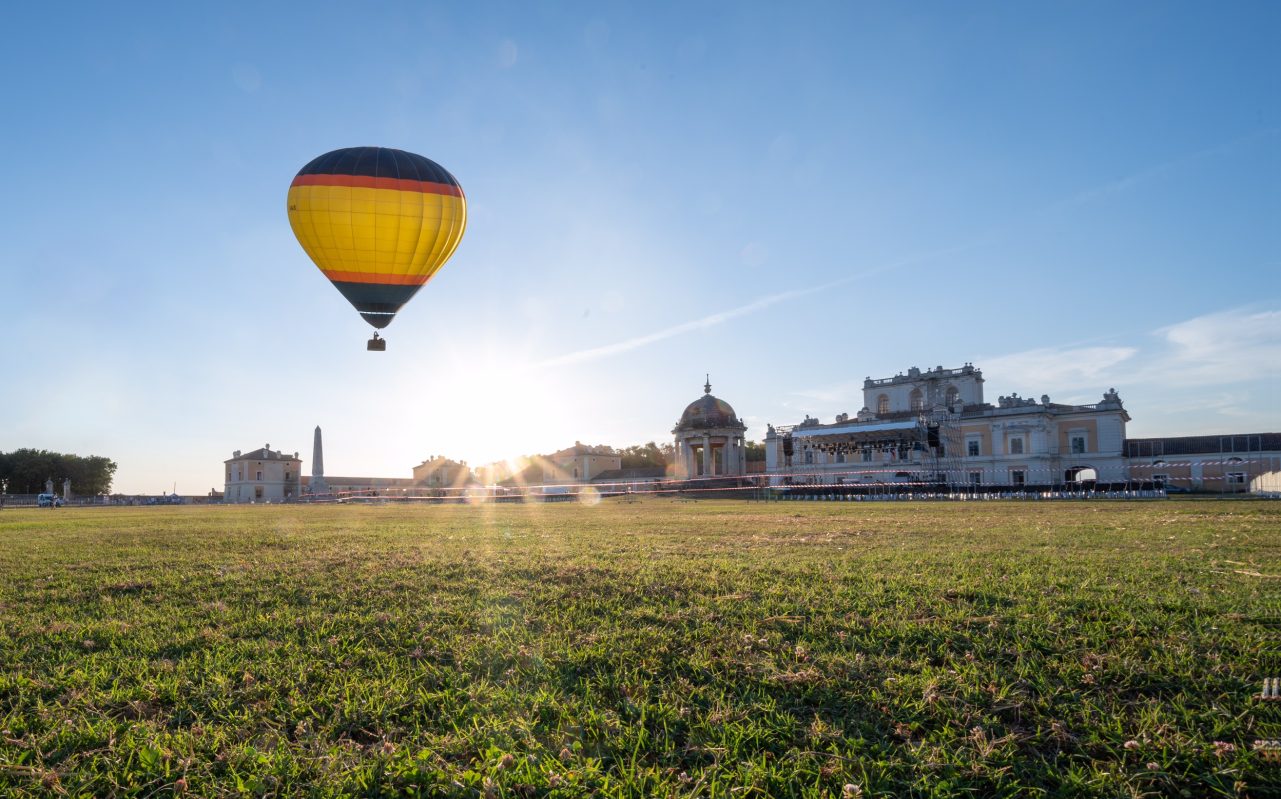 THE ROYAL PALACE OF CARDITELLO
The Tenuta Storica di Carditello (Historic Estate of Carditello), also known as the Reggia di Carditello (Royal...Read more
Leave a comment