



In Naples, a graduation is never a private affair: it's a neighbourhood celebration. Here's how to choose an original...
Latest posts
-
 Original Neapolitan graduation gift: ideas for the graduate (him and her)Read more
-
 Asso 'e mazze: meaning and history of the Neapolitan ace of clubsRead more
The strongest card on the green table becomes, in Naples, the most elegant way to say who really calls the shots....
-
 Michelina Di Cesare, the brigantessa who defied a kingdomRead more
Born poor in Terra di Lavoro, Michelina Di Cesare chose the maquis and the rifle against a newly united Italy. A...
-
 Neapolitan Hoodies: The Autumn 2026 Style GuideRead more
When the air turns crisp, in Naples people don't just reach for a hoodie: they reach for a piece of identity. Here's...
-
 Maradona Stadium: City Council allocates €50 million for Euro 2032Read more
The City Council has allocated €50 million for the redevelopment of the Diego Armando Maradona stadium, ahead of...
-
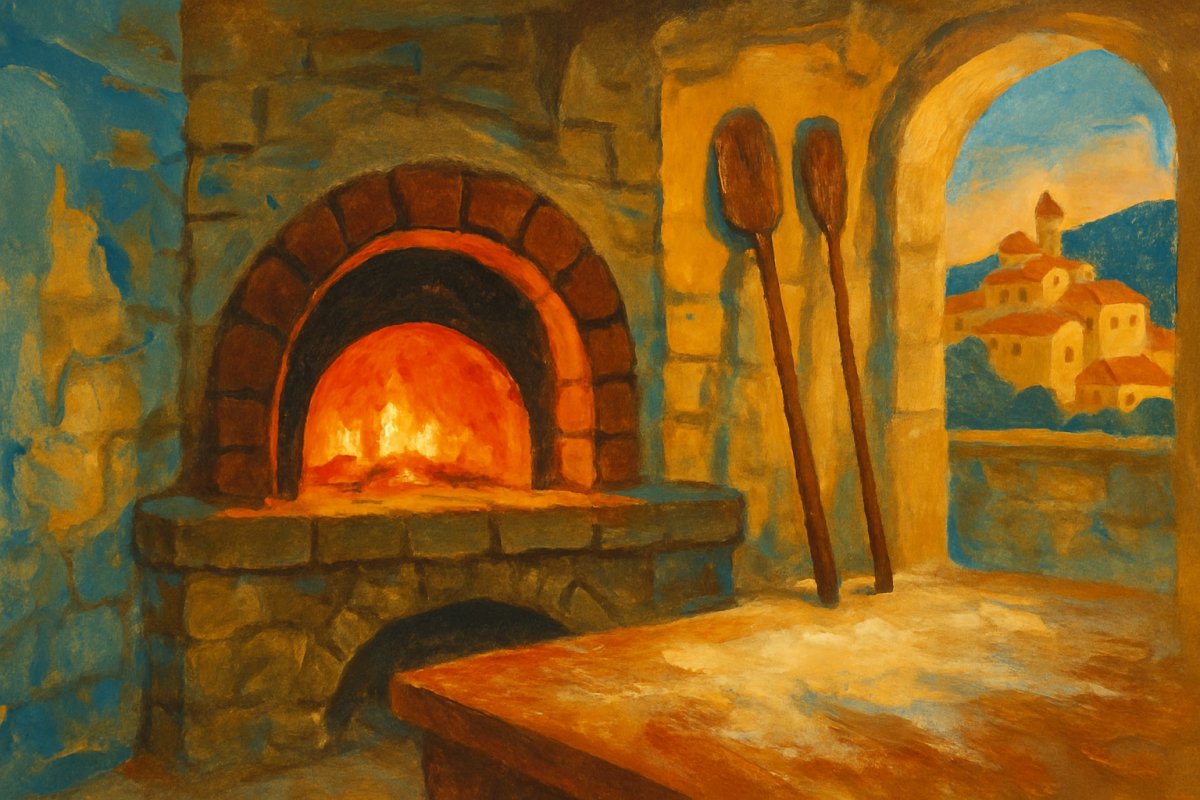 Pizza Maxima 2026: Franco Pepe Is Once Again Best Pizzeria in ItalyRead more
At the fifth edition of Pizza Maxima, the Oscars of Italian pizza, Franco Pepe confirms his title as Best Pizzeria in...
-
 ‘L’acqua è poca e ‘a papera nun galleggia’: what it meansRead more
When the means are few, so is the result. Let's discover the most realistic Neapolitan saying there is.
-
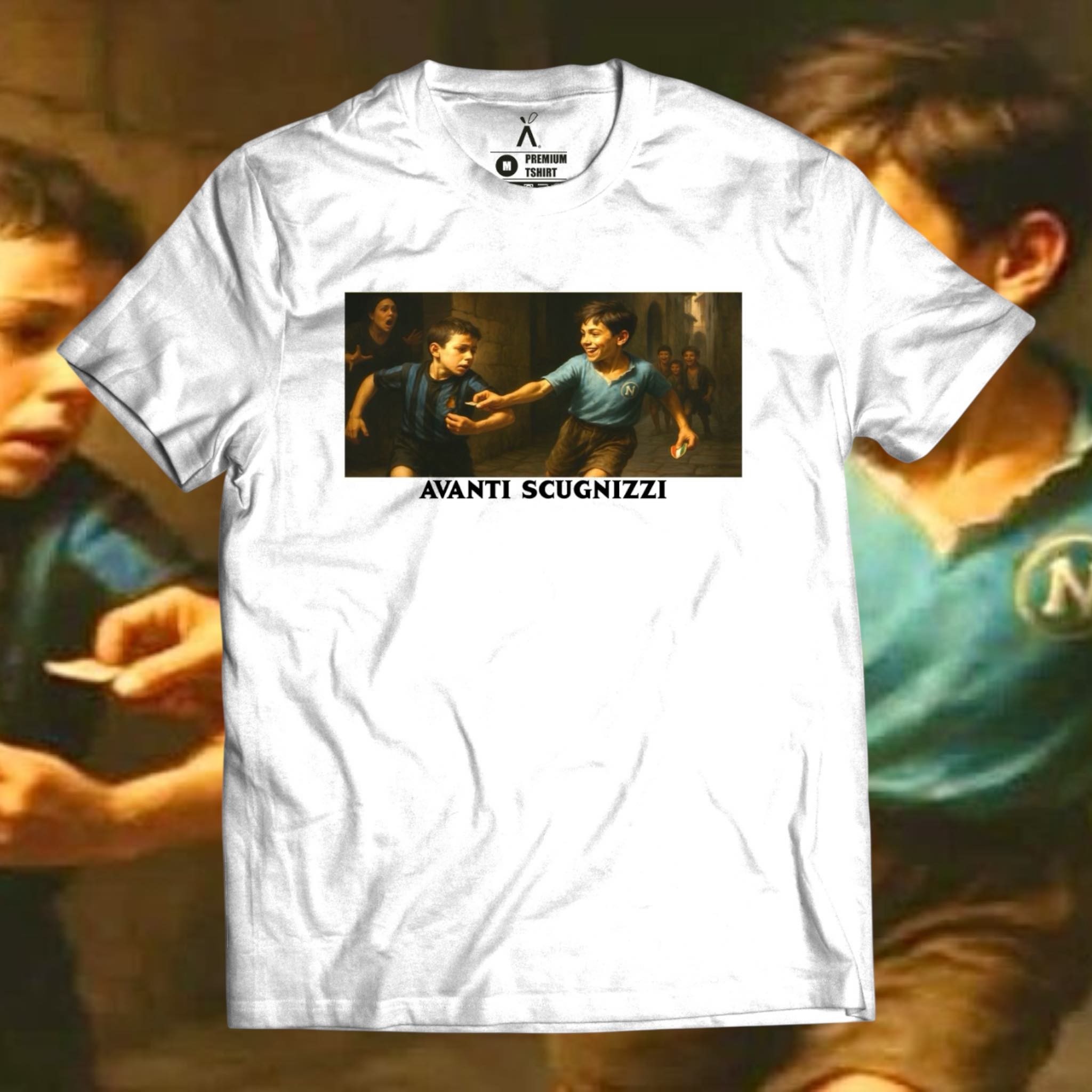 Avanti Scugnizzi: the story of the year's most loved T-shirtRead more
One word, ‘scugnizzo’ (Neapolitan street kid), and it holds the whole of Naples inside it. We tell you how the year's...
-
 'Chi chiagne fotte a chi ride': what it means and why it's truer than everRead more
At the market, at the counter, in the family: there's always someone who complains and gets more. It's the sharp...
-
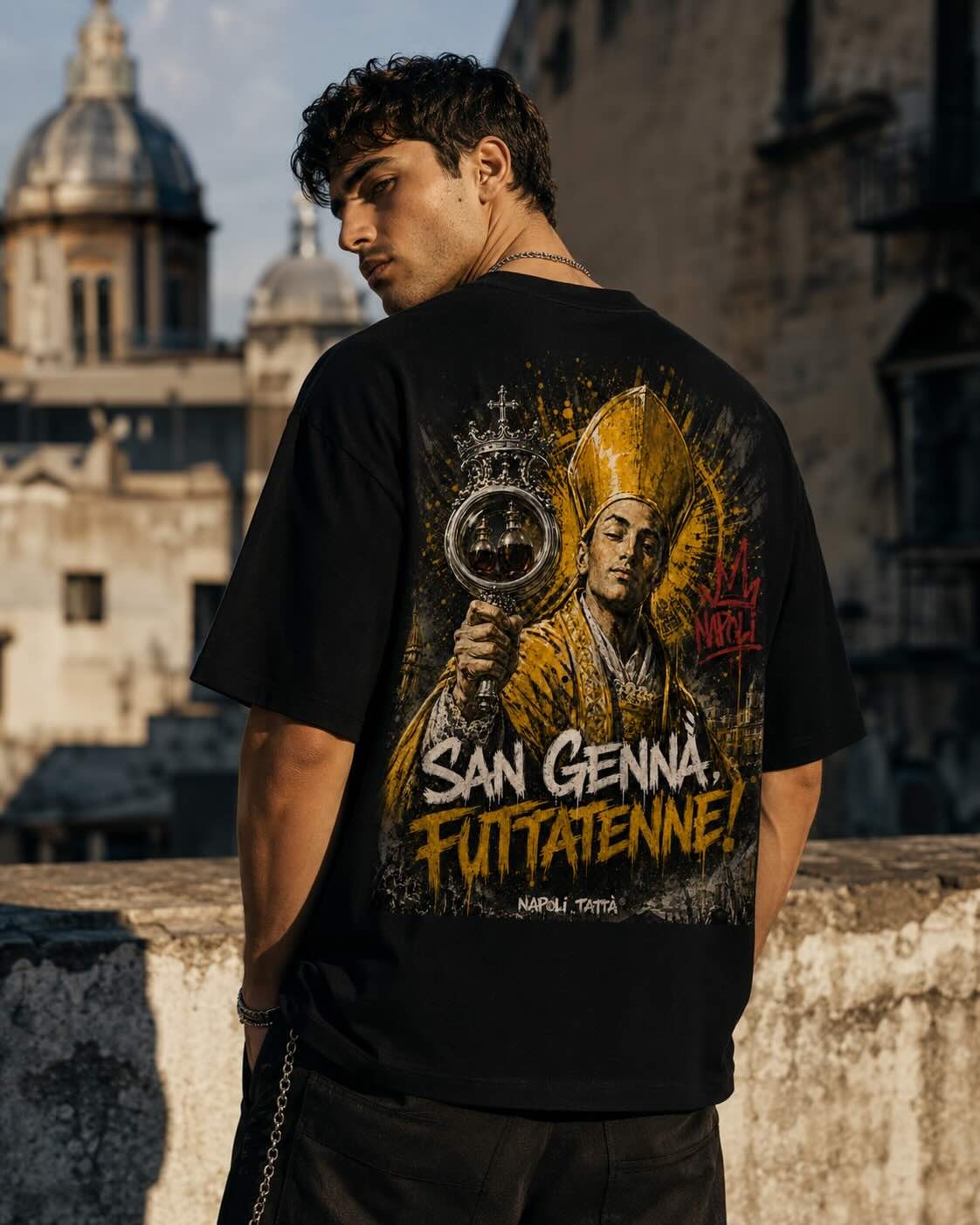 San Gennà, futtatenne! (Saint Januarius, don't worry about it!) San Gennaro, 19 September and the patron saint's t-shirtRead more
Who San Gennaro was, the miracle of the blood that liquefies, and the feast on 19 September. Plus that close,...
Blog categories
Search in blog
Archived posts
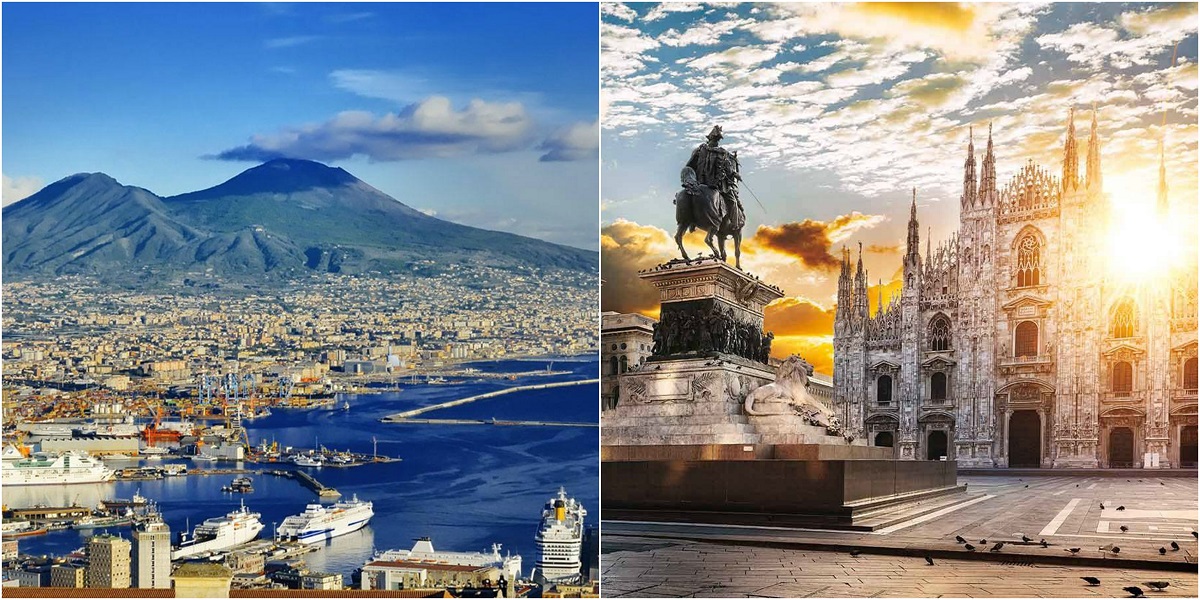
Naples VS Milan
One is the capital of fashion and is gaining more and more importance on a European and national level, and the other is our beloved Naples. Have you worked out which city we're talking about? It's Milan, and it will be the star of this new comparison, based on 10 points, with the Neapolitan city. Here's our line-up, the choice is yours!
by Silvia Semonella
One is the capital of fashion and is gaining more and more importance on a European and national level, and the other is our beloved Naples.
Have you worked out which city we're talking about?
It's Milan, and it will be the star of this new comparison, based on 10 points, with the Neapolitan city.
Here's our line-up, the choice is yours!
1 - Naples Cathedral / Milan Cathedral
The Metropolitan Cathedral Basilica of the Nativity of the Blessed Virgin Mary, better known as the Duomo di Milano, is the cathedral of the Archdiocese of Milan. A symbol of the Lombard capital, and located in the square of the same name at the centre of the city, it is dedicated to Santa Maria Nascente. By surface area it is the sixth largest Christian church in the world and is also home to the parish of Santa Tecla within the Duomo di Milano. A masterpiece of Gothic architecture, it attracts thousands of tourists every year, who are captivated by its monumental scale and its majestic facade, with spires and towers.
Naples' Duomo, on the other hand, stands along the eastern side of the street of the same name, in a small square lined with porticoes, and incorporates, like side chapels, two other places of worship that arose independently of the cathedral: the Basilica of Santa Restituta, which houses the oldest baptistery in the West, that of San Giovanni in Fonte, and the Royal Chapel of the Treasure of San Gennaro, which preserves the relics of the city's patron saint. It is the symbol of Naples' artistic and religious identity, being the heart of the centuries-old cult of San Gennaro, the beloved patron saint of the city, of whom, three times a year, it hosts the miracle of the liquefaction of the blood.
2 - Capodimonte Museum / Pinacoteca di Brera
The Pinacoteca is housed in the grand Palazzo di Brera, which also houses other institutions: the Biblioteca Nazionale Braidense, the Brera Observatory, the Botanical Garden and the Istituto Lombardo di Scienze e Lettere and the Accademia di Belle Arti. The building was constructed on the ancient, uncultivated land known as "braida" (or "breda", a word which in late Latin meant suburban field), from which both the palace and the district took the name Brera. The palace opens onto a courtyard surrounded by an elegant two-storey portico, at the centre of which stands the Monument to Napoleon I designed by Antonio Canova.
The site houses works of great value such as the "Dead Christ" by Andrea Mantegna, "Supper at Emmaus" by Caravaggio and the "Pietà" by Giovanni Bellini.
The Capodimonte Museum, on the other hand, located within the royal palace of the same name, the second residence of the Bourbons, in the Capodimonte district, houses galleries of ancient art, one of contemporary art and a historic apartment. It was officially opened in 1957, although the halls of the royal palace had already housed works of art since 1758. It preserves, mainly, paintings, spread widely across its two main collections: the Farnese Collection, which includes some of the great names of Italian and international painting (among them Raphael, Titian, Parmigianino, Bruegel the Elder, El Greco, Ludovico Carracci, Guido Reni), and the Neapolitan Gallery, which brings together works from churches in the city and its surroundings (Simone Martini, Colantonio, Caravaggio, Ribera, Luca Giordano, Francesco Solimena). Also important is the contemporary art collection, unique of its kind in Italy, which features "Vesuvius" by Andy Warhol.
It is surrounded by a beautiful park, which, every day, especially during the summer, is taken over by joggers, sports lovers and others besides.
3 - Sartù di riso (Neapolitan baked rice) / Polenta
Polenta is a very ancient Italian dish made from cereal flour.
Although known, in its various forms, across almost the whole of Italy, in the past it made up the staple diet of a great many people in certain northern regions.
To prepare it, the most commonly used base grain is maize, which gives it its characteristic yellow colour, while previously the shade was darker because spelt or rye were mainly used, and, later on, buckwheat too. Polenta goes very well with butter, soft cheeses and dishes with plenty of sauce, generally stewed meats. The pairing "polenta e osei" (polenta and small birds) is very famous: its distinguishing feature is that the polenta is served with birds (osèi=birds), such as pheasants and other fowl easily found on the plains around Bergamo. Also widespread is polenta with cünì/cönécc (rabbit) and other cooked meats, such as braised or roast meats.
Born in the Bourbon era, sartù, on the other hand, is one of the most elaborate and delicious Neapolitan rice dishes. This ingredient was first brought to Naples at the end of the 14th century from Spain, in the holds of Aragonese ships. Unfortunately, it was not very successful at first, so much so that it was called "sciacquapanza" (belly-rinser), that is, poor, bland food. It was used mainly as a remedy: doctors in Salerno prescribed it plain in cases of intestinal or gastric illness (at that time epidemics such as cholera were rife).
Later, in the 1700s, during the rule of the Bourbons of the Two Sicilies, several French cooks came to work in the royal kitchens and those of many aristocratic Neapolitan families, and were known as Monsù (from the French Monsieur). Aware that Neapolitans had a real aversion to rice, they decided to make it tastier by cooking it with tomato sauce, fried aubergines, peas and little meatballs. The French name of this dish, "sur-tout" ("above all"), was soon adapted into "sartù".
4 - Galleria Umberto / Galleria Vittorio Emanuele
Both named after members of the House of Savoy, they are the two cities' most famous shopping arcades.
The Vittorio Emanuele is a shopping arcade in Milan which, in the form of a covered pedestrian street, links Piazza Duomo to Piazza della Scala. Thanks to its elegant shops and cafés, ever since its opening it has been a meeting place for the Milanese bourgeoisie, so much so that it was nicknamed the "drawing room of Milan": built in Neo-Renaissance style, it is among the most celebrated examples of European iron architecture and represents the archetype of the 19th-century shopping arcade. Simply called "la Galleria" by the Milanese, it is often considered one of the first shopping centres in the world.
The Umberto, on the other hand, is Naples' quintessential arcade and was built between 1875 and 1890.
In 1885 the Law for the Redevelopment of the City of Naples was passed (this period was in fact called "the redevelopment" for this reason), thanks to which the Santa Brigida area was given a new layout. Various proposals were put forward, but the winning design was that of the engineer Emmanuele Rocco, later taken up by Antonio Curri and subsequently expanded by Ernesto di Mauro. This design featured an arcade with four arms intersecting at an octagonal crossing, covered by a dome. Demolition of the existing buildings (with the exception of Palazzo Capone) began on 1 May 1887, and, on 5 November of the same year, the foundation stone of the building was laid. Within three years, precisely on 19 November 1890, the new arcade was opened.
5 - Teatro San Carlo / Teatro alla Scala
The Teatro alla Scala, opened in 1778 and often referred to informally as "la Scala", is Milan's main opera house. Regarded as one of the most prestigious in the world, for over 238 years it has hosted the leading names of international opera and, more broadly, classical music, often commissioning works that are still performed on the programmes of the world's greatest theatres. Since the year it was founded, it has been home to the choir, orchestra and ballet company of the same name and, since 1982, also to the Philharmonic.
«The eyes are dazzled, the soul is enraptured. […] There is nothing in the whole of Europe that, I won't say resembles this theatre, but even gives the faintest idea of it.» (Stendhal)
The Teatro di San Carlo, formerly the Real Teatro di San Carlo, is Naples' opera house, and one of the most famous and prestigious in the world. It is the oldest opera house in Europe and in the world still in operation, having been founded in 1737, as well as one of the largest Italian-style theatres on the peninsula. It can hold 1,386 spectators and has a large stalls area (22×28×23 m), five tiers of horseshoe-shaped boxes plus a spacious royal box, an upper gallery and a stage. Given its size, structure and age, it served as a model for later theatres across Europe. Facing onto the street of the same name and, at its side, onto Piazza Trieste e Trento, the theatre, in keeping with the other great architectural works of the period, such as the great Bourbon royal palaces, was the symbol of a Naples asserting its status as a great European capital.
6 - Pastiera / Panettone
Two iconic desserts of tradition, the first for Easter, the second typically for Christmas.
Panettone typically has a cylindrical base topped by a dome shape. The leavened dough, made from water, flour, butter and eggs (yolk), is enriched with candied fruit, orange and citron peel in equal parts, and raisins. The result is commonly known as panetton candìo.
In Milan, up until 1900, there were a great many bakers and pastry chefs producing panettone; today, however, the large industrial producers are spread throughout Italy, while in Milan many artisans still make panettone according to the traditional recipe.
Pastiera, on the other hand, is a shortcrust pastry cake filled with a mixture of ricotta, candied fruit, sugar, eggs and wheat grains boiled in milk. The pastry is crisp while the filling is soft. Its colour is a deep, golden yellow. The scent and flavour vary depending on the spices and flavourings used during preparation.
In the classic recipe, the flavourings used are cinnamon, candied fruit, orange zest, vanilla and orange blossom water. Today, however, there are numerous variations, ranging from adding pastry cream to the filling, to white chocolate in the shortcrust pastry. In the Salerno area there is also a traditional variant made with rice, once widely grown locally, in place of wheat.
Neapolitan housewives, by tradition, bake the pastiera on Holy Thursday, Good Friday or Holy Saturday, but nowadays it is a cake found all year round in homes and in the best Neapolitan pastry shops.
The legend that the siren Partenope created this delicacy probably derives from pagan festivals and votive offerings of the spring season. In particular, the myth is likely linked to the cult of the Goddess Ceres, whose priestesses carried an egg in procession, a symbol of rebirth, later absorbed into Christian tradition. The current recipe was perfected precisely in the convents, and the pastiere made by the nuns of the San Gregorio Armeno convent became famous.
7 - San Gennaro / Sant'Ambrogio
These are the two beloved patron saints of the cities, venerated in different ways, according to the modus vivendi of the Milanese and the Neapolitans.
Aurelio Ambrogio (Aurelius Ambrosius), better known as Saint Ambrose (Trier, c. 339–340 – Milan, 4 April 397), was a Roman official, bishop, theologian and saint: one of the most important figures in the Church of the 4th century. He is venerated as a saint by all Christian Churches that hold to the veneration of saints; in particular, the Catholic Church numbers him among the four greatest Doctors of the Western Church, alongside Saint Jerome, Saint Augustine and Pope Saint Gregory I. In Milan he is celebrated on 7 December, an occasion which also sees the setting up of the famous Christmas markets.
Gennaro (272 – Pozzuoli, 19 September 305) was a bishop and Christian martyr; he is venerated as a saint by both the Catholic Church and the Orthodox Church.
He is the principal patron saint of Naples, in whose cathedral his bones are kept, along with two very ancient vials said to contain blood collected by a devout woman named Eusebia straight after his martyrdom. These vials are shown to the faithful for veneration three times a year: the Saturday before the first Sunday in May, 19 September and 16 December; on these days, one can witness the phenomenon of the liquefaction of the blood, an event of vital importance to Neapolitans and one of unparalleled folklore for non-believers and visitors from abroad. It is lived through with great anxious anticipation: the years in which the phenomenon (called a miracle) did not occur have, in fact, been particularly ill-fated for the city, struck by all manner of misfortunes.
8 – Via Dei Mille / Via Monte Napoleone
Via Monte Napoleone, a street in central Milan considered one of the most luxurious, was laid out following the ancient course of the Roman city walls, which in turn followed the course of the river Seveso.
It is lined with the shops and showrooms of the biggest names in fashion, such as Gucci, Bottega Veneta, Armani, Dolce & Gabbana, Prada, Versace, Alberta Ferretti and others. Together with its cross streets and parallel roads, Via della Spiga, Via Sant'Andrea and Via Pietro Verri, it makes up the so-called Fashion Quadrilateral.
Via dei Mille, on the other hand, is an important shopping street in Naples located in the Chiaia district. Famous for its upmarket shopping, thanks to the presence of shops belonging to major fashion houses, it is named after the Expedition of the Thousand of 1860, which saw Garibaldi's army clash with the troops of the Kingdom of the Two Sicilies under Francis II.
The street features buildings in Art Nouveau (Liberty) style built between the late 1800s and early 1900s by the architect Giulio Ulisse Arata, and continues into two extensions, Via Gaetano Filangeri and Via Vittoria Colonna, which are likewise famous for high-end shopping and share the same architectural style.
9 – Castel dell'Ovo / Castello Sforzesco
The Castello Sforzesco is one of the main symbols of Milan and its history. It was built in the 15th century by Francesco Sforza, who had recently become Duke of Milan, on the remains of an earlier fortification dating back to the 14th century known as Castrum Porte Jovis (Castle of the Giovia/Zobia Gate); over the centuries it has undergone considerable transformation. Between the 16th and 17th centuries it was one of the leading military citadels in Europe; restored in a historicist style by Luca Beltrami between 1890 and 1905, it is now home to important cultural institutions and a popular tourist destination. It is one of the largest castles in Europe.
Castel dell'Ovo (Castrum Ovi, in Latin), meaning "Egg Castle", is the oldest castle in the city of Naples and one of the most striking features of the wonderful panorama of the gulf. It stands between the districts of San Ferdinando and Chiaia, facing Via Partenope.
Owing to various events which partly destroyed its original Norman appearance, and thanks to later reconstruction work carried out during the Angevin and Aragonese periods, the castle's architectural profile has changed drastically over time, up to the state in which it appears today.
Its name derives from an ancient legend according to which the Latin poet Virgil — who in the Middle Ages was also regarded as a sorcerer — hid, in the dungeons of the building, an egg that kept the entire fortress standing. Its breaking, so the legend goes, would cause not only the collapse of the castle, but also a series of ruinous catastrophes for the city of Naples.
10 - 'O Sole Mio (My Sunshine) / O mia bela Madunina (Oh my beautiful little Madonna)
To finish, the two iconic melodies that have become, almost, a worldwide soundtrack for the two cities.
"'O Sole mio" is a song in the Neapolitan language published in 1898 and known throughout the world. It has been recorded by singers of every nationality, in a great many languages. Giovanni Capurro, a journalist and editor of the cultural pages of the Naples daily newspaper Roma, wrote the lyrics in 1898, entrusting the musical composition to Eduardo Di Capua.
The greatest interpretation of this song, however, probably remains that of Enrico Caruso, alongside which we can also count that of Luciano Pavarotti, both solo and with the group "The Three Tenors"; in any case, a great many other artists have performed the song, of which there are multiple versions: among the most famous is that of Elvis Presley, under the title "It's Now or Never".
"O mia bela Madunina", on the other hand, is a song composed, both words and music, by Giovanni D'Anzi in 1934: the little Madonna in question is the golden statue placed atop the Duomo di Milano.
That year, Giovanni D'Anzi, a Milanese, was working as a pianist and singer at the Pavillon Dorè in Milan. The city continued to draw in workers from rural areas across various regions of the Italian peninsula, including southern Italy. Audiences would often ask the artist to play songs from the Neapolitan or southern Italian tradition. It was precisely from this very personal inspiration that, shortly afterwards, on an October night, he composed this song, which also has ironic overtones. The lyrics, in fact, are written in a Milanese dialect that is at times rather approximate, with a few Italianisms thrown in.
Posted in:
Places in Naples
Related posts
-
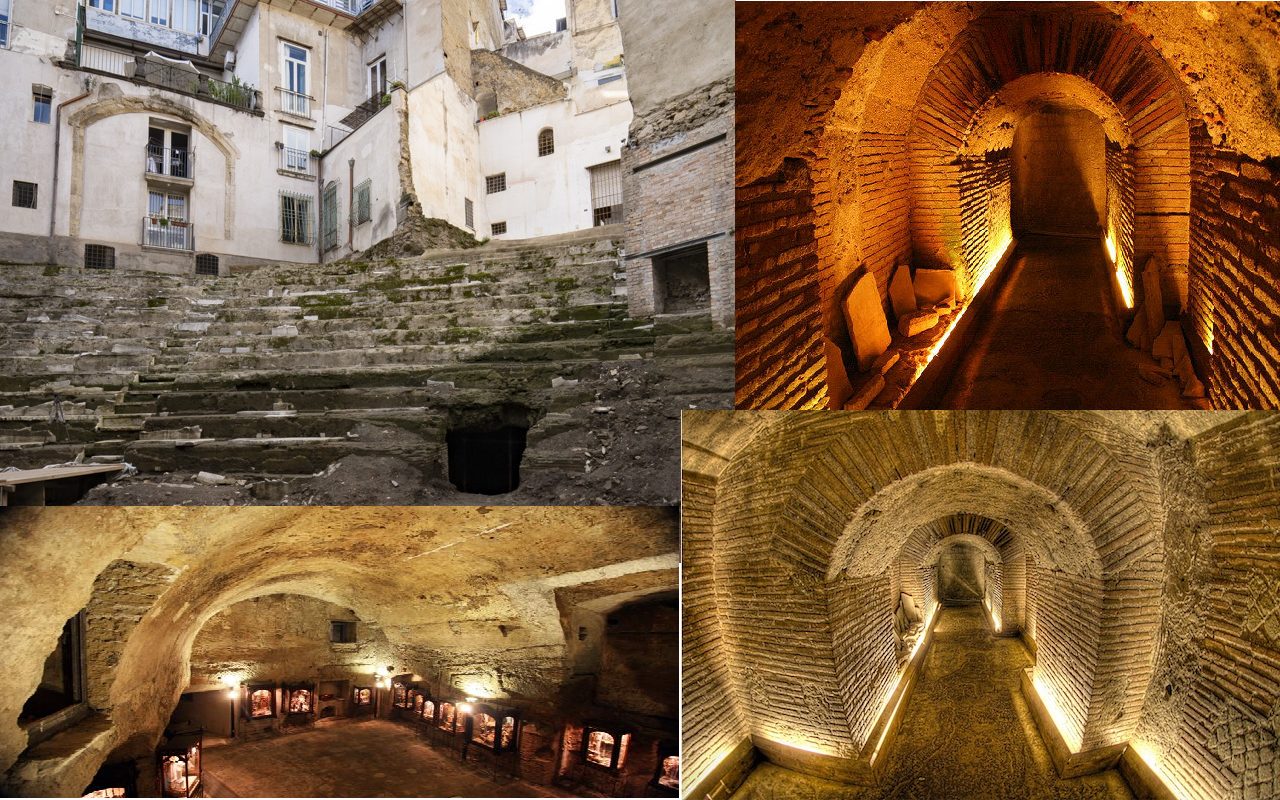 The Roman Theatre of Neapolis
Among the many wonders of Naples' historic centre stands the ancient Roman Theatre of Neapolis, between what are now...Read more
-
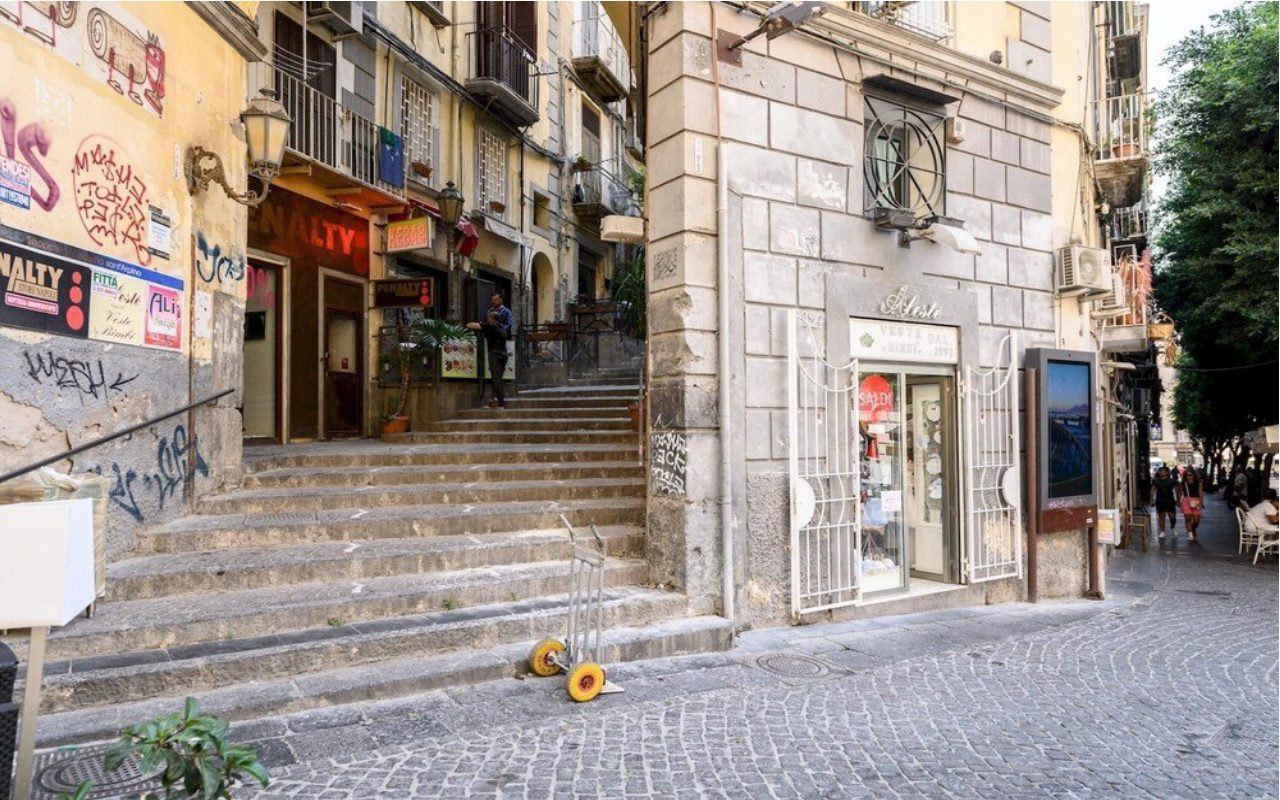 Discover Vicoletto Sant'Arpino: History and Beauty of Naples
There are corners of Naples that tell incredible stories, that take your breath away and make it unique, sincere and...Read more
-
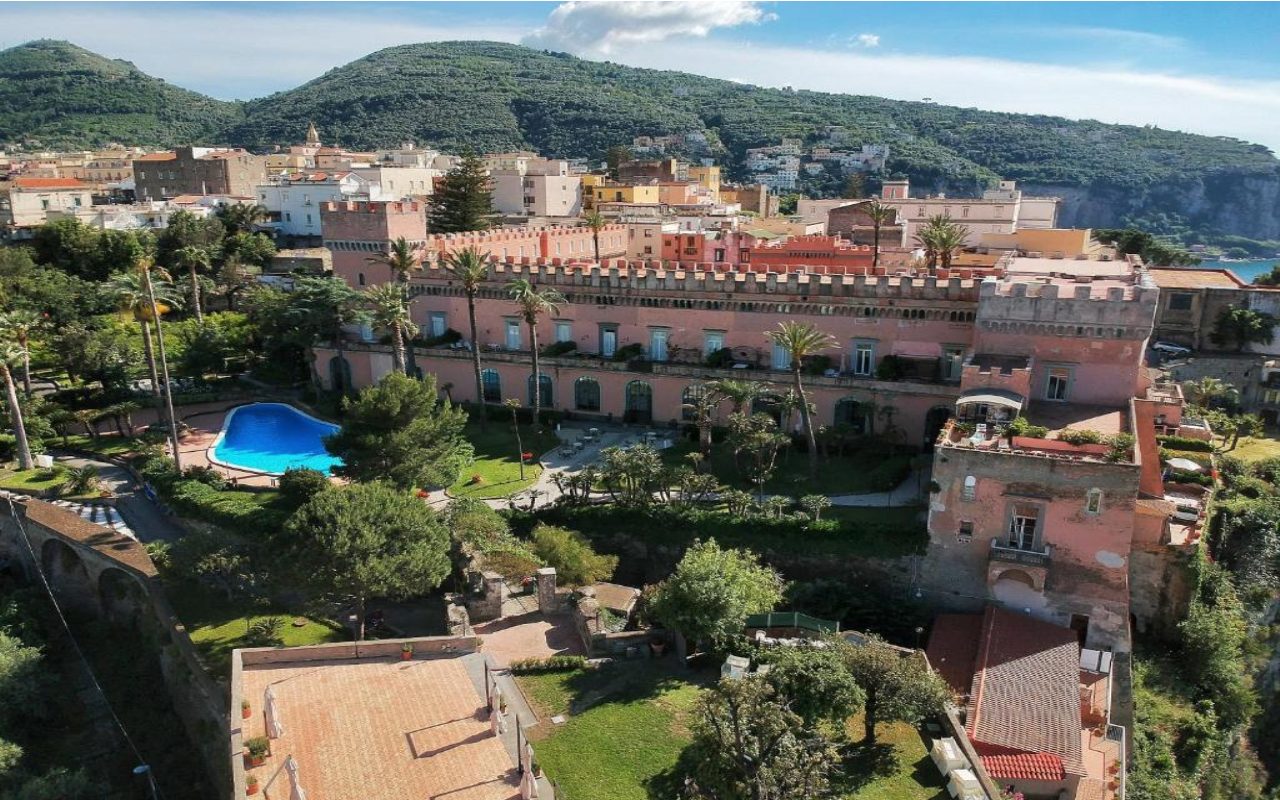 Giusso Castle: the legends of Vico Equense
Built at the end of the 13th century, Giusso Castle was designed as both a military fortress and a residence.Read more
-
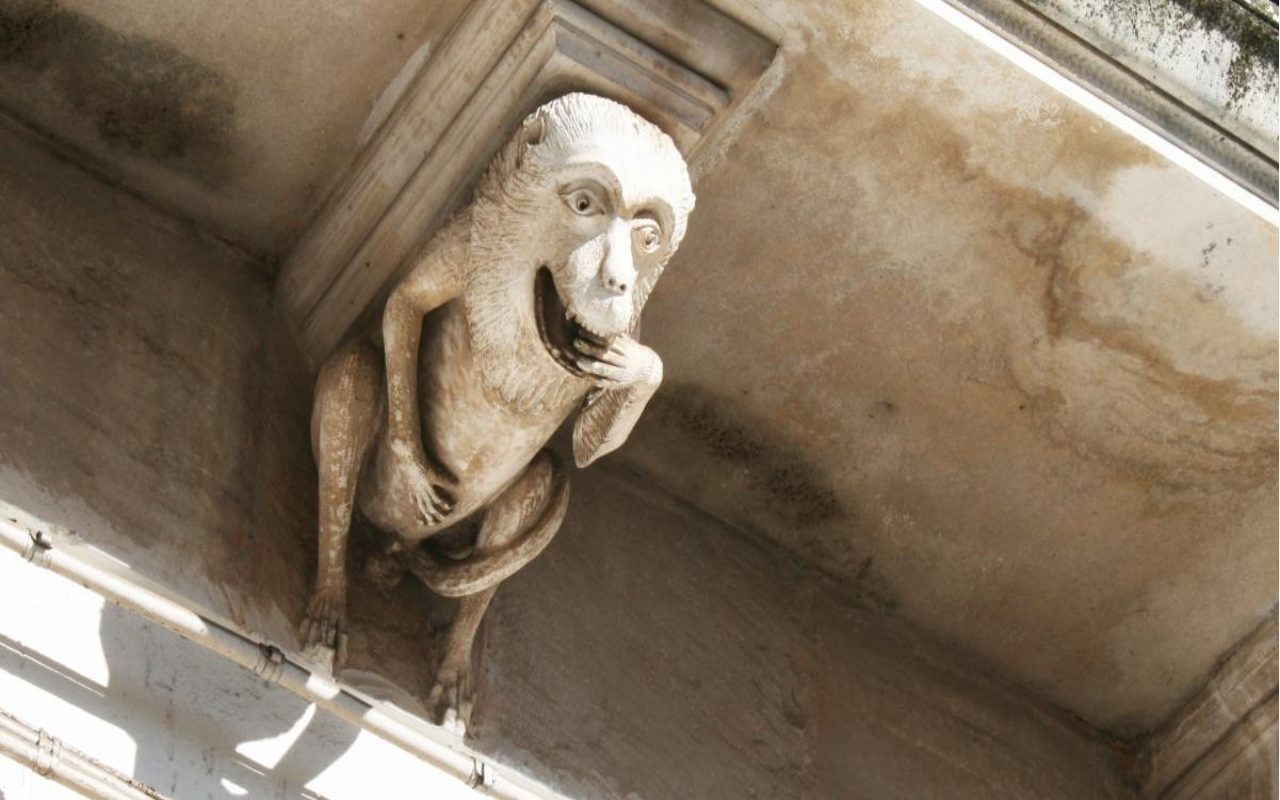 The apotropaic stone masks of lava rock and marble
Neapolitan apotropaic masks are truly fascinating works of art that can be admired on numerous historic buildings...Read more
-
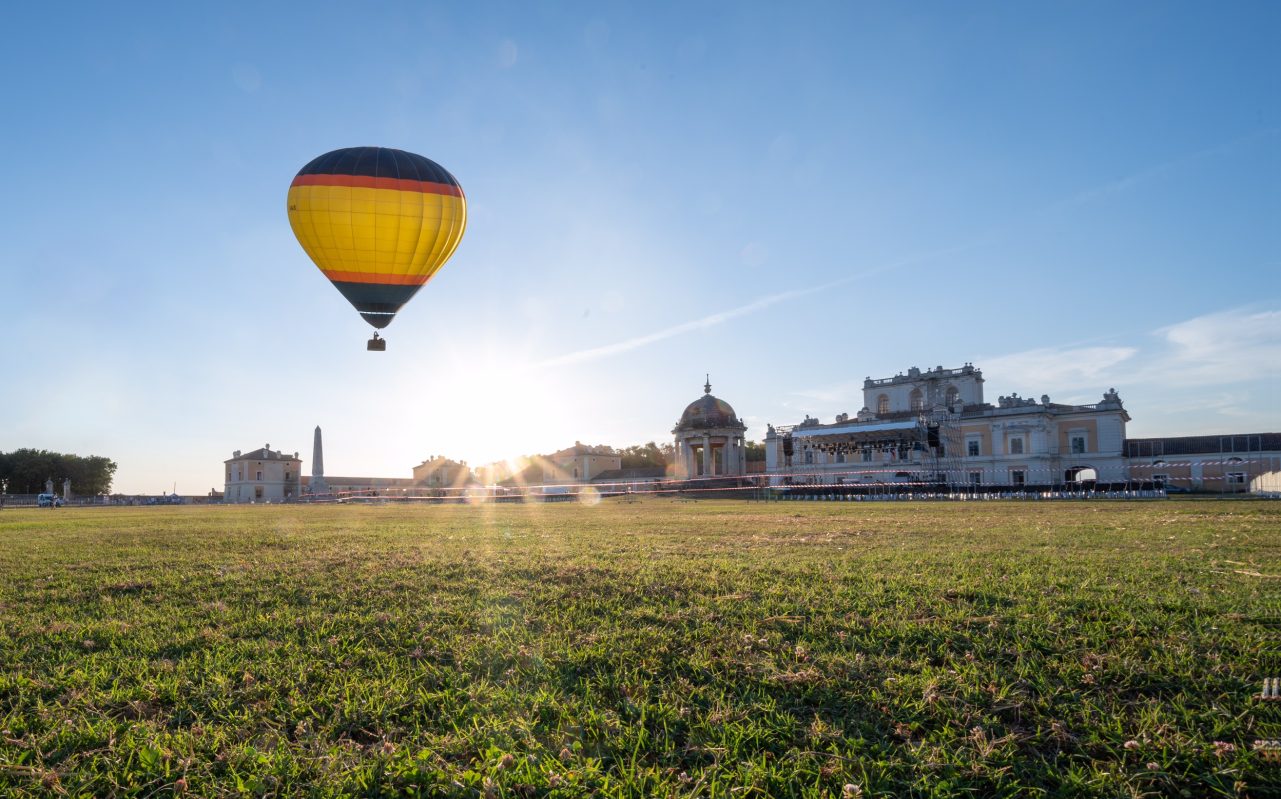 THE ROYAL PALACE OF CARDITELLO
The Tenuta Storica di Carditello (Historic Estate of Carditello), also known as the Reggia di Carditello (Royal...Read more
Leave a comment