



In Naples, a graduation is never a private affair: it's a neighbourhood celebration. Here's how to choose an original...
Latest posts
-
 Original Neapolitan graduation gift: ideas for the graduate (him and her)Read more
-
 Asso 'e mazze: meaning and history of the Neapolitan ace of clubsRead more
The strongest card on the green table becomes, in Naples, the most elegant way to say who really calls the shots....
-
 Michelina Di Cesare, the brigantessa who defied a kingdomRead more
Born poor in Terra di Lavoro, Michelina Di Cesare chose the maquis and the rifle against a newly united Italy. A...
-
 Neapolitan Hoodies: The Autumn 2026 Style GuideRead more
When the air turns crisp, in Naples people don't just reach for a hoodie: they reach for a piece of identity. Here's...
-
 Maradona Stadium: City Council allocates €50 million for Euro 2032Read more
The City Council has allocated €50 million for the redevelopment of the Diego Armando Maradona stadium, ahead of...
-
 Pizza Maxima 2026: Franco Pepe Is Once Again Best Pizzeria in ItalyRead more
At the fifth edition of Pizza Maxima, the Oscars of Italian pizza, Franco Pepe confirms his title as Best Pizzeria in...
-
 ‘L’acqua è poca e ‘a papera nun galleggia’: what it meansRead more
When the means are few, so is the result. Let's discover the most realistic Neapolitan saying there is.
-
 Avanti Scugnizzi: the story of the year's most loved T-shirtRead more
One word, ‘scugnizzo’ (Neapolitan street kid), and it holds the whole of Naples inside it. We tell you how the year's...
-
 'Chi chiagne fotte a chi ride': what it means and why it's truer than everRead more
At the market, at the counter, in the family: there's always someone who complains and gets more. It's the sharp...
-
 San Gennà, futtatenne! (Saint Januarius, don't worry about it!) San Gennaro, 19 September and the patron saint's t-shirtRead more
Who San Gennaro was, the miracle of the blood that liquefies, and the feast on 19 September. Plus that close,...
Blog categories
Search in blog
Archived posts
Church of Carminiello ai Mannesi
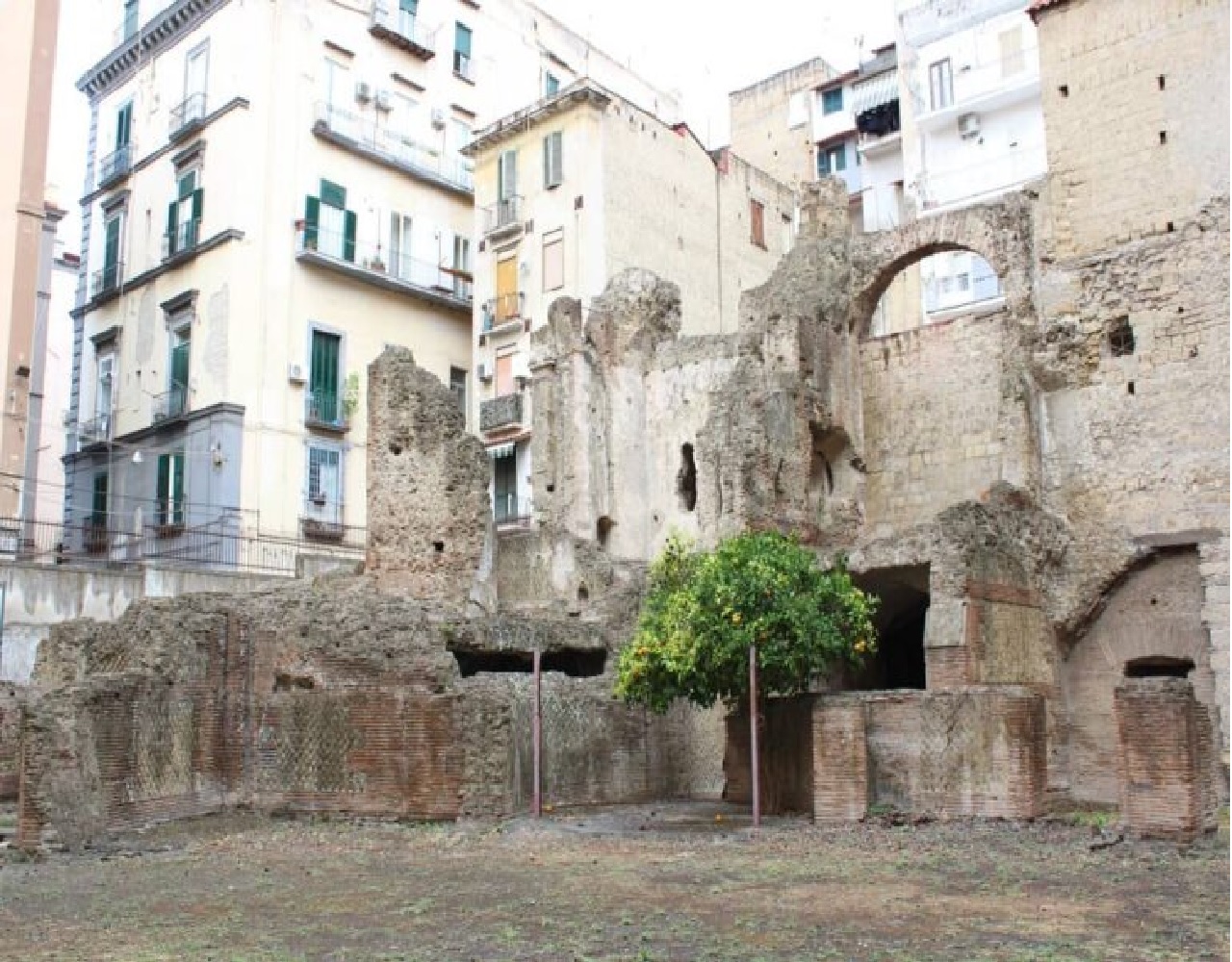
The temple was razed to the ground during an air raid in 1943; amid the rubble it was discovered that the walls and floor of the church concealed the remains of a large Roman-era building, spanning the whole of an insula between the Decumanus Maggiore and the Decumanus Minore. The vast archaeological find took the name Complesso di Carminiello ai Mannesi (Carminiello ai Mannesi Complex).
The Chiesa del Carminiello ai Mannesi (Church of Carminiello ai Mannesi) was a church in Naples.
Historical notes
A first church was built at some uncertain point during the Early Middle Ages, and was later absorbed into the church of Santa Maria del Carmine ai Mannesi during the 16th century. While the diminutive Carminiello ('little Carmine') was used on account of the church's modest size, the place name "Mannesi" instead refers to the whole surrounding area, where cart builders and repairers mainly worked.
The Roman building
The Roman building (which incorporated into its foundations the remains of a pre-existing late-Republican domus[1]) was constructed at the end of the 1st century AD and is arranged over two floors, featuring cross vaults and brick arches, along with panels of opus reticulatum in yellow tuff. The lower floor was given over to service rooms arranged around a large frescoed rectangular room, while a small bath complex can be made out to the south. On the upper floor, meanwhile, one can identify a large rectangular pool covered in cocciopesto (a waterproof Roman mortar) and a small pool with a central stepped fountain, faced with white marble.
During the Imperial era the complex underwent renovations, the most significant of which was the installation of a Mithraeum in two rooms on the lower floor: this is recognisable from the remains of a stucco relief visible on the rear wall, depicting the god Mithras in the act of slaying the bull. Towards the west, rectangular pillars made of tuff blocks and brick were raised, perhaps to create an external portico.
The life of the building did not extend beyond the end of the 4th century. Indeed, from the 5th to the 7th century it served as a rubbish tip and receptacle for urban waste. These layers, distinct and excavated with extreme care[2], have allowed the recovery of a large amount of archaeological material (mainly pottery, bones, glass, coins, etc.)[3], thanks to which it has been possible not only to trace, for that period, the gradual decline of domestic animal farming and thus of diet, but also to reconstruct the trade flows of early medieval Naples. More precisely, it has been established that until the mid-6th century Naples imported foodstuffs (chiefly oil and wine) from Tunisia, Asia Minor, Syria and the Levant; and later tableware ceramics (the so-called sigillata chiara D) from Tunisia and Asia Minor. The 7th-century layers, by contrast, bear witness to a revival of Campanian wine production, and to the existence of a glass workshop in the area.
After the 7th century, perhaps also following the construction of the first church, some rooms of the Roman building were reused for unspecified purposes (as dwellings, storerooms, or cellars), and some openings were made in the ancient walls. The marble pool with the central fountain on the upper floor became a burial place for a group of infants ranging in age from around four months to four years; they were covered with soil containing glazed pottery from the 13th century.
Posted in:
Places in Naples
Related posts
-
 The Roman Theatre of Neapolis
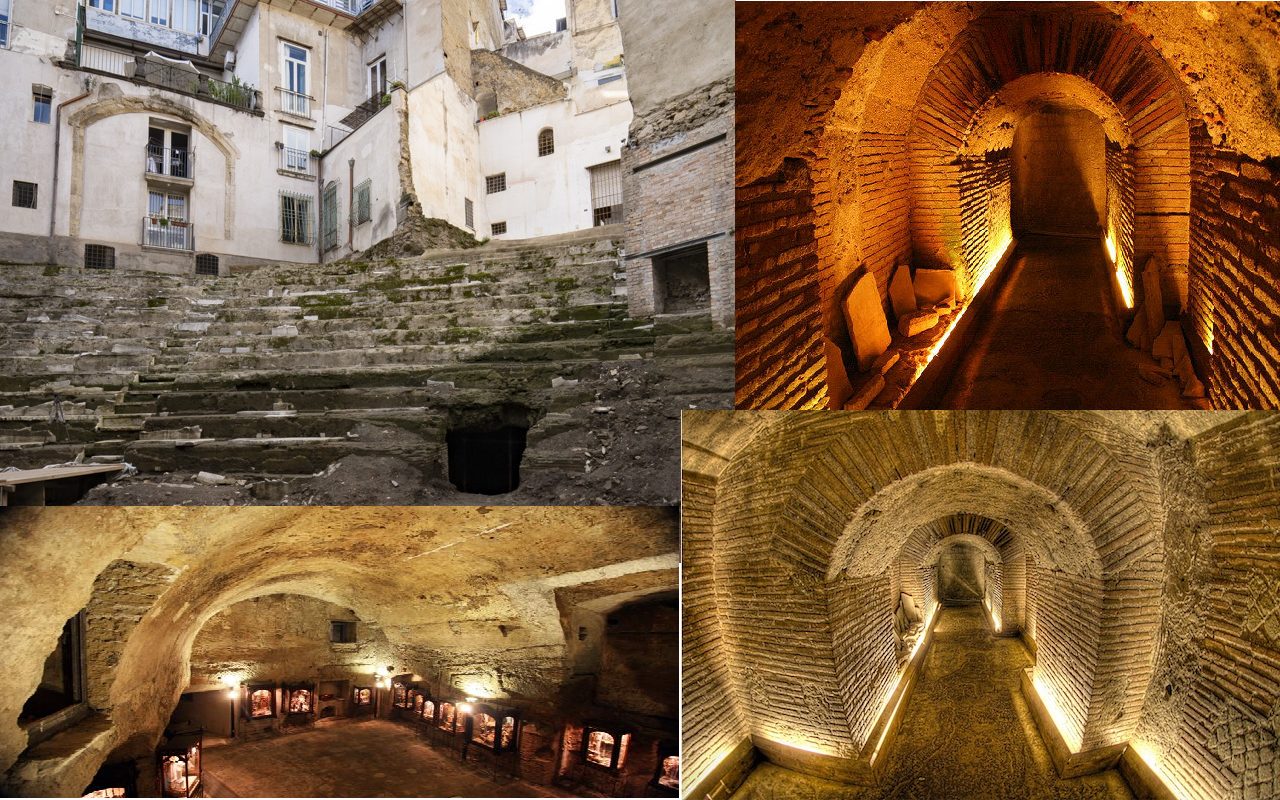
Among the many wonders of Naples' historic centre stands the ancient Roman Theatre of Neapolis, between what are now...Read more
-
 Discover Vicoletto Sant'Arpino: History and Beauty of Naples
There are corners of Naples that tell incredible stories, that take your breath away and make it unique, sincere and...Read more
-
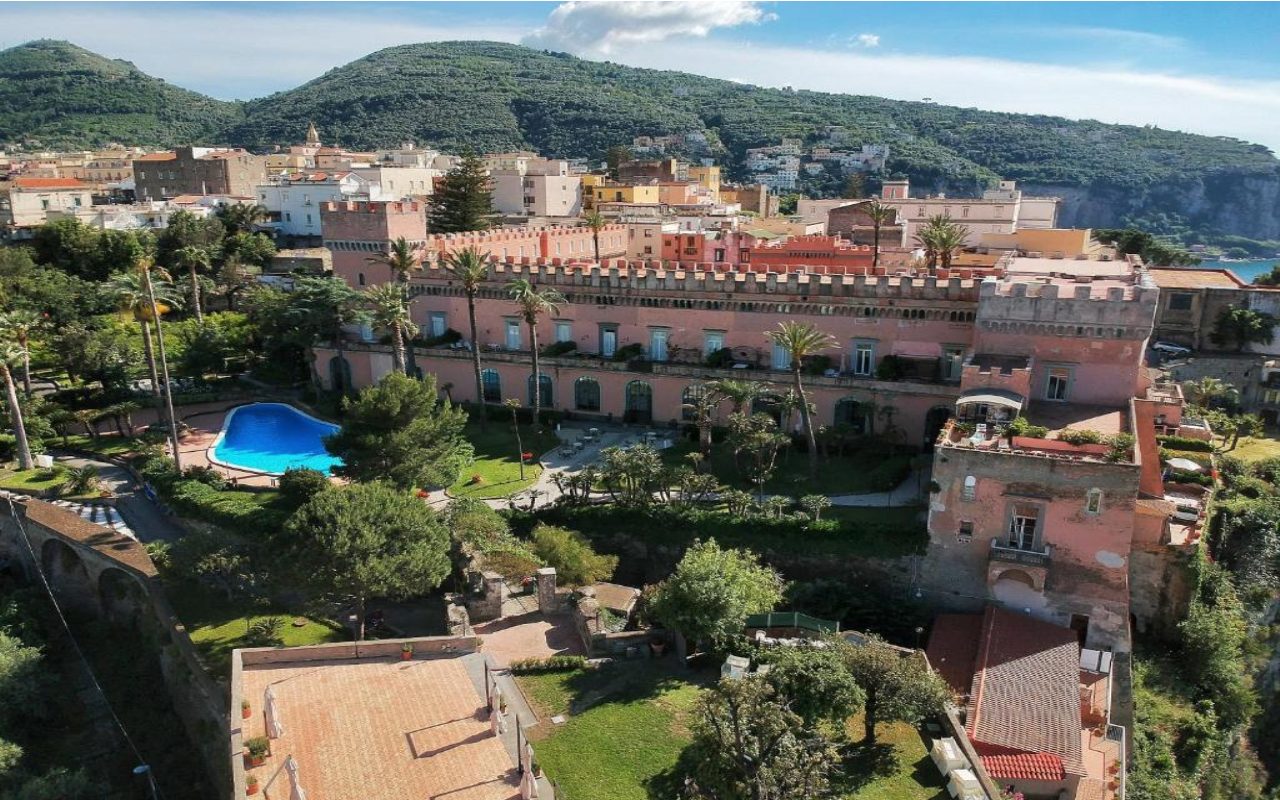 Giusso Castle: the legends of Vico Equense
Built at the end of the 13th century, Giusso Castle was designed as both a military fortress and a residence.Read more
-
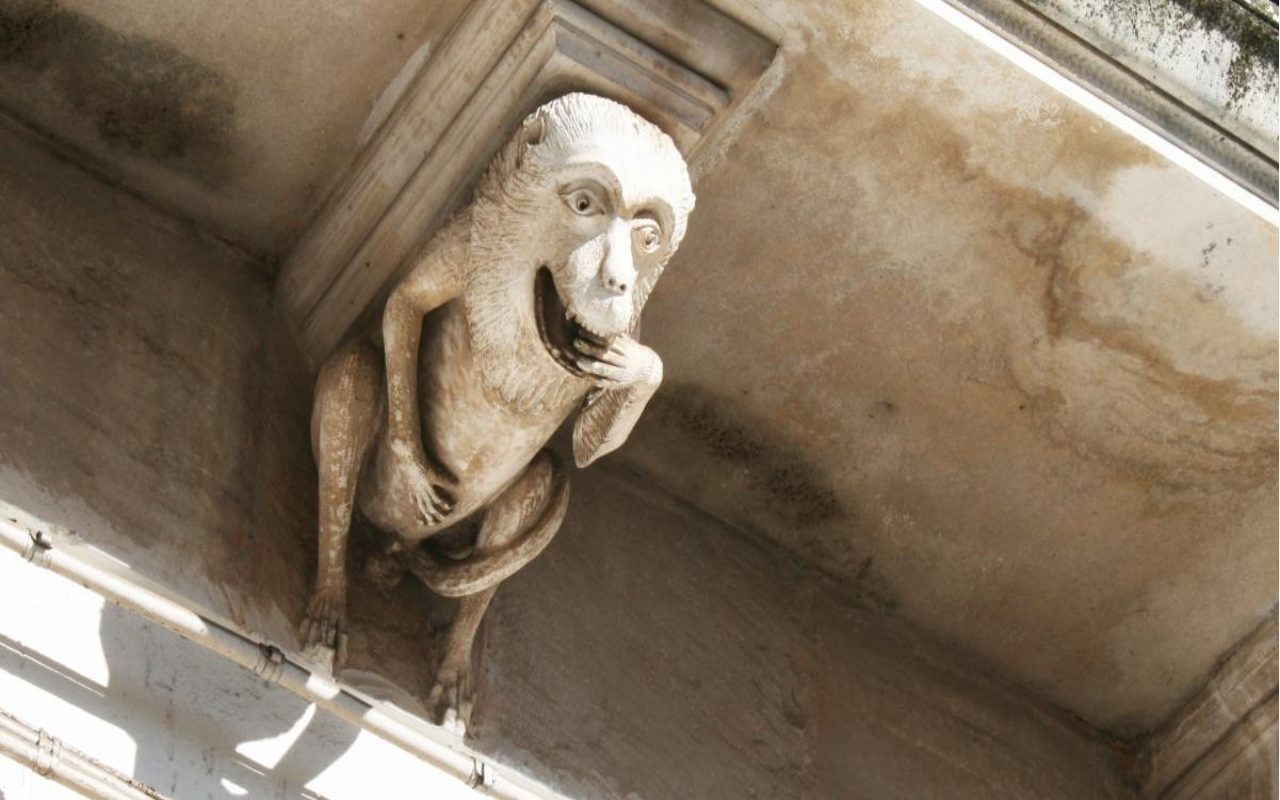 The apotropaic stone masks of lava rock and marble
Neapolitan apotropaic masks are truly fascinating works of art that can be admired on numerous historic buildings...Read more
-
 THE ROYAL PALACE OF CARDITELLO
The Tenuta Storica di Carditello (Historic Estate of Carditello), also known as the Reggia di Carditello (Royal...Read more
Leave a comment