



La tombola napoletana è il rito di famiglia delle feste: dal panariello alle cartelle, fino ai nomi della Smorfia che...
Latest posts
-
 Tombola napoletana: la storia, il panariello e i 90 numeri della SmorfiaRead more
-
 Hoodie or T-shirt? Ten gifts under 40 euros for Naples loversRead more
There's always that moment when you need to find a gift and your budget says one thing while your heart says another....
-
 Stai sciuoto: the meaning and use of 'stay loose', and why we love it so muchRead more
A friend sees you tense and gives you a "Stai sciuoto!" (stay loose!) with a pat on the shoulder. In those two words...
-
 Neapolitan Christmas gifts: the definitive 2026 guideRead more
The longest guide of the year to get your gift right: ideas sorted by recipient and budget, with Neapolitan spirit...
-
 Regno delle Due Sicilie, the symbols: Elegant Borbonic and the Cavalluccio Rosso to wearRead more
Bourbon lilies and De Crescenzo's little red horse: the story of the symbols of the Regno delle Due Sicilie and of a...
-
 'O Munaciello: the legend, the mischief and the coins under the pillowRead more
There's a noise in the old house, an object that disappears and then reappears, a coin found on the floor. In Naples...
-
 How to choose your T-shirt size (and make it last): the Tattà® guideRead more
Sizes, fabrics and prints explained plainly, with the honesty of someone who really wears 'a maglietta' (Neapolitan...
-
 Original Neapolitan graduation gift: ideas for the graduate (him and her)Read more
In Naples, a graduation is never a private affair: it's a neighbourhood celebration. Here's how to choose an original...
-
 Asso 'e mazze: meaning and history of the Neapolitan ace of clubsRead more
The strongest card on the green table becomes, in Naples, the most elegant way to say who really calls the shots....
-
 Michelina Di Cesare, the brigantessa who defied a kingdomRead more
Born poor in Terra di Lavoro, Michelina Di Cesare chose the maquis and the rifle against a newly united Italy. A...
Blog categories
Search in blog
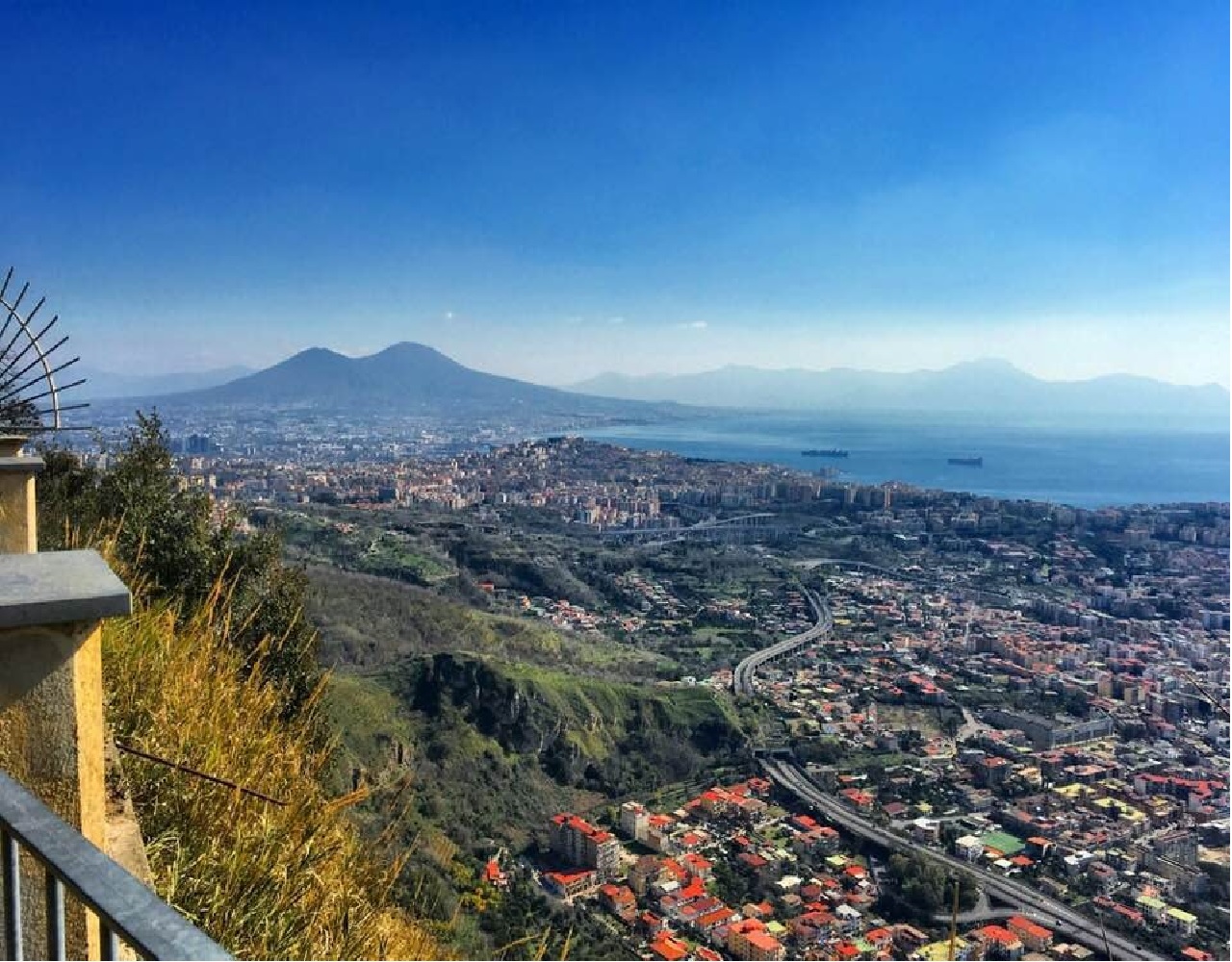
The Hermitage Complex of the Camaldoli
It was founded in 1585 by Giovanni d'Avalos, son of Alfonso d'Aragona. It was built on the site of an earlier church dedicated to the Transfiguration, later renamed after the Ss. Redentore (Holy Redeemer).
The Hermitage Complex of the Camaldoli is a monumental historical and artistic complex in Naples; it rises on the Camaldoli hill.
Historical background
It was founded in 1585 by Giovanni d'Avalos, son of Alfonso d'Aragona. It was built on the site of an earlier church dedicated to the Transfiguration, later renamed after the Ss. Redentore (Holy Redeemer). A great arch guards the entrance hall, above which sits the coat of arms of the Camaldolese order; from here one enters the church, built upon the ruins of the ancient chapel; the latter is flanked by the tall bell tower and by a belvedere divided into two areas, one for the monks and the other for visitors.
Throughout its history, the complex was suppressed twice: the first time by order of Napoleon in 1807, and the second by order of the House of Savoy in 1866. In 1885, the hermitage returned to the care of the Camaldolese Benedictines. Today the complex is run by the Bridgettine sisters.
The building was designed by Domenico Fontana, and it is thanks to him that the religious structure displays late-Renaissance features.
The church
The church is entered through a beautiful portal made of pietrarsa (dark volcanic stone); the temple, besides bearing sixteenth-century features, also carries the mark of later Baroque additions.
The interior consists of a single nave with six side chapels. The high altar is by Cosimo Fanzago. Also noteworthy are the seventeenth-century frescoes by Giovanni Bernardino Azzolino, such as the Miracolo di San Bernardino (Miracle of Saint Bernardino).
By Luca Giordano are the Immacolata Concezione (Immaculate Conception), the Sacra Famiglia davanti alla Croce (Holy Family before the Cross) and the Trasfigurazione (Transfiguration). The other works have been attributed to Massimo Stanzione, Cesare Fracanzano and Angelo Mozzillo.
To the left of the religious structure are the sixteen monastic cells, along with vegetable gardens and gardens. The hermitage also has a well-stocked library, a guesthouse and a refectory.
Standing atop the highest hill in the city, the complex offers breathtaking views over the Gulf of Naples.
Posted in:
Places in Naples
Related posts
-
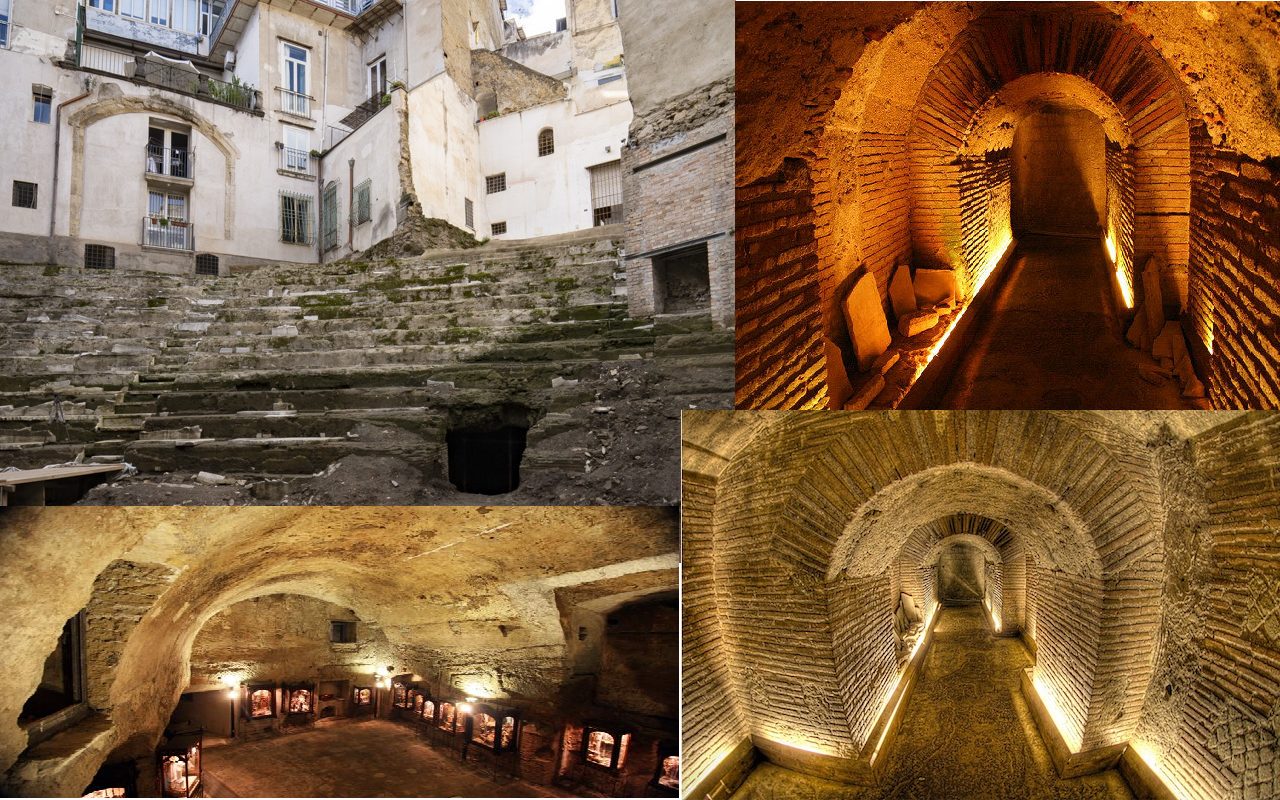 The Roman Theatre of Neapolis
Among the many wonders of Naples' historic centre stands the ancient Roman Theatre of Neapolis, between what are now...Read more
-
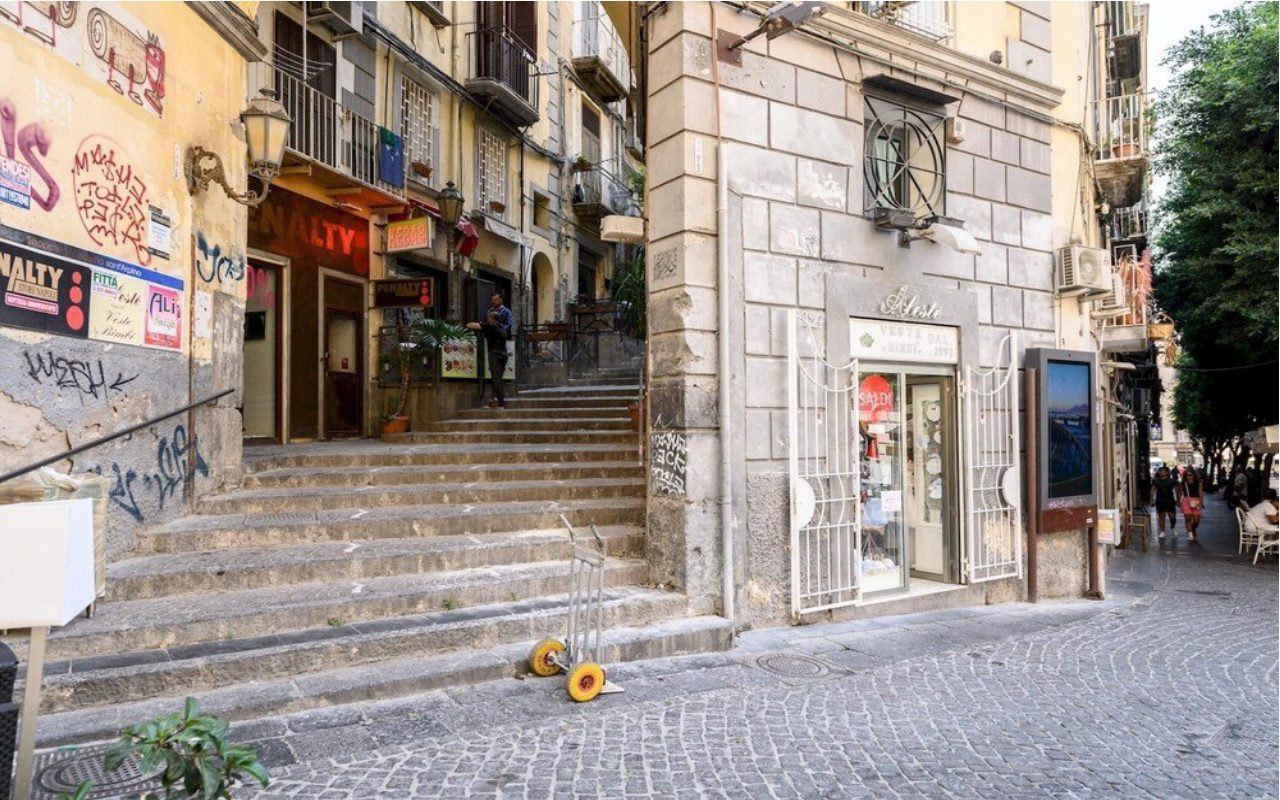 Discover Vicoletto Sant'Arpino: History and Beauty of Naples
There are corners of Naples that tell incredible stories, that take your breath away and make it unique, sincere and...Read more
-
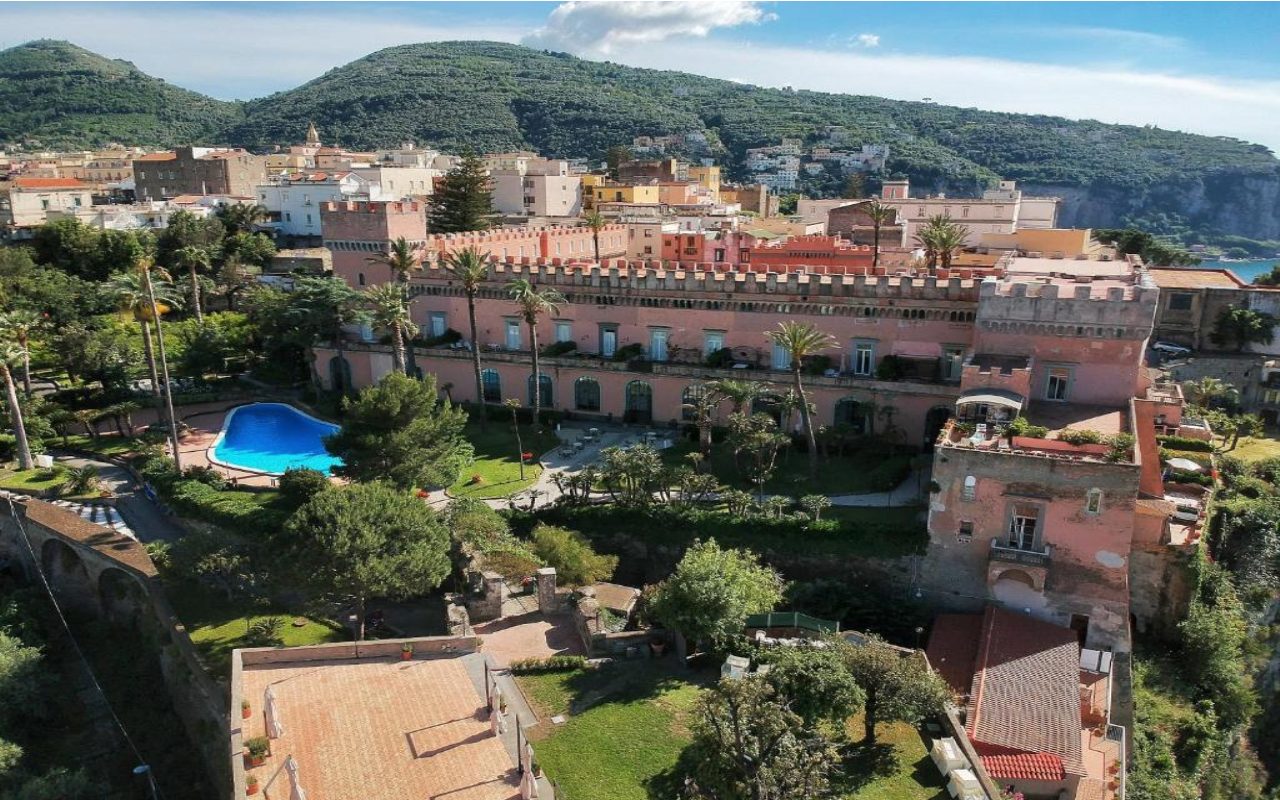 Giusso Castle: the legends of Vico Equense
Built at the end of the 13th century, Giusso Castle was designed as both a military fortress and a residence.Read more
-
 The apotropaic stone masks of lava rock and marble
Neapolitan apotropaic masks are truly fascinating works of art that can be admired on numerous historic buildings...Read more
-
 THE ROYAL PALACE OF CARDITELLO
The Tenuta Storica di Carditello (Historic Estate of Carditello), also known as the Reggia di Carditello (Royal...Read more
Leave a comment